Mykonos tours show the white town, the windmills, the island beaches and the sacred island of Delos, all within a short ride or sail of each other. For more routes, see our tours in Greece page.
This page covers how the island is reached, Mykonos Town, Little Venice and the windmills, the museums, Ano Mera, Delos and Rhenea, the beaches of the coasts, the island trips, food, the seasons, and where travellers stay.
What are Mykonos tours?
Mykonos tours are guided outings on the Cyclades island of Mykonos. They go by road, on foot or by boat. Listing pages sort them into road tours, sea trips, food and wine outings and town walks.
One listing site sorts its Mykonos tours into five groups. These are cruises and sailing, food and drink, outdoor activities, sightseeing tours, and yoga and wellbeing. It also filters them by length, from up to one hour to seven days or more. It counts 24 tours and experiences in all.
An operator’s page lists private tours by land and by sea, on foot, and by adventure cruise. A half-day island tour on another listing links villages, farms and beaches. Another page offers a sailboat cruise to Delos and Rhenea and a sunset cruise. Photos of the island sit in the Mykonos photo gallery.
Food outings and walks form a third group. One site offers a 2.5 hour stroll through Mykonos Town. It also lists a tour of food and wine. Another listing offers a six-hour program on Mykonian life and cuisine. A walking tour on a third page covers the history and traditions of the island.
Mykonos tours explore a Greek island that lies among Naxos, Paros, Syros and Tinos. The Cyclades islands number about 220 and sit in the Aegean Sea. Wikipedia gives two theories for the name. One is an ancient Greek word for a rocky place. The other is a hero called Mykonos, son of Anius.
Mykonos tours also save travellers from arranging their own transport, one travel site says. It calls Mykonos Town easy to explore alone and a tour more useful for Ano Mera and the countryside. It adds that taxis are limited and that rural meeting points are hard to reach without a car.
How do travellers reach Mykonos for Mykonos tours?
Travellers reach Mykonos by air or by sea. Planes land at an airport 4 kilometres from the town. Ferries call at two ports, one in the town and one at Tourlos. Mykonos tours can start at either port.
Wikipedia calls Mykonos Airport the international airport of the island, 4 kilometres from the town. It serves flights to domestic and European destinations. The airport article gives a ground transfer of about 10 minutes from the town. Transit buses link the airport with Chora, but only in summer.
The Mykonos article gives the flight from Athens as 25 minutes. It puts the island 150 kilometres from Athens, out in the Aegean Sea. In the off-peak season, Wikipedia adds, flight connections and operating hours at the airport are limited. A Mykonos map shows how the town, the airport and both ports sit on the island.
A travel wiki lists two ports for the island. The first sits in Mykonos Town and is called the old port. The other lies at Tourlos and is called the new port. It sits about 2 kilometres north of the town. One travel site says Mykonos tours can leave from either port, Ornos or a rural property.
According to Wikivoyage, both ferries and fast catamarans leave the mainland ports of Piraeus and Rafina every day. It adds that Mykonos can be reached directly from other Cyclades islands. Wikipedia also says fast vessels arrive each day from Athens and from nearby islands. Wikivoyage calls the walk from the old port into town short and easy.
Mykonos tours by road cover an island 12 to 15 kilometres long and 10 kilometres wide, says Wikivoyage. Wikipedia puts its land area at 85.5 square kilometres. It names taxis, buses and boats for getting around, with three main bus depots. Further useful information about Mykonos is on a separate page.
What do Mykonos tours show in Mykonos Town?
Mykonos tours in the town cover whitewashed lanes, three old wells, the churches and Petros the pelican. The town, called Chora, is the largest on Mykonos and lies on the west coast. Chora simply means town in Greek.
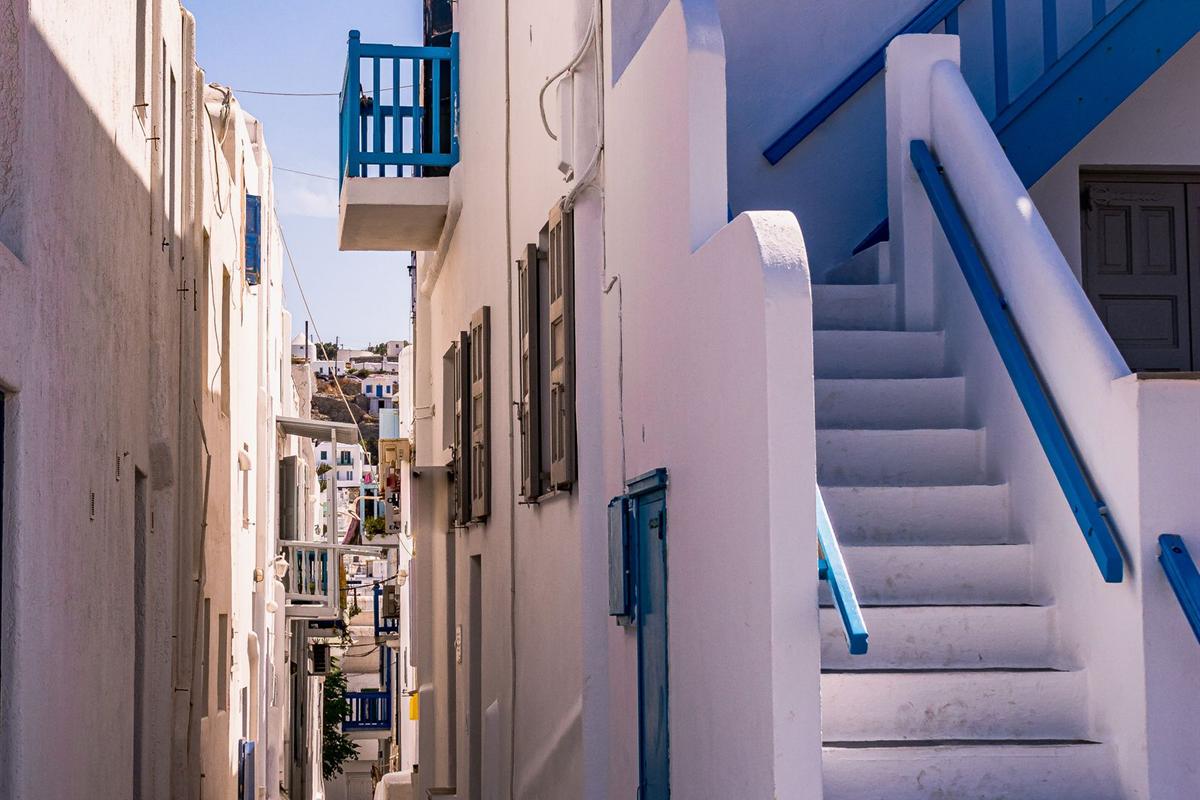
Wikivoyage describes Mykonos Town as a tangle of narrow white lanes, houses and churches. The harbour sits at the centre of a broad bay, and the town clusters about it. Listings for Mykonos tours include a walking tour of the town and a golden hour walk. One travel site adds that the town is easy to explore without a tour.
In the middle of the town stand the Tria Pigadia, three identical wells in a row. Wikipedia says they were built in the eighteenth century. The wells reach down only five to six metres, since the diggers worked in sand and found water close by. The municipal library, with over 8,000 volumes, fills a mansion on Ayia Kyriaki Square.
Churches stand all over the town. Islanders had to put up a church on their plot before building a house, Wikipedia explains. Wikivoyage puts the island’s church count at 400.
The mascot of Mykonos was a great white pelican named Petros. A fisherman found the bird wounded, and locals nursed it back to health. After a car killed Petros, three new pelicans settled around the town, and one took the name. Mykonos tours along the waterfront pass the spot where Wikivoyage says a pelican is sometimes found.
Mykonos island history begins with the Carians, whom Herodotus names as the first inhabitants, according to Wikipedia. Later the Venetians and the Ottomans ruled the island. In the Greek Revolution Mykonos played an important role, led by the heroine Manto Mavrogenous. Her statue stands in the town square that bears her name.
What do Mykonos tours show at Little Venice and the windmills?
Mykonos tours at Little Venice show old fishing houses whose balconies overhang the water. The Kato Mili windmills form a line along a hill. The five-part church of Panagia Paraportiani lies in the same western part of town.
Wikipedia describes rows of fishing houses along the waterfront, with balconies hanging over the sea. The oldest dates to the mid-eighteenth century, and merchants or sea captains owned them. Wikivoyage adds two or three storeys and compares the row to a wall rising over the water.
Basement doors opened straight to the sea and to storage below. Wikipedia says the doors fed a rumour of secret piracy by the owners. Houses of the row now hold bars, cafes, shops and galleries. Wikipedia adds that crowds collect there as the sun goes down. One listing for Mykonos tours is a two-hour sunset cruise to Little Venice.
Wikipedia credits the Venetians with building the windmills in the sixteenth century. They ground flour until the early twentieth century. Kato Mili means lower mills in Greek. The mills face the sea from a hill, where the strong northern winds turn them. Wood and straw cap them, and restored mills now serve as homes.
Wikivoyage notes that the island once produced wheat and bread on a large scale. A walk down the steps from the windmills ends at Little Venice. Camel Rock lies near the windmills, and Wikipedia says its shape is like a camel sitting down. One free walking tour among Mykonos tours promises the history, the traditions, Little Venice and the windmills.
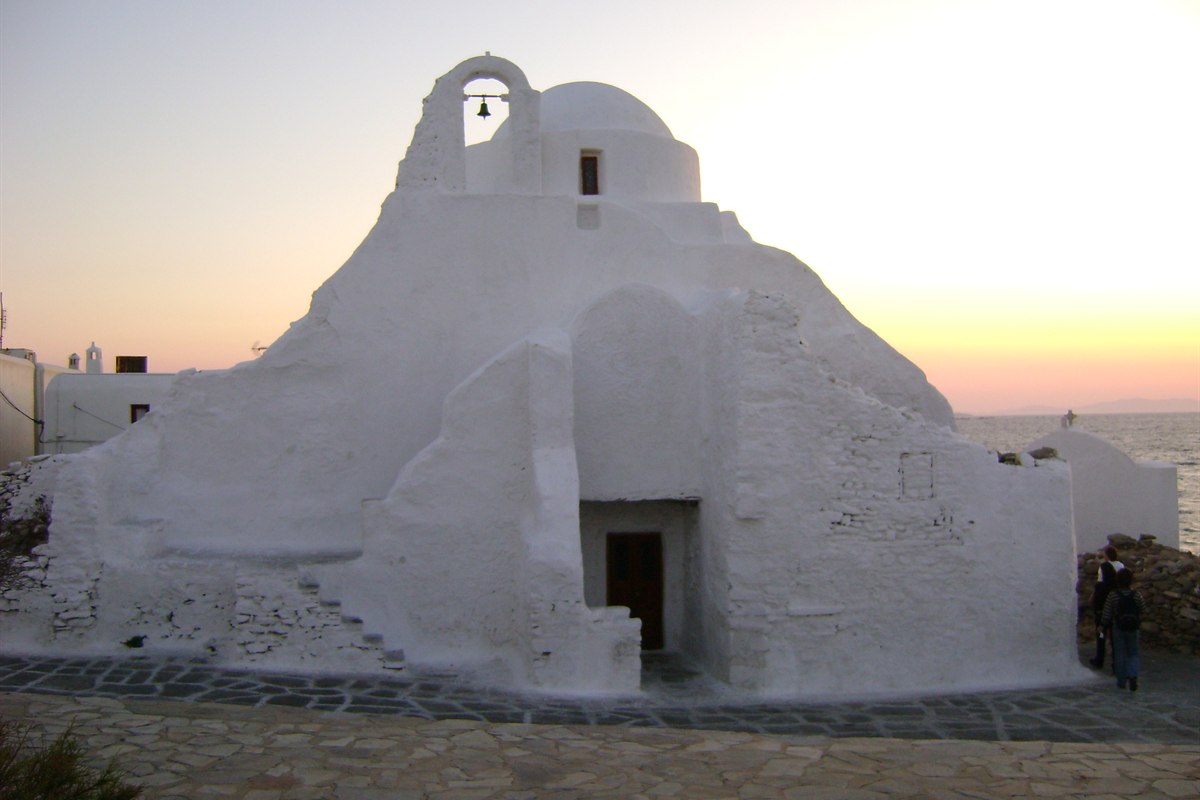
Panagia Paraportiani stands in the Kastro district. Its title honours Our Lady of the Side Gate, named for the gate of the old Kastro. Work began in the fifteenth century and ended in the seventeenth. Four churches form the base, with a fifth built above. A layover listing for Mykonos tours names this church and the windmills.
Which museums do Mykonos tours visit?
Mykonos tours in the listings we read name the Armenistis lighthouse as a stop, not a museum. Wikipedia describes three museums on the island. One holds archaeological finds, one tells of Aegean shipping and one shows folk life inside an old house.
Close to the Old Port you find the Archaeological Museum of Mykonos. Wikipedia says the Greek Archaeological Service set it up in the early twentieth century. The museum was created for objects found in a burial site on Rhenia, a nearby islet. Those objects date back to 425/426 B.C.
Its rooms show sculptures, burial urns and pottery from three eras: Cycladic, Geometric and Classical. The article calls the large Mykonos vase its leading item, and the vase shows the fall of Troy. One listing among Mykonos tours is a sailboat cruise to Delos and Rhenia, the islet behind the museum’s founding.
The Aegean Maritime Museum sits at Tria Pigadia, in the town centre. It opened to the public in the nineteen-eighties, inside a Mykonian building of the nineteenth century. This non-profit museum studies Greek maritime history and the merchant ships of the Aegean Sea. Its garden holds ancient sailors’ marble gravestones collected from Mykonos and Delos.
Wikipedia says it was the first in Greece to restore historic exhibits to working order, as first built. The Folklore Museum fills the oldest house on the island. It shows nineteenth-century furniture, jewellery and ceramics. It also shows models of Mykonian ships and maps. An anchor and cannons that served in the Greek War of Independence stand there too.
The lighthouse is the outing that Mykonos tours do list. Wikipedia places Armenistis Lighthouse at Fanari, which means lantern in Greek, 6.5 kilometres from Chora. A page on Greek lighthouses gives a tower 19 metres tall and a white flash every ten seconds. One listing offers the visit by day or at sunset.
What do Mykonos tours show in Ano Mera?
Mykonos tours show Ano Mera as a village in the island’s middle. The Panagia Tourliani monastery faces its square. Wikipedia places the monastery seven kilometres from Mykonos Town. The listings add a local farm stop and a drive through the countryside.
Wikivoyage describes Ano Mera as a small village at the centre of Mykonos. A tourism page names it the second-largest settlement of Mykonos, behind Mykonos Town. The Mykonos article says the northern bus depot runs a regular service to Ano Mera. One page on Mykonos tours says a tour helps you see Ano Mera without your own transport.
Three listings of Mykonos tours name Ano Mera. One half-day route combines Mykonos Town with a drive through the island, Ano Mera and the monastery. A second visits Ano Mera and a local farm. A third explores the monastery chambers in the village square before a light lunch.
The island tourism site says traditional cafes and tavernas surround the square. The all-white monastery faces it directly. Wikipedia dates the monastery to the sixteenth century. An earlier church had stood there. One tourism page adds an ornate bell tower with three bells.
Mykonos tours that stop at the monastery reach a three-aisled cruciform church with a dome. Wikipedia calls it Byzantine and gives it a towering marble spire. Its icon screen, the iconostasis, runs 10.20 metres and spans all three aisles. Wikipedia notes that the miraculous icon of the Virgin Mary is attributed to Luke the Evangelist.
North of the village, one tourism page places the Paleokastro monastery, a women’s convent of the eighteenth century. Its name comes from a nearby hill with the remains of a medieval castle. Wikivoyage says to follow the signs for Fokos from Ano Mera and that you need your own transport.
What do Mykonos tours show on Delos?
Mykonos tours show the ruins of a sacred island. In Greek myth, Leto bore Apollo and Artemis there. Delos is a World Heritage site, and tours point out its marble lions, mosaic floors, dry lake and Doric temple.
Mykonos tours of Delos begin with a myth. Wikipedia retells how Hera ordered every land to deny shelter to Leto. Leto found Delos, an island not joined to the mainland or attached to the sea floor. She gave birth there to the twins Apollo and Artemis.
The island measures 3.43 square kilometres and lies among the Cyclades. In nineteen-ninety, UNESCO gave Delos a place among its World Heritage sites. The listing names its sacred importance across Ancient Greece and its influence on Greek architecture. Mount Cynthus keeps its pre-Greek name, and a sanctuary of Zeus sits on its top.
The Sacred Way on the site leads past the Terrace of the Lions. Naxian islanders gave Apollo the terrace in a gift dated shortly before 600 BC. Mykonos tours show what is left of the row. It first held nine to twelve snarling marble lions, and only seven remain. One lion now stands over a gate of the Venetian Arsenal.
Among the houses stands the House of Dionysus, a private home of the second century. A floor mosaic of Dionysus riding a panther gives it the name. The sacred lake lies in a circular bowl. Caretakers keep it dry on purpose, to stop the mosquitoes that carry malaria. The position of the lake fixed where later features were built.
The Delos site that Mykonos tours visit also holds the Temple of the Delians, dedicated to Apollo. Wikipedia calls it a classic example of the Doric order. A colossal statue of Apollo, a kouros of the sixth century BC, once stood beside it. Only parts remain, and a hand is kept in the local museum.
How do Mykonos tours reach Delos and Rhenea?
Mykonos tours reach Delos and Rhenea by boat from Mykonos. Wikipedia puts Delos only two kilometres from Mykonos. Listings name sailboats, wooden boats and rigid inflatable boats for the crossing. One trip lasts five hours, and another a full day.
Listings for Mykonos tours show the range of boats. One describes a full-day cruise to Rhenea and Delos on a traditional wooden boat. Another is a sailboat cruise from Mykonos. A third is a five-hour trip on a rigid inflatable boat that visits Mykonos, Delos and Rhenea.
One travel site says a Delos and Rhenea boat trip combines time at the ruins with swimming. Food and drinks come at Rhenea. The site tells readers to check the booking details, because admission and site arrangements vary by departure. It adds that Delos has little shade and gets very hot.
The Delian League took its name from the island. Athens founded the league in 478 BC to keep fighting the Persian Empire. Mykonos tours of Delos reach its official meeting place, where the congresses met in the temple. In 454 BC, Pericles took the common treasury away to Athens.
Rhenea lies just west of Delos. Wikipedia gives it 14 square kilometres, against 3.43 for Delos, and calls it uninhabited today. The southern half of the island served as the necropolis of Delos. The Delos photo gallery shows the ruins of the sacred island. Polycrates, tyrant of Samos, subdued Rhenea and gave it to the Delian Apollo.
In 426 BC, the Athenians cleared every tomb from Delos and forbade burials there. Under the ban, women expecting a child and people near death were carried to Rhenea instead. The Delos article counts only 14 residents at one census and 24 at a later one. Mykonos tours therefore land on an almost empty island.
Which south coast beaches do Mykonos tours visit?
Mykonos tours reach the south coast beaches by bus, by road and by boat. One cruise listing for the southern beaches names Ornos, Psarou, Super Paradise, Platys Gialos and Elia as its stops.
Platys Gialos is the first name to know for south coast Mykonos tours by sea. Wikivoyage describes a long sandy beach, with a frequent bus from Mykonos Town that takes about 15 minutes. The page calls it the starting point for regular boat services to the other southern beaches. It describes small fishing boats converted into tourist transport.
Psarou comes next on the same stretch. Psarrou is a village with a beach, says Wikipedia, 4 km out of Mykonos Town and near Platys Gialos. Wikivoyage says the sandy beach at Ornos slopes gently into the sea, and a bus runs there. The same page lists schools for sea-skiing and surfing at Ornos.
Paradise and Super Paradise lie further along the coast. Wikivoyage says a bus or the regular boat from Platys Gialos reaches Paradise, the second stop. Super Paradise has no bus, but the regular boat serves it. By car, the road from town is difficult and winding. Boat-based Mykonos tours match this setup.
Wikivoyage counts Elia among the larger beaches on Mykonos, with sunbeds, umbrellas and water sports. Wikipedia says the northern bus depot serves Elia too. Agrari is calmer and less popular than Elia, and boats from Platys Gialos stop there if enough passengers ask. Paraga has rocks in the water, but also places where you can enter over sand.
Start points vary by outing, says one travel site. Mykonos tours depart from the Old Port, the new port in Tourlos, Ornos or a rural property. The same site describes a free coastal walk from Platis Gialos past Agia Anna to Paraga. A water taxi carries on east from Paraga.
Which north and east coast beaches do Mykonos tours visit?
Mykonos tours reach the east coast beaches after a stop at Ano Mera. One half-day listing names Kalo Livadi and Kalafatis. Wikivoyage says Agios Sostis, Panormos and Fokos on the north coast need your own transport.
Kalo Livadi on the east coast is a quiet, long stretch of sandy beach, says Wikivoyage. The page adds that your own transport is the better way, though a bus runs there. One half-day listing leaves Ano Mera for Kalo Livadi, Kalafatis and Agia Anna. So Mykonos tours by road can include it.
Wikivoyage calls Kalafatis a very large, less developed beach and a favourite with windsurfers because of the offshore breeze. The bus from Mykonos Town runs infrequently. One catamaran listing boards guests at Kalafatis beach and sails toward Rhenia and Delos.
Wikipedia places sandy Agios Stefanos beside Tourlos, the island’s new harbour, 3.5 km from Mykonos Town. A taxi, a private vehicle or a regular bus reaches it. Restaurants and cafes stand close by. One listing pairs Little Venice with Agios Stefanos on a daily cruise, which suits Mykonos tours by boat.
Wikivoyage calls Agios Sostis one of the more remote beaches, with no rental loungers or umbrellas. Panormos is long and faces east onto Panormos Bay. Fokos is small, with coarse sand, and tour pages list a hike and a bike ride there. Without a tour, all three need your own transport, so readers can look at car hire.
Ftelia faces north, so the strong summer northern winds hit it, says Wikivoyage. Wikipedia says the meltemi belongs to the etesians. These north winds sweep the Aegean, stay dry and blow strongly until mid-September. One travel site warns that strong winds can cancel or change boat itineraries on Mykonos tours.
Which island trips do Mykonos tours include?
Boat-based Mykonos tours sail to Delos and along the south coast. On a map of the Cyclades, Wikipedia shows Mykonos among four neighbours: Tinos, Syros, Paros and Naxos. Each of the four has a different town and a different landmark.
Tinos occupies a spot near the archipelago’s geographic middle and spans about 194 square kilometres. Wikipedia gives the ferry time between Tinos and Mykonos as 35 minutes. It says Tinos has three ports: one for passenger speedboats and two for ferries. The church of Panagia Evangelistria draws a yearly pilgrimage on 15 August.
Syros holds Ermoupoli, the capital of the Cyclades. Wikipedia says houses and neoclassical buildings climb a natural bowl above its harbour. It puts Syros 144 kilometres south-east of Athens. From the cathedral of Ano Syros, visitors see Mykonos, Tinos, Paros, Andros, Delos and Naxos.
Ferry links matter once Mykonos tours leave the island. Parikia, the harbour of Paros, is a busy junction for ferry and catamaran lines, says Wikipedia. It lists Mykonos among the islands Parikia serves, next to Naxos and Ios. Wikipedia says only a narrow channel divides Paros from its eastern neighbour, Naxos.
No island in the Cyclades is larger than Naxos. The group’s highest peak, Mount Zeus, also stands there. Wikipedia lists a local cheese, potatoes and thyme honey among its products. Its capital, Chora, is also called Naxos City. Readers who prefer a ship to a ferry can look at Greek islands cruises.
Boat days on Mykonos tours take different shapes in the listings. One lists a south coast cruise on a traditional caique with lunch. A second lists a sunset cruise along the coast. A third runs all day on a wooden boat and includes a barbecue on board. More sea trips sit on the tours and cruises page.
What do Mykonos tours show about food and island life?
Food on Mykonos tours means a spicy local cheese, a cured pork and farm visits. Wikipedia lists kopanisti and louza among the island’s specialities, and tour pages add cooking classes, wine tastings and farm stops.
Fish is a regular part of island cooking, says Wikipedia. It names the Cyclades as one of the country’s regional cuisines. Syros also gave Greece its first printed cookbook, in the eighteen-twenties, the article adds. The Mykonos article lists desserts such as amygdalota and melopita.
Wikipedia describes kopanisti as a sharp, salty cheese that holds a protected designation of origin. Cheesemakers on Mykonos have produced it for over 300 years. Repeated kneading during ripening gives it a peppery taste, and ripening takes 30 to 40 days. One page about Mykonos tours lists a hands-on cheese-making class at a local dairy.
Louza comes next. Wikipedia’s article on lountza calls louza preserved pork loin. It names Mykonos, Syros, Andros and Tinos as northern Cyclades islands where louza is found. The kopanisti article describes mostra as a dish of dry bread topped with the cheese, tomato pieces and olive oil. Islanders also pair the cheese with ouzo as a meze, it adds.
Farm stops on Mykonos tours show how work on the land runs. One listing describes organic and animal farming, followed by a barbecue. Another describes an organic vineyard in the Maou area, where wine comes with local cheese, bread and rusks. A third has guests cook spanakopita and stuffed tomatoes in a Mykonian home.
The countryside on Mykonos tours is rocky. Wikipedia describes Mykonos as mostly granite, with stretches worn down by wind. On neighbouring Tinos, it says, the hills are terraced with stone walls and about 1,000 dovecotes stand. One page also lists a mosaic workshop in a Mykonos Town garden. Its teacher spent 10 years working on Delos.
When do Mykonos tours run through the year?
One booking site ties Mykonos tours to the warm season that stretches from late spring into early autumn. Summers are dry and sunny. Wikivoyage calls July and August extremely crowded, and those two months also bring the meltemi wind at its highest frequency.
Wikipedia gives Mykonos a hot semi-arid climate, citing the National Observatory of Athens. The rainy season, it says, runs from October to March. The average summer high is 27.0 °C, and the average summer night is over 24 °C. Winter highs average around 15 °C. Mykonos tours therefore meet a dry summer and a mild, wetter winter.
The etesian wind, or meltemi, comes down from the north over the Aegean Sea. Wikipedia calls it strong and dry. It dates the wind season from the last weeks of spring until mid-September. The Climate of Greece article puts the peak of meltemi days in July and August. Mykonos tours in those months meet the wind in full force.
Wikipedia adds that it arrives with no warning under clear skies, at times reaching Beaufort force 7 or 8. Island ferries and yachts cannot always sail then. One travel site says strong winds can cancel or change a boat trip, so it advises booking early. Boat days on Mykonos tours therefore depend on the wind.
Wikivoyage suggests visiting from late spring into June, or from September to mid-October. It calls March and April quieter, with a number of restaurants and shops closed until the new season starts. A transfer company’s page says the airport is busy from April until the end of October. The same booking site calls June to September especially appealing.
Time of day matters too. Listings include a sunset cruise along the coast and a two-hour sunset cruise named for Little Venice. One listing says a lighthouse tour runs by day or at sunset. One travel site tells readers to book early for July and August. Small-group boat trips and private Mykonos tours can sell out.
Where do travellers stay for Mykonos tours?
Travellers who book Mykonos tours stay in Mykonos Town or in a beach area on the south or east coast. Wikivoyage says lodging clusters in and around the town and near the beaches.
The island’s largest town, also named Chora, sits on the west coast, Wikipedia says. Nearby on that coast are Megali Ammos, one kilometre south, and Tourlos, two kilometres north, where the new port lies. Wikipedia places the Agios Stefanos beach next to Tourlos, 3.5 kilometres from the town.
Further out, Wikivoyage measures the road from the town. Ornos is 3 kilometres south, and Wikipedia puts Psarou 4 kilometres out, close to Platis Gialos. Wikivoyage gives Platis Gialos and Paraga 6 kilometres each, with a regular boat from Platis Gialos to Paraga. The list below links the area pages for travellers who plan Mykonos tours from one base.
- Start with Mykonos Town for stays on the west coast, close to the old port.
- At Platis Gialos, a south coast resort, small boats leave for the southern beaches.
- Walking east along the coast from Platis Gialos leads to Paraga, which has its own page.
- Agrari lies on the south coast, eight kilometres from the town.
- Travellers heading for the south coast beach of Elia can open its stay page here.
- On the east coast, Kalo Livadi sits two kilometres from the village of Ano Mera.
- According to Wikivoyage, Kalafatis lies twelve kilometres from the town on the east coast.
Wikipedia counts three main bus depots. Buses from the southern depot, at the town entrance, serve Paraga, Psarou, Plati Gialos, Agios Yannis, Ornos and Paradise Beach. Above the old port stands the northern depot, with buses to Ano Mera, Elia and Kalafatis. Each area page hangs from the page on hotels on Mykonos.
Stays are also grouped by class and by type. Wikivoyage says the hotel season ends in late October and restarts in the spring. A traveller who joins Mykonos tours in the cold months checks that a stay is open. The second list links the class pages and the type pages.
- Open the page on deluxe hotels on Mykonos to see that class on its own.
- A second page sorts first-class hotels on Mykonos from the other classes.
- Next in the classes come B class hotels on Mykonos, listed on their own page.
- The C class hotels on Mykonos page closes the run of hotel classes.
- A separate page lists apartments and studios on Mykonos for travellers who skip the hotel classes.
- The last page type covers villas on Mykonos as a group of their own.
The same travel site that lists the start points of Mykonos tours also gives advice for the stay itself. It says to choose hotel transfers when they are offered. A traveller can check the start point of an outing before choosing the base. The full set of stays sits on the Mykonos hotels page.
What else do travellers ask about Mykonos tours?
How do you say Mykonos, and what other names did it have?
Wikipedia spells the Greek name Μύκονος and shows the sound as [ˈmikonos]. Both the accent in the Greek spelling and the stress mark in the sound fall on the first syllable. The article calls the islanders Mykonians.
Venice took direct control of the island in thirteen-ninety, Wikipedia says. In fifteen thirty-seven an Ottoman fleet settled there, and Ottoman rule lasted almost three centuries. In Turkish, the article adds, the island was called Mukene during that period.
What does Greek myth say about the rocks of Mykonos?
Wikipedia says Greek myth places the Gigantomachy on the island. This was the great war between Zeus and the Giants. Heracles drew the invincible giants away from the shelter of Mount Olympus and killed them there.
The myth also accounts for the large rocks all over the island. Wikipedia says the tale makes them the petrified bodies of the giants. It sits in the article’s section on mythology. That section names Apollo as the grandfather of the island’s first ruler.
Can travellers dive or try water sports on Mykonos tours?
One listing site offers dives for certified divers among its Mykonos tours: wreck dives, cavern dives and reef dives. It names Paradise Reef and Grouper Rocks as the popular dive sites. Advanced divers can visit a shipwreck of the nineteen-thirties near a reef, it adds, conditions permitting.
Other listings cover other water sports. One page lists a wakeboard lesson, a sport in which the rider tries aerial tricks. A second page lists a kayak rental for exploring the clear waters of the island at leisure.
Which vehicles do tours on Mykonos use?
Mykonos tours on land use more than a bus or a car. One listing describes a private open-air e-TUK tour with 360-degree views. Another describes a guided sightseeing tour in which guests drive their own 4×4 jeep around the island.
Among the Mykonos tours listed by one site is a helicopter flight of 45 minutes. The page says it shows the town, the coastline and beaches such as Psarou, Paraga and Super Paradise. It adds that passengers can take photos of the Delos archaeological site.
How tight can a cruise passenger’s schedule be for Mykonos tours?
One travel site tells cruise passengers to allow extra time for Mykonos tours. It lists three risks to a tight schedule: tendering, port crowds and transport delays. It warns against tours that start soon after arrival or end close to the time passengers must be back aboard.
The same site says a private tour gives more control over timing. It tells passengers to leave a large buffer of time before the return to the ship. Passengers with questions about timing can ask us about a trip to Mykonos.