
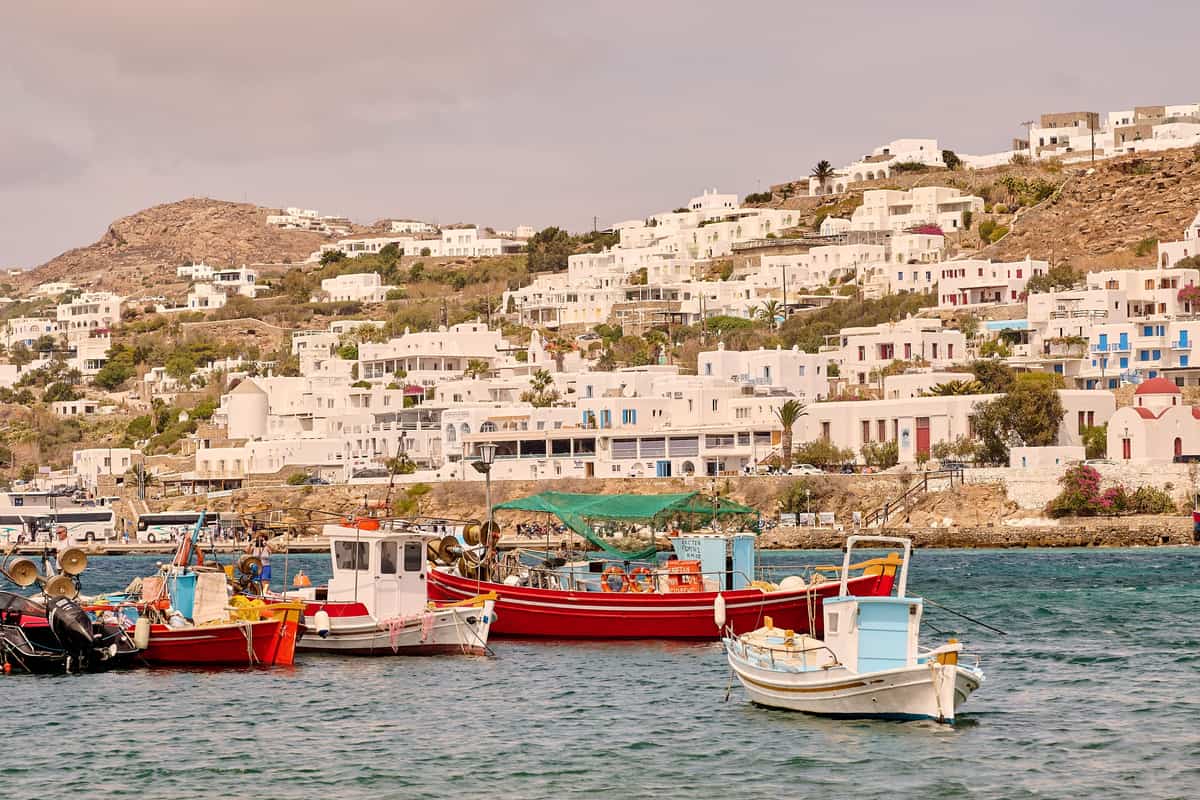
Mykonos travel tips on this page cover the practical side of a visit to the island. Boat days and island tours from Mykonos are collected on our tours in Greece home page.
The sections below cover arriving, getting around, weather, the sea, rules, food, safety and a day plan. The last part answers questions. Each section answers one plain question, so a visitor can read only the part needed.
Which Mykonos travel tips cover arriving by air and by sea?
Mykonos travel tips begin with two entrances to the island: the sky and the sea. The airport opened for flights in nineteen seventy-one, and it sits quite close to the town. Ferries and high-speed boats sail from Piraeus and Rafina into one of two harbours, which are described further below.
These Mykonos travel tips meet four flight times from Athens. The Mykonos article says twenty-five minutes. The Wikivoyage article says thirty-five, and visitgreece says forty-five. The older page of this site gave thirty minutes. The sources disagree. Timetables vary between seasons, so check the current flights before planning. Visitgreece also adds one hour and ten minutes from Thessaloniki.
The airport sits close to the town, yet the sources give different figures. The Mykonos article says about four kilometres to the southeast. The airport article names three and a half kilometres to Chora. Wikivoyage says four kilometres. Wikivoyage also says charter flights come direct from European airports between late spring and October. Mykonos tours covers the island itself.
Sea services also run from Piraeus and Rafina, and these Mykonos travel tips repeat only the Wikivoyage durations. The Piraeus crossing takes between three and a half hours and five hours and fifteen minutes. The Rafina crossing takes between two hours and ten minutes and five hours and thirty minutes. The boat type matters. Check the current timetable.
Mykonos has a pair of harbours, and the old one sits in Mykonos Town. Wikivoyage puts the new one at Tourlos, north of Mykonos Town by about two kilometres. It places the main part of the ferries at the new harbour and the catamarans at the old harbour. Check the harbour first. Tourlos is covered under Mykonos Tourlos beach hotels.
Wikivoyage says nearly all cruise ships tie up at the new harbour. It also lists boats to Syros, Andros, Tinos and Paros more than once a day. Strong wind can cancel the irregular winter sailings. A UK government page, quoted in these Mykonos travel tips, says strikes can disturb buses, ferries and air travel. They come at short notice.
What do these Mykonos travel tips say about getting around the island?
These Mykonos travel tips name the island bus service, taxis, bicycles and boats as ways to move around. Two bus stations stand apart in the town, with no bus linking them. About thirty taxis serve the whole island, and Wikivoyage says motor cars are kept out of the town itself.
Mykonos Town has a northern and a southern bus station, says the Wikivoyage article, on different sides of the town. No bus joins them. Walking between the two stations through the streets takes roughly twenty minutes. A journey that uses both of the stations includes that walk. These Mykonos travel tips treat it as part of the plan.
These Mykonos travel tips repeat that, per Wikivoyage, the southern station serves Platys Gialos, Paraga, Ornos and Agios Ioannis. The northern station serves Kalafatis, Elia and Ano Mera. The article adds that timetables are posted at the stations and revised roughly every fortnight. Buses are more frequent in high season. Check the current schedule before any trip you plan.
Wikivoyage names three places to buy a bus ticket. They are the driver, a vending machine that takes coins, and kiosks or mini-markets. No return ticket exists, so a return trip needs two single tickets. The driver tears the ticket to validate it. A check can follow a short time later. These Mykonos travel tips give no amount.
Wikivoyage counts about thirty taxis on the whole island. Their main waiting place is Manto Square, beside the harbour. In the evening an available taxi is hard to find. A taxi, says Wikipedia, is hired as a point-to-point ride and serves one hiring party rather than a shared group. Rules differ by country. The queue can be long.
Wikivoyage reports a ban on motor cars inside the town. Parking areas sit on the town outskirts, and in the peak season a space is hard to find. A bicycle parks almost anywhere and heats up less than a car standing in the sun. These Mykonos travel tips also note that the island is twelve to fifteen kilometres long.
What do the Mykonos travel tips say about the climate and the sea month by month?
Mykonos travel tips give a hot, dry climate. The island has a number of Mediterranean traits, and the sea beside it shapes the weather. The Mykonos article lists a winter day high near fifteen degrees Celsius and a summer high near twenty-seven. No source of this page lists sea warmth by month.
Mykonos travel tips begin with the climate class. The Mykonos article cites the National Observatory of Athens. By that body the island falls in class BSh, which stands for hot semi-arid. The article notes a number of Mediterranean traits, class Csa. Both codes belong to the Köppen system. It adds that the Aegean Sea strongly influences the weather.
The Mykonos article gives two sets of average numbers. Winter days reach about fifteen degrees Celsius, and summer days reach about twenty-seven. Winter nights fall to eleven degrees, while summer nights stay above twenty-four. The sea moderates the heat, and the cool seasonal meltemi helps. The article says summer days feel pleasant: cool for the season, dry and sunny.
Mykonos travel tips quote Wikivoyage on the beach months. Warm and sunny weather runs from midway through late spring until midway through October, and that suits the sand. This is a span of about five months. The source gives no sea temperature for any month. A careful visitor checks the current weather before a swim in the sea.
Wikivoyage names an early season, which starts midway through late spring and ends with June. It names a post-season too, from September until midway through October. July and August are extremely crowded. March and April have fewer restaurants, shops and sea routes open. The Mykonos photo gallery is a separate page with pictures of the island and its places.
Mykonos travel tips can be read as a short list for the year. The Mykonos article calls winters mild, with sunshine on a number of days even in midwinter. Summers are dry. According to the same source, the sea softens the heat. This page names seasons only, because the sources give no sea figures for single calendar months.
Which Mykonos travel tips cover the meltemi and the sea wind?
Mykonos travel tips treat the meltemi as a dry wind from the north that blows across the Aegean. Wikipedia places the Etesian winds between midway through late spring and midway through September. Wikivoyage reports that beaches along the southern side of the island lie sheltered from the prevailing north wind.
Wikipedia lists the Etesian winds among the strong, dry northern winds that cross the Aegean. Mykonos travel tips use the local name meltemi for these winds. They blow in spells, from about midway through late spring until about midway through September. That span covers about four months. So the wind marks the summer season in the Aegean islands.
Wikipedia adds that the winds peak during the afternoon and can fade after dark. They can also continue for days with no pause. Wikivoyage says the southern bus station serves Ornos, a small place on the south coast of Mykonos. Readers who want to see that place on its own can also open the Mykonos Ornos beach hotels page.
Mykonos travel tips carry a warning about wind and boats. Wikipedia adds that the Etesian winds can rise on a clear day without any warning. The force can climb to seven or eight. Yachts and ferries between islands cannot sail then. Wikivoyage calls weather cancellations rare, only a small group of days across a summer.
Wikivoyage describes a steady wind over the Cyclades, named meltemi, through the height of summer. The same source says this wind mitigates the heat. The Mykonos article calls the meltemi seasonal and cool, like that of the other Cyclades islands. Mykonos travel tips read the wind as a cooling effect and a point to check before a beach day.
Visitgreece uses the name island of the winds and puts Mykonos in the heart of the Cyclades. The Mykonos article also lists the same name as a nickname. These Mykonos travel tips quote the name once, as a statement of those two sources. For the wind on a given day, check the current weather forecast before each trip.
Which Mykonos travel tips cover beaches as a kind and the rules of the sea?
Mykonos travel tips on beaches cover four plain things. These are the gear on a beach, sellers on the sand, the risk of drowning and the rip current. A lifeguard is explained as a role only. The sources give kinds of beaches and safety rules, not a ranking of single beaches.
Mykonos travel tips describe the beaches by kind. The Wikivoyage article says beaches are equipped with deck chairs and parasols, and a taverna or restaurant stands nearby. Equipment differs from beach to beach and also from one week to the next. This page states no amount, so ask at the beach itself about the chairs on that day.
On the more popular beaches, sellers walk along the sand. The Wikivoyage article says they come right up to a sunbather, which can be somewhat annoying. Its advice is simple: say a firm no, thank you, and the seller moves on. The article says the sellers are easily pushed away in this manner. It names no single beach.
These Mykonos travel tips repeat the government advice on drowning. The government page says drownings happen in the Greek sea every year. An adult must stay close enough to touch a small child. For the position of Paraga, a beach the bus from the southern station serves, see Mykonos Paraga beach hotels. Do not dive into unknown water.
Wikipedia names the rip current a strong and narrow flow of water that leaves the shore through the breaking waves. It calls the rip current the leading cause of lifeguard rescues at beaches. A swimmer who feels a strong pull away from shore can ask a lifeguard. Local advice on the sea that day is the safe step.
These Mykonos travel tips use the Wikipedia definition of a lifeguard. A lifeguard supervises the safety and rescue of swimmers. The priority is that no harm comes to the users of the area. No source of this page says which Mykonos beaches have a lifeguard. Check for a lifeguard, flags and signs on the beach itself before a swim.
What do these Mykonos travel tips say about the town on foot and its museums?
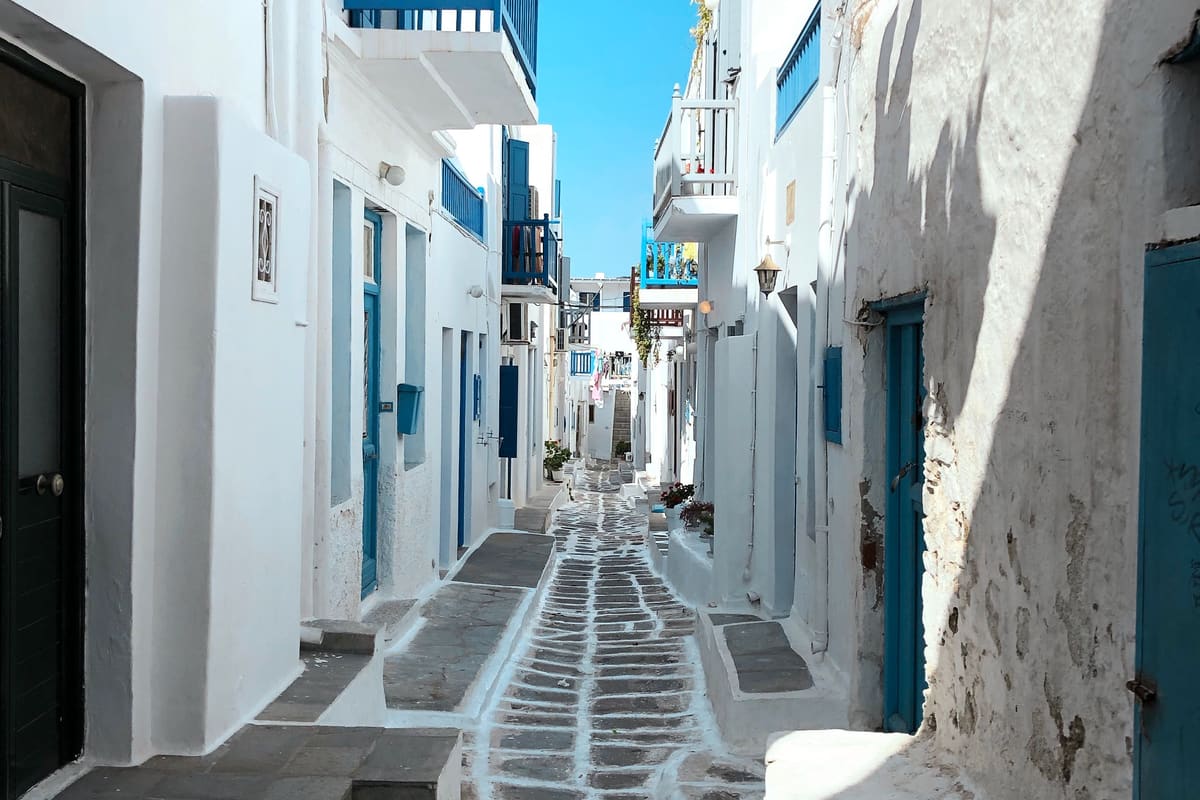
These Mykonos travel tips describe Chora as a town to walk. Its lanes are tiny and whitewashed, and Little Venice has balconies over the sea. The Paraportiani church has five chapels. The Archaeological Museum and the Aegean Maritime Museum are plain facts of the town, with dates from their own articles.
Wikivoyage describes Chora, the town, as a tangle of small whitewashed lanes. Houses and churches stand close together around the harbour. The lanes hold shops, galleries, cafes and bars. The article adds that the traditional Cycladic style has remained. These Mykonos travel tips treat the town as a place for walking. The town lies on the west coast.
In Little Venice, balconies hang over the water from a line of old houses. The Mykonos article gives the mid-eighteenth century for the earliest one. Merchants and captains owned the houses first, and a number are now bars and cafes, as the article notes. These Mykonos travel tips leave the long story of the island to Mykonos history.
Work on the Panagia Paraportiani church started in the fifteenth century; the seventeenth century saw it completed. It has one chapel above and four on the ground floor. The name refers to a side gate. Wikivoyage says only one ground-floor chapel is open to visitors. These Mykonos travel tips give no hours; check the current page of the church.
The Archaeological Museum of Mykonos dates from nineteen hundred and five, says the Mykonos article. Its finds come from a purification pit of the fifth century BC. The pit came to light in eighteen ninety eight on the islet of Rheneia. The museum lies near the old port of the town. Check the current page of the museum.
Nineteen eighty three is the founding year of the Aegean Maritime Museum, and its doors opened two years later. Its home is a house from the nineteenth century. It stands at Tria Pigadia, within the town centre. The museum studies the maritime history of the Greeks. These Mykonos travel tips give no opening hours for the museum itself.
Which Mykonos travel tips cover money, language and local customs?
Mykonos travel tips on money name the local currency, split into one hundred cents. Cash machines stand throughout the town. Greek is the official language, and visitors manage in English. Tipping differs by country, and the police act against rowdy or indecent behaviour. Check each point below against the current rules.
The European Union has twenty-seven member states, and twenty-one of them use one shared currency. Its unit is split into one hundred cents. These Mykonos travel tips name no amount, because amounts change and no source here fixes one. A ticket machine for the island bus takes coins, so a little small change is useful to carry along.
The Wikivoyage article says cash machines are available throughout the town. It adds that a concentration of them stands near the southern bus station. A cash machine lets a bank customer withdraw cash and check balances without direct contact with bank staff. This page names no bank, and it gives no opening hour of any business or office.
The Wikivoyage article names Greek as the national tongue, and visitors communicate mainly in English without trouble. Wikipedia says Greek has the longest documented history of any Indo-European language, at least three thousand four hundred years. People have written it in its own alphabet for about two thousand eight hundred years. These Mykonos travel tips cite both sources.
Tipping is a sum given to a service worker on top of the bill. The custom varies by country, and in a number of places a tip is not expected. No source here gives a Mykonos tipping rule, so ask the property or the venue. Chora, the capital, sits on the west coast of Mykonos; see Mykonos Town hotels.
The Greek police will arrest a person for behaviour they find rowdy or indecent, especially where excessive drinking is involved. The UK government safety page also warns about fancy dress. A number of costumes can count as offensive under the decency laws. These Mykonos travel tips therefore ask for calm conduct everywhere in the town and at the port.
What do the Mykonos travel tips say about sun, heat and traffic safety?
Sun and traffic are the main risks named by the sources. The government page advises checking forecasts, avoiding the peak hours of sun, and packing a hat, sunscreen and water. Wikivoyage names dangerous and drunk driving as the one problem. These Mykonos travel tips stress care on narrow roads and quads.
The government page gives hiking advice that fits any day in the sun. It asks readers to check forecasts and to stay out of the peak hours of sun. Its advice is to pack a hat, sunscreen and water. It says trails can lack shade. These Mykonos travel tips add no further sun rule of their own to it.
Sunscreen protects the skin against sunburn and skin cancer. The Wikipedia article says it is sold as lotion, spray, gel, stick and powder. It does not say which form suits a beach day on Mykonos, so the choice is left to the reader. The sources name no brand, and this page names none either, for the same reason.
Wikivoyage says the roads of the island are sometimes narrow with sudden twists. A motorbike or a quad needs driving experience and extra care. These Mykonos travel tips note that the northern bus station serves Elia. A bus is one way to avoid those roads. The bay of Elia is the bus stop here; see Mykonos Elia beach hotels.
The government page calls drink-driving a serious offence. It also says drivers fail to stop at crossings every time, though they are meant to. A walker crosses with care and uses a crossing where one exists. These Mykonos travel tips give the same advice to every walker. It holds on every road at any hour of the day.
Accidents on quad bikes cause serious injury every year, the government page says. Helmets are required for drivers and passengers. The page calls quad biking an extreme sport, which a number of insurance policies exclude. An all-terrain vehicle has handlebars, a seat the rider straddles and tyres of low pressure. These Mykonos travel tips advise reading the insurance details.
Which Mykonos travel tips cover camping, drones, cliffs and fire rules?
Mykonos travel tips on rules start with camping, fire, drones and cliffs. Camping in tents and parking camper vans are banned at beaches, seashores, forest edges and archaeological sites. Only licensed campsites are allowed there. No cited page states a drone rule or a cliff rule, so check the current official pages.
Mykonos travel tips on camping rest on a rule from the UK government safety page. Greece bans camping in tents and the parking of trailers, camper vans and motorhomes in general public areas. The ban reaches beaches, seashores, archaeological sites and the borders of public forests. Licensed campsites are the way to avoid fines, says the same page.
The Wikivoyage article lists two campgrounds on the island, and both stand at popular beaches. It adds that public transport or a boat reaches those beaches. No names are written here. Ask the property about its current opening state and its rules before a trip. A tent pitched anywhere else on the shore falls under the ban described above.
Mykonos travel tips on fire come from the same government page. The risk of wildfires is high from April to October. Do not light fires, because it is dangerous and illegal. Leave no litter, especially glass, which can start fires. The page on Mykonos accommodation covers the lodging kinds, so these tips stop at the rules of the island.
The government page says a fire started by accident is still a crime under Greek law. Wikipedia defines a wildfire as an unplanned and uncontrolled fire in combustible vegetation. Mykonos travel tips add the emergency number for a fire or any danger: call 112. The same number serves the emergency services across the country, as the government page notes.
A drone is an unmanned aerial vehicle. It flies with no pilot on board, by remote control or on its own. Wikipedia gives that simple definition. No cited page states a Greek or Mykonos drone rule. Check the current page of the civil aviation authority. Mykonos travel tips also give no cliff rule, because no cited page states one.
What do these Mykonos travel tips say about food and drink on the island?
These Mykonos travel tips describe food and drink as plain facts. Wine, olive oil and wheat are the base of Greek cooking. The island has two local specialities, kopanisti and louza. Gyros and souvlaki shops are all over the town. Restaurants facing the sea tend to charge more because of the view.
Mykonos travel tips on food start with the wider Greek kitchen. In its cuisine article, Wikipedia calls wine, olive oil and wheat the three pillars of Greek cuisine. Vegetables, grains, fish and meat join them, along with cheeses, herbs, lemon juice and olives. This is a general fact about Greece, not a claim about one island or one kitchen.
Wikipedia names two local specialities in its cuisine list. Kopanisti Mykonou is a cheese of the island. Louza is similar to the Cypriot lountza. Ask at the table what is served that day. Wikivoyage lists Kalafatis as one of three stops of the town’s northern bus station. The page on Mykonos Kalafatis beach hotels shows where it lies.
Mykonos travel tips list the quick food of the town. Gyros and souvlaki shops and creperies stand all over Mykonos Town. Wikivoyage says a meal there takes little money, and no amount is written here. Almost all restaurants post their menus at the entrance. Walk past and read the menu first, then decide where to sit down and eat.
Restaurants facing the harbour or the sea, especially in Little Venice, tend to charge more, says Wikivoyage. The reason given is the view, since a guest also pays for the place. Restaurants in the streets deeper in the town tend to charge less. Drinking out can also be a large spend, the same article says, with no amount given.
Mykonos travel tips also name the shops that sell food. Wikivoyage lists kiosks, bakeries, butchers, green grocers, liquor stores, mini-markets and small supermarkets. Bigger supermarkets stand out of town. These are kinds of shops only, and no shop is named here. The article gives no opening times, so ask at the shop itself before walking there from the town.
What do the Mykonos travel tips say about nightlife as a plain fact of the island?
Mykonos travel tips describe the island as known for an intense nightlife, with bars and nightclubs in great number. The Wikivoyage article says so directly. The Mykonos article adds that in the summer months the island works as an upscale party and nightlife destination. Nightlife is part of island life.
The Wikivoyage article states that Mykonos is known for an intense nightlife. It points to its vast count of bars and nightclubs as proof. Nightlife on the island focuses mainly on bars, and a number of notable dance clubs are found there too. These Mykonos travel tips report only what the sources state. They give no ranking at all.
The Mykonos article calls the island a destination for upscale nights out and parties in the summer months. Those words come from its economy section. The article also names tourism as a major industry. This is a plain statement of how the island lives through the summer. No single bar, club or place is rated anywhere on this page.
The Wikivoyage article says Mykonos welcomes gay visitors and has a lively gay nightlife. It adds that the island ranks among the popular holiday destinations in Europe for gay travellers. These Mykonos travel tips repeat that as a fact. Wikivoyage also calls Agrari calmer than its neighbour Elia, and Mykonos Agrari beach hotels covers that beach as a place.
One open-air dance club on the island runs only in July and August, the busy months. That is what the Wikivoyage article states. The article names the club, but this page does not. A club that runs only in two months is a seasonal place. Check the current page of any venue for its open months and days.
A favourite activity in Little Venice, says the Wikivoyage article, is a cocktail on the seashore while the sun sets. The Mykonos article says visitors come together at Little Venice as the sun goes down. These Mykonos travel tips keep this as part of the island’s evening life. Nothing here tells a reader which bar to choose, or when.
Which Mykonos travel tips cover accessibility and the paths for guests with limited mobility?
These Mykonos travel tips treat accessibility as a matter of paths. Accessible tourism means destinations that suit all people, including people with disabilities, children and older travellers. The sources give no route without steps on Mykonos. This section states only what they say and sends the reader to the island’s own pages.
Accessible tourism is the endeavour to make tourist destinations, products and services accessible to all people. The aim holds for any bodily or mental limit, any disability and any age. Wikipedia names children and seniors in the same group. These Mykonos travel tips use that meaning. A step or a slope matters to every person in that group.
A pedestrian zone restricts an area to people on foot and to human-powered transport. Wikipedia gives its aim as better accessibility and mobility for pedestrians. Wikivoyage describes a walk of about ten minutes downhill from the hilltop stop of the Elia bus to Kalo Livadi. Mykonos Kalo Livadi hotels covers that place, which lies ten kilometres from the town.
Wikivoyage says a staircase joins the windmill area with the Little Venice district. Stairs matter to anyone who cannot climb or descend them easily. These Mykonos travel tips therefore state the fact plainly. Wikivoyage places the windmills on the western side of town, and Little Venice at its western edge. Check the island’s own pages before the visit.
Wikivoyage gives the way on foot from the airport into town as about two and a half kilometres. It runs largely on a pavement and largely uphill towards the airport. These Mykonos travel tips note both facts, because a slope and a pavement matter on a long walk. The airport article also lists a taxi outside the terminal.
The sources do not give routes without steps on Mykonos, and these Mykonos travel tips do not invent any. Check the island’s own pages for that matter. One more plain fact comes from the government safety page. A phone set to allow emergency alerts receives them when an event happens near it. Always keep the phone with you there.
What is a day plan in these Mykonos travel tips?
A day plan in these Mykonos travel tips starts at the old port. Wikivoyage calls the way from that port into town easy and brief. From there the day can go to the boats for Delos, or a day trip to Tinos, Syros or Paros. No organised tour is needed here, says Wikivoyage.
The first step in a day plan is to know where the day starts. These Mykonos travel tips start at the old port in town. Wikivoyage describes a gentle stroll along the shore to the town. Wikivoyage also notes that the high-speed catamarans still use this old port. The rest of the day grows from there, step by step.
Delos is a small uninhabited island close to Mykonos and a UNESCO world heritage area. Wikivoyage places the departure pier at the western edge of the harbour. The article puts the sea trip at roughly thirty minutes. The excavations open early, so the article advises an early start. Check the current page of the site for its opening details.
These Mykonos travel tips keep Delos to one sentence, because the page on Delos island tells that story in full. In this day plan Delos is only one possible stop and not the whole day. The other stops are the old port and the town. Wikivoyage links those two places by a brief walk beside the sea, as noted.
These Mykonos travel tips name day trips to Tinos, Syros and Paros. Wikivoyage tells readers to check the ferry schedules. Boats connect these islands with Mykonos more than once a day in the route list. The schedules change by season. A day trip therefore needs a look at the current timetable first. The day is built around that.
Wikivoyage says the island is easy to explore without help, and there is no real need for an organised tour. For that reason these Mykonos travel tips present the day plan as a frame and not a schedule. A reader fills it with the town, the old port and the boats, and keeps room for the changing weather.
Which Mykonos travel tips cover packing and the seasons of the year?
Wikivoyage puts the wet weather between October and April, while hardly any rain falls in the summer. These Mykonos travel tips find no packing list in any source, so they give season facts only. The ferries, the hotels and the crowds all change with the months, as the next paragraphs show.
A packing list is a gap in the sources of this page, and none is written here. These Mykonos travel tips give season facts instead. Wikivoyage places the rain between October and April and says the summer is nearly dry. The facts help a reader think about clothes. For the weather of the days, check a current forecast.
The article says a large share of the ferries from Piraeus and Rafina stop working by the end of October. They resume by April. This matters in the cooler months. The same source says boat services can be cancelled by strong wind in the irregular winter sailings. Check the current timetable of the ferry before a date is fixed.
Wikivoyage says that a large number of the hotels shut when October ends. They open again by the end of April or soon after. That changes how a visit looks in the cooler months. The Mykonos map shows the places these Mykonos travel tips name. Reading it is that page’s topic, so this part stays with the seasons.
Pentecost falls in late spring or early June, and Greek visitors come in large numbers then. These Mykonos travel tips place that weekend before the busy months of July and August. Wikivoyage names mid-July to late August as the one stretch when advance tickets for the boats are required. The same holds near a Greek holiday. Check current dates.
Wikivoyage says the Cyclades can get notoriously choppy, and it tells seasickness sufferers to beware. The same article calls weather cancellations very rare, affecting only a limited number of days in a summer. These Mykonos travel tips end this part with that plain fact. A reader who feels sick on boats can plan the crossing with it in mind.
What else do visitors ask about Mykonos travel tips?
Five short questions follow, each answered from the sources of this page.
What do these Mykonos travel tips say about the number of visitors each year?
Wikipedia’s Mykonos article ranks the island second among Greek summer destinations. It also describes the island as a place for upscale nightlife and parties in the warm months. This is a statement about the island’s economy. The article gives no date for the claim, so read it as a rough picture and not as a count.
These Mykonos travel tips pass on one figure from that article. It estimates the island receives one and a half million visitors a year, or more. The words or more tell the reader that the exact number is unknown. It is a lower limit, not an upper one. Wikivoyage describes the crowds of July and August as extreme.
The article says the island can hold around fifty thousand guests each night. Its census figure for residents is just over ten thousand. So a full night brings nearly five times the number of residents. The sources here give no split of visitors by month. Both figures come from one article. Check the current figures first.
Which Mykonos travel tips explain the emergency number and the phone alerts?
These Mykonos travel tips give one number for emergencies: 112. The UK government safety page says to call it after an accident or when a walker is lost. It is also the number for a fire or for danger from an earthquake. Keep it in mind before the day begins, not after trouble has started. Learn it early.
The UK page lists natural dangers in Greece: earthquakes, wildfires, very hot weather and flash floods. To receive a warning, the phone has to allow emergency alerts in its settings. Alerts reach the phone according to where it is, so carry it. Charge it before leaving a town for a walk. Check the settings before travel.
These Mykonos travel tips also pass on a warning about weather. The safety page says that adverse weather, including floods, can happen quickly. It advises readers to register for emergency alerts and to follow the official updates of the emergency service. A sunny sky in the morning is therefore no promise for the hours that follow.
What do these Mykonos travel tips say about the Hellenic Coast Guard?
Greece’s national coast guard is called the Hellenic Coast Guard. Wikipedia dates its founding to nineteen nineteen, under a law passed by Parliament. The article describes the body as paramilitary. It adds a role beside the navy in wartime. The sources used here say nothing about its work around the island of Mykonos, so check its current pages.
Why does a coast guard appear in these Mykonos travel tips? Mykonos belongs to the Cyclades in the Aegean, and every trip meets the water, from ferry to beach. Rip currents, strong wind and rough seas are all facts of that sea. The national coast guard is the body that the Wikipedia article describes for the Greek coast.
For a problem at sea, the sources used here name no phone line or desk, so none is written. They do name 112 as the number for the emergency services. Before sailing, check the current page of the coast guard for its own contact details. Ferry times differ from season to season. Wind can stop sailings.
What do these Mykonos travel tips say about the public hospital and the emergency care?
Wikivoyage says the public hospital on the island runs an emergency service round the clock. It names nothing else about the departments of the hospital. For any other need, ask the property where you stay or check the current pages of the island. No clinic or doctor is named in the sources used here, so none is written.
These Mykonos travel tips place the hospital uphill from the town. Wikivoyage gives the distance as about one kilometre along the road to Ano Mera. That village is the only inland settlement of Mykonos, and the article puts it about seven kilometres from the town. Seen on a map, the hospital lies on that same road.
For immediate danger the same UK government page names 112 as the emergency line. Insurance matters too. For walkers, the page says to check that cover includes mountain rescue and helicopter evacuation. For quad bikes, the page notes that a number of policies exclude them as an extreme sport. Read the details of any cover before the trip.
What do these Mykonos travel tips say about the crowds on the fifteenth of August?
Wikivoyage points to the fifteenth of August, when thousands of Orthodox pilgrims make Tinos their goal each year. The same article places Mykonos south of Tinos in the Cyclades. The older page of this site says the same day is the feast of the island’s patron saint. Expect more people around that day. Plan around it.
These Mykonos travel tips repeat ferry facts. The article says a number of ferries and high-speed boats from Piraeus and Rafina make a stop at Tinos. Around the fifteenth of August the article advises buying tickets well in advance. The article sets the busy ticket window at mid-July to late August, with holiday days added.
The same older page ties the feast to the monastery of Panagia Tourliani in Ano Mera. Wikivoyage says the monastery was founded in fifteen forty-two. It lists the monastery as a highlight of the village. Check the current page of the monastery for any event on that day. Expect busy roads and boats around the date.