
Leto Hotel Mykonos is a hotel on the Mykonos Town waterfront, near the old port, with a pool. Island tours and boat days from Mykonos are listed on our tours in Greece home page.
The sections below cover the position, status, history, design, rooms, pool, meals and services, with answers at the end.
Where is the Leto Hotel Mykonos placed on the waterfront of Mykonos Town?
Per the microsite, the Leto Hotel Mykonos stands at Mykonos Town Waterfront, and one listing page adds Mykonos City Centre. The old entry sets the old port at five hundred metres. The microsite puts the centre ten minutes away on foot. A call to the hotel settles which figures are current.
The microsite’s address line for the Leto Hotel Mykonos reads Mykonos Town Waterfront, Mykonos Town, Greece. It gives no street and no house number, so it names a stretch of coast, not a door. A second listing page writes Mykonos Town Waterfront, Mykonos City Centre. The street name and the entrance stay a question for the hotel.
The earlier entry on this site lists two distances. The old port lies five hundred metres off, and the new port lies one and a half kilometres off. Both figures belong to an old text, so this page repeats them as the old entry’s own claim. The hotel can say whether the two distances still hold today.
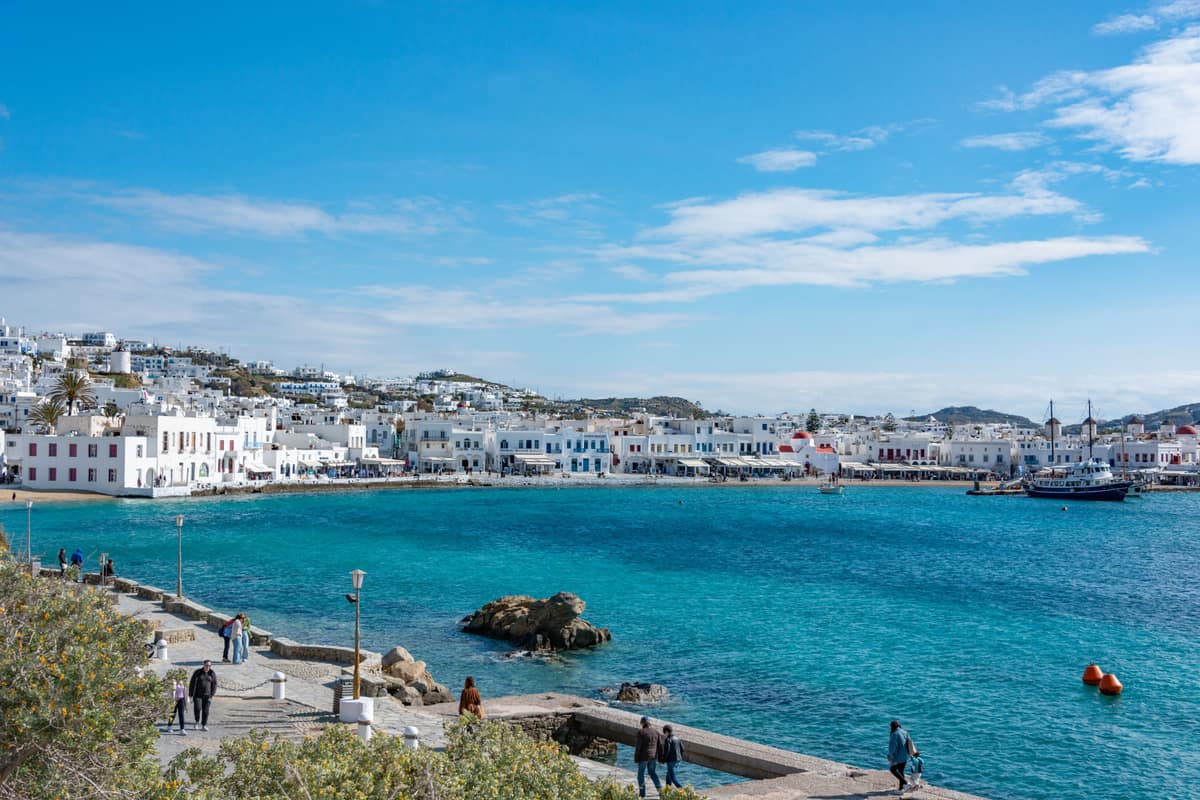
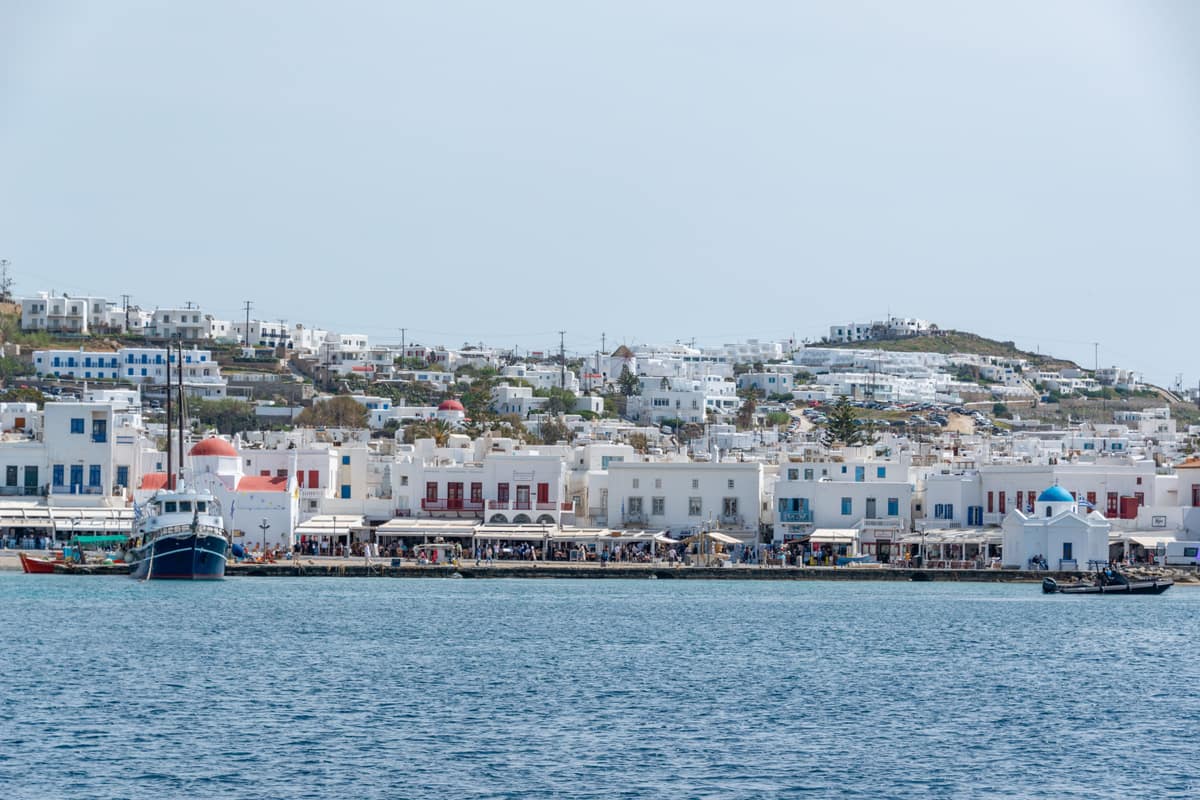
The microsite sets the Leto Hotel Mykonos on a narrow stretch of the Old Harbour beach. A digital exhibition about the history of tourism in Greece says the hotel was built in Chora. Its plot overlooks the old port. Neither text names a street. Sights and day trips across the island have their own page, Mykonos tours.
The microsite lists five places within a ten-minute walking distance of the Leto Hotel Mykonos. The list names the ferry port, the taxi rank, the beach bus stop, the municipal car park and the alleys. It does not say which port it means, and it gives no route. Each walking route is something the hotel has to supply.
In its questions, the microsite gives the walk to the centre as only ten minutes. The same page names the closest bus station as otopark and puts it nine-tenths of a kilometre away. Otopark is the microsite’s own word, and the page adds no stop name or street. The right stop is a detail to confirm with the hotel.
One listing page counts a six-minute stroll between the Leto Hotel Mykonos and Matogianni. It puts the Aegean Sea about a hundred feet away. Agios Stefanos Sandy Beach lies one and a half miles away. The microsite’s text gives five kilometres to Mykonos, which sits oddly beside a ten-minute walk. The hotel itself must explain that line.
Wikipedia files Mykonos under the Cyclades, an island group of Greece. Its Cycladic neighbours, it adds, are Tinos, Syros, Paros and Naxos. In its main town, Chora, lives the largest share of the islanders. The old entry and the microsite both set the Leto Hotel Mykonos in that town. So the waterfront address sits in the island’s principal settlement.
Does the Leto Hotel Mykonos still take guests, and under which name, class and room count?
Four pages, the microsite among them, speak in the present tense of the Leto Hotel Mykonos, at the waterfront. No page among them speaks of a closing, a rename or a sale. Two of them give four stars and twenty-five rooms. The hotel alone can confirm what holds today.
Four pages describe the hotel as a working property: the microsite, a second listing page and two travel sites. Each gives the waterfront address and writes in the present tense. Not one of them hints at a shutdown, a new name, a sale or a refit. Its own reply proves it takes guests today, and under which name.
The names are not the same on every page. The old entry heads its page with the name used here, then repeats it once more with Town added below. The microsite writes Leto Hotel Mykonos Town. The listing pages cut it down to Leto Hotel. For other lodging on the island, start at the Mykonos hotel index.
Grade A, with four stars in brackets, is the old entry’s line on class. A headline on the microsite says four stars, and one listing page agrees. The exhibition adds an A-class label for the hotel’s first years. No registry was read, so each class is a claim only. Which class is current stays unsettled until the hotel replies.
Three texts agree on the room count of the Leto Hotel Mykonos. The old entry lists twenty-five rooms under its general information heading. In the microsite the hotel has twenty-five rooms, and a listing page gives the same count. None of these three texts gives another number. Whether a refit changed the count is for the hotel to say.
According to Wikipedia, ratings put hotels into classes by quality, and the bodies behind the schemes differ. In France a public tourist board runs the scheme. In Australia a tourism industry council holds the star marks, and in Germany a hotel association sets the rating. No page read names the body behind the four stars, so that stays open.
Wikipedia opens its hotel article with a plain definition: lodging that guests pay for and use for a short period. The word traces back to the French hôtel, which shares an origin with hospital. In French today hôtel means the same as the English word. The Leto Hotel Mykonos fits that definition, since every source names rooms for guests.
Four questions settle the open points of the Leto Hotel Mykonos. Which class is current, and which registry holds it? What is the number of rooms today? Which name hangs on the door: the plain one, the one with Town added, or another? Does the hotel still take guests at the waterfront address? Replies rest with the hotel.
What is the history of the Leto Hotel Mykonos in the sources?
A digital exhibition on the history of tourism in Greece lists the Leto Hotel Mykonos among four hotels. It calls them the first hotels of the national tourism body, newly re-established in nineteen fifty-one. The other three stood in Delphi, Nafplio and Kastoria. All four were designed in one year.
Two texts date the national tourism body differently. Wikipedia dates its founding to nineteen twenty-nine and its restart to nineteen fifty. The exhibition gives nineteen fifty-one for the restart, one year later. Wikipedia calls the body the governmental board for promoting tourism in Greece. The Leto Hotel Mykonos is tied to that restart in the exhibition’s account.
The exhibition says the Marshall Plan funded the first three of those four hotels. Its list of the four opens with the Leto Hotel Mykonos. Wikipedia describes the plan as an American initiative, enacted in nineteen forty-eight, that gave foreign aid to Western Europe. The plan was named after an American secretary of state, according to the same article.
Wikipedia lists aims such as rebuilding regions hurt by the war, cutting trade barriers and updating industry. It says the plan ran for four years and was largely replaced in nineteen fifty-one. The exhibition does not say how much of the hotel the plan paid for. Ask the hotel whether its archive records the funding of the building.
In the exhibition’s words, the hotel was an A-class house with room for forty-eight beds in twenty-five rooms. This site’s old entry also lists twenty-five rooms and gives no bed count. The Leto Hotel Mykonos therefore shows the same room count in both texts. Ask the hotel whether the bed count of the early years still holds.
Four levels make up the building in the exhibition’s description, and it began operating in nineteen fifty-three. The exhibition sets it in Chora, with the old port in view. It files the entry for the hotel under the state hotel network of the time. Ask the hotel which of the four levels hold the rooms today.
The exhibition calls the hotel very popular among wealthy Athenians who visited the island in the nineteen fifties. Ask the Leto Hotel Mykonos whether it keeps photographs or papers of those years. Ask also whether any room keeps its early layout or its early fittings. The island’s wider past, beyond the hotel, sits on the Mykonos history page.
A detective novel of nineteen fifty-six set its action at the Leto Hotel Mykonos, the exhibition says. A Greek newspaper printed it as a serial. The first instalment appeared on Monday, the twenty-fourth of September, nineteen fifty-six. Ask the hotel whether it holds a copy of the serial. The page Delos island covers the nearby island.
How was the Leto Hotel Mykonos designed, and what style do the sources name?
The exhibition names a Greek modernist architect as the designer of the Leto Hotel Mykonos. A second person supervised the construction, it says. This site’s old entry uses a different word for the building, Neo-classical. The sections below keep the two descriptions apart, as the sources give them.
According to an architectural historian, the exhibition says, the project adapts to the shape of the terrain. The same text names spaces of three kinds, enclosed, semi-outdoor and open, and the way they fit together. It also names innovations in style, construction and decoration. Ask the Leto Hotel Mykonos which open and semi-outdoor spaces guests can use today.
The exhibition adds that the design reinterprets elements of Cycladic local architecture. To fit the size of the vernacular buildings on the island, the architect chose a staggered layout. The volume of the building was broken up, the exhibition says. The text judges the building a strong influence on later architects. It names none of them.
In the old entry, the building is called Neo-classical. It names no architect and no design year. The exhibition calls the architect modernist and describes a staggered layout for the building. The two words differ, and this page keeps both without choosing between them. Ask the Leto Hotel Mykonos which word it uses for its own building today.
Wikipedia explains Neoclassical architecture as a style born of the Neoclassical movement. Italy, France and Germany were where the movement began, in the mid-eighteenth century. The style rests on symmetry and simple geometry, not on ornament, the article says. Its aim was to drop the excess of the late Baroque and turn back to a purer classical form.
Wikipedia calls modern architecture a style of the twentieth century, also known as the modern movement. It rests on new technologies of construction, above all glass, steel and concrete, says the article. It also names functionalism, the idea that form follows function, and a rejection of ornament. The exhibition names no building material for the Leto Hotel Mykonos.
Wikipedia dates the rise of modern architecture to the first half of the twentieth century. It became dominant after the Second World War. In the nineteen eighties postmodern architecture gradually replaced it as the main style for institutional and corporate buildings. The exhibition puts the opening of the hotel in nineteen fifty-three, inside the years of that dominance.
The old entry adds one main building, air-conditioned throughout, with a large lobby and reception area. Wikipedia treats vernacular architecture as the work of local builders, without a professional designer or architect. It adds that such building serves local needs and follows the materials of its region. The wall materials are a question for the Leto Hotel Mykonos.
Our Greece Hotels page and our Cyclades Islands page frame the wider trip. For the whole trip, read the Greece Destinations page.
Which rooms does the Leto Hotel Mykonos list, and what does each room have?
The old entry lists seven room facilities for the Leto Hotel Mykonos. They are air conditioning, satellite television and a direct dial phone. The rest are a fully stocked minibar, bath tubs, a hairdryer, and a balcony or terrace. The entry adds a sea view for the greater part of them.
That entry sets its facts in two blocks, one headed hotel facilities and one headed room facilities. The seven items above sit in the second block. It gives no room size, no floor number and no bed type. It does not say whether every room has a bath tub. Those gaps are for the property to fill.
The microsite describes the look of the rooms in three details. The colours are earth tones of beige, gold and brown. Rustic oak panels and parquet floors complete the picture. This site keeps photographs of the Leto Hotel Mykonos in its Leto photo gallery. A reader can set the words above beside those pictures and judge the match.
One listing page words the room contents in another way. It lists an adjoining terrace, a balcony, a mini fridge bar and a flat-screen television that carries satellite channels. Coffee and tea makers, climate control, a separate toilet and shower, bathrobes and towels end that list. Only the property can say whether every room holds each item.
The microsite names three room options for the Leto Hotel Mykonos. They are the Ground Floor Twin Room, the Two-Bedroom King Suite and the Superior Queen Room. Each name holds a clue, such as ground floor, two-bedroom, king or queen. The microsite gives no size and no count beside them. The hotel can confirm which types exist today.
The microsite adds a note on access. It says the hotel has large bathroom doors and showers in place of bathtubs for guests with reduced mobility. In contrast, the old entry lists bath tubs among its room facilities. The two texts do not say how they fit. The hotel alone can tell which rooms hold only a shower.
Wikipedia defines parquet as wood pieces set in a geometric mosaic to decorate a floor. Herringbone is the leading pattern. Oak, walnut and cherry are listed among its woods. The article adds that parquet feels warmer underfoot than tile but does little to muffle footsteps. A guest of the Leto Hotel Mykonos can ask which floor each room has.
Wikipedia says a balcony can help reduce noise. It adds that theatre balconies were inspired by the raised seating of ancient Greece and Rome. A bathtub, in the same article, holds water for bathing. Modern bathtubs use acrylic, enamelled steel, cast iron or fibreglass. The Leto Hotel Mykonos can say which rooms hold a balcony or a bath.
Which garden and which pool facilities does the Leto Hotel Mykonos list?
A garden, a pool and a pool bar belong to the Leto Hotel Mykonos in the old entry. It says the garden surrounds the hotel and the pool has its own bar. It sets the garden walk and the pool as alternatives. It gives no opening months and no pool hours.
The old entry mentions the swimming pool and its pool bar twice. The first is in its hotel facilities line, an eleven-item list with the pool first and the pool bar eighth. The second is in its text, which speaks of the pool with its pool bar. Neither mention gives a pool size or a bar menu.
The same entry says the hotel is surrounded by a garden, and guests can stroll through it. It gives no size for the garden and names no plant. It praises the garden, but that praise is the entry’s own opinion, not a measure. The entry names two uses for the Leto Hotel Mykonos garden: a stroll and a rest.
One listing page puts two garden lines among its highlights. One reads Swimming Pool with Garden View, and the other reads Candlelit Garden Event Space. The first ties the pool to a view of the garden. The second names a garden space for events, and the word candlelit is the listing’s own. It states no size or event type.
The microsite answers one question about the pool of the Leto Hotel Mykonos in its list of questions. The question is whether the hotel has a swimming pool, and the answer is yes. The microsite gives no length, depth or hours. The old entry is just as silent. Ask the hotel in which months the pool is open.
Wikipedia ties the word garden to an old Germanic word for an enclosure, also seen in the city name Stuttgart. A garden can carry pergolas, trellises, fountains and ponds. The article lists bird-watching, family dinners on a terrace and reflection on the seasons among its uses. Which of these the hotel’s garden allows is for the hotel to say.
Wikipedia says a pool can sit indoors or outdoors, in the ground or above it. The article names concrete, vinyl-lined and one-piece fibreglass shells among in-ground private pool types. Pools at hotels turn up more in tourist areas, says the article. The Leto Hotel Mykonos can say which kind of pool it has and whether the water is heated.
Wikipedia compares a sunlounger to a deckchair. Its back can be raised so a person sits up to read, or laid flat for sleeping. The article calls sunloungers widespread in tourist resorts in Europe and at swimming pools. The old entry names no loungers at the pool. Guests of the Leto Hotel Mykonos can ask whether any stand there.
Which food and drink does the Leto Hotel Mykonos list?
The restaurant of the Leto Hotel Mykonos serves a full American buffet breakfast, says the old entry. That entry also names a snack bar, plus a pool bar. The microsite adds two tasting menus, and one travel site names a restaurant and a bar on site. No source gives kitchen hours.
The old entry gives the Leto Hotel Mykonos a restaurant that serves a full American buffet breakfast. It adds that the restaurant also runs at lunch and at dinner. Sales words praise the cooking; this page does not repeat them. The entry names no dish, no hour and no seat count. Those points stay with the property.
One line of the old entry lists the places to eat and drink. A breakfast area comes first. A restaurant follows, then a snack bar, then a pool bar. The line gives no size, position or hours for any of the four. Whether the snack bar and the pool bar are one counter or two is not stated.
The microsite of the Leto Hotel Mykonos describes two tasting menus featuring eight dishes. As one example it names a tuna ceviche. It gives no restaurant name, no chef’s name, no season and no hours. It does not say how a guest takes a table. Whether both menus run every evening is a question for the property.
One travel site says a restaurant stands in the hotel and a bar is on site too. For the kitchen hours it sends the reader to the property. A second listing page pairs the restaurant with the swimming pool in its opening lines. The microsite names a restaurant among its top amenities. No page gives an opening hour.
Wikipedia defines a tasting menu as a set of dishes in small portions that a restaurant serves as one meal. Its French name is menu dégustation. The article lists three aims: a sample of one cuisine, a house speciality, or fresh seasonal ingredients. Which of the three aims the Leto Hotel Mykonos follows, no source says.
Wikipedia calls ceviche a cold dish of raw fish or shellfish, steeped in citrus juice and seasonings. The acid turns the flesh opaque and firm, yet the seafood stays raw. The article calls ceviche the national dish of Peru, a country on the Pacific coast. The earliest documented use of the word is a patriotic song of eighteen twenty.
Wikipedia names three pillars of Greek cuisine: wine, olive oil and wheat. Fish dishes are common on the coasts and the islands, the article adds. It calls beef dishes uncommon, because the land favours sheep and goats. Does the table of the Leto Hotel Mykonos follow that Greek base? Which hours does the kitchen of the hotel keep?
Which services and house rules does the Leto Hotel Mykonos list?
The Leto Hotel Mykonos has a laundry service, safety boxes and room service, according to the old entry. The same entry names a lounge, a TV room and a play room. The microsite adds a safe box, a check-in window and no luggage storage. No source gives hours, steps or rules.
The old entry names a guest’s laundry service among the facilities of the hotel. One travel site says the hotel has a laundry service and points to the property for details. In Wikipedia, laundry covers washing clothes and other textiles, with drying and ironing added in a wider sense. The word also names the place where the washing happens.
The old entry puts safety boxes in its facilities line for the Leto Hotel Mykonos. The microsite names a safe box in its question list. Wikipedia defines such a box as an individually secured container kept within a larger safe or vault. Hotels that have them keep them at the reception desk or anchor them in a guest room.
To the luggage question, the microsite replies that the hotel cannot keep bags. Wikipedia describes baggage as the cases, bags and containers a traveller uses to carry personal articles in transit. In earlier times, wood trunks sent by professional movers were the common form. After the Second World War, lighter suitcases that one person carries took over.
The microsite lists check-in at the Leto Hotel Mykonos from three in the afternoon until eleven fifty-nine at night. One travel site says guests check in after three in the afternoon and leave before twelve noon. In Wikipedia, check-in is the step where people announce their arrival. It places hotel check-in times between about noon and about three.
One facilities line of the old entry holds room service, the lounge, the TV room and the play room. None of the four has a size, a position or an opening hour in that line of the entry. Arrival notes for the island sit on the page called Mykonos accommodation, so this page leaves them out.
The search form on the microsite of the Leto Hotel Mykonos accepts a stay of thirty days or less. It states that limit in plain words and asks for other dates beyond it. The pages read give no rule on pets, smoking, quiet hours or visitors. Tips for the island are collected on the page named Mykonos island information.
Which of the services on this list still exist at the property? At the Leto Hotel Mykonos, is the laundry collected each day, and how long does it take? Where are the safety boxes kept in the house? Can bags wait at the desk on the last day? Does the check-in window still run until eleven fifty-nine at night?
Which further questions does the Leto Hotel Mykonos raise?
Is the Leto Hotel Mykonos different from the text of the old entry here?
In nineteen ninety-seven, says the old entry, the Leto Hotel Mykonos was renovated and redecorated throughout. That is the only dated work the old entry names. It gives no list of works and no count of the rooms touched. The year of the refit is known, and its extent is not.
Wikipedia says renovation means making a broken, damaged or outdated structure better, whether a home or a commercial building. It also counts the restoring of a thing to a former better state, by cleaning, repairing or rebuilding. The old entry does not settle which meaning fits that work, and it gives no end date.
The listing pages describe the hotel in the present tense. They show twenty-five rooms and a four-star label, the same counts as the old entry. None of them names a later refit. Ask the hotel which refit is current, and when the rooms, the bathrooms and the lobby were last redone.
Are children under the age of three listed for an extra bed at the Leto Hotel Mykonos?
The microsite says an extra bed is included for every child under the age of three. A child who has turned three falls outside that line. The line sits in the block with the check-in line. It names an age limit and a bed, and it adds no room type and no number of beds.
One listing page for the Leto Hotel Mykonos repeats the same age limit for an extra bed. It sets the line in its block of important information. The two pages agree on the number three. Neither says whether a child of three or older can use an extra bed, and neither names a cot.
Ask the hotel whether the extra bed is a folding bed or a cot. Ask whether the bed is already in the room on arrival. Ask the number of extra beds a room takes and which room types allow one. Ask what rule applies to an older child, and keep each reply with its date.
Do the balconies of the Leto Hotel Mykonos look over the port?
The old entry says each of the twenty-five rooms has a balcony over the port and the Aegean Sea. It states this as a fact about every room. Its list of room features words it differently, as a balcony or a terrace, with no port named. Both lines sit in the same old entry.
The microsite credits the greater part of the rooms of the Leto Hotel Mykonos with a balcony over the port. That claim is smaller than the old entry’s claim of a port balcony in every room. One travel site adds that the hotel gives views of the old port, and it names no rooms.
The sources differ, so the port view is a point to confirm room by room. Ask which rooms of the hotel look toward the port and which look inward. Ask whether a room on the ground floor has a balcony at all. Ask which floors carry the port balconies, and how wide the view is.
How far is the Leto Hotel Mykonos from the airport, and is there an airport transfer?
The old entry gives four kilometres between the Leto Hotel Mykonos and the airport. One travel site gives two and two-tenths kilometres. Another gives one and four-tenths miles, with a drive of two minutes in normal traffic. A mile is a little over one and a half kilometres, so those two sites nearly agree.
Wikipedia’s article on the island’s airport also says four kilometres. It measures that distance to the town of Mykonos, not to this hotel. So the old entry’s figure equals the article’s figure for the town. The hotel’s door is a different point, so the hotel alone can name the figure it counts.
The microsite says the hotel does not provide an airport transfer. The reply sits in the microsite’s list of frequent questions and gives no reason. Ask whether any transfer exists today and who runs it. Ask which of the three figures fits the hotel door, and how long the drive takes with luggage.
Is Wi-Fi included at the Leto Hotel Mykonos?
One travel site names Wi-Fi among the features of the Leto Hotel Mykonos and marks it as included. It also answers yes to a question on Wi-Fi for guests. A second travel site answers yes as well. The old entry names no Wi-Fi in its facility lists, and the microsite’s text names none.
Wikipedia describes Wi-Fi as a set of wireless network protocols for local networking and Internet access. It lets nearby devices swap data by radio waves. The Wi-Fi Alliance holds the trademark for the name. The Alliance limits the label Wi-Fi Certified to products that pass interoperability tests. Hardware that does not comply is simply called WLAN.
Ask the hotel whether Wi-Fi reaches every room or only the lobby and the garden. Ask whether it is included for the whole stay and whether it needs a code. Ask which network a guest joins, and who to ask when the link drops. Neither travel site names a speed or a network name.