Athens hotels sit in three groups: the old centre around Plaka, the squares of the modern city and the Riviera coast to the south. For other trips, see our tours in Greece page.
This page covers the kinds of lodging, the star classes, the areas, the way from the airport, the sights and the evenings nearby, the seasons and the day trips.
What kinds of Athens hotels does the city have?
Athens hotels run from large full-service buildings to small boutique houses. The city also has hostels, guesthouses and coastal resorts. This page sorts the lodging by star class, from deluxe to C class, so a traveller compares like with like.
Wikipedia treats a hotel as any place that lodges guests for a short stay. The article adds that small hotels offer basic services, while larger ones add a pool or conference rooms. Athens hotels in any listing fit that wide definition. An apartment hotel, says the same source, is a serviced apartment complex that works like a hotel.
A vacation rental, says Wikipedia, is a furnished apartment or house rented to tourists instead of a hotel. In a hostel, guests rent a bed, such as a bunk in a dormitory for four to twenty people. The lounge is shared. Wikipedia names backpackers and young travellers as the guests drawn to hostels.
Boutique hotels, says Wikipedia, are small hotels that offer more personal service. A bed and breakfast is a small lodging, and the hosts generally live in the same house. A resort keeps food, drink, sport, entertainment and shopping on its own premises. One travel page lists coastal resorts among the Athens hotels of the city.
The Athens hotels in this listing are sorted by star class, not by building type. The four classes are deluxe, A class, B class and C class. One listing page shows a star label beside each hotel, so a class works as a scale. For lodging outside the capital, this site has a page of hotels across Greece.
Athens hotels serve the Greek capital, which is also the country’s largest city and the regional capital of Attica. Wikipedia calls it a gateway for trips to the islands and the mainland, and counts tourism in its economy. A separate page of this site lists Athens tours for the days out of the hotel.
Wikipedia counts Athens among the oldest cities on Earth: records of it stretch back more than 3,400 years. Its earliest human presence dates from somewhere between the eleventh and seventh millennia BC. Classical Athens was a powerful city-state in ancient Greece and a centre of democracy, the arts, education and philosophy.
How are Athens hotels grouped by star class?
In this listing, deluxe means five stars, A class four, B class three and C class two. For Athens hotels, the star class is a quality label. Wikipedia adds that a wide variety of schemes is in use, run by different organisations.
Hotel ratings classify hotels by quality, Wikipedia explains, and grading, rating and classification all name one idea. A number of schemes use stars, and a higher count of stars points to a higher level. The Athens hotels of this listing follow that idea, with five stars as the highest step.
Underneath this paragraph sits a list that links to the page of each hotel class in this listing. Each page gathers the hotels of one class. A traveller can open the class that fits the stay and read on from there. The hotel names live on those pages. This page keeps to the general picture.
- Deluxe hotels in Athens is the five star group of this listing.
- 4 star hotels in Athens is the A class group, split into city and coast.
- 3 star hotels in Athens is the B class group.
- 2 star hotels in Athens is the C class group.
The European Hotelstars Union established its star system at a conference in Prague in September of two thousand and nine. Wikipedia says Greece, the country of these Athens hotels, joined the system in two thousand and thirteen. It also lists Greece among the member countries where the law sets the standards.
The union’s catalogue lists seven qualification areas with 247 elements. Each level needs a minimum sum of points. The union uses mystery guests to check hotels with three to five stars. Wikipedia adds that traditional systems look at dining, entertainment, the view and any spa or gym. Room size, accessibility and position can be weighed too.
Wikipedia says an upscale full-service hotel adds an on-site restaurant, room service and a concierge. Traditional ratings weigh facilities like these for Athens hotels as for any others. The article says an amenity-based rating can hold back a small hotel whose rooms fit a higher class. The missing item can be a lift or a spa.
Plain questions help a traveller weigh one class against another among Athens hotels. Does the building have a lift, and is the room cooled by air conditioning? Is breakfast part of the stay? Which metro station is nearest, and how far is it on foot? Each answer comes from the listing or from the hotel’s own website.
Where do Athens hotels cluster in the city?
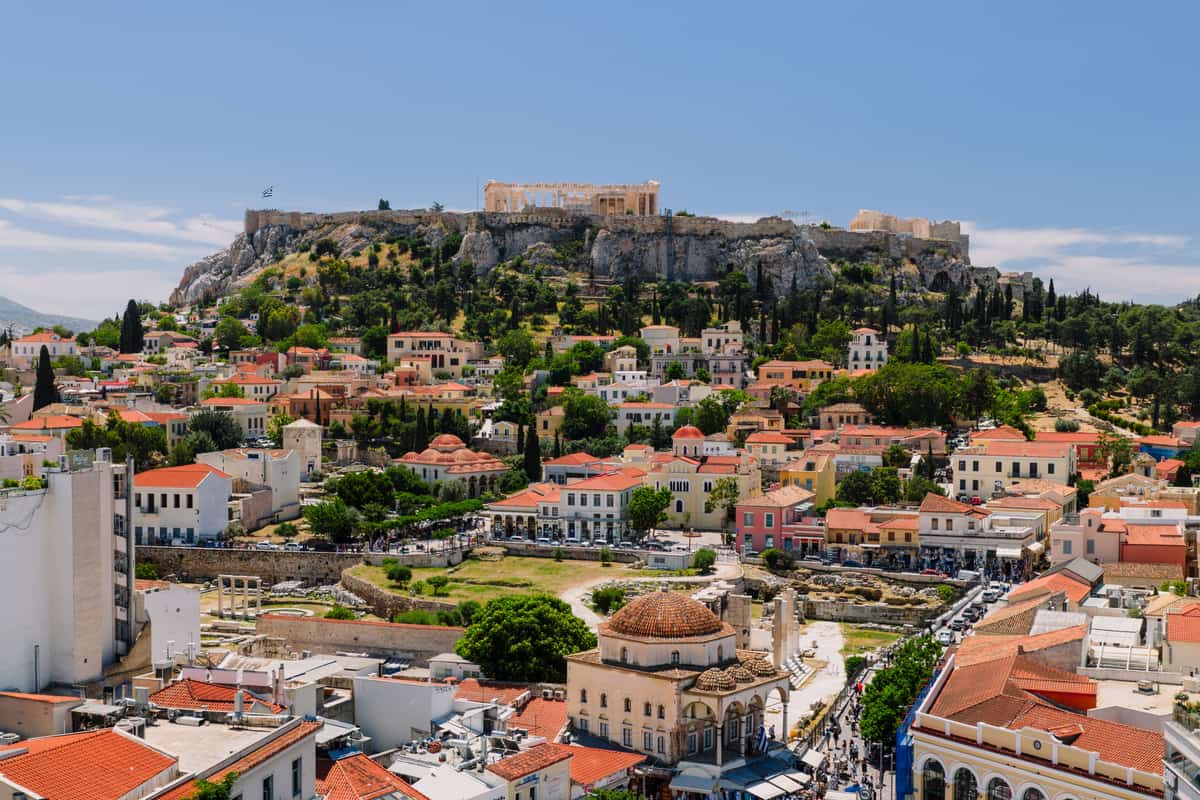
Athens hotels cluster close to the Acropolis, within the old centre. The districts are Plaka, Monastiraki, Psyrri, Thiseio and Koukaki, while Kolonaki sits on the south side of Mount Lycabettus. Each name marks one area of the same city, each with its own history.
Plaka is the old neighbourhood of Athens. Wikipedia describes it as spreading over two sides of the Acropolis, the north and the east, among neoclassical houses. Its nickname is Neighborhood of the Gods, since the Acropolis stands so close. Athens hotels with a Plaka address sit in the oldest district of the city, inhabited since the Neolithic age.
Monastiraki lies in the old town. The Pantanassa church lent its name to the square, and the square lent its name to the district. Wikipedia calls it a flea market neighbourhood and a main shopping district. Its two main streets are named Pandrossou and Adrianou. The Athens hotels index of this site gathers the hotel pages of the city.
Psyrri is the district next to Monastiraki. Wikipedia says it is known today for restaurants, bars, live music tavernas and a small number of hotels. The article adds that the area had a poor name until the early nineteen nineties and is fashionable now. Athens hotels in Psyrri share the streets with bars and tavernas.
Thiseio lies north-west of the Acropolis. Wikipedia lists three archaeological sites around it: Keramikos, the Pnyx and the Agora. The article explains the name: the Temple of Hephaestus was wrongly called the Thiseion, after Theseus. It describes pedestrian streets, cafes and terraces with views of the Acropolis. Paths join Thiseio to the other old districts.
Koukaki is a south-eastern neighbourhood, with Makrygianni to its north and Filopappou and Thiseio to its west. Wikipedia notes a large vegetable market held every Friday, plus the Drakou pedestrian zone with its cafes and restaurants. Athens hotels in Koukaki stand in a district with its own market. The Athens photo gallery shows the old centre.
Kolonaki sits on the south flank of Mount Lycabettus. Museums in Kolonaki include the Benaki Museum and the National Gallery of Greece, and Wikipedia calls the neighbourhood upscale. Athens hotels in Kolonaki stand on the hill side of the centre. All six districts belong to the municipality of Athens, which Wikipedia divides into seven municipal communities.
What is a stay on the Athens coast like?
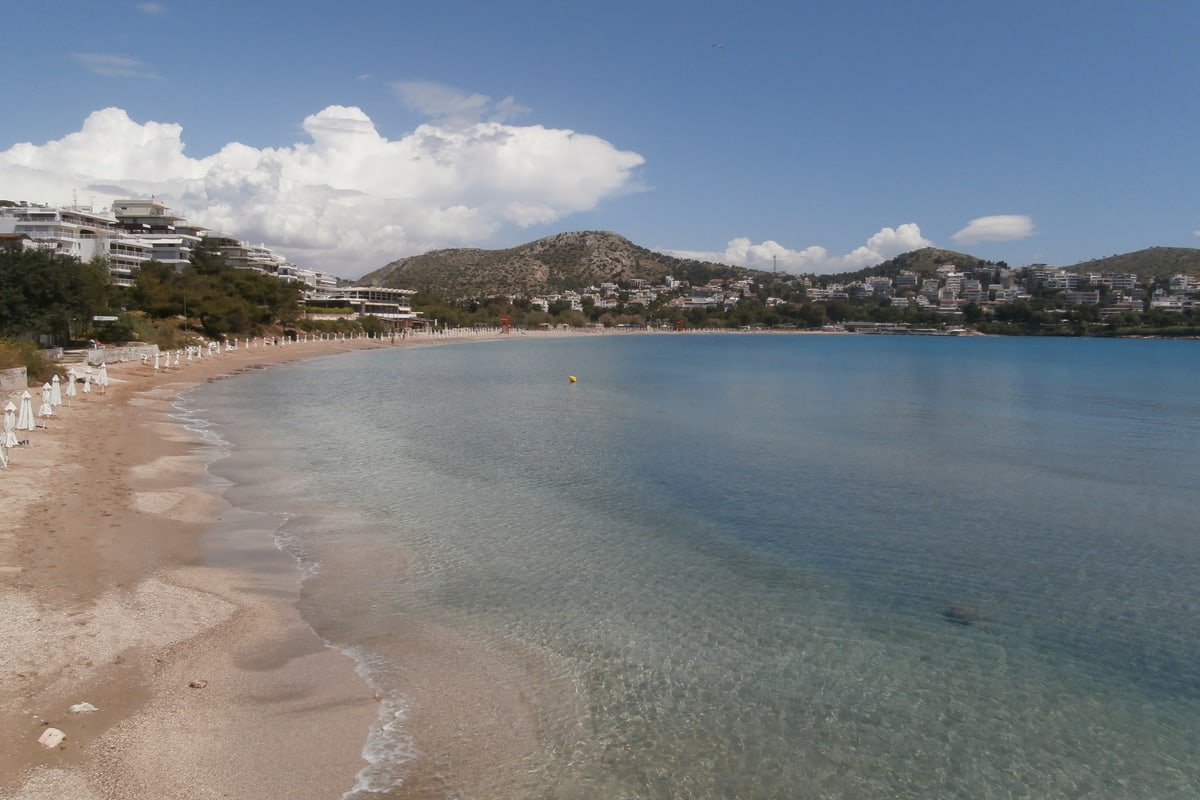
A stay on the Athens coast means a base on the Athens Riviera, the seaside strip south of the centre. Wikipedia puts it about 16 km from downtown Athens. Athens hotels there stand outside the old centre, beside the Saronic Gulf.
The seaside suburbs south of the city form the Athens Riviera, Wikipedia explains. The belt reaches from Piraeus out to Sounio and Lavrio. Another article gives the city coastline from Piraeus to Varkiza as about 25 km. Athens hotels on this coast therefore stand along a long strip of shore, and every suburb is a separate choice.
The Greek National Tourism Organisation, as Wikipedia reports it, names ten main areas on the Riviera. They include Elliniko, Voula, Lagonisi, Varkiza, Anavyssos and Sounio, along with Aenaon Park and the Bay of Zea. A traveller who picks the coast therefore picks one of these places first and a hotel inside it second.
Faliro lies close to the centre. The old port of Phalerum lay 5 km south-west of the Acropolis, Wikipedia says, on the Saronic Gulf shore. Palaio Faliro and Neo Faliro now occupy the site, and so do Kallithea and Moschato. The Park of Maritime Tradition keeps historic ships there. Athens hotels in Faliro belong to the Bay of Phalerum.
Wikipedia places Voula 16 km from the city centre, in the south. The suburb faces the Saronic Gulf and sits at the south-western foot of Mount Hymettus. The article adds that National Road 91, which links the city centre with Sounio, passes through it. It describes a hot, dry season in summer and a milder, wetter one in winter.
Wikipedia gives the distance from the city centre to Varkiza as 22 km, towards the south. The place was rural until the nineteen sixties and then filled with suburban housing. The article describes a beach with parkland, tennis courts, restaurants and taverns. Wikipedia’s Athens article ends the city coastline at Varkiza. Athens hotels at Varkiza serve beach days.
Wikivoyage names South Athens as the home of the greater part of the beaches that public transport reaches. Wikipedia says a waste plant on Psytalia improved the Saronic Gulf, so coastal waters are open to swimmers again. Athens hotels on the coast therefore serve sea days, and those in the centre serve days among the ruins.
How do travellers reach Athens hotels from the airport?
Wikipedia and Wikivoyage list four routes from the eastern airport to the centre: metro, suburban train, express bus and taxi. A traveller who picks the ride before landing reaches Athens hotels from the terminal without guesswork on arrival.
Wikipedia names Athens International Airport Eleftherios Venizelos as Greece’s largest international airport, serving Athens and Attica. The airport opened on 28 March in two thousand and one and replaced the old Ellinikon airport. Wikipedia gives two distances from central Athens: about 20 km eastwards in a straight line, and 30 km along the road, which has to wind between hills. Wikivoyage gives 27 km.
The metro is a rail route from the airport towards Athens hotels in the centre. Beside the terminal stands a station, which Wikipedia says the suburban railway and metro line 3 share. Wikivoyage notes that not every train goes to the airport, because the trains in between turn round at Doukissis Plakentias.
The first suburban line to the airport opened on 30 July in two thousand and four. Wikipedia lists line A1 between Piraeus and the airport. Wikivoyage says trains leave the airport once an hour for Athens Central station and run more sparsely than the metro. Check the current times before the ride to Athens hotels.
City buses depart between exits 4 and 5 of the arrivals level, says Wikipedia. According to Wikivoyage, traffic decides the length of the express bus ride, which runs from 45 to 90 minutes. Wikivoyage adds that, unlike the metro, buses run around the clock. That matters for a night landing at Athens hotels.
Wikipedia says the taxi rank stands at exit 3 on the arrivals floor. Wikivoyage notes a special rule for rides to the centre. The amount is fixed, includes the tolls and differs between day and night. Wikipedia names the Attiki Odos toll highway as the road link, and a separate page covers Athens transfers.
A traveller with a late flight can put three questions to Athens hotels before departure. Can the reception accept a late arrival? Which station stands closest? Can the staff arrange a taxi? Wikivoyage says an English speaker staffs a desk at the airport metro station for the greater part of the day.
How do guests move around the city from Athens hotels?
Guests of Athens hotels move around the city on foot, by metro, by bus or trolleybus and by taxi. Wikivoyage says a number of places of interest lie within walking distance of Syntagma Square. The metro reaches the others.
Wikipedia describes three metro lines with 66 stations and 91.7 km of track. Line 1 is green, line 2 is red and line 3 is blue. Wikipedia names five interchange stations, Syntagma, Monastiraki, Omonia, Attiki and Piraeus, which link the three lines to one another. Line 1 began as a steam railway in eighteen sixty-nine.
Wikivoyage names Syntagma, Larissa and Acropolis as the three major stations of the system. Wikipedia lists Monastiraki, Akropoli and Syntagma among the stations that show ancient artefacts or replicas. Wikivoyage says the finds were dug up during construction. Photography is allowed across the whole network, so a guest from Athens hotels can photograph these displays.
Wikivoyage says the Athens urban transport organisation runs diesel buses, natural gas buses and electric trolleybuses. The greater part of the central stops have smart displays with arrival times. A single ticket covers every type of transport except the airport lines, with changes allowed for 90 minutes. Signs always carry Roman letters as well as Greek.
Wikivoyage lists a walk, mostly closed to cars, that starts on Vasilisis Amalias Street. It passes the Acropolis Museum, the Acropolis and the Herodion Theatre and ends in the Kerameikos area. Wikivoyage calls the walking pleasant in upper Plaka and in much of Kolonaki. Shoes with good grip matter, because pointed heels damage the marble at sensitive sites.
Wikivoyage describes canary yellow taxis and advises insisting on the meter. In the rush hours, and at night once the metro has closed, Wikivoyage expects riders to share a cab. Strikes by taxi drivers and public transport are common. Wikivoyage points guests of Athens hotels to the lodging host for a solution.
Wikivoyage calls driving in Athens difficult. The streets are narrow, the corners are blind and curbside parking is almost impossible to find. A pollution control area in the centre limits entry by number plate on even and odd days. Readers staying at Athens hotels who want a vehicle can read about car hire on another page.
What sights lie close to Athens hotels in the centre?
Wikipedia puts the top of the Acropolis rock 150 metres up from sea level. Around the rock lie the Ancient Agora, the Acropolis Museum and the Olympian Zeus temple. They belong among the sights close to Athens hotels in the centre.
The Acropolis is a citadel of ancient times set on a rock over the city, as Wikipedia puts it. People lived on the rock as early as the fourth millennium BC. Pericles coordinated the building of its main temples in the fifth century BC. Guests choosing Athens hotels in the centre can use the rock as a fixed point.
The Parthenon stands at the centre of the Acropolis and is also called the Temple of Athena Parthenos. In the seventeenth century a Venetian bombardment hit the gunpowder stored inside, and the blast badly damaged the building. A restoration project that began in nineteen seventy-five has since restored its colonnades, using new marble from Mount Pentelicus sparingly.
Near the southeastern slope, the Acropolis Museum is 280 metres from the Parthenon, or 400 metres on foot. It opened to the public in two thousand and nine and displays over 4,250 objects. Dionysiou Areopagitou Street runs past the entrance, and Akropoli metro station stands directly beside it. That detail matters when comparing Athens hotels in the centre.
Northwest of the Acropolis sits the Ancient Agora. To its south rises the Areopagus hill, and to its west Market Hill. Wikipedia calls it a gathering place for trade and assembly. A site museum now occupies the rebuilt Stoa of Attalos, a colonnade lined with shops in the second century BC.
The Olympian Zeus temple stands roughly 500 metres away from the Acropolis, to the south-east. Syntagma Square lies roughly 700 metres to the north of the ruin. Hadrian completed it in the second century AD, 638 years after work started, and fifteen columns still stand. These figures help when weighing Athens hotels in the centre by distance.
Among the world’s stadiums, only the Panathenaic Stadium in Pangrati is built entirely of marble. Greek antiquities are shown in the richest collection anywhere at the National Archaeological Museum in Exarcheia, Wikipedia says. Readers who prefer to ride between stops can turn to a separate page: Athens hop-on hop-off bus tour.
What can guests do near Athens hotels in the evening?
Sources describe the evening in Thiseio, Psyrri and Gazi, on Lycabettus hill and on the Acropolis slope. Two ancient theatres stand on that slope. Guests of Athens hotels in the centre can build a night around these places.
Wikipedia places Thiseio, a traditional neighbourhood, to the northwest of the Acropolis, ringed by the Agora, Keramikos and Pnyx. For guests of Athens hotels in the centre, the article lists pedestrian streets, cafés and open terraces among its features. Apostolou Pavlou Street and Dionysiou Areopagitou Street form the pedestrian zone around the Agora from Thiseio to the Acropolis.
The Thiseio article adds that views of the surrounding sites from the Areopagus height stand out, especially by night. Wikivoyage says Plaka, an old district at the foot of the Acropolis, has restored neoclassical homes, pedestrian streets and restaurants. It adds that traditional Greek evenings can be spent there, while big dance clubs are scarce.
Wikipedia says Psyrri is known for restaurants, bars, live music tavernas and a small number of Athens hotels. Its central square is Iroon Square. Gazi, around the old gasworks, has gained active nightlife, cafés and restaurants since the early twenty-first century. Kerameikos metro station on Line 3 stands beside the old gasworks site.
Wikivoyage says bars and clubs in Athens get going late, after midnight. Metro trains run from half past five in the morning to half past midnight, it adds. On Friday and Saturday nights they keep going until around 2 in the morning. Check the current times before planning a late return.
At 277 metres, Mount Lycabettus overtops every other spot in Central Athens, Wikipedia says. The funicular starts on Aristippou Street in Kolonaki, a useful detail when choosing Athens hotels for an evening out. Near the top stand a chapel of Saint George, a theatre and a restaurant. Wikivoyage mentions views down to the Saronic Gulf from the hills.
Herodes Atticus built the Odeon named for him in AD 161, on the southwestern side of the Acropolis. Performances of the Athens Festival take place there between late spring and October, says Wikipedia. A planned closure for restoration is also reported, so check the programme. Nearby, the Theatre of Dionysus hosted the City Dionysia.
How does the season change a stay at Athens hotels?
The season changes a stay at Athens hotels through heat, wind and rain. Wikipedia gives Athens a hot-summer Mediterranean climate, with an average yearly temperature of 19.2 degrees Celsius near the centre. The weather decides what a guest asks the hotel.
Summer brings the heat. Wikipedia says Athens can be warmer than Seoul or Melbourne, cities nearer the Equator. Part of this comes from the urban heat island effect. Athens appointed the first chief heat officer of any European city. Readings of 47.5 degrees Celsius and over appear in the metropolitan area.
The district changes the heat. Wikipedia says the southern areas see smaller swings in temperature, because the Saronic Gulf moderates their climate. In Kifissia, on higher ground to the north, it records cooler air and slightly more rain all year. A guest comparing Athens hotels in the north, by the sea or in the basin meets different weather.
The wind shapes a summer stay at Athens hotels. Wikipedia’s article on Greek climate names the etesians, also called meltemia. They blow between late spring and October, peaking in July and August. Temperatures in the Aegean stay lower than on the Ionian Sea. The article adds that cool water and an onshore breeze keep coastal heatwaves mild.
Spring and late autumn are the seasons Wikivoyage finds pleasant for a visit. It calls winter the low season, with an occasional rainy or snowy day. An extreme summer heatwave is rare, it adds. One travel page says Athens hotels only recently met the demand for long weekends and shoulder-season trips.
A traveller can turn the climate into questions for the hotel. Does the room have air conditioning, and is it quiet at night? Is there heating in winter? Which side of the building takes the afternoon sun? One listing page names air conditioning among the amenities of the Athens hotels it lists.
Heat and sights meet at the Acropolis. Wikivoyage gives summer hours from opening at 8 in the morning until closing at 8 at night. In winter closing moves with the sunset, to 5 in the afternoon by December. It calls the National Garden a respite from the heat. Check the current hours before an early start.
Which day trips start from Athens hotels?
Day trips start easily from Athens hotels. Cape Sounion lies 69.5 kilometres southeast of the city. Aegina is 27 kilometres away in the Saronic Gulf, and Hydra and Poros are two more Saronic islands. Delphi is the inland choice, in central Greece.
Cape Sounion is the promontory where the Attica peninsula ends in the south. Wikipedia places it in the Athens Riviera and gives it hot, dry summers and milder, wetter winters. It adds that tourists from Athens treat the cape as a popular day outing. Guests at Athens hotels in the city start about 70 kilometres from it.
On the headland rises the Temple of Poseidon, dated by Wikipedia to 444 to 440 BC. Almost 60 metres of height separate it from the water below. Of 34 original columns, 15 remain standing. The article says people have sought the Aegean sunset since the early nineteenth century. That evening hour gives the Cape Sounion sunset tour its name.
Aegina lies 27 kilometres from Athens in the Saronic Gulf. According to Wikipedia, the crossing from Piraeus lasts forty minutes by hydrofoil and about one hour by the regular ferry. The article links the island with the Aphaia temple and with pistachio growing. Check the current timetable first. The island also has its own Aegina tours page here.
Wikipedia says high-speed hydrofoils and catamarans serve Hydra from Piraeus, about 69 kilometres away, calling first at Poros. No wheeled vehicle is allowed on Hydra, where donkeys, mules and water taxis carry people. Poros, 58 kilometres south of Piraeus, is a pair of islands linked by a bridge. A separate page on this site lists Hydra tours.
Delphi was a sacred site in central Greece, home of the Pythia, an oracle consulted on weighty decisions. In the ancient Greek view, the world’s centre lay there. For guests at Athens hotels, Wikivoyage gives the journey to Delphi as about three hours. This site describes an Athens and Delphi mythology tour.
Wikipedia places the Athens urban area along the northern shore of the Saronic Gulf. A guest at Athens hotels asks three questions before choosing a trip. How long does the crossing or the drive take, and when does the last return leave? How does the weather look that day? Each answer needs a current check.
What else do travellers ask about Athens hotels?
Where does the name Athens come from?
The ancient founding myth tells how the city that holds today’s Athens hotels got its name. The goddess Athena and the sea god Poseidon both wanted to be its patron. King Cecrops judged the contest.
With his trident, Poseidon struck the ground, and salt water welled up as a spring. Athena answered with the first domesticated olive tree and the promise of wealth. Cecrops accepted her gift and declared her the patron goddess of the city.
Virgil’s poem Georgics tells it differently, as Wikipedia notes: Poseidon’s gift is the first horse, not a spring. Wikipedia also reports that scholars of today broadly agree on the reverse order: Athena’s name came from the city. The ending -ene is common in the names of places and rare in the names of people.
How old is Athens, and what did the classical period give the city?
Wikipedia describes Athens as one of the earliest cities of the world. Its history on record covers over 3,400 years. The earliest human presence dates to somewhere between the eleventh and seventh millennia BC. Guests in Athens hotels sleep in a place that has been inhabited continuously for at least 5,000 years.
The classical period gave the city its democracy. Cleisthenes introduced it in the late sixth century BC. Wikipedia calls the decades after the Persian wars the Golden Age of Athenian democracy.
Under Pericles, who promoted the arts, the city began an ambitious building programme that included the Parthenon. In the same age, Aeschylus, Sophocles and Euripides wrote plays there. The historians Herodotus and Thucydides worked in the city too. So did the physician Hippocrates, with the philosophers Socrates and Plato.
What is the population of Athens, and what is Attica?
Wikipedia lists 643,452 residents for the city’s own municipality, in the figures for two thousand and twenty-one. Its land area is 38.96 square kilometres. The urban area around it, also called Greater Athens, held 3,059,764 people in that count. That area consists of 40 municipalities.
The metropolitan area is larger again. It spans 2,928.717 square kilometres, has 58 municipalities and had 3,638,281 residents in that count. Wikipedia notes that the word Athens can mean the municipality, the urban area or the whole metropolitan area. This page uses the wide sense, so Athens hotels here include the coast as well as the centre.
Wikipedia describes Attica as a historical region, and the whole Athens metropolitan area belongs to it. Athens holds the role of capital for the Attica region. The metropolitan area sprawls over the Attica peninsula, which reaches into the Aegean Sea. Athens hotels in the centre and on the coast all lie inside that region.
What do travellers ask Athens hotels before arrival?
Four plain questions cover the arrival, and they fit every one of the Athens hotels. When does check-in open, and when is check-out due? Does the hotel look after bags until the room is ready, and again after the room is left?
Where is the nearest station, and how long is the walk to it? At what hours is breakfast served? These are questions, not promises: only the hotel can answer for its own times and rooms.
What remains near Athens hotels from the Olympics held in two thousand and four?
Athens held the first modern Olympic Games in eighteen ninety-six. The city hosted the Summer Games for a second time a hundred and eight years afterwards, in the year two thousand and four. Wikipedia says this makes it one of five cities that hosted the Summer Olympics more than once.
The main Olympic complex, with the Greek acronym OAKA, stands in the northern suburb of Maroussi. Wikipedia says the Spanish architect Santiago Calatrava designed its redevelopment. Its features include steel arches, gardens, fountains and a blue glass roof on the main stadium.
A second complex lies on the shore at Palaio Faliro beach, with modern stadia and an elevated esplanade. The Panathenaic Stadium in the centre also served as a venue. It held the archery contest and the finish of the marathon. The three places lie in different parts of the city, so Athens hotels sit at varying distances from each.