Luxury hotels in Athens form the deluxe group of this listing, with one list for the city and one for the Athens coast. For other trips, see our tours in Greece page.
This page covers what the level means, where the hotels stand, the services and spas, the museums and stages, the food, the hills and the sea, and how guests move between city and coast.
What are luxury hotels in Athens?
Luxury hotels in Athens are the five-star hotels of the capital, the top class that older pages here call deluxe. The class rests on written criteria for service and facilities, not on a hotel’s own description of itself.
The older hotel listings of this site named this class deluxe, and the word stands for five stars. This page uses the plainer phrase luxury hotels in Athens for the same group. It reports what sources say about the class and the city. It does not rate, rank or recommend a single hotel.
Wikipedia says a Prague conference founded the Hotelstars Union classification on the fourteenth of September, two thousand and nine. The system began in a number of the founding countries at the start of two thousand and ten. Greece became a member in two thousand and thirteen. Wikipedia names Greece among the states where the law fixes hotel standards.
Wikipedia describes a system of five stars plus a Superior mark that flags extras. Luxury hotels in Athens sit at the five-star end of that scale. A hotel earns the Superior mark when it has the points for the next star but misses one obligatory requirement. The mark stays within the star level and flags the extras.
Wikipedia says the classification rests on a catalogue of criteria with 7 qualification areas and 247 elements. A star requires certain elements, and the other elements are optional. A hotel also needs a minimum number of points for each star, on top of the obligatory criteria. The main criteria cover quality management, wellness and sleeping accommodation.
Wikipedia says the Hotelstars Union uses mystery guests to check the service quality of hotels with three to five stars. No formal body recognises a rating over five-star deluxe, the same Wikipedia article also notes. Claims of seven stars are mainly used for advertising, so luxury hotels in Athens hold the top class.
Athens is the seat of government and the largest city of Greece, with an urban area of more than 3.6 million residents. Wikipedia says records of Athens reach back more than 3,400 years, so it ranks among the oldest cities. Readers who plan their days around a stay can also look at the Athens tours that this site lists.
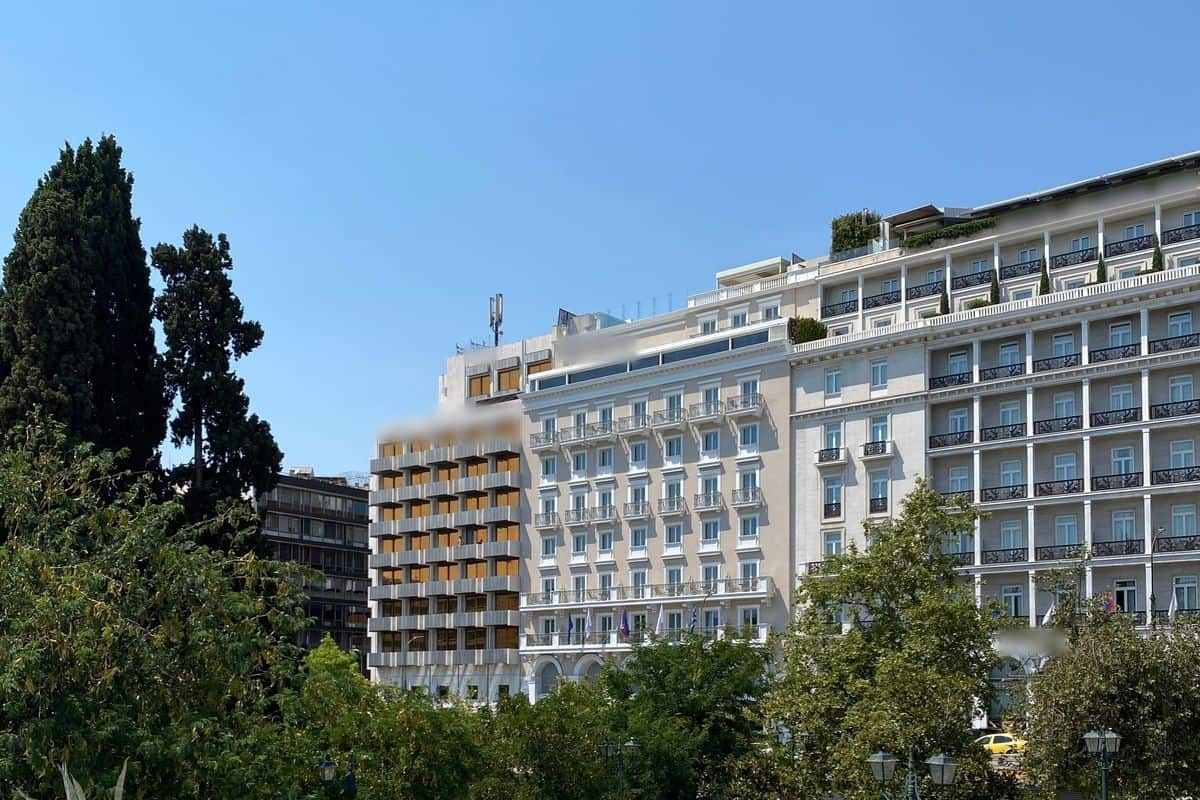
The hotel tradition of the capital is long, and one hotel on Syntagma Square opened in the nineteenth century. Wikipedia says the original house was built in the eighteen forties, and the hotel had electricity by eighteen eighty-eight. Luxury hotels in Athens are the top rung of the star scale, and the Athens hotels page covers every class.
How do luxury hotels in Athens differ from 4 star hotels?
Luxury hotels in Athens differ from 4 star hotels first in service. In the Hotelstars Union list, the fifth star adds a reception open 24 hours and a concierge. It also adds doorman service or valet parking on top of the fourth star.
In the Hotelstars Union list, reception hours separate luxury hotels in Athens from 4 star hotels. A 4 star hotel opens its reception for 16 hours and answers the phone for 24 hours. Five stars add a round-the-clock desk with multilingual staff. It also names doorman service or valet parking at five stars.
The five-star list also names a concierge and a page boy. It lists a shuttle service, which it calls limousine service, and a luggage service. The four-star entries that Wikipedia shows do not mention them. These lines tell a traveller who meets the guest at the door and who carries the bags.
Room service shows another difference. Four stars ask for a breakfast buffet or a breakfast menu card via room service. Five stars ask for a minibar and a food and drink offer via room service during 24 hours. A question about luxury hotels in Athens can start with the hours of room service.
Rooms differ too. Four stars ask for an upholstered chair or couch with a side table. They also ask for a bath robe and slippers on demand. At five stars the list adds an in-room safe and an internet device on request. They add a personal greeting for each guest, with fresh flowers or a present.
Services around the room form the next difference in the list. The five-star list names an ironing service with return within 1 hour and a shoe polish service. It also names a turndown service in the evening. A reader of listings for luxury hotels in Athens can look for these services by name.
The Superior marks add one more difference. Wikipedia says a First Class Superior hotel adds facilities like a sauna or a room for exercise. At five stars, the Superior mark is only awarded with a system of intensive guest care. The page on 4 star hotels in Athens sets out that class in full.
Wikipedia notes that the system has no strict minimum for the size of a room. When you read listings of luxury hotels in Athens, put these questions to the hotel. Which view does the room have? Is there a pool? When does the spa open? Does the hotel arrange an airport transfer? Which room types exist?
Where are luxury hotels in the centre of Athens?
Listing pages place luxury hotels in Athens around Syntagma Square, in Kolonaki and at the foot of the Acropolis. Kolonaki lies on the slopes of Lycabettus. Wikipedia and Wikivoyage describe each area, and the paragraphs below set out the squares, streets and hills around them.
Wikivoyage names Syntagma Square as the city centre. Four districts touch the square. Plaka lies on its south side and Kolonaki on its east side, while Monastiraki and Omonia lie west and north. Listing pages put luxury hotels in Athens on the square itself. The National Garden, a park of 15.5 hectares, lies between Kolonaki and Pangrati.
A list of links follows this paragraph. Each link leads to the page of one hotel of the centre, where rooms and services are described. This page keeps to the places around luxury hotels in Athens: the squares, the slopes and the roads. After the list, the text goes back to Kolonaki and the Acropolis side.
- Andromeda Hotel Athens and its Andromeda Hotel Athens photo gallery
- Baby Grand Athens Hotel and its Baby Grand Athens Hotel photo gallery
- Athenian Callirhoe Hotel and its Athenian Callirhoe Hotel photo gallery
- Athens Imperial Hotel and its Athens Imperial Hotel photo gallery
- Divani Caravel Hotel Athens and its Divani Caravel Hotel Athens photo gallery
- Divani Palace Acropolis Hotel and its Divani Palace Acropolis Hotel photo gallery
- Electra Palace Hotel Athens and its Electra Palace Hotel Athens photo gallery
- Grand Bretagne Hotel Athens and its Grand Bretagne Hotel Athens photo gallery
- Hilton Hotel Athens and its Hilton Hotel Athens photo gallery
- Ledra Marriott Hotel Athens and its Ledra Marriott Hotel Athens photo gallery
- Metropolitan Hotel Athens and its Metropolitan Hotel Athens photo gallery
- Royal Olympic Hotel Athens and its Royal Olympic Hotel Athens photo gallery
- Saint George Lycabettus Hotel and its Saint George Lycabettus Hotel photo gallery
Wikipedia describes Kolonaki as an upscale neighbourhood in the middle of Athens, set below Mount Lycabettus on its southern side. The name means Little Column. The name goes back to a pillar, two metres tall, that stood here before the area filled with buildings. The Athens Metro reaches the quarter at Evangelismos, a station on Line 3.
Wikivoyage places Kolonaki on the south and southeast slopes of Lykavettos Hill, north of Vasilissis Sofias Avenue. A number of embassies and archaeological schools, among them the American School and the British School, stand there. The district also holds the city’s greatest concentration of trendy fashion boutiques. Listing pages set luxury hotels in Athens in this quarter.
Wikipedia sets Plaka on the Acropolis flank that faces north-east. Adrianou Street splits Plaka into an upper level, Ano Plaka, and a lower level, Kato Plaka. Makrygianni spreads over the southern side of the rock, between Dionysiou Areopagitou Street and Syngrou Avenue. Koukaki lies south of Makrygianni and Plaka and has the Akropoli metro station near the rock.
Wikipedia describes Andrea Syngrou Avenue as a major road from the centre to Poseidonos Avenue near the Bay of Faliro. It says hotels stand along the avenue and that company headquarters make it one of the business districts. Its course crosses Nea Smyrni, Kallithea and Palaio Faliro. The Syngrou-Fix metro station stands near its northeastern end.
Wikipedia names Mavili Square in its list of the town squares of Athens. Kifissia is a large suburban municipality in the northern part of the Athens urban area, reached along Kifisias Avenue. It has long counted among the affluent suburbs. Readers who weigh luxury hotels in Athens beyond the centre can use the Athens hotels index.
Where are luxury hotels on the Athens coast?
Luxury hotels in Athens reach the sea along the Athens Riviera, the coastal strip south of the city. The Riviera article says 16 km to downtown, and the Vouliagmeni article says 18 km. The two figures differ, so check the distance for each hotel.
Wikipedia treats the Athens Riviera as the seaside belt below the capital, from Piraeus to Sounio. It is the strip where luxury hotels in Athens meet the sea. The article takes its main areas from the Greek National Tourism Organisation. They run from the Bay of Zea and Elliniko through Glyfada and Vouliagmeni to Varkiza and Sounio.
Below this paragraph stands a second list of links. Each link leads to the page of one hotel on the coast, where rooms, pools and services are described. This page keeps to the places around luxury hotels in Athens: suburbs, peninsulas, roads and marinas. After the list, the text starts with Vouliagmeni and the peninsulas of Kavouri.
- Divani Apollon Palace and Spa and its Divani Apollon Palace and Spa photo gallery
- Margi Hotel Athens Coast and its Margi Hotel Athens Coast photo gallery
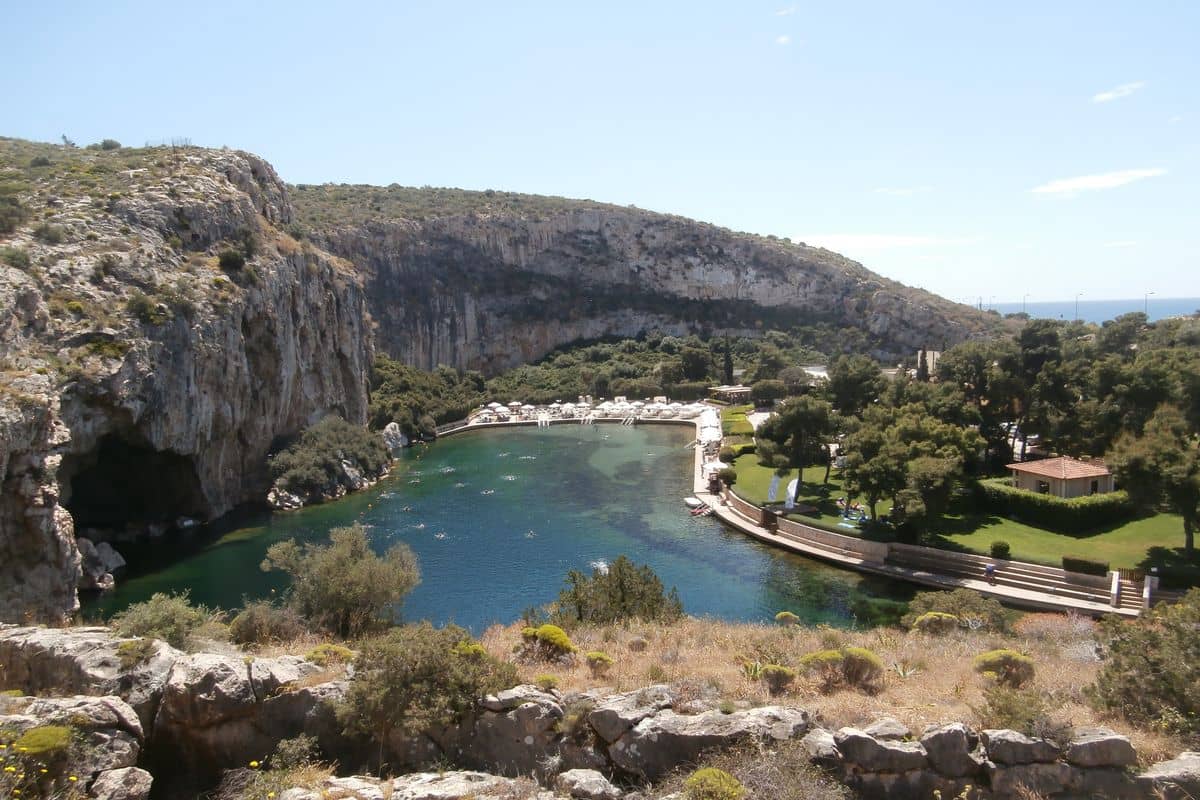
Wikipedia describes Vouliagmeni as a seaside suburb named after Lake Vouliagmeni. Along the southern fringe of the town, right beside the sea, lies the lake. It sits on the south-western foot of the Hymettus range. A boulevard lined with palm trees, Athinas Avenue, follows the shore. The article calls the suburb a home of renowned hotels and beaches.
Wikipedia places luxury hotels in Athens on the two pine-covered peninsulas of Kavouri. Megalo and Mikro Kavouri mean Big Crab and Little Crab. One hotel takes up the greater part of Mikro Kavouri. Between the rocky shores the article names sandy and pebble beaches and two marinas. A narrow isthmus links Mikro Kavouri to the mainland.
Wikipedia calls Poseidonos Avenue, or Paraliaki, the main coastal road of Athens. Starting in Piraeus at Faliro, it follows the whole shoreline past Glyfada and further. The article calls it busy all year and says it holds the public beaches nearest to the city centre. Anyone who weighs luxury hotels in Athens on the coast meets this road.
One travel page names the Riviera as a recently regenerated area about 10 miles out of the city. It adds that a number of the resorts there have pool areas and private beaches on the Aegean Sea. The same page gives a Poseidonos Avenue address for one of the luxury hotels in Athens on this coast.
Wikipedia also describes the disused airport site at Elliniko as a redevelopment area. Its plans list luxury hotels in Athens, conference facilities and recreation facilities. Check the present state of the works before planning a stay. Pictures of the capital sit in the Athens photo gallery of this site, for a first look at the city.
What services do luxury hotels in Athens list?
Luxury hotels in Athens list their services in layers. A desk handles check-in, a concierge gives advice, rooms run up to suites, and extras include a spa. Wikipedia explains the words concierge, suite and spa in plain terms.
Wikipedia describes a concierge as a hotel employee who receives guests and helps them. In a hotel the concierge works near reception, at a counter of their own. The receptionist handles check-in and check-out. The concierge advises on excursions, transfers and restaurants. A services list for luxury hotels in Athens that names a concierge points to this desk.
The word concierge is French. Wikipedia traces it to the Old French cumcerges, then to the Latin conservus, a fellow servant. French authors suggested another idea as early as the nineteenth century. They read it as comte des cierges, the count of candles, a servant who kept medieval palaces lit and clean.
Hotel concierges have an international association. Its members wear two crossed gold-plated keys on the lapel. Wikipedia says a candidate needs at least five years of hall service in a hotel of the highest class. A recommendation from at least two people is required. Does the concierge at one of the luxury hotels in Athens wear those keys?
Wikipedia says a suite strictly means connected rooms under one room number. Hotels also use it for accommodation with more space than a standard room. In upscale hotels a suite is made of more than one room. Wikipedia names the presidential suite and the royal suite as titles for the grandest accommodation of a hotel.
The word has two meanings, so a listing can leave a question open. Is the suite one large room with a sitting area, or connected rooms with one number? Wikipedia adds that honeymoon suites are marketed to couples and newlyweds with special amenities. Put the same question to each of the luxury hotels in Athens.
Wikipedia describes a boutique hotel as a small hotel with more personal service. It tends to have fewer than a hundred rooms. It can also offer a spa, yoga and painting classes. A resort, in the North American sense, aims to supply a vacationer’s needs on its own premises. Its services include food, drink, sports, entertainment and shopping.
The Hotelstars Union builds the list for luxury hotels in Athens on the four-star list. That base holds a lobby with seats and beverage service. It also names a television with international channels. The bathroom list names cosmetic products such as a shower cap and cotton swabs. Wikipedia says rating systems also weigh spas and fitness centres.
What do spas at luxury hotels in Athens offer?
Spas at luxury hotels in Athens use a word with a long past. Wikipedia defines a spa as a place where mineral-rich spring water, sometimes seawater, is used for medicinal baths. It says the health treatments are known as balneotherapy.
Wikipedia says the bathing regimens of ancient Greece formed the foundation for modern spa procedures. The earliest finds are the palace baths at Knossos on Crete and the alabaster bathtubs of Akrotiri on Santorini. Wikipedia dates both to the mid-2nd millennium BC. Spas at luxury hotels in Athens work with an idea of Greek roots.
Greek myth said that certain natural springs and tidal pools were blessed by the gods to cure disease. Bathing places grew around them. Public baths and showers stood in the gymnasium complexes. The Romans copied Greek habits. Wikipedia lists their ritual as undressing, bathing, sweating, a massage and rest, each step in its own room.
In the early nineteenth century a European bathing routine had taken shape. It included soaking in hot water and drinking the water. Bathers also steamed in a vapor room and relaxed in a cooling room. Wikipedia says the wellness industry has made such treatments popular again. Spas at luxury hotels in Athens belong to that trend.
The word comes from the town of Spa in Belgium, called Aquae Spadanae in Roman times. Its water came from a spring named Espa, the Walloon word for a fountain. A tale says spa stands for the Latin words for health through water. Wikipedia treats it as a backronym, since it appears only in the early twenty-first century.
Wikipedia says spa towns, spa resorts and day spas are popular worldwide, especially in Europe and Japan. A spa resort is a short-term residential facility with individual services for spa goers. Its programme adds fitness activities and healthy diet programmes. A reader of listings for luxury hotels in Athens can ask if the spa sits inside the hotel.
Lake Vouliagmeni lies just south of the town of Vouliagmeni, a coastal suburb that stands 18 km away from the middle of the city. Wikipedia calls it a small brackish-water lake. Water reaches it from below, passing through Mount Hymettus. Wikipedia gives its temperature as 22 to 29 degrees Celsius, so the lake serves as a spa all year.
One travel page lists wellness facilities of boutique hotels in Athens. They include a sauna, a fitness centre, an indoor heated pool and massage treatments. Put plain questions to each of the luxury hotels in Athens. When does the spa open? Is a treatment arranged ahead or on the day? Is the pool open to every guest?
Which museums lie close to luxury hotels in Athens?
The museum list for luxury hotels in Athens starts with four buildings in the centre of the city. Three of them stand on Vassilissis Sofias Avenue. They hold Cycladic art, Byzantine works, Greek and European paintings, and the military history of Greece.
According to Wikipedia, the Museum of Cycladic Art came into being in nineteen eighty-six. It began as a home for the Cycladic and ancient Greek collection of Nikolaos and Dolly Goulandris. From the early nineteen sixties the couple bought Greek antiquities, above all the prehistoric art of the Cyclades. The permanent collection numbers over 3,000 items.
Ioannis Vikelas designed the main building, erected in the centre of Athens in nineteen eighty-five. In nineteen ninety-one the museum gained the neo-classical Stathatos Mansion, at the corner of Vassilissis Sofias Avenue and Herodotou Street. Temporary exhibits are housed there. A reader of luxury hotels in Athens can ask how far each listing lies from that corner.
The Byzantine and Christian Museum stands at number 22 on Vassilissis Sofias Avenue. Its story starts in nineteen fourteen, on the first level of the Academy. Later it moved into the Ilissia Villa, a building of eighteen forty-eight that belonged to the Duchesse de Plaisance. Wikipedia names Stamatios Kleanthis as the architect of the villa.
The museum houses more than 25,000 exhibits, among them frescoes, pottery, fabrics and manuscripts. The collections begin in the third century AD and run to the Late Middle Ages. It reopened in June of two thousand and four after a renovation. The Evangelismos metro station serves it, a stop to match with listings of luxury hotels in Athens.
The National Gallery shows Greek and European art from the fourteenth to the twentieth century. Wikipedia places it on Vassilissis Sofias Avenue, in the Pangrati district, with the Evangelismos metro station as its stop. Its Greek art is mainly post-Byzantine, and the European collection is extensive. Paintings of the Renaissance form a particularly valuable part of it.
Among the museums near luxury hotels in Athens, the War Museum is the one for military history. Wikipedia says the Greek Armed Forces have their military museum here. Artillery guns and retired aircraft stand outside the building, which dates from nineteen seventy-two. Four floors inside show exhibits from antiquity to modern times.
The Benaki Museum occupies a former family house across Queen Sofias Avenue from the National Garden. Wikipedia says Antonis Benakis established it in memory of his father. A visitor who adds the Acropolis Museum can read about the Acropolis tour with the Acropolis Museum. Check current opening times before planning a day from luxury hotels in Athens.
Which stages and concert halls lie close to luxury hotels in Athens?
The stage list for luxury hotels in Athens starts with three venues. The Athens Concert Hall stands on Vassilissis Sofias Avenue. The Greek National Opera performs in Kallithea, and the Odeon of Herodes Atticus lies on the Acropolis slope.
The Athens Concert Hall was inaugurated in nineteen ninety-one. Wikipedia counts four halls there today, two large and two smaller, since two were added later. The Megaro Moussikis station of the Athens Metro, on Line 3, lies just outside. Among the stages close to luxury hotels in Athens, the hall has a metro stop at its door.
The Christos Lambrakis Hall has a capacity of 1,961 and serves concerts and recitals. Wikipedia states that its organ, with 6,080 pipes, is the biggest in Greece. The Alexandra Trianti Hall, with a capacity of 1,750, serves opera, ballet and other music. The Dimitris Mitropoulos Hall has a capacity of 494 and serves chamber music and dance.
In the Athens suburb of Kallithea lies the Stavros Niarchos Foundation Cultural Center. Renzo Piano planned it to shelter both the national library and the opera. Its roofs rise from an artificial hill, set in a park of 210,000 square metres. Among the stages close to luxury hotels in Athens, its opera auditorium has 1,400 seats.
Wikipedia says the Greek National Opera gives its performances on three stages. The Stavros Niarchos Hall is the main place for opera and ballet. The Alternative Stage presents musicals. In summer the company moves to the Odeon of Herodes Atticus, together with the Athens Festival. The state lyric opera company was formally established in nineteen thirty-nine.
The southwest slope of the Acropolis carries the Odeon of Herodes Atticus. Wikipedia says the Roman theatre had a front wall of three storeys in stone and 33 rows of marble seats. In AD 267 the Heruli destroyed it and left it in ruins. In the nineteen fifties, Pentelic marble went into the restored seating and orchestra.
Between late spring and October each year, the Odeon serves as the home stage of the Athens Festival. The Greek National Opera has staged summer opera there since nineteen fifty-five. Maria Callas performed there in nineteen fifty-seven, and Luciano Pavarotti performed twice. Anyone staying at luxury hotels in Athens can look up the programme before the trip.
The Theatre of Dionysus, which Wikipedia says is considered the oldest theatre, stands beneath the southern slope of the Acropolis. The City Dionysia, held there, honoured the god of wine and theatre. In the fourth century BC the seating held up to 25,000. Guests of luxury hotels in Athens can ask for a view of that hill.
What do guests of luxury hotels in Athens eat and drink?
Four Greek products fill the table for guests of luxury hotels in Athens: wine, olive oil, ouzo and Greek coffee. Wikipedia sets out the history, the grapes and the rules behind each one, so guests can ask better questions.
Wikipedia counts Greece among the world’s oldest regions for making wine. It dates the first evidence of Greek wine to about 6,500 years ago and counts about 200 vine varieties. A wine list at one of the luxury hotels in Athens is worth reading slowly. The marks PDO and PGI on a label point to the origin.
Attica, the region that holds Athens, has its own grapes. Wikipedia names Savatiano as the leading white grape there and Roditis as a popular one. With cold fermentation, Savatiano gives a floral and fruity scent. Fermented warm, the grape gives retsina or a rustic wine with no resin. Ask which Attica bottles are on the list.
Retsina is a traditional wine, and pine resin gives it its taste. Wikipedia says it became the national drink in the nineteen sixties, and tourism tied it to Greece. Guests of luxury hotels in Athens can ask about two other grapes. The white Assyrtiko grape is native to Santorini. Agiorgitiko is a soft and fruity red from Nemea.
Wikipedia names the olive, wheat and the grape as the three core food plants of Mediterranean cuisine. After Spain, it lists Greece, Italy and Turkey among the large producers. Extra virgin olive oil is mainly used raw, in dressings and as a condiment, where its flavour is stronger. Ask whether the oil on the table is Greek.
Ouzo is a dry aperitif, and anise gives it its taste. Wikipedia says water turns it milky white. It comes with mezes, plates of olives, feta, fries and small fresh fish. Ouzeries serve it sipped slowly for hours in the early evening. Does the bar at one of the luxury hotels in Athens pour ouzo with water and ice?
Greek coffee is made in a small pot, a briki on the mainland. Wikipedia’s article on the style, titled Turkish coffee, says the fine grounds stay in the cup. The coffee is brought to the boil and topped with froth. The guest names the sugar level when ordering. Tradition adds a glass of water, sipped first.
Rooftop and terrace tables form a category. One travel page lists rooftop restaurants and bars among the facilities of the hotels it covers. A second page counts rooftop bars with Acropolis views as a feature of the hotels it lists. Before dinner at one of the luxury hotels in Athens, ask which hours the terrace keeps.
Where do guests of luxury hotels in Athens shop and stroll?
Guests of luxury hotels in Athens shop among the boutiques of Kolonaki. They stroll in Plaka, the Zappeion gardens, the road by the Panathenaic Stadium and on Philopappos Hill. Wikipedia and Wikivoyage describe each of these places in plain facts.
Kolonaki is the shopping quarter. Wikivoyage says it holds the city’s greatest concentration of fashion boutiques, as well as upscale cafes, bars and restaurants. The quarter covers the slopes of Lycabettus Hill, north of Vassilisis Sofias Avenue. Guests of luxury hotels in Athens who shop on foot can start the day there.
Kolonaki is also a place to walk. Wikivoyage names much of the quarter as pleasant for walking. It also lists a number of embassies and archaeological schools. Wikipedia adds that the evening options include bars, ouzeries and tavernas. A shopper can pair a morning of boutiques with a long coffee and a slow walk back to the hotel.
Plaka is the second place for a stroll. Wikivoyage lists pedestrianized streets, shops, restaurants and renovated nineteenth-century houses in Plaka, the district below the Acropolis. It names the upper reaches as pleasant for walking. Guests of luxury hotels in Athens who climb through Plaka reach Ano Plaka, which Wikipedia places right under the Acropolis.
Beside the National Gardens stands the Zappeion, a large hall that looks like a palace. Wikipedia records it as the first structure built for the Olympic Games when they returned. The building dates from the late nineteenth century. It now serves as a conference and exhibition centre. The gardens around the hall hold statues, a quiet pause.
The Panathenaic Stadium lies east of the Zappeion, between the hills of Ardettos and Agra, which carry pine trees. Wikipedia adds that the Ilissos river, now covered, runs beneath Vasileos Konstantinou Avenue in front of the entrance. A walk from one of the luxury hotels in Athens along that avenue follows the line of the old river.
Philopappos Hill is a walk with a monument on it. Mouseion Hill, southwest of the Acropolis, is crowned by the Philopappos Monument. Wikipedia calls it a Roman mausoleum for a prince of Commagene. Wikivoyage counts the Hill of Philopappus among the seven historical hills of Athens. It says the hills offer a refuge from street noise.
Guests of luxury hotels in Athens can plan each walk with the front desk. Ask how long the route takes on foot and whether the hill path is open on that day. Wikivoyage advises comfortable shoes with good traction and no high heels. Sensitive archaeological sites have banned pointed heels, which damage the marble.
Which hills and gardens lie close to luxury hotels in Athens?
Mount Lycabettus and the National Garden lie close to luxury hotels in Athens that stand in Kolonaki. Wikipedia gives the hill 277 metres of height. It gives the garden 15.5 hectares, and both sit in the centre of the capital.
Wikipedia calls Mount Lycabettus a Cretaceous limestone hill. The summit stands 277 metres above the sea and tops every other point in Central Athens. Pine trees cover the base. A funicular railway climbs the hill from a lower terminus on Aristippou Street in Kolonaki. Luxury hotels in Athens stand in that quarter, below the hill.
The two summits carry a theatre, a restaurant and a chapel of St. George that dates from the nineteenth century. The large open-air amphitheatre near the top has housed Greek and international concerts. It closed for safety reasons, stayed shut for fifteen years and then reopened. Guests of luxury hotels in Athens ask the hotel for current events.
Popular stories say wolves once found refuge on the hill. The Greek word for wolf, lycos, is offered as the source of its name. Another story credits the goddess Athena. In the story Athena carried a mountain of limestone away from the Pallene peninsula, heading for the Acropolis building site. She let it fall, and so the hill appeared there.
Wikivoyage counts twelve hills inside Athens and names the Acropolis and Lykavittos as the hills that stand out. It says the hills give a refuge from the noise of the streets and views down to the Saronic Gulf. Guests of luxury hotels in Athens who prefer a seat find the Athens hop-on hop-off bus tour listed separately.
Public parkland of 15.5 hectares makes up the National Garden, Wikipedia says. It lies between Kolonaki and Pangrati. Guests of luxury hotels in Athens in Kolonaki find it beside their quarter. The garden dates from eighteen thirty-eight, when Queen Amalia ordered it, and the work was finished by eighteen forty. It carried the name Royal Garden until nineteen seventy-four.
A German agronomist, Friedrich Schmidt, designed the garden and imported over 500 species of plants. He also brought a variety of animals, among them peacocks, ducks and turtles. Wikipedia adds that the dry Mediterranean climate proved too harsh for a number of the plants. Ancient Roman remains in the garden include a villa with a mosaic.
The principal gate opens onto Leoforos Amalias. Wikipedia lists three other gates, one of them on Vasilissis Sophias Avenue. Inside are a pond for ducks, a small botanical museum, a cafe and a children’s library with a playground. The garden admits visitors between sunrise and sunset, so guests of luxury hotels in Athens plan the visit by daylight.
What sea and sport lie close to luxury hotels on the Athens coast?
Vouliagmeni, 18 kilometres south of the centre, has a brackish lake, two marinas and beaches with blue flags. Glyfada has a golf course. These are the sea and sport places near luxury hotels in Athens on the coast.
Wikipedia describes Vouliagmeni as a seaside suburb. Pine trees cover its western half, which lies by the sea. It forms two peninsulas, Megalo Kavouri and Mikro Kavouri. Megalo Kavouri is the Big Crab and Mikro Kavouri the Little Crab. Hotels are among their features, and luxury hotels in Athens on the coast stand beside pines and sea.
The lake sits on the town’s southern fringe, with the sea right beside it. Wikipedia explains that underground currents flowing through the rock of Hymettus feed this small lake of brackish water. The lake gave the suburb its modern name, which means sunken in Greek. In every season the lake serves as a spa, Wikipedia says.
The beaches of Vouliagmeni are sandy or pebble and lie between rocky shores. Wikipedia says they have won the EU blue flag for environmental quality year after year. A narrow sandy isthmus, Laimos or the Neck, joins Mikro Kavouri to the mainland. The triathlon of the two thousand and four Olympic Games took place in this area.
Vouliagmeni has two marinas. Wikipedia also describes an aquatic sports club there. It runs its own marina and a waterskiing school, and it keeps sailing boats for competition. Its heated open-air pool hosts swimming and water polo teams. The club admits members and their guests, so a visitor from luxury hotels in Athens asks the hotel about access.
Glyfada belongs to the Athens Riviera and faces the Saronic Gulf. Wikipedia says Glyfada Marina totals 3 kilometres of water and coast. The golf course of Athens lies to the northwest, south of the former Ellinikon Airport. Alimos, 8 kilometres south of the centre, also has a large marina and beaches.
Voula lies 16 kilometres from the centre, between Glyfada on its northwestern side and Vouliagmeni on its southern side. For guests of luxury hotels in Athens at Vouliagmeni, it is the next town to the north. Varkiza lies 22 kilometres south of the centre. Beside its widely known beach, Wikipedia places restaurants, fields, parkland and tennis courts.
Sailors like the Saronic Gulf, because the Attic mainland gives it partial cover against the Meltemi, the wind of summer. According to Wikipedia, the Meltemi reaches Force 7 and above out among the islands of the eastern Aegean. Luxury hotels in Athens on the coast face this gulf, which also gathers short-beaked common dolphins.
Who stays in luxury hotels in Athens?
Travel sources name couples, families, business and conference travellers and cruise passengers as guests of luxury hotels in Athens. The capital draws leisure and work visitors alike. Wikipedia reports 40.7 million inbound travellers for Greece in two thousand and twenty-four.
Luxury hotels in Athens stand in the capital of Greece. Wikipedia calls the city central to the economic, financial, industrial, maritime, political and cultural life of the country. Athens is also the capital of Attica, and it lies further south than any other capital on the mainland of Europe. Wikivoyage adds that Kolonaki holds a number of embassies.
In Wikipedia’s account, around three quarters of the tourist arrivals in Greece fall from late spring to the close of September. It lists Germany, the United Kingdom and France as the three leading markets in two thousand and twenty-three. Germany supplied about 4.7 million travellers, the United Kingdom roughly 4.5 million and France 4.2 million.
A travel magazine page calls Athens a city-break destination for history buffs and sunshine seekers alike. It adds that hotels in Athens have only lately answered demand for weekend breaks and for stays in the quieter months. The page applies this to every kind of hotel, from guesthouses to coastal resorts, luxury hotels in Athens included.
One travel page lists five upscale hotels. It names couples among the guests of four of them and honeymooners for the fifth. A second page names couples and design lovers for one boutique hotel and first-time visitors for another. Further entries suit guests seeking a base at the foot of the Acropolis or near Syntagma Square.
Families are the next group in the listings. One listing page names family rooms, interconnecting rooms and babysitting on request at a design hotel. Another page lists family suites, children’s amenities and babysitting services at a boutique hotel. The details come from listings, so a family can ask luxury hotels in Athens to confirm them.
Wikipedia treats conference tourism as a pillar of the national tourism policy. It cites a trade report that ranked Greece eighth in the world in overnight stays for conferences. One listing page marks an upscale Athens hotel as suited to business travellers. Together these lines place business and conference visitors among the guests of luxury hotels in Athens.
Wikivoyage notes that cruise ships regularly visit Piraeus, with the warm months bringing more of them. It names Piraeus as the main harbour that serves the capital. One travel page lists Hydra, Poros and Aegina as a boat trip from the city. This site has a page on Greek islands cruises for passengers who plan one.
How do guests of luxury hotels in Athens move between the city and the coast?
Guests of luxury hotels in Athens reach the coast by taxi, tram, metro or hire car. Wikipedia puts the Athens Riviera about 16 kilometres from downtown. Wikivoyage describes each of these ways to make the trip, with its cautions.
Wikivoyage describes canary yellow taxis as a common sight in Athens. A taxi that already carries a passenger shows a brightly lit TAXI sign. The driver asks where a new passenger wants to go before letting them join. Guests of luxury hotels in Athens who plan ahead can read about Athens transfers on a separate page.
Wikivoyage says overcharging is rarer than it used to be but still happens, so passengers insist on the meter. A driver owes a receipt on request. Strikes among cab drivers and city transit workers are common, Wikivoyage reports. It suggests asking the host of a lodging for a way round a strike.
On a trip from luxury hotels in Athens to the sea, the main coast road is Poseidonos Avenue. Wikipedia says it starts at Faliro in the Piraeus area and goes on past Glyfada along the whole shore. The article adds that the road is busy all year and has the public beaches nearest to the centre.
Wikipedia calls Syngrou Avenue a major road that links the city centre with Poseidonos Avenue near the Bay of Faliro. It runs from southwest to northeast through Palaio Faliro, Kallithea, Nea Smyrni and the Municipality of Athens. The Syngrou-Fix station of the Red Line of the metro stands near its northeastern end.
Wikipedia says the Athens Tram network is 27 kilometres long, with two lines and 60 stops across ten suburbs. Wikipedia adds that the network reaches the larger share of the city’s Saronic Gulf shore. Next to taxis, the tram gives guests of luxury hotels in Athens a second way to follow the shoreline.
Wikivoyage lists three metro lines and calls Acropolis, Larissa and Syntagma the major stations. Line 2, the Red Line, joins western and southern Athens through the centre and runs to Elliniko, a coastal district. Wikipedia says the suburban railway has 45 stations and runs from half past 4 in the morning until midnight. Check the current times.
Wikivoyage calls driving in Athens notoriously difficult, with tight streets and scarce kerbside parking. The greater part of the garages in the centre offer valet parking only. Wikivoyage also tells renters to ask the hire firm about the Daktylios pollution control area. Guests of luxury hotels in Athens can read about car hire on a separate page.
What else do travellers ask about luxury hotels in Athens?
How do guests of luxury hotels in Athens reach the Athens Olympic Sports Complex?
The Athens Olympic Sports Complex stands in Marousi, a suburb of Athens. Wikipedia lists three ways to reach it: Metro Line 1, the suburban train or a direct bus. The metro stops are Neratziotissa and Irini, and the suburban train also calls at Neratziotissa.
The complex has five major venues. It was the main venue of the two thousand and four Summer Olympics. The Spanish architect Santiago Calatrava produced the design for its revamp. The stadium was built in nineteen eighty-two and later received a roof.
Travellers who stay in luxury hotels in Athens find the history of the site in one list. Wikipedia names the Mediterranean Games of nineteen ninety-one and the World Championship in Athletics of nineteen ninety-seven. The Indoor Hall also held the fifty-first Eurovision Song Contest, and all facilities are still in use.
What do guests of luxury hotels in Athens find in the Pangrati quarter?
Pangrati is a quarter of Athens with an estimated population of 35,173 residents. An ancient sanctuary of Hercules Pancrates, a title meaning All Powerful, gave the quarter its name. Wikipedia places it a short walk from the National Garden, and Kolonaki borders it on the west.
Wikipedia names a number of squares in the quarter. Plastira Square serves as a stop for trolleys and local buses. Saint Spyridon Church stands on Agios Spyridon Square, and the Church of the Prophet Elijah stands on Profitis Ilias Square. Evangelismos metro station serves the quarter.
Wikipedia also names artists of the quarter. The poet Giorgos Seferis, a Nobel laureate, lived in Pangrati. The composer Manos Hatzidakis won an Academy Award for the song Never on Sunday. Wikipedia links him closest with the quarter.
What is the Athens memorial of the unknown soldier, and who are the Evzones, for visitors staying at luxury hotels in Athens?
A cenotaph stands on Syntagma Square, facing the Old Royal Palace. Wikipedia names the monument as the Tomb of the Unknown Soldier. It honours Greek soldiers who died in conflict. Fokion Rok sculpted it in the years nineteen thirty to nineteen thirty-two.
Evzones from the Presidential Guard keep watch over the tomb. The central figure is a warrior lying on the ground. He holds a circular shield and wears a helmet of the ancient Greek type. Lines of Thucydides are cut into the stone on both sides. At the unveiling, a torch carried from Agia Lavra monastery lit the eternal flame.
Which questions about check-in and late arrival help with luxury hotels in Athens?
Wikipedia describes check-in as the step where a guest registers, also called signing in. A guest can sign a register, and certain hotels ask for an identity document such as a passport. Reception then hands over the room key at the end.
Check-in times vary. Wikipedia says the start of check-in falls between noon and mid-afternoon. Wikipedia adds that hotels with a grace time give thirty to sixty minutes when a guest asks. A traveller can ask luxury hotels in Athens which check-in time applies.
For a late arrival, Wikipedia says the hotel can arrange a late check-in if the guest agrees this in advance. Certain hotels set a latest check-in time between 6 and 8 in the evening. Which latest time does a listing of luxury hotels in Athens give? Can the hotel arrange a late check-in after a late flight?
Can guests of luxury hotels in Athens read the street signs without the Greek alphabet?
Wikivoyage says the signs on Athens public transport always show the names written out in Roman letters. It adds that almost all signs in the city are written in Greek and English. A traveller who cannot read Greek therefore meets Roman letters on the transit signs.
Transliteration varies from sign to sign. Wikivoyage gives the district of Helliniko as an example, because its Greek spelling has more than one Roman form. Two signs can show two spellings of one name, so a traveller can check the map against both.
Greek is the official language in Greece, and Wikivoyage says English information is abundant in Athens. It adds that people in the tourist trade are expected to speak French or German as well. A traveller can ask luxury hotels in Athens which languages the front desk speaks.