3 star hotels in Athens form the B class group of this listing, with one list for the old centre and the districts around it. For other trips, see our tours in Greece page.
This page covers what the level means, how Greece classifies it, where the hotels stand, the walk to the Acropolis, the museums, the food and the parks and hills nearby.
What are 3 star hotels in Athens?
3 star hotels in Athens are hotels of the middle level in the European star system. The Hotelstars Union calls this level the comfortable European middle class. It sets fixed standards for the front desk, the room and breakfast.
The old listings of this site filed these hotels under B class. Greece rates hotels with one to five stars. The 3 star hotels in Athens sit in the middle of that scale, with one step above and one below. The other classes of the capital are set out on the Athens hotels page of this site.
The Hotelstars Union page for Greece places the level in the mid-market segment. It says such a hotel offers a balanced mix of function, comfort and regional character. It names business travellers, city travellers and families as the guests of this level. Cleanliness, well-kept facilities and reliable service form the base of the level, it adds.
The criteria for 3 star hotels in Athens start at the front desk. The Hotelstars Union list for Greece asks for a staffed desk of 10 hours a day. A desk of 8 hours also meets the rule with self check-in and check-out at any hour. The same list also requires bilingual staff at the front desk.
The same list names the services behind the desk. It asks for a breakfast buffet or an equivalent menu. It adds secure luggage storage for guests, a washing and ironing service, wake-up calls and a central safe. The page calls them minimum criteria and says no claims can be drawn from its graphic.
The room has its own list for 3 star hotels in Athens. The list names a seat for each guest and a desk with a light and a power socket. It adds a dressing mirror, a luggage rack, a hairdryer and drinks in the room. In all, six criteria are for the hotel and four for the room.
Behind the short lists stands a catalogue of criteria. Wikipedia describes seven areas with 247 elements, each with points, and a minimum sum of points for every level. The Hotelstars Union page for Greece gives a different total of 239 criteria. Wikipedia adds that anonymous inspectors test the service of hotels in the three-star to five-star range.
The city serves as the national capital and also as the seat of the Attica region. No other Greek city is larger than Athens, and its built-up area holds more than 3.6 million residents. This is the setting of 3 star hotels in Athens: a large capital with an ancient core. The Athens tours of this site show a day out from the hotel.
How does Greece classify 3 star hotels in Athens?
Greece classifies 3 star hotels in Athens in a law-based scale of one to five stars. The Hellenic Chamber of Hotels issues the classification certificate after an inspection. A hotel earns its stars by meeting a catalogue of criteria.
Wikipedia names Greece among the members whose hotel standards are fixed by law. Since two thousand and thirteen, Greece has belonged to the European Hotelstars scheme. One Greek study calls the system obligatory, with five star categories. So 3 star hotels in Athens belong to a European scale that a number of countries share.
The Hellenic Chamber of Hotels has worked since nineteen thirty-five as a legal entity of public law. Its own page says every hotel and campsite in Greece belongs to it by law, with about 10,000 members. It is also a member of HOTREC, the confederation of hotels and restaurants in the European Union.
A hotel reaches its stars in steps, as the Hotelstars Union page for Greece describes them. A classification society first checks the data that the hotel sends in online. Assessors then visit the hotel for an on-site audit. Only after both checks does a hotel take its place among the 3 star hotels in Athens.
After a successful audit the hotelier receives a certificate and a sign. The sign shows the Hotelstars Union logo, the star category and the period of validity. Each classification is valid for a limited time. The portal of the Hellenic Chamber of Hotels lists the issuance of certificates and a checklist of categorisation criteria.
Stars do not tell everything about 3 star hotels in Athens. Wikipedia reports a view that amenity-based schemes disadvantage small hotels, where a missing lift blocks a higher class. The Hotelstars Union FAQ states that meeting the minimum criteria alone does not earn a star category. The level below is on the page about2 star hotels in Athens.
A Greek travel page says a rating comes from mandatory criteria in the law. They cover the building, the equipment and the services, and optional criteria raise the rating. Furnished rooms and apartments are rated in keys, from two to four, not in stars. The step above is covered on the page about 4 star hotels in Athens.
For a listing of 3 star hotels in Athens, which questions fit? How large is the room? Is there a lift to the upper floors? Does the room have air conditioning? Where is the breakfast room, and until what hour is breakfast served? Wikipedia names room size and ease of access among the points that schemes can consider.
Where are 3 star hotels in the old centre of Athens?
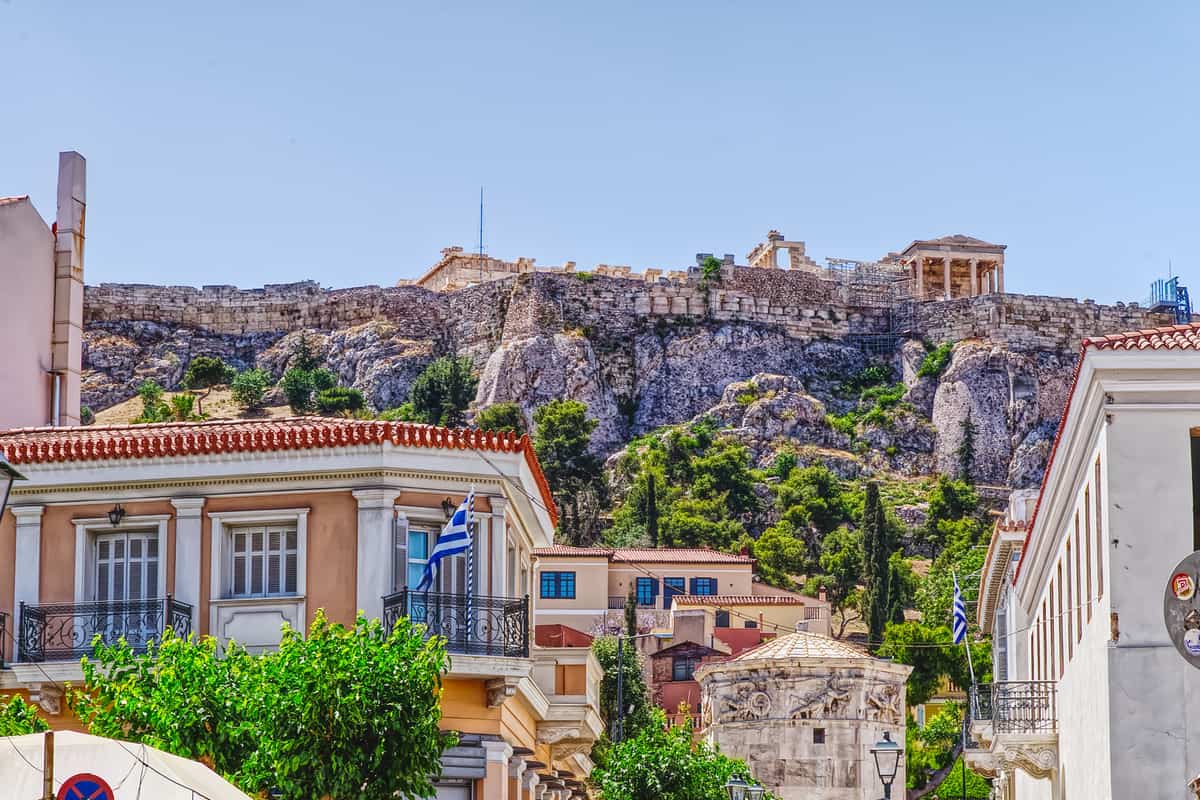
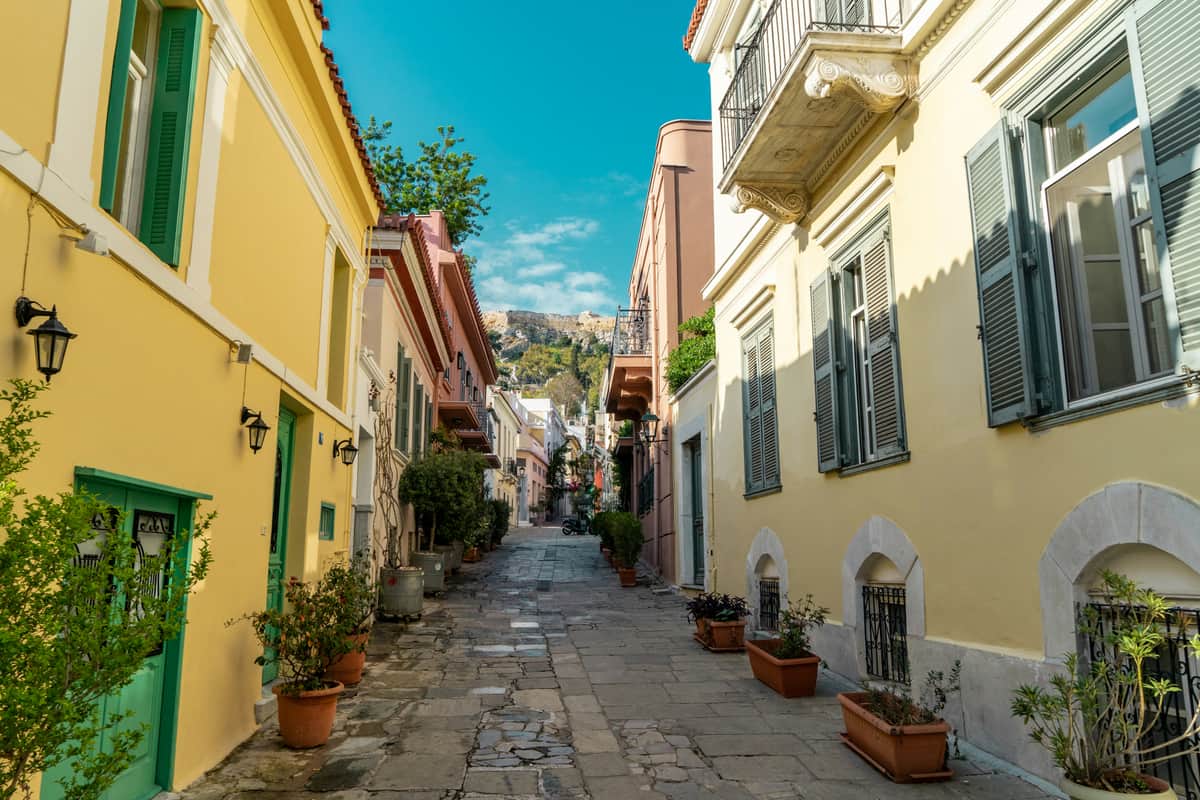
One listing page names the Plaka, Syntagma and Monastiraki as the areas of its 3 star hotels in Athens. These three form the old centre. The Plaka rests on the north-eastern flank of the Acropolis hill, between Syntagma Square and Monastiraki Square.
Wikipedia names Adrianou Street as the largest, central street of the Plaka. Running north and south, it splits the Plaka into two parts. Ano Plaka, the upper part, sits directly below the Acropolis. Kato Plaka, the lower part, fills the ground toward Syntagma and Monastiraki. Wikivoyage notes that the borders of the Plaka are only loosely drawn.
Below this paragraph a list gathers the pages of hotels in this class that stand in the old centre. This page does not rank or rate the 3 star hotels in Athens on that list. It gives the facts of the streets around them, so that a reader can place each page on the map.
- Achilleas Hotel and its Achilleas Hotel photo gallery
- Acropolis Select Hotel and its Acropolis Select Hotel photo gallery
- Adrian Hotel and its Adrian Hotel photo gallery
- Alassia Hotel Athens and its Alassia Hotel Athens photo gallery
- Amazon Hotel Athens and its Amazon Hotel Athens photo gallery
- Arethusa Hotel Athens and its Arethusa Hotel Athens photo gallery
- Arion Hotel Athens and its Arion Hotel Athens photo gallery
- Athens Cypria Hotel and its Athens Cypria Hotel photo gallery
- Candia Hotel Athens and its Candia Hotel Athens photo gallery
- Dorian Inn Hotel and its Dorian Inn Hotel photo gallery
- Fresh Hotel Athens and its Fresh Hotel Athens photo gallery
- Hermes Hotel Athens and its Hermes Hotel Athens photo gallery
- Jason Inn Hotel and its Jason Inn Hotel photo gallery
- Ionis Hotel Athens and its Ionis Hotel Athens photo gallery
- King Jason Hotel and its King Jason Hotel photo gallery
- Museum Hotel Athens and its Museum Hotel Athens photo gallery
- Pan Hotel Athens and its Pan Hotel Athens photo gallery
- Philippos Hotel Athens and its Philippos Hotel Athens photo gallery
- Plaka Hotel Athens and its Plaka Hotel Athens photo gallery
- Plaza Hotel Athens and its Plaza Hotel Athens photo gallery
- Pythagorion Hotel Athens and its Pythagorion Hotel Athens photo gallery
- Zinon Hotel Athens and its Zinon Hotel Athens photo gallery
Wikipedia says the Plaka has had people living in it nonstop since the Neolithic period. The 3 star hotels in Athens that stand in the Plaka are in the city’s oldest quarter. A blaze in eighteen eighty-four destroyed a large part of the district. That fire gave archaeologists a chance to dig the Roman Agora.
Anafiotika is a tiny corner of the Plaka, set against the Acropolis rock. Workers from the island of Anafi raised the first homes. They had come to Athens to work on the palace of King Otto. Wikipedia counts only 45 houses there today. They are white, small and cubic, in the style of the Cyclades.
Wikipedia lists museums inside the Plaka. They include the Frissiras Museum, the Jewish Museum of Greece and the Museum of Greek Folk Musical Instruments. A walk from 3 star hotels in Athens in this district can end at their doors. The Plaka is also the only quarter of Athens that keeps all utility lines in tunnels below ground.
The name Monastiraki is Greek for little monastery. The district is named after its square, and the square after the Pantanassa Church. Two main streets, Pandrossou and Adrianou, run through this flea market. Both Line 1 and Line 3 of the metro call at the station on the square. One listing page of 3 star hotels in Athens puts a hotel near that station.
Wikipedia dates the Roman Agora between 27 BC and 17 BC, built with funds from Augustus. It lies about 100 metres east of the Ancient Agora. Wikivoyage gives Syntagma Square the Plaka on its south and Monastiraki on its west. Another listing page files 3 star hotels in Athens under Syntagma too.
Where are 3 star hotels beyond the old centre of Athens?
Beyond the old centre, a reader can place 3 star hotels in Athens in five quarters. Koukaki and Makrygianni lie south of the Acropolis. Exarcheia and Metaxourgeio lie north of the centre, and Pangrati lies to the east.
Wikipedia places Koukaki on the south-eastern side of the city. Makrygianni and the Plaka touch it on the north, and Neos Kosmos on the east. Filopappou and Thissio lie on its west. Veikou Street and Dimitrakopoulou Street are its two largest streets. Andrea Syngrou Avenue joins the centre to Poseidonos Avenue along its eastern border.
A reader who compares 3 star hotels in Athens by area can use the transport facts of Koukaki. Two metro stations serve it, Akropoli near the Acropolis and Syngrou-Fix. Both tram lines stop at Fix and at Vouliagmenis. Wikipedia adds a large weekly vegetable market every Friday and names Petralona as the nearest overground station.
Makrygianni spreads across the southern foot of the Acropolis hill. For 3 star hotels in Athens there, the neighbours are the Plaka above it and Koukaki below it. Wikipedia names the quarter after Ioannis Makrygiannis, a general of the Greek War of Independence. Pictures of the city sit in the Athens photo gallery.
Exarcheia stands in central Athens, framed by three roads: Panepistimiou Street, Alexandras Avenue and Patission Street. In the nineteenth century a merchant called Exarchos opened a big general store there, giving the quarter its name. Wikipedia places the National Archaeological Museum inside Exarcheia. That is the quarter to check for 3 star hotels in Athens near the museum.
The Athens Polytechnic dominates Exarcheia, says Wikivoyage. It calls the district bohemian, with bars and clubs visited by students, intellectuals and people who like alternative culture. Wikipedia records that the student uprising against the military junta began at the Polytechnic in November nineteen seventy-three. Wikipedia says the quarter was laid out between eighteen seventy and eighteen eighty.
Metaxourgeio means silk mill. Wikipedia places it north of the historical centre. Avdi Square is its centre, with theatres and an art gallery. The quarter has a station on metro line 2. One listing page of 3 star hotels in Athens puts one hotel 350 metres from that station. The same entry gives 1.2 km to Monastiraki.
Pangrati, named after the ancient sanctuary of Hercules Pancrates, has an estimated 35,173 residents. The Panathenaic Stadium, host of the first Olympic Games of modern times, stands in it. Among 3 star hotels in Athens beyond the old centre, Pangrati is the quarter east of Kolonaki. The Athens hotels index leads on to the other hotel pages.
How far is it on foot from 3 star hotels in Athens to the Acropolis?
The walk depends on the quarter, as 3 star hotels in Athens stand in different parts of the centre. Wikipedia gives two fixed points. The Acropolis Museum sits 280 metres away from the Parthenon. The Temple of Olympian Zeus lies roughly 500 metres away from the rock.
Wikipedia gives the rock a height of 150 metres over the sea. Its flat top spreads across about three hectares. Every walk from 3 star hotels in Athens ends with a climb. Wikivoyage expects visitors to climb and descend the hill on their own. Wheelchair users have a lift on the north face.
Dionysiou Areopagitou Street is reserved for walkers and hugs the southern slope of the Acropolis in Makrygianni. Its east end lies by the Arch of Hadrian and Amalias Avenue, and its west end lies near Philopappos Hill. Dimitris Pikionis gave it its shape in nineteen fifty-five. Cars were shut out in two thousand and three.
Past Makrygianni Street, buildings stand on the south side alone, while the other side looks over the archaeological site of the Acropolis. A walker from 3 star hotels in Athens therefore walks beside the ancient site. On the south side stands the Acropolis Museum, and the ancient Theatre of Dionysus has its gate near Makrygianni Street.
Wikipedia gives 400 metres as the walking distance from the museum to the Parthenon, longer than the plain 280 metres. The first museum stood on the rock itself. Its building work ended in eighteen seventy-four, and an extension followed in the nineteen fifties. A seat between two sights is possible on an Athens hop-on hop-off bus tour.
Wikivoyage counts seven historical hills in Athens, and the Areopagus is one of them, beside the Acropolis. Wikipedia says the Areopagus, Lycabettus and Mouseion hills formed from the same eroded rock sheet as the Acropolis. A walker from 3 star hotels in Athens meets hills, and a hill adds effort to a short distance.
The second fixed point is the Temple of Olympian Zeus. From Syntagma Square, Wikipedia measures about 700 metres to the south. Of its 104 original columns, sixteen survive, and fifteen of those are upright. The Arch of Hadrian marks the north-west corner of its precinct, and the pedestrian street begins close by.
Wikivoyage names two entrances to the Acropolis. The main entrance is at the west end, and the south entrance is near the Theatre of Dionysus. Guests of 3 star hotels in Athens who start in Plaka climb Mnisikleous Street, which rises steeply to the south. Wikivoyage asks for comfortable shoes with good grip, since a number of sensitive sites ban heels.
Which museums lie close to 3 star hotels in Athens?
Four museums lie within reach of 3 star hotels in Athens. They are the National Archaeological Museum, the Benaki Museum, the Kerameikos museum and the Acropolis Museum. Together they cover Greek history, from prehistory to modern times, in four different settings.
In central Athens, the Exarcheia area holds the National Archaeological Museum. Its entrance is on Patission Street, beside the old National Technical University building. Wikipedia names Victoria Station on Line 1 as the nearest stop, five minutes away on foot. Guests of 3 star hotels in Athens find it in the centre.
Wikipedia says building work began in eighteen sixty-six and ended in eighteen eighty-nine. The design is neoclassical, in line with the classical objects inside. The first plan came from the architect Ludwig Lange. Panagis Kalkos later reworked it as the main architect. A large garden with sculptures lies in front. Eleni Tositsa gave the land for the building.
The objects date from prehistory to late antiquity. Wikipedia lists a prehistoric section with Cycladic figurines and Mycenaean gold masks. The Egyptian section holds more than 6,000 pieces, and 1,100 of them are on show. The south wing holds the Epigraphical Museum. Visitors from 3 star hotels in Athens can treat each section as a separate visit.
The Benaki Museum occupies the Benakis family mansion on Queen Sofias Avenue, across from the National Garden. The museum dates from nineteen thirty and was created by Antonis Benakis. Wikipedia says no other museum in Greece takes visitors through all ages of Greek culture. Close to 3 star hotels in Athens, this house holds over 100,000 objects, says Wikipedia.
The Acropolis Museum stands on the south-east slope, on the ancient road up the rock. Visitors enter from Dionysiou Areopagitou Street, where the Akropoli stop of the red metro line is next door. Doors first opened on 20 June in two thousand and nine. More than 4,250 objects are shown over 14,000 square metres.
The Parthenon hall on the top level has glass on all four outer walls. Forty-eight columns there mark the plan of the old temple. On the outside the pediments, metopes and frieze look out toward the city, as they did on the Parthenon. Glass panels set in the floor reveal the excavations below. Details on Acropolis Museum tickets sit on a separate page.
Kerameikos lies north-west of the Acropolis and was a potters’ quarter and a cemetery. The entrance lies at the end of Ermou Street, close to Peiraios Street. The museum sits in a small neoclassical house, and Wikipedia says no collection of burial objects in Greece is more extensive. Guests of 3 star hotels in Athens see the original sculptures inside.
What do guests of 3 star hotels in Athens eat and drink?
A cuisine resting on wine, wheat and olive oil, says Wikipedia, feeds the guests of 3 star hotels in Athens. The old centre adds the Central Market on Athinas Street, souvlaki shops near Monastiraki and small cups of Greek coffee.
A traveller who sleeps in one of the 3 star hotels in Athens eats a cuisine with ancient roots. Wikipedia describes it as heir to Ancient Greek and Byzantine traditions, with Italian, Balkan and Middle Eastern touches. Fish, lamb, pork, poultry, pasta, yogurt, herbs and lemon juice fill the pantry, along with cheeses and olives.
Olive oil, the article says, marks Greek cooking from ancient times, and olives are widely eaten. It lists cheeses such as Feta, Kasseri, Graviera and Manouri. Salads and dips sit among the appetizers. One is a village salad of tomato, cucumber, onion, feta and olives. Another is tzatziki, made from strained yogurt, cucumber and garlic.
Moussaka has eggplant, ground meat and a thick béchamel layer, the article says. Pastitsio is a baked pasta with ground meat. Souvlaki, gyros, pies and roasted corn count as street foods. A guest of the 3 star hotels in Athens finds the taverna and the estiatorio widespread. Common dessert ingredients are nuts, honey, fruit, sesame and filo.
The Central Market, called Varvakios Agora in Greek, stands on Athinas Street. One travel page places it halfway between Omonia Square and Monastiraki Square. A second travel page says planning began in the year eighteen seventy-six and the market opened in eighteen eighty-four. Ioannis Varvakis, a benefactor, paid for the building, and the market took his name.
A visitor from the 3 star hotels in Athens finds the fish market in the centre of the building. Butchers in the meat market sell cuts, game, goat and lamb. Across Athinas Street, the vegetable and fruit market sells olives, cheeses and pulses. One travel page names the morning, Monday to Saturday; check current hours.
Wikivoyage says souvlaki is sold nearly everywhere in tourist areas. It lists a trio of souvlaki shops at the end of Mitropoleos Street, near Monastiraki metro station. It places a number of the city’s clubs and bars in Psyrri. It adds that eight in the evening is the earliest the greater part of Greeks go out to eat.
Wikipedia says Greece calls Turkish coffee Greek coffee and its small pot a briki. The grounds stay in the cup, and Wikivoyage lists it sweet, medium or plain. At check-in at one of the 3 star hotels in Athens, ask whether breakfast brings bougatsa, koulouri, yogurt and honey. Ask too about frappé, the cold coffee invented in Thessaloniki.
Which parks and hills lie close to 3 star hotels in Athens?
Three green places lie near 3 star hotels in Athens: Philopappos Hill, Strefi Hill and the Pedion tou Areos park. The first faces the Acropolis, the second borders Exarcheia, and the third is a park near the National Archaeological Museum.
Guests of 3 star hotels in Athens find green space on the hills, Wikipedia says. Pines and other trees were planted across Lycabettus and Philopappos Hill, with the Pnyx and Ardettos hill around it. The article compares them to a small forest. Wikivoyage names seven historical hills and calls the hills a refuge from street noise.
Wikipedia puts Mouseion Hill, today called Philopappou Hill, southwest of the Acropolis. Its older name is Muses Hill. A travel page on the hill gives the summit as 147 metres, almost level with the Parthenon. It calls the hill a pine-covered ridge across Dionysiou Areopagitou Street and puts the Parthenon about 590 metres away.
A Roman monument crowns the hill. Gaius Julius Antiochus Epiphanes Philopappos, a Commagene prince, died in 116 AD, and the tomb honours him. It is built of white Pentelic marble, with sides of 9.80 and 9.30 metres. Only two-thirds of the front remains, so visitors from 3 star hotels in Athens see part of the original.
The same page says the architect Dimitris Pikionis laid out the walkways between nineteen fifty-four and nineteen fifty-seven. The paths are polished stone and loose earth, so it says to leave flip-flops behind. The climb starts near the small church of Agios Dimitrios Loumbardiaris. Wikivoyage advises avoiding the area of Philopappou Hill at night.
From the summit, the same page says, the Parthenon stands across the valley. Piraeus and Lycabettus sit in the wider view. The sun sets behind you as you face the Acropolis, and the page advises arriving 45 minutes early. For a sunset by the sea, guests of 3 star hotels in Athens can try the Cape Sounion sunset tour.
Strefi Hill is a limestone hill and urban park where Neapoli meets Exarcheia, northwest of Lycabettus. It rises about 150 metres above sea level. A quarry worked there until the nineteen twenties, and the hill opened to the public in nineteen thirty-eight. Paths lead to terraces with views of the Acropolis, the city and Lycabettus.
Field of Ares, the park named Pedion tou Areos, is one of the largest public parks in Athens, Wikipedia says. Its area is 27.7 hectares, and it lies about one kilometre northeast of Omonia Square. Designed in nineteen thirty-four, it holds twenty-one marble busts of Greek Revolution heroes. A walk from 3 star hotels in Athens can end at its open theatre.
What else do travellers ask about 3 star hotels in Athens?
Where does Hadrian’s Library lie, for travellers in 3 star hotels in Athens?
Hadrian’s Library now stands as a ruin, once a large Roman building that Emperor Hadrian had made in AD 132. The ruin rests north of the Acropolis rock. On a map of the centre that shows 3 star hotels in Athens, it sits beside the Roman Agora.
The building followed the plan of a Roman forum. Its single entrance gate, in the Corinthian order, formed part of the Stoa of Hadrian. A high outer wall had niches along the long sides. A courtyard ringed by columns held an oblong ornamental pool.
The books were rolls of papyrus, stored in cupboards and on shelves along the eastern side. Reading happened in halls beside the shelves, while lectures took place in the corner rooms. Gilded wood made the ceilings, and marble and paintings covered the walls.
What do guests of 3 star hotels in Athens see at the Tower of the Winds?
This tower in the Roman Agora has eight sides and is built of Pentelic marble. It is 12 metres tall and about 8 metres across. Wikipedia dates it to about 50 BC at the latest. It is the only clock tower that survives from classical antiquity.
Eight sundials mark its faces, and the bronze rods that cast the shadows are modern replacements. The Clepsydra spring above supplied a tank at the back, which fed a clock inside. Wikipedia says it is unclear how people outside read that clock.
The frieze shows eight wind gods as winged men, both young and old. Boreas marks the north and Zephyrus the west. Their names are carved above them. A modern metal cable crosses the letters, so they are hard to read from the ground.
What is the Choragic Monument of Lysicrates, near the Acropolis?
Lysicrates was a rich sponsor of choirs at the Theatre of Dionysus. His choir won a contest of choral song, the dithyramb, at the City Dionysia in 335 or 334 BCE. He raised the monument to mark the prize.
Anyone who compares 3 star hotels in Athens on a map can place this monument near the Acropolis. A small garden surrounds it, along Tripodon Street, a name that translates as Tripods Street. That street follows the line of the ancient road to the Theatre of Dionysus.
The round structure is the first Greek monument built with the Corinthian order on its outside. In the seventeenth century a French monastery bought the monument. In the early nineteenth century a friar set the first tomato plants of Greece in the monastery gardens.
What does the Numismatic Museum hold for visitors from 3 star hotels in Athens?
The collection ranges from coins and medals to engraved gems, weights and stamps, more than 500,000 objects in all. Wikipedia dates the objects from the fourteenth century BC to modern times. The collection follows the history of coinage from room to room.
The museum sits in a mansion built for the archaeologist Heinrich Schliemann. The architect Ernst Ziller designed it in the late nineteenth century. Mosaics and wall paintings with scenes from the Trojan War, or with Greek sayings, decorate the rooms.
The address is Panepistimiou Street, near Syntagma Square and the Syntagma metro station. Guests of 3 star hotels in Athens who like coins or old houses find both under one roof.
What is the Zappeion, and how can guests of 3 star hotels in Athens see it?
The Zappeion is a large hall in the heart of Athens, beside the National Garden. Wikipedia names it the first building raised to revive the Olympic Games. The Danish architect Theophil Hansen designed it, and its doors opened in eighteen eighty-eight.
The Summer Olympics of eighteen ninety-six used it as the main fencing hall. In nineteen thirty-eight the country’s first national radio station began to work there. It served as the press centre of the Olympic Games in two thousand and four.
Statues stand in the gardens around it. Today it works as a conference and exhibition centre. A guest of 3 star hotels in Athens who wants to go in checks the current events first.