
The Kalavrita restaurants are the eating places of a mountain town in the Achaea region of the northern Peloponnese. For other trips, see our tours in Greece page.
Below you find the kinds of eating places, the mountain dishes, cheeses, wines, coffee and sweets, meal times, ordering, tipping, fasting foods, winter meals and short answers.
What is the setting of the Kalavrita restaurants in the mountain town of Kalavrita?
The Kalavrita restaurants belong to a historic mountain town in Achaea, a region of the northern Peloponnese. The town lies in the foothills of Mount Helmos, and Wikivoyage calls it a year-round destination. This page describes how eating out works there, starting with the setting and then the food.
Wikipedia spells the name Kalavryta. It describes a town and a municipality among the mountains of east-central Achaea. The pages of this site use the spelling Kalavrita throughout, and both spellings name the same town. The Kalavrita restaurants in this text belong to that mountain town and to no other place in the wider district.
Wikipedia puts the town beside the river Vouraikos, on its right bank, and fixes it against three other places. Aigio lies twenty-four kilometres to the north, Patras forty kilometres to the north-west and Tripoli sixty-two kilometres to the south-east. The sights around the town are described elsewhere on this site, in a page called Kalavrita tours.
Two mountains frame the municipality, according to Wikipedia. Mount Erymanthos rises in the west, while Aroania, also called Chelmos, rises in the south-east. The Kalavrita restaurants therefore stand in a mountain landscape, with high peaks on two sides. The later sections of this page return to the mountains when they describe the climate and the local foods.
Aroania is also a village, known as Sopoto, and a former municipality of Achaea in West Greece. Wikipedia says the former municipality took its name from both the village and the mountain. The local government reform of twenty eleven turned it into a municipal unit inside the Kalavrita municipality. That municipality lies in the northern Peloponnese.
The same reform merged four former municipalities into one: Aroania, Kalavrita, Kleitoria and Paia. Wikipedia gives the whole municipality an area of 1,058 square kilometres. The Aroania unit alone is divided into twelve communities. The Kalavrita restaurants are therefore a local matter inside a wide mountain district. This page keeps to the town, not to the villages.
Which kinds of eating places make up the Kalavrita restaurants of a town this size?
The first kind among the Kalavrita restaurants is the taverna. Wikipedia defines it as a small restaurant of Greece that cooks Greek food. This section also defines three other kinds of food business: the bakery, the patisserie and the takeaway shop. Each has a Wikipedia article of its own.
Wikipedia calls the taverna an integral part of Greek culture. It adds that the taverna has become familiar to people from other countries who visit Greece. Greeks living abroad also opened tavernas, for example in the United States and in Australia. The Kalavrita restaurants therefore use a word that people know far beyond Greece.
A bakery sells flour-based goods baked in an oven, such as bread, cakes and pies, says Wikipedia. Certain retail bakeries are also cafes that serve coffee and tea to customers who stay on the premises. Wikivoyage lists cafes among the features of the town centre. So cafe tables and taverna tables both belong to the picture.
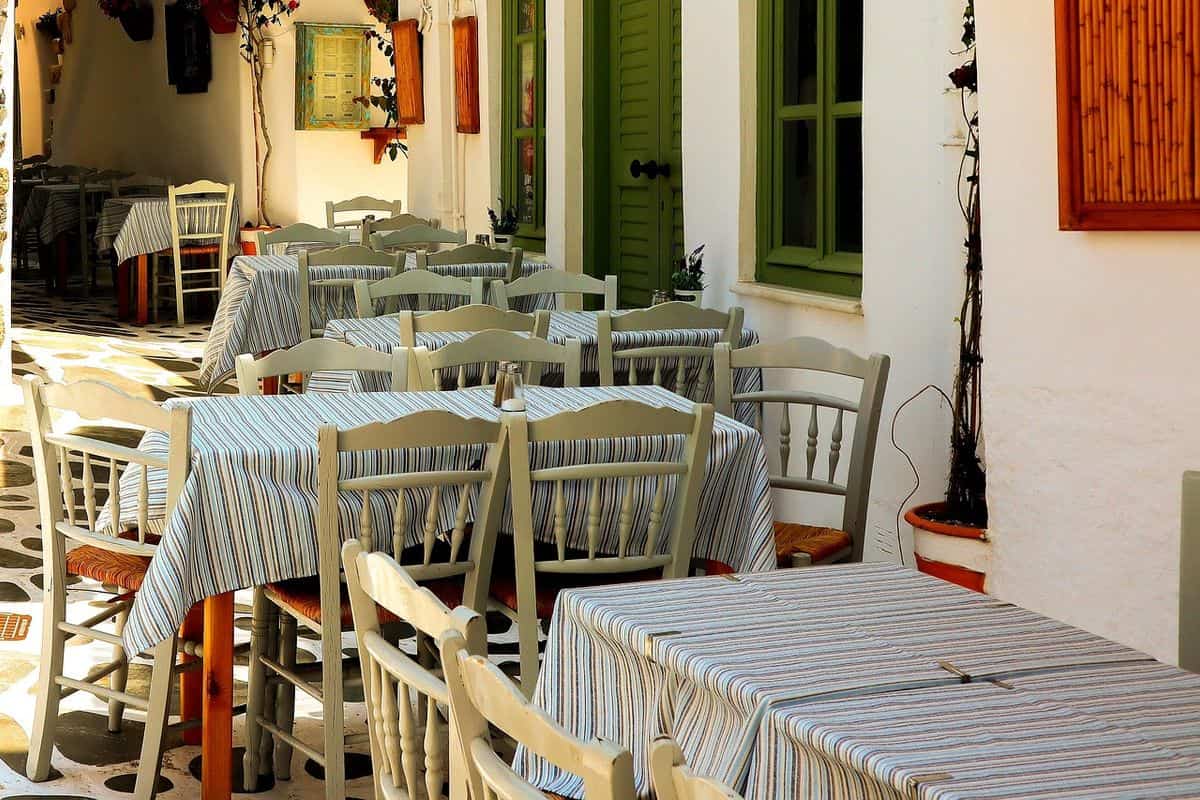
These Kalavrita restaurants sit in the setting that the official Greek tourism website describes. It names stone-carved houses, small squares and shady plane trees. Traditional cafes and tavernas stand beside the trees, and small shops stand along the central pedestrian street. A single taverna of the town is described on a page of its own here: Peri Orekseos taverna.
A patisserie is a type of bakery that specialises in confectionery and desserts, says Wikipedia. The article adds that in certain countries the word is a legally controlled title. Only bakeries that employ a licensed master pastry chef can use it. Whether a shop in the town uses the word is a question for the shop itself.
Wikipedia defines a takeaway as prepared food bought at a restaurant or fast food outlet and eaten elsewhere. The article traces the idea back to antiquity. It names the market stalls and roadside stalls of Ancient Greece and Rome. The takeaway is the last kind of eating place that this section defines for the Kalavrita restaurants.
How do the mountains and the climate shape the dishes of the Kalavrita restaurants?
The Kalavrita restaurants work in a country whose climate is mainly Mediterranean. Wikipedia describes that climate by dry summers, wet winters, hot summers and mild winters. The mountains around the town then add their own local differences to that pattern, as the next paragraphs show.
Wikipedia says that Greece has a climate that is predominantly Mediterranean. Because the geography is complex, the country holds a broad spread of micro-climates and local variations. Yearly average temperatures run from about four degrees Celsius at Kaimaktsalan to about twenty-two degrees at Lindos. The weather behind the Kalavrita restaurants is a local case inside that whole range.
The Greek mainland is extremely mountainous, Wikipedia says, and Greece ranks among the mountain-heavy countries of Europe. It adds that the Köppen system finds eleven climates in Greece. Among countries of its size, that is the largest number in Europe. A visitor can ask at the table which dishes of the season come from the surrounding hills.
Wikipedia says Aroania, a mountain also called Chelmos, carries pine forest between 800 and 1,800 metres of elevation. The same article calls Kalavrita the largest town beside the mountain. That places the Kalavrita restaurants near the mountain itself. The wider setting of the town is covered by the Kalavrita travel information page.
Higher up, Wikipedia says, the ground of the mountain is grassland and barren rock above the pines. Three rivers drain Aroania north towards the Gulf of Corinth, and a fourth drains it south-west towards the Ionian Sea. A diner curious about local produce can ask where the vegetables and herbs on a plate were grown or gathered.
Only Taygetus and Kyllini stand taller in the Peloponnese, Wikipedia says, and Aroania itself reaches 2,355 metres. Its highest peak is called Psili Koryfi. Kyllini is only slightly higher and lies about fifteen kilometres to the east, across the valley of the Olvios. Aroania rises near the Kalavrita restaurants, higher than any other mountain in Achaea.
Which mountain foods, such as trahanas, greens and pies, are part of the Kalavrita restaurants?
Three foods of Greek cooking fit this question: trahanas, greens and pies. Wikipedia defines the Greek trahanas as fermented milk combined with cracked wheat or with a couscous-like paste, and nothing else. Whether any of the three appears on the lists of the Kalavrita restaurants now is for each place to answer.
Wikipedia says tarhana is eaten as a thick soup, and the liquid can be water, stock or milk. In its dry state it looks like coarse, uneven crumbs. The article lists the Greek names as trahanas and xynohondros. At the Kalavrita restaurants, a soup on the list raises one plain question about the liquid that the cook used.
The same article explains how the food keeps. Cooks mix flour with yoghurt or sour milk and let the mixture ferment. Salt, groats and spices can be added, and the mixture is then dried. The result is acidic and low in moisture, so the milk proteins last for long periods. Fermentation also gives it a sour taste.
Wikipedia counts almost 1,000 plant species with leaves that people eat. In Greek cooking, it says, horta is the word for greens eaten as a side dish. Olive oil and lemon go over them, and they are eaten hot or cold. A diner can ask the Kalavrita restaurants which greens are on the plate today and how they were cooked.
Wikipedia says Greek cooking uses at least eighty kinds of greens, which vary by area and by season. The list runs from dandelion and chicory to fennel, chard, kale, mallow, wild sorrel and wild leeks. Greens eaten cooked are called pot herbs, while the ones served raw in a salad are salad greens.
The Greek word fýllo, Wikipedia notes, means leaf. Filo is a pastry dough, very thin and without leavening, layered in sheets and baked into pies. One travel page names cheese pies among the town’s bakery and workshop products. Whether the Kalavrita restaurants bake pies of their own is a question for the counter or the table.
Which grilled and spit-roasted meats are part of the Kalavrita restaurants?
Souvlaki, kontosouvli and kokoretsi are the three grilled and spit-roasted meats to look for in the Kalavrita restaurants. Souvlaki is made of small meat pieces that are grilled on a skewer. Kontosouvli is turn-roasted pieces of pork. Kokoretsi wraps seasoned offal in lamb or goat intestines and is grilled over heat.
Wikipedia describes souvlaki as a Greek food of small pieces of meat, and at times vegetables, grilled on a skewer. Guests eat it straight off the skewer while it is hot. The word comes from souvla, Medieval Greek for a skewer. At the Kalavrita restaurants, the word souvlaki on a menu points to this simple cooking method.
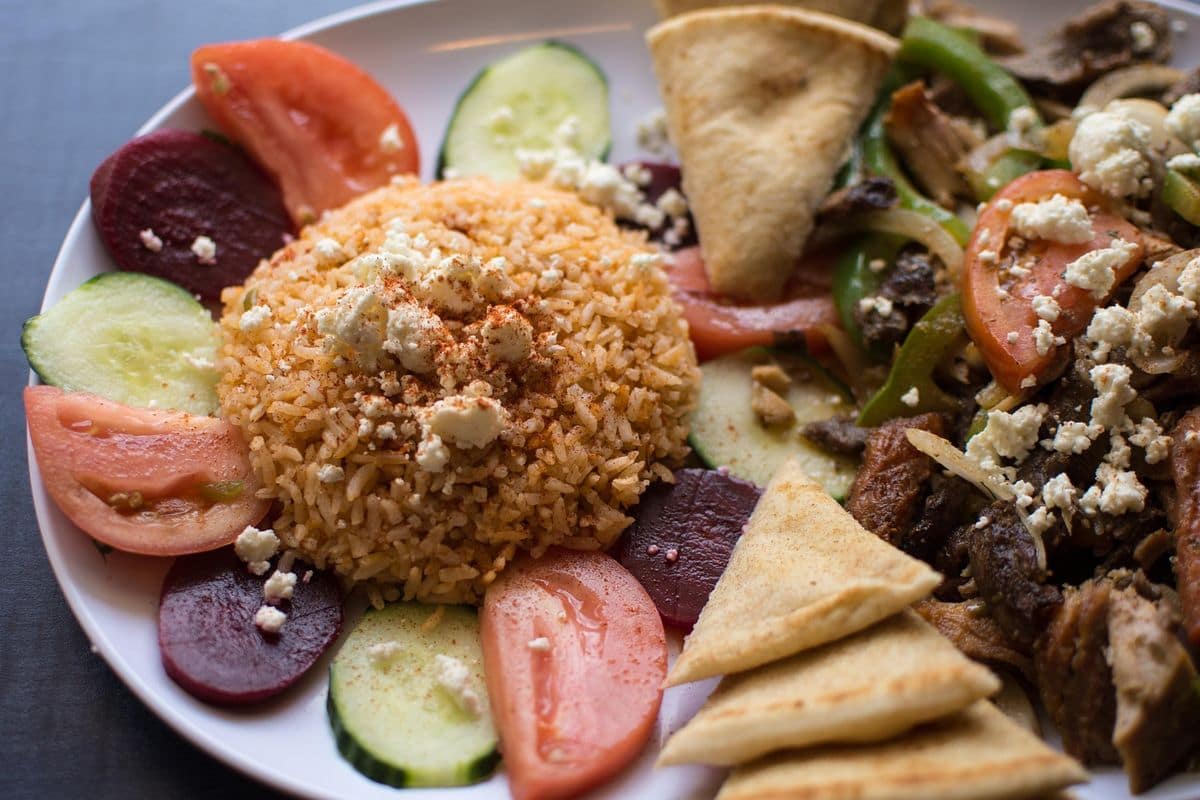
Pork is the meat that Wikipedia names for souvlaki in both Greece and Cyprus. A full plate called souvlaki-merida adds quartered pita bread, fried potatoes, vegetables and a sauce. Chicken or lamb can replace the pork on that plate, the article adds. Guests can ask which meat is on the skewer at the Kalavrita restaurants that day.
Wikipedia describes the ways in which souvlaki is served. It comes with a pita or rolled inside one, with lemon, sauces, tomato, onion and fried potatoes. Northern Greece says souvlaki, while southern Greece and the Athens area say kalamaki. Souvlaki skewers became a fast food sold widely in the nineteen sixties, after vendors from Boeotia introduced them.
Kokoretsi wraps lamb or goat intestines around seasoned offal, such as hearts or kidneys, and is grilled. Wikipedia adds that the intestines of suckling lambs are preferred. It is traditionally served at Orthodox Easter, as an appetiser while the lamb roasts. It is also served year-round, so the Kalavrita restaurants can be asked about it outside Easter.
Wikivoyage lists kontosouvli among the foods of the Peloponnese, describing it as turn-roasted pieces of pork. The same list names roasted pig, gourounopoula, and roasted lamb, arnaki souvlas. Wikipedia traces cooking on spits and skewers in Greek culture to the Bronze Age. Stone cooking supports from the time before the Thera eruption came out of excavations on Santorini.
Which cheeses and dairy of the mountains are part of the Kalavrita restaurants?
Feta, graviera and strained yogurt are the three dairy foods to look for in the Kalavrita restaurants. Feta is a brined white cheese, made with sheep’s milk alone or with sheep’s and goat’s milk together. Graviera is a hard cheese that is made as wheels. Greek yogurt is thick yogurt strained of its whey.
Wikipedia describes feta as soft, crumbly and aged in brine, with a tangy and salty flavour from mild to sharp. Cheese made from sheep and goat milk has been common in the Eastern Mediterranean since ancient times. Wikipedia places feta in salads and pastries, so guests at the Kalavrita restaurants can ask about it in those dishes.
Feta production first began in the Eastern Mediterranean and around the Black Sea, says Wikipedia. The European Union has protected the feta name with a designation of origin since two thousand two. Only cheese made by the traditional method on the Greek mainland and on Lesbos can carry that name. Ask the Kalavrita restaurants where their feta is from.
The hard cheese graviera is formed into wheels. Wikipedia places it second in popularity among the cheeses of Greece, after feta. The rind carries a crisscross pattern that its draining cloth leaves behind. Its name derives from gruyere, the Swiss cheese that it resembles. Crete, Lesbos, Naxos and Amfilochia are the home of the main varieties, says Wikipedia.
Graviera is cooked as well as sliced; Wikipedia lists the ways it is eaten. It is fried as saganaki and eaten as a snack, or grated and served over pasta dishes. It can also be baked in a casserole or added to salads in cubes or shavings. For pictures of the town itself, open the Kalavrita photo gallery.
Greek yogurt is yogurt strained of its whey, which makes it thicker while the sour taste stays, says Wikipedia. In Greek food it is used as the base of tzatziki dip and as a dessert. In Greece, the traditional milk for it is sheep’s milk. Guests can ask at the Kalavrita restaurants which milk went into the yogurt.
What are the meze, tsipouro and ouzo habits linked with the Kalavrita restaurants?
Meze is a range of small plates served first, as appetizers, in Eastern Mediterranean cuisines. Wikipedia compares it with Spanish tapas. In Greece the plates travel with spirits such as ouzo and tsipouro. A visitor to the Kalavrita restaurants can ask for that pattern: small plates and a short glass.
Wikipedia adds that a meze can form a whole meal or one stage of a multi-course meal. It says the small dishes come with spirits at meyhanes and ouzeria. An ouzeria is a café-like place that serves ouzo with mezedes. Whether the plates are a starter or the full meal is a point to raise at the Kalavrita restaurants.
On a meze table, Wikipedia lists olives, grilled meats, cubes of cheese and dips among the common features. It adds grilled octopus, fava spread, taramosalata and saganaki, which is cheese fried or grilled. In Greece the plates can arrive hot or cold, with a spicy or a savoury taste. Ask which of these plates the kitchen makes today.
Tsipouro is an unaged brandy from Greece, with an alcohol content between forty and forty-five per cent. Its traditional base is grape pomace, the winepress residue. Wikipedia adds that it comes in shot glasses beside the meze. Ask the staff of the Kalavrita restaurants about the glass and the plates beside it.
Tsipouro comes in two varieties, pure and anise-flavoured, and Wikipedia says it is normally double-distilled. It lists olives, cheese, raisins, nuts, dried fruit, seafood, halva and paximadi, a rusk, as side dishes. The European Union recognises tsipouro, like ouzo, as a spirit drink with a protected geographical indication. Ask which variety the table pours today.
Ouzo is an anise-flavoured dry spirit that is widely drunk in Greece and Cyprus. Wikipedia says it is traditionally sipped slowly, with water or ice. Guests share the mezedes over a number of hours in the early evening. Water turns the clear liquid milky white. Ask at the Kalavrita restaurants which plates go beside the glass.
Which wines of Achaea are linked with the Kalavrita restaurants?
Mavrodafni is a black wine grape native to the Achaea region of the northern Peloponnese. Wikipedia says its Greek name means black laurel. The same name covers a sweet fortified wine style. A visitor to the Kalavrita restaurants can look for it on a list or ask the staff.
Wikipedia calls the sweet style rich and Port-like and links it to the city of Patras. It names Kefalonia as a second important growing area for the grape. Dry red wines come from the grape too, and modern Greek reds sometimes blend it. Which style does a wine card at the Kalavrita restaurants show, sweet or dry?
Roditis is a Greek wine grape with pink skins, long grown in the Peloponnese. Wikipedia says the grape ripens late, and in hot climates the fruit holds on to its acidity. Plantings fell during the twentieth century because the vine is prone to powdery mildew. A diner can ask whether any wine on the card comes from this grape.
In Patras, Wikipedia names roditis as the main grape behind the wines that carry the city’s name. It also places the grape in Thessaly, near Volos. Today growers blend it with savatiano to make the Greek wine retsina. Ask the staff of the Kalavrita restaurants whether a bottle takes its name from a grape or a place.
Western Greece has its capital and largest city in Patras. It lies in the northern Peloponnese, at the foot of Mount Panachaikon. Wikipedia places a wine centre for tastings on its outskirts, in the village of Petroto, and ties it to mavrodaphne. Do any of the bottles on the table come from the area around Patras?
The Wikivoyage article on the Peloponnese lists moschofilero as a white dry wine of the region. Its short drink list also names tsipouro and mavrodafni, the sweet dark red wine of the Patras area. Ask at the Kalavrita restaurants whether the carafe on the table is red or white. Then ask which grape or region stands behind it.
What do breakfast and the coffees of Greece mean for the Kalavrita restaurants?
The Kalavrita restaurants sit in a country with a familiar breakfast pattern. Wikipedia lists a typical Greek breakfast. Fruit juice, hot milk, mountain tea, frappé coffee and Greek coffee are on that list. A visitor asks at the table which of these drinks are served that morning and which foods join them.
The same Wikipedia list names the foods that go with those drinks. Rusks, bread, butter, honey, jam and fresh fruit all appear on it. So do a sesame bread ring called koulouri and strained Greek yogurt. For the Kalavrita restaurants this is a pattern of the Greek morning. A visitor checks what each place serves.
Wikipedia singles out bougatsa as a well-liked breakfast dish. It comes mainly from shops called bougatsadika, a kind of eating place that also sells pies, pastries and drinks. The word names a type of shop, not one business. A visitor who wants a pastry in the morning asks a local resident which shops in town sell one.
Wikipedia adds that the traditional Greek breakfast was also served in dairy shops called galaktopoleia, or milk shops. These shops carried dairy products, milk, butter, yogurt and sweets. The Kalavrita restaurants belong to a Greek food culture. In that culture milk, butter and yogurt have long had a place at the first meal of the day.
Wikipedia files Greek coffee under its Turkish coffee article, which lists Greek among the local names. Connoisseurs cited there set at least seven grams of ground coffee per cup. The coffee goes into a pot called a cezve with cold water and sugar, if wished. The pot is heated until the mixture just comes to the boil.
The mainland Greek name of the pot is briki, Wikipedia says. When the coffee is served, the fine grounds remain in the cup. The amount of sugar is named when the coffee is ordered. The article quotes the aim of the thickest possible layer of froth. At the Kalavrita restaurants the sweetness level is stated in the order.
Which Greek sweets of the spoon, loukoumades and halva are linked with the Kalavrita restaurants?
Spoon sweets, loukoumades and halva are the three Greek sweets linked here with the Kalavrita restaurants. Wikipedia says Greece and Cyprus favour spoon sweets, with a glass of cold water and Greek coffee beside them. A visitor asks at the place which sweets are on the table now.
Wikipedia adds that spoon sweets in the Balkans and Levant are preserves offered on a spoon as hospitality. The Greek form, glykó tou koutalioú, means sweet of the spoon. The greater part use whole fruit, though a number of kinds use pieces or purees. A visitor to the Kalavrita restaurants asks which fruit is in the dish.
One Greek spoon sweet is snow-white and strongly scented. It is called vanilia, yet it holds no vanilla. It is a paste of mastic resin and table sugar. A spoonful is dropped into a tall glass of ice-cold water, a serving nicknamed the vanilla submarine. The Aegean island of Chios is known for that resin.
Wikipedia says loukoumades are leavened dough balls that are deep-fried, then soaked in syrup or honey. The dish was described in the thirteenth century as judge’s morsels. The name used in Greek is borrowed from Arabic. The article calls loukoumades a mainstay of Greek cooking in the south. A visitor to the Kalavrita restaurants asks if they are served.
Wikipedia reports that the writer Athenaeus mentions an ancient Greek dish called sesamidios. It was a round cake of honey, roasted sesame seeds and oil. The article treats it as the same as the sesame form of halva. The article adds that Greek halva is also a dessert, and appears too at village festivals called paniyiria.
One page on the local products of the town says that local women make the jams and spoon sweets there. Wikipedia says the greater part of spoon sweets are homemade, though they can also be found in supermarkets. A visitor to the Kalavrita restaurants asks whether a sweet on the table is made at home or bought.
When do the meals of the day fall for the guests of the Kalavrita restaurants?
The meals of the day at the Kalavrita restaurants run in the order that Wikipedia gives for lunch. Breakfast comes first, lunch falls around the middle of the day, and dinner follows it. This page gives no serving hours, so check the current hours with the place.
Wikipedia defines lunch as the meal eaten around the middle of the day, after breakfast and before dinner. A guest at one of the Kalavrita restaurants at that point of the day is having lunch in that sense. The article adds that the form, size and significance of the meal change across cultures and across historical periods.
In certain societies lunch is the main meal of the day, with a number of courses. In others it is a lighter and more practical meal. Wikipedia names religion, geography and economic context among the factors behind these customs. Which pattern holds in Kalavrita is for each place to answer, so ask how its midday table runs.
In a number of Western cultures, Wikipedia says, dinner is the largest meal of the day, with a formal tone. Dinner at the Kalavrita restaurants is a Greek meal, so that Western picture is a starting point only. Readers who plan from the capital find the travel facts on the Athens tours page; this page gives none.
Wikipedia says that the largest meal of the day used to be eaten around noon and carried the name dinner. Over the sixteenth to the nineteenth centuries, above all among the elite, it gradually moved later in the day. Guests who arrive by air find the transfer facts on the Athens airport transfers page; this page gives none.
Breakfast, eaten in the morning, is the first meal of the day. Greek literature, Wikipedia says, mentions ariston, a meal that came soon after the sun rose. Breakfast opens the sequence the guests of the Kalavrita restaurants follow. Visitors who add Delphi to the trip read the Delphi tours page for the travel facts; this page gives none.
How does ordering work at the Kalavrita restaurants: shared dishes, menu words and regional stews?
Ordering at the Kalavrita restaurants starts with menu words that a guest can learn first. Wikivoyage lists a number of Greek ones, among them horiatiki salata, tyri saganaki, kokkinisto, tyropitakia, pastitsio and gemista. How a table shares and orders those dishes is a question to put to the server.
Wikivoyage explains that the words psistaria and souvla stand for broiled food in general, and also for the broiling apparatus. Each word therefore covers the food and the grill that cooks it, so a menu line can mean either. A guest at one of the Kalavrita restaurants can ask which of the two a menu word means.
The same article names a number of typical Greek foods, so each name works as a menu word worth learning. Horiatiki salata is a mixed salad, tyri saganaki is fried cheese, and kokkinisto is a stew cooked in tomato sauce. Tyropitakia are cheese pies, pastitsio is a pasta dish baked in the oven, and gemista are stuffed vegetables.
Wikipedia notes that the cuisines of the Mediterranean basin share a number of dishes. Roast lamb or mutton and meat stews with vegetables and tomato are named as examples. That sharing links cuisines to one another; it is not a rule of any one of the Kalavrita restaurants. Ask the server how a table splits its dishes.
Wikipedia reports that a number of writers count olive, wheat and grape as the core trio. Together they yield olive oil, bread and wine. Other writers deny that the varied foods of the basin form one cuisine at all. The trio is therefore a frame for the cuisine, not a promise about any one menu.
Wikivoyage also lists kokoras krasatos, or kokoras horiatikos: rooster in wine sauce, or country-cooked rooster. The same list adds gida vrasti, a goat stew from the north-east area. Both dishes sit in the Eat list of that article. Anyone who meets these names at the Kalavrita restaurants can check whether the dish is on that day’s list.
How do money, cash and tipping work at the Kalavrita restaurants?
Money at the Kalavrita restaurants is counted in euros, and a tip is a matter of social custom. Wikipedia describes a tip as a sum that a customer customarily gives to service workers. The paragraphs below take the tip, the currency and the cash machine one item at a time.
The Kalavrita restaurants sit inside a service custom that Wikipedia defines in plain words. A gratuity, also called a tip, is a sum of money. A customer customarily gives it to certain service workers, such as hospitality staff, for the service that they performed. It comes in addition to the basic charge for the service itself.
Wikipedia adds that tips and their size are a matter of social custom and etiquette. The custom changes between countries and between settings. The same article says tipping is not always expected when the bill already carries a charge for the service. The plain question for the staff is what the custom is at that table.
Wikipedia says servers in bars and restaurants, taxi drivers and hair stylists receive tips in a number of countries. In other places tipping is simply not expected. Where tipping is customary, the amount is a set range or a share of the bill. The question for the Kalavrita restaurants is which custom the staff follow at the table.
Greece is one of the twenty-one EU member states that use the euro, according to Wikipedia. A euro splits into one hundred cents, so a bill in Kalavrita counts in euros and cents. The currency is managed by the European Central Bank together with the Eurosystem. The Eurosystem also takes part in printing the notes and minting the coins.
An ATM lets customers take out cash, move funds or check a balance without bank staff. Cash in a currency other than the account’s is converted at the bank’s exchange rate. At the Kalavrita restaurants two plain questions come up for a visitor. Does the table take cards or only cash? Where does the nearest cash machine stand?
Which vegetarian, vegan and fasting foods, and which food allergies, matter at the Kalavrita restaurants?
At the Kalavrita restaurants, four plain ideas cover a special diet. Vegetarian cuisine leaves out meat, and vegan cuisine leaves out every animal product. Great Lent sets aside a list of foods. A food allergy is an abnormal immune response to food. The paragraphs below take them in turn.
Wikipedia defines vegetarian cuisine, also called plant-based cuisine, as cooking built on vegetables, fruits, nuts, legumes and grains. Dairy belongs to it, and eggs belong to it for lacto-ovo vegetarians. Meat and animal tissue products, such as gelatin or animal-derived rennet, are excluded. A diner at the Kalavrita restaurants can ask which dishes fit that definition.
Vegetarianism is a very old idea in Greece. According to Wikipedia, it was practised in ancient Greece. The earliest reliable evidence for vegetarian theory and practice there dates from the sixth century BCE. The Orphics, a religious movement of that time, promoted it. English speakers once called vegetarians Pythagoreans, a name tied to the Greek teacher Pythagoras.
A vegan is a person who practises veganism, and the word also describes foods that fit it. Veganism means abstaining from the use of animal products and from animal-source foods. Wikipedia says ethical veganism leaves out meat, fish, eggs, honey and dairy products. The question for the Kalavrita restaurants is which dishes contain milk, egg or honey.
Great Lent is the chief fasting season of the church year within Eastern Christianity. Wikipedia lists meat and fish, eggs and dairy products, and wine and oil among the foods the fast sets aside. One tradition leaves out only olive oil, and another leaves out all vegetable oils. On Saturdays and Sundays, wine and oil are permitted.
A food allergy is an abnormal immune response to food. Wikipedia names milk, eggs, peanuts, tree nuts, fish, shellfish, soy, wheat and sesame among the common causes. The common ones differ by country. Managing an allergy means avoiding the food in question. A visitor with an allergy can ask the Kalavrita restaurants which ingredients go into a dish.
What does the winter season add to eating out at the Kalavrita restaurants?
Winter adds more life to the mountain town around the Kalavrita restaurants. A national tourism page says the town teems with life mainly in winter, thanks to its modern ski resort. Eating out in the cold season therefore belongs to the livelier months of the town.
The cold season in Achaea brings snow to the heights. Wikipedia says snow is very common in winter on Erymanthos, Panachaiko and Aroania, three mountains of the region. The Kalavrita restaurants stand in that mountain country, so a winter day looks different from a summer day. A guest can ask the place what the weather is doing.
Wikipedia gives a temperature for the cold months: winter highs near ten degrees Celsius in the low-lying areas of Achaea. That figure describes the low ground. The same article ties the snow to the mountains, so the slopes around the town are another matter. Opening hours in the cold months are a question to put to each place.
Wikipedia describes hot summers and mild winters across the regional unit. For the Kalavrita restaurants, winter is one season of a varied year. In summer, mountain days can turn cloudy and rainy. Near the coast, sunny days dominate in summer. The mountain town and the shore of the same regional unit live in two different weathers.
Wikivoyage lists skiing or snowboarding in winter among the things to do in Kalavrita. It also calls the town a year-round destination for travellers. The Kalavrita restaurants therefore belong to a mountain town open to visitors in every season. A night in town is covered under where to stay near Kalavrita.
The tourism page describes the setting as mountains that mix the green of nature with the white of snow. Which dishes the Kalavrita restaurants cook in the cold months is a question for each place. The same goes for the drinks. A guest asks at the door and listens to what the kitchen has on that day.
How do drinking water, food safety and the heat matter at the Kalavrita restaurants?
Water and clean food matter at every table, and the Kalavrita restaurants are no exception. Wikipedia defines drinking water as water safe for ingestion, drunk directly or taken in through food preparation. Food safety then covers how that food is handled, in the kitchen and at the table.
In modern society, Wikipedia says, drinking water reaches households through a distribution system of pipes that ends in taps. Water from a tap is called tap water. At the Kalavrita restaurants the water in a glass comes from a tap or a bottle. The staff of the place can say which. Asking the staff takes one short sentence.
Wikipedia adds that exercise and heat make the body lose water, and the loss brings thirst. The article says thirst is a better signal of the amount than a fixed number of glasses. It calls the common advice of eight glasses a day not scientific. That is why the first glass of water on a hot day counts.
Wikipedia describes food safety as the handling, preparation and storage of food so that it causes no illness. It says proper storage, clean tools and work spaces, and heating and cooling food to adequate temperatures greatly reduce contamination. Those steps apply to every kitchen. The kitchens of the Kalavrita restaurants are no different from kitchens anywhere else.
Keeping raw and cooked foods apart is another step. Wikipedia says that avoiding contact between cooked and uncooked foods lowers the chance of contamination. The article lists the same step among the five principles of food hygiene of the World Health Organization. That list also names safe water and safe raw materials, which ties water to food.
Bacteria can survive in a moist food, rich in starch or protein, that stays between five and sixty degrees Celsius. The article calls that temperature band the danger zone. A warm kitchen is therefore a matter of careful temperature control. Guests with questions on water, storage or cooking put them to the place and listen to the answer.
Which seasonal foods of the mountains appear through the year at the Kalavrita restaurants?
The year at the Kalavrita restaurants turns with the scenery: spring bloom, summer shade, then red and yellow autumn leaves. Wikipedia adds two plants of the Greek mountains. One is the sweet chestnut, a food of the hills. The other is sideritis, a herbal tea.
The official tourism page says nature is in full bloom in spring. The routes around the town fill with colours and scents. Spring is therefore the season of fresh growth around the Kalavrita restaurants. The page describes the scenery and names no spring dish. A guest can ask the kitchen which dishes it cooks from the season’s produce.
In summer the plane trees give a cool respite, even on the hottest days. The tourism page sets traditional cafés and tavernas next to those shady trees. Wikipedia gives July for gathering sideritis, when the plant is in full bloom. The same article adds that the plant is dried before it is used for tea.
In autumn the leaves dress the streets of the town in shades of red and yellow. Wikipedia says the chestnut tree sheds its fruit in autumn. The nuts grow inside a spiny husk that splits open when they are ripe. Autumn is therefore the season to ask the Kalavrita restaurants about chestnuts and dishes made with them.
The Greek word for the sweet chestnut traces back to the Ancient Greek kastanon. Wikipedia calls the nut a staple food of southern Europe for thousands of years. In mountainous Mediterranean areas it largely replaced cereals that grew badly, if at all. Chestnut trees are rarer in Greece, it adds, as chalky soil does not suit them.
Sideritis is also called mountain tea and shepherd’s tea, a herbal tea. The tea is made by boiling the stems, leaves and flowers in a pot of water. The plant grows high in the hills, commonly above one thousand metres. A guest at the Kalavrita restaurants can ask whether mountain tea is on the list of hot drinks.
Which feasts and fasting days bring their own breads and cakes to the Kalavrita restaurants?
Wikipedia ties three days of the Greek calendar to their own baked foods or fasts. They are Clean Monday with lagana, the first of January with vasilopita, and the fifteenth of August with the Dormition. Which of them a kitchen marks is something the Kalavrita restaurants can tell.
The first meaning on the list for lagana is a flatbread that Greece bakes for Clean Monday. The same list has tracta, also called lagana, an ancient pastry dough of Greek and Roman cuisine. One name covers a flatbread tied to a day and an ancient dough. The Kalavrita restaurants can be asked whether the kitchen bakes it.
Vasilopita is a New Year’s Day bread, cake or pie in Greece. Its Greek name means Saint Basil’s pie. In the greater part of Greece it belongs to Saint Basil’s day, the first of January. Good luck goes to whoever finds the coin or trinket hidden inside. Wikipedia compares it with the western European king cake.
Families cut the vasilopita to bless the house and bring luck for the new year. Wikipedia gives midnight on New Year’s Eve as the time of the cutting. A slice goes to each family member and each visitor present, from the eldest to the youngest. Whether the kitchen bakes one is easy to ask at the Kalavrita restaurants.
In a number of regions the cake with the hidden coin belongs to Epiphany or to Christmas. In Thessaly the pie is filled with pork, wrapped in phyllo, and holds the coin. The dough differs with region and family: tsoureki dough, or a custard base called galatopita. The Ancient Olympia tickets page covers another place in the Peloponnese.
Eastern Orthodoxy counts the Dormition among its Great Feasts, kept on the fifteenth of August. A two-week fast comes before it, from the first to the fourteenth of August. The fast leaves out red meat, poultry, dairy products, fish, oil and wine. The Kalavrita restaurants can be asked how a kitchen treats those days.
What else do guests ask about the Kalavrita restaurants?
What language do the menus of Kalavrita restaurants use, and how old is it?
A visitor who opens a menu at the Kalavrita restaurants meets the Greek language. Wikipedia describes Greek as an Indo-European language that forms a branch of its own inside that family. No other member of the family has a longer documented past. Its written records stretch over at least 3,400 years.
The Greek alphabet is the writing system of the language today. Wikipedia says people have used it for about 2,800 years. That span is shorter than the history of the Greek language itself. Linear B and the Cypriot syllabary carried the Greek language before the alphabet came into use.
At the Kalavrita restaurants, a menu printed in Greek letters follows the alphabet of that long history. A guest who cannot read those letters can ask plain questions at the table. Which dish is this? How is it made? Pointing at a line and asking is quicker than guessing a name.
What part does olive oil play in the Kalavrita restaurants’ cooking?
Wikipedia counts the olive among three staple food plants of Mediterranean cooking. The other two are wheat and the grape. Wheat turns up as pasta, bread and couscous, while the grape serves as dessert fruit and as wine. The olive supplies the oil. A guest can ask the cook how a given dish uses that oil.
Olive oil is also a matter of trade. Wikipedia says Italy, Greece and Turkey together account for fifty-nine per cent of the global market for it. That share covers whole countries, not single kitchens. The staff at the Kalavrita restaurants can say which oil a dish carries and where it comes from.
Wikivoyage lists the local production of olives, especially in the south-west of the Peloponnese, in its Eat section. Grapes and oranges follow in the same line, both with the north-east as the special area. The line names regions of the peninsula and no single town. A guest can ask which olives and which oil come from nearby.
What is honey, and how do bees make it for the tables of Kalavrita restaurants?
Bees make honey, a sweet and thick substance, and honey bees are the makers people know. Wikipedia says bees gather the sugary secretions of plants, mainly floral nectar. Bees also gather the secretions of other insects, such as the honeydew of aphids. They refine what they gather, and the refined product is honey.
Wikipedia says the refining takes place inside the bees, through regurgitation and enzymes, and during storage in the hive. There, water evaporates until the honey turns thick. The nectar starts out thin and runny. Any honey that reaches a table, whether at the Kalavrita restaurants or elsewhere, has gone through that work.
Honey also feeds the bees themselves. Wikipedia says they make it and store it to nourish the colony. They stockpile it in the hive for lean periods. During cold weather, adults and larvae eat the stored honey. A guest who reads honey on a menu can ask where it comes from and whether it is local.
What is the difference between lamb, hogget, mutton and goat meat at Kalavrita restaurants?
Wikipedia divides sheep meat into three types by the age of the animal. Lamb comes from sheep in their first year, and hogget from sheep in their second. Mutton comes from older sheep. Whoever meets one of these words at the Kalavrita restaurants can ask the cook which type is meant.
Goat meat is the meat of the domestic goat. Wikipedia says the term names especially the meat of older animals. Meat from young goats goes by the name kid. So age sets the name for goat meat, as it does for sheep meat. A guest can ask whether a dish uses kid or older goat.
Wikipedia calls goat meat both a staple and a delicacy in the cuisines of the world. It names Mediterranean cuisine among the cuisines known for goat. The same article names stewing, baking, grilling and barbecuing among the ways to prepare it. A guest who wants to know how a dish was cooked can ask the kitchen.
What is pita, the flatbread that can wrap souvlaki at Kalavrita restaurants?
Pita is a family of round flatbreads. Wikipedia says they are baked from wheat flour and leavened with yeast. The family is common around the Mediterranean, in the Middle East and in neighbouring areas. The widely known version has a pocket inside, which forms when steam puffs the dough in a hot oven.
Wikipedia gives Greek bread as another name for pita. The same list holds Arabic bread, Syrian bread, Lebanese bread and pocket bread. One flatbread therefore carries a number of names across the region. A guest who hears the word pita at the table can ask which kind of bread is meant.
In the United Kingdom, Wikipedia says, the word pita names pocket versions such as the Greek pita. People there use it at barbecues as a wrap for souvlaki. That use belongs to the United Kingdom and describes no menu at the Kalavrita restaurants. A guest can ask how a souvlaki is served and with which bread.