
Peri Orekseos Kalavrita is a traditional taverna on the pedestrian street of Kalavrita, a mountain town in the northern Peloponnese. For other trips, see our tours in Greece page.
Below you find what the old entry and later sources say about the taverna, where it stands, the dining room, the dishes and drinks, and short answers.
What is Peri Orekseos Kalavrita today, and what do the sources say about it?
Peri Orekseos Kalavrita is a taverna in the town of Kalavrita, in Achaea. Its own website describes a working kitchen with slow-cooked dishes, meze, grills, wine and tsipouro. An earlier story survives only in the old entry kept on this website. This section lays both texts next to each other and marks every gap.
The taverna’s own website writes the name Peri Orexeos, with an x. The same website says the taverna has made its dishes since two thousand five. The page on restaurants in Kalavrita covers eating out across the whole town. This page about Peri Orekseos Kalavrita follows one taverna and names the text behind each statement it makes.
The website describes a working taverna as it stood when the page was checked. It lists slow-cooked dishes, a choice of meze and grills, served with local wine. The menu page also lists tsipouro and ouzo. Ask the taverna about the opening hours and the months open. The sights around the town sit on the page about Kalavrita tours.
According to the old entry, Peri Orekseos Kalavrita opened in November of two thousand five. Three young people ran it. The entry calls it the re-opening, in a new form, of the oldest taverna of the town. That older taverna had run for more than forty-five years, it adds. No neutral source confirms this claim.
The website makes its own, smaller claim. It speaks of more than two decades of history that began as a small haunt for locals and travellers. Wikipedia describes a taverna as a modest Greek eatery serving Greek cuisine. Another business with a similar name is not this taverna, and nothing about that business is used on this page.
Where does Peri Orekseos Kalavrita stand on the pedestrian street of Kalavrita?
Peri Orekseos Kalavrita gives its address as 25th of March Street, on the pedestrian street of Kalavrita. The old entry and the taverna’s own website word the spot in two ways. No source gives a distance to a landmark, so this section compares only the words.
On its own website the taverna’s address line reads 25th of March Street, in Kalavrita, on the pedestrian street. The website gives no house number, and none is written here. The home page says the taverna stands in the heart of the town. The footer of the home page repeats the pedestrian street as the place.
The old entry of this site words the spot differently. It says Peri Orekseos Kalavrita stands at the end of the pedestrian street of the town. The website does not use that wording. The two wordings differ, and no source says which end of the street is meant. Ask the taverna how to find the door.
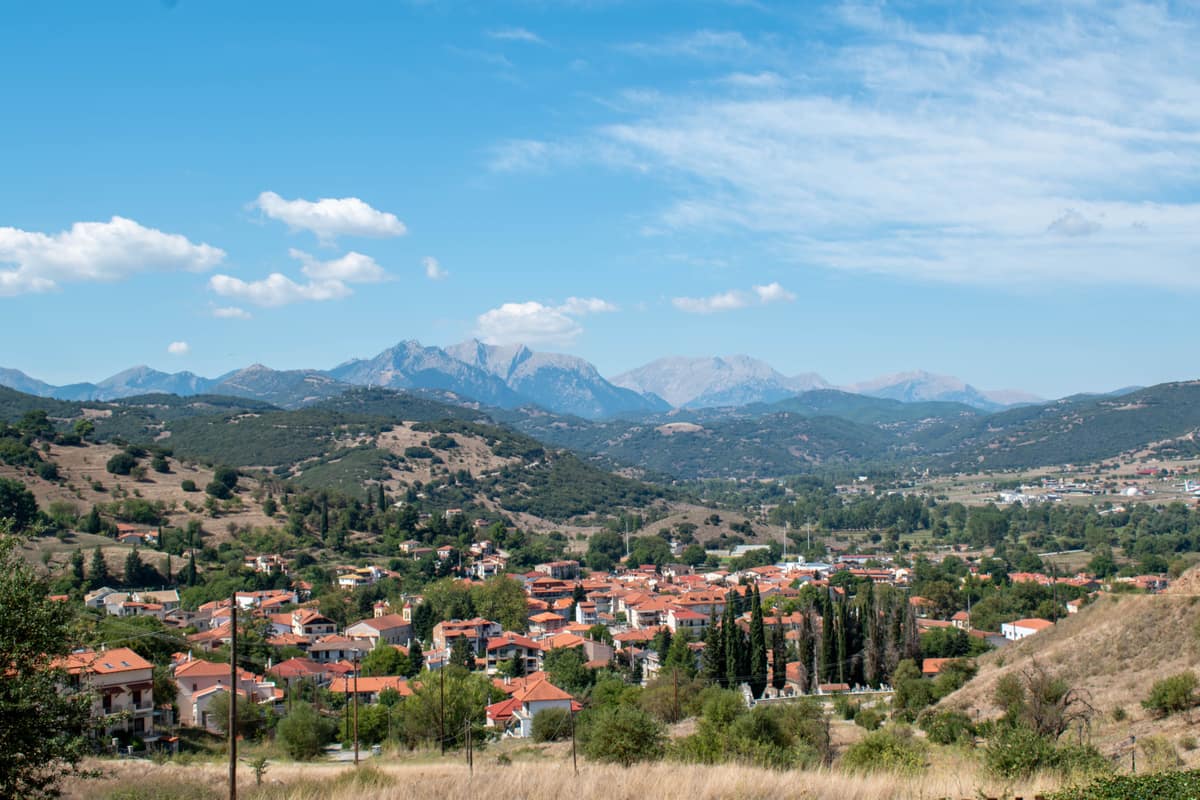
Wikipedia spells the town Kalavryta. It places the town in the mountains of east-central Achaea, at the river Vouraikos. Wikipedia adds that Patras is the capital of Achaea, a region of the north-western Peloponnese peninsula. These are plain place facts, and none of them is a statement about the taverna.
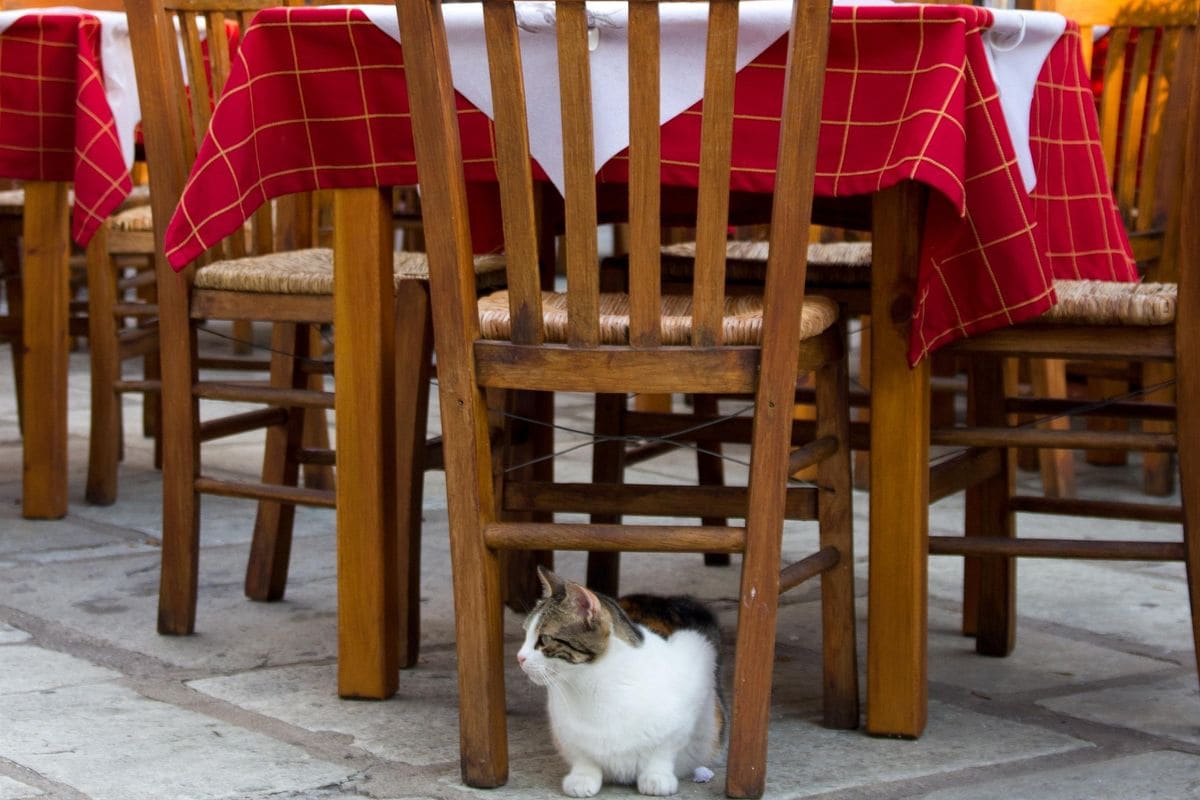
Wikipedia defines a pedestrian zone as a town area kept for walkers and for human-powered transport such as bicycles. Non-emergency motor traffic is not allowed there. The sources call the street of Peri Orekseos Kalavrita a pedestrian street, but they state no rule for it. Ask the taverna whether its tables stand outside on the street.
What is the dining room of Peri Orekseos Kalavrita like?
The old entry calls the dining room of Peri Orekseos Kalavrita a warm room of stone and wood. The taverna’s own website gives no seat count for it. The same website lists a team of cooks and staff who greet guests. Ask the taverna about the tables.
The old entry gives the room one line. It calls the setting warm and names stone and wood as the materials. The line comes before the specialities of the kitchen and before the welcome of the staff. It gives no size and no number of seats. For Peri Orekseos Kalavrita today, ask the taverna for the number of tables.
Stone is one of the two materials the old entry names. Wikipedia describes dry stone as a general way of building from stones without any mortar. Carefully chosen stones that interlock give the wall a certain amount of hold. The Peloponnese pages of this site cover the region. Ask the taverna how its own room was built.
The taverna’s own website mentions traditional hospitality on its home page. Its about page says the team of Peri Orekseos Kalavrita includes the cooks and the staff who greet guests. The same page says the taverna wants to give guests a warm experience as well as good food. Ask the taverna how large the team is.
The about page adds a note on the kitchen behind the room. It says the cook and the owners choose raw materials from small producers, with weight on local and seasonal products. Ask the taverna whether tables stand outside on the pedestrian street. Ask also whether the room still looks as the old entry describes it.
Which casserole dishes and pies does Peri Orekseos Kalavrita list on its menu?
The own menu page of Peri Orekseos Kalavrita lists beef giouvetsi and pork shank with beer, honey and mustard. It also lists aubergines in the Imam Bayildi style, chickpeas with lemon and a greens pie with feta. Ask the taverna for the full list of dishes served today.
The old entry names cooked dishes among its opening lines. The taverna’s own home page now speaks of traditional slow-cooked dishes served with local wine. Its about page says the cooking follows the Greek tradition and uses good raw materials from Western Greece. Ask the taverna which of these slow-cooked dishes are on the table today.
For the whole trip, use the Car Rental Greece page and the Greece Hotels page. Trip planning continues on the Greece Destinations page and the Greece Tours and Cruises page.
The own menu page lists beef giouvetsi, the clay-pot dish, with village barley. The same page lists a pork shank with beer, honey and mustard. In both dishes the meat is the centre of the plate, beef in one and pork in the other. Ask whether Peri Orekseos Kalavrita cooks both dishes every day of the week.
The menu page also lists aubergines in the Imam Bayildi style and chickpeas with lemon. The menu page says the olive oil in its salads and dishes is virgin olive oil. Wikipedia places olive oil in the triad of Greek cuisine, with wheat and wine. The Kalavrita travel information page holds the wider background on the town.
The menu lists a greens pie with feta and seasonal greens. Wikipedia calls a pie a dish baked inside a casing of pastry, with a filling. The menu also names bread from the wood-fired oven with honey and sesame. One post says dough is made and baked on the day. Ask whether Peri Orekseos Kalavrita bakes pies daily.
What grilled meats and oven dishes does Peri Orekseos Kalavrita serve?
The old entry says Peri Orekseos Kalavrita grills dishes on the coals. The taverna’s own posts also show a pork kontosouvli from the oven. The own menu lists lamb with oil and oregano and a number of chops. The menu does not say which dishes come from which fire.
The old entry, written when the taverna opened, mentions dishes grilled on the coals. Wikipedia describes barbecue as a way of cooking with live fire and smoke. One form of it cooks the food over hot coals or over a gas flame. Ask Peri Orekseos Kalavrita whether a charcoal grill still runs, because the taverna’s own posts name an oven.
One of the taverna’s own posts shows a pork kontosouvli from the oven and calls it traditional. In that post it is an oven dish, with no mention of charcoal. Wikipedia defines souvlaki as bite-sized meat cooked on a skewer and at times served with vegetables. Whether the kitchen lists that dish is a question for the taverna.
The own menu lists lamb with oil and oregano, pork and beef chops, pork pansetta and a village sausage. The menu page does not say how each dish is cooked. Ask Peri Orekseos Kalavrita which of them are grilled and which are baked. Photographs of the town around the taverna sit on the Kalavrita photo gallery page.
The taverna’s own posts also describe the kitchen in the morning. Fresh ingredients are cut, the meats are marinated and the fires are lit. Time is then given so that the taste can set. The posts name no hour for any of this. A guest who wants a particular dish asks the taverna when it is ready.
What wine, tsipouro and songs belong to Peri Orekseos Kalavrita?
The own menu of Peri Orekseos Kalavrita lists a white Moschofilero, a rosé and a red wine. It also lists tsipouro and ouzo. The old entry names rebetika and laika songs as the music. The own pages do not say whether the music is still played today.
The menu page lists three wines by colour. One is a white Moschofilero. The others are a rosé and a red. The menu page gives no grape or region for the rosé or the red. The home page names a wine list with wines from Greek wineries. A guest asks Peri Orekseos Kalavrita which of those are poured now.
The own about page says the taverna’s list includes local wine varieties from small wineries. Wikipedia describes Moschofilero as an aromatic white grape of Greek origin with a pink or purple skin. It grows mainly in the Peloponnese, where it makes a dry wine. Ask the taverna which wineries and which local varieties are poured now.
Peri Orekseos Kalavrita also lists tsipouro and ouzo among its drinks. Wikipedia calls tsipouro an un-aged brandy from Greece, traditionally made from grape pomace. Its strength is forty to forty-five per cent by volume. Ask whether tsipouro comes by the carafe. Anyone who needs a bed in town finds choices through the where to stay near Kalavrita link.
The old entry names rebetika and laika songs as the music that goes with the wine and the tsipouro. Wikipedia describes rebetiko as urban Greek music that took a more distinct form in the nineteen thirties. Ask Peri Orekseos Kalavrita whether songs are still played in the dining room. The own website gives no word about songs.
What do guests ask about Peri Orekseos Kalavrita before a visit?
What is a winter visit to Peri Orekseos Kalavrita like?
The posts on the taverna’s own website show a winter side of the place. They speak of a winter atmosphere, of hot food and of rainy evenings in Kalavrita. The posts carry no month, so they do not say when that side begins or ends.
Winter hours and winter dishes are not stated on those pages. Ask Peri Orekseos Kalavrita whether the dining room opens on every winter day. Ask which hot dishes the kitchen cooks on a rainy evening, and whether that list changes week by week.
What is Tsiknopempti, and does Peri Orekseos Kalavrita mark it?
Tsiknopempti is a Thursday of the Greek Carnival season, the second to last Thursday before Lent. Wikipedia translates the name as Charred Thursday or Smoky Thursday. The day is about meat before the fast: big outdoor parties grill or roast it.
The taverna’s own posts carry a greeting for this day. A greeting does not say what is on the table. Ask whether the kitchen cooks anything special for the day. Ask whether that Thursday has other hours than the rest of the week.
What is a meze, and which small dishes does Peri Orekseos Kalavrita list as starters?
Wikipedia defines meze as an assortment of small plates that arrive as appetisers. A meze can sit as one course in a longer meal, or make a whole meal on its own. It goes with spirits such as ouzo, in places called meyhanes and ouzeria.
The taverna’s own menu lists pork fried in wine and zucchini fritters among its starters and salads. Aubergines cooked as Imam Bayildi and a chickpea dish with lemon stand on the same list. Ask whether those two come as small dishes for the table or as a full plate.
Which cheeses come with the dishes at Peri Orekseos Kalavrita, and what is feta?
Feta is a Greek white cheese cured in brine. Wikipedia says it comes from the milk of sheep, or from sheep’s milk blended with goat’s milk. The cheese is soft and crumbly. It has no rind, and its holes are small or absent.
The own menu names feta in its greens pie. According to the own about page, the taverna’s list holds dairy products of the area. It names no cheese and gives no number. Ask Peri Orekseos Kalavrita which cheeses the kitchen uses and which come as a dish alone.
What questions can guests put to Peri Orekseos Kalavrita before they arrive?
The taverna’s own pages state no opening hours, no months and nothing about the seating. So the questions go to the taverna. Ask Peri Orekseos Kalavrita about opening hours and about the months when it is open. Ask whether the hours change in winter.
Ask for the number of tables in the dining room, and for any tables set out on the pedestrian street. Ask for the full list of dishes as it stands today, and for the vegetarian dishes in full. Ask which dishes are cooked that day.
Ask whether music plays in the dining room, and whether tsipouro comes by the carafe. Ask whether a child can have a smaller dish. Put each question in one clear sentence, so that the reply of the taverna is short and exact.