
Hydra travel tips cover the practical side of a visit to a car-free island of the Saronic Gulf. For tours and day trips from Athens, see our tours in Greece page.
The sections below cover the sea crossing, the arrival, getting around, money and the phone signal, health and water, swimming, the day plans, the neighbouring islands and short answers to common questions.
What are the first Hydra travel tips for the sea crossing from Athens?
Among these Hydra travel tips, the opening one concerns the crossing, which starts at Piraeus, the capital’s main seaport. Wikipedia places it by the Saronic Gulf, facing the western Aegean. No Greek port is larger, says the article, and the port ranks among the big ones of Europe.
A hydrofoil, in Wikipedia’s words, lifts its hull out of the water as it gains speed, which decreases drag. The same article says high-speed passenger ferries are the main use. Hydra travel tips about the fast boats start from that idea. Readers who want a set programme can open the Hydra island tours page of this site.
The older text of this page lists ninety minutes by hydrofoil. For the ordinary ferry it gives three hours and ten minutes, stopping at Aegina, Methana and Poros. The Wikivoyage article puts the slow car ferry at about three hours. It rates the fast catamaran at ninety minutes. The two figures for the fast boat match.
Wikivoyage says tickets for every boat are sold by agencies at the harbour. It adds that the small boats fill up in busy periods, above all at the convenient hours. These Hydra travel tips treat the ticket as the first task. Anyone starting in the capital can read where to stay in Athens on another page.
One travel page puts the flying dolphins, the small hydrofoils, at about an hour and a quarter. One timetable page gives one to two hours, depending on the stops. It says no slow conventional ferries run to the island. That claim contradicts the Wikivoyage article. The sources differ, so check the current timetable before choosing a boat.
One timetable page calls the Sunday evening returns from Hydra to Athens the busiest ones in Greece. One travel page urges early tickets in summer and at weekends. For a Sunday night return it names at least a day ahead. Hydra travel tips for the return therefore begin with an early ticket and a check of the timetable.
Which Hydra travel tips cover arriving on an island with no cars?
These Hydra travel tips for arrival start with a ban, because the island bars wheeled vehicles. Wikipedia names cars, motorbikes, scooters, cycles and electric bikes as banned. Waste lorries are the sole motorised exception it mentions, so luggage reaches the lodging by other means.
Wikivoyage describes the same rule in its own way. Motorised transport is forbidden, it says, apart from trucks owned by the city and a fire truck. One magazine article adds that a law from the nineteen fifties bans cars and bicycles. Hydra travel tips on the ban rest on all three sources, whose lists of exceptions differ slightly.
Porters with carts and mules meet the boats, says one older travel page. The same page advises agreeing terms with a porter beforehand. One magazine article describes a porter tipping a suitcase into a cart and walking it up the cobbled lanes. Guests who land by plane can look at Athens airport transfers before heading to the port.
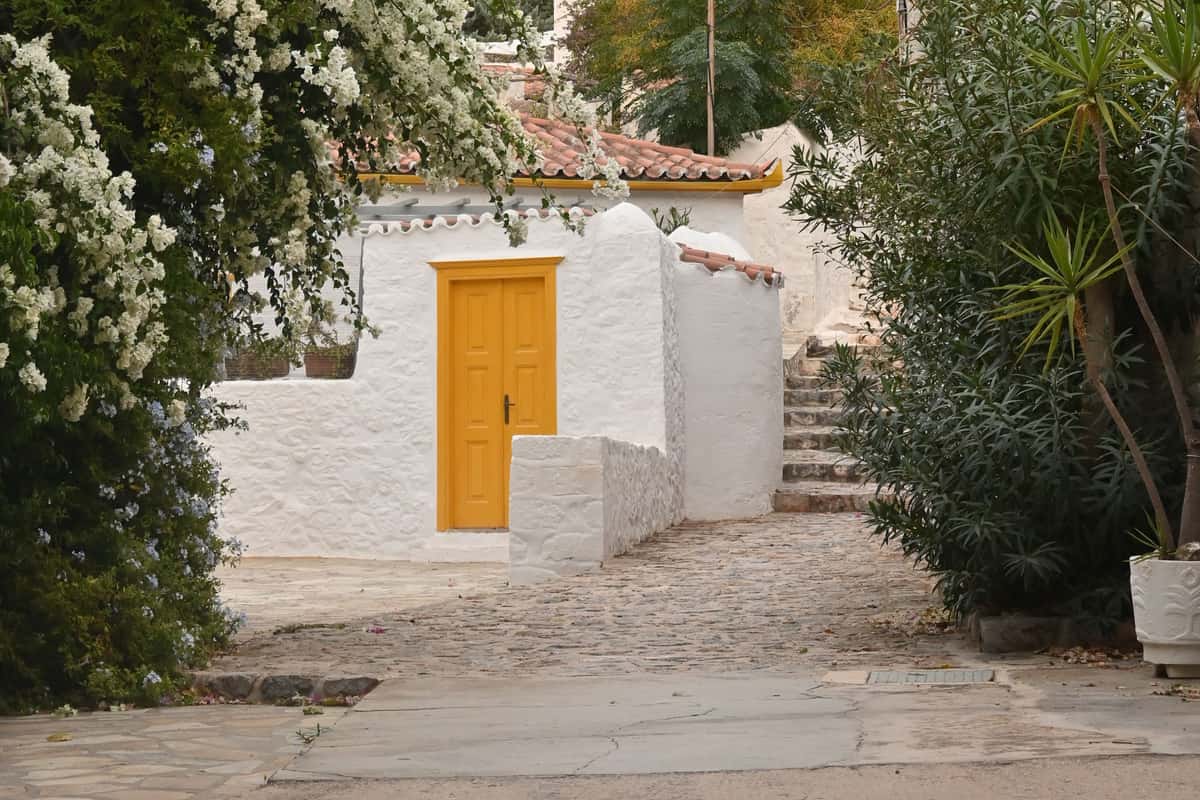
In Wikipedia’s account, the stone streets climb sharply as they leave the harbour area. The greater part of the local residences stand along them, as do the lodgings. For a visitor with luggage, Hydra travel tips about the slope matter as much as the boat. A fair question for the lodging is what the last stretch looks like.
The magazine article counts thirty-odd steps on a porter’s uphill route from the quay to a lodging in town. In that article the lodging sent the porter to meet the boat. A useful question for the lodging is whether it sends a porter. Another is the number of steps between the nearest lane and the door.
One page says the donkeys mingling at the port exist to move visitors, luggage or children to their lodging. The page adds that a traveller with heavy bags need not worry about a possible climb to the lodging. Hydra travel tips on arrival end at the quay, where the porter, the cart or the donkey takes over.
Which Hydra travel tips cover getting around on foot and by water?
The Hydra travel tips for getting around begin on foot. Wikipedia describes Hydra’s inhabited area as compact, so the greater part of the people go everywhere on foot. Wikivoyage agrees that the town centre is easy to walk, while going elsewhere means a donkey or a boat taxi.
Public transport on Hydra, Wikipedia says, consists of water taxis at sea and of horses, mules and donkeys on land. That gives visitors two ways out of the harbour area, one on four legs and one on water. The same article names Mandraki, Palamidas, Episkopi and Molos as villages beyond the main town, which it calls Hydra port.
One travel article describes a sole cliff path that runs five miles along the north coast, either side of town. The island is barren, it says, with hardly any roads. A number of the coves can be reached only by sailing or on foot. These Hydra travel tips take the path as the walking route out of town.
According to the Wikivoyage article, the boat taxis gather in the middle of the port. A sign in Greek only lists fixed fares for popular destinations. These Hydra travel tips leave the figures out, because only the sign at the stand is current. A visitor with no Greek asks the crew what the sign says.
Wikipedia says a water taxi is a boat that works on demand, while a water bus keeps to a schedule. It adds that, in marinas and harbours, on-demand boats serve waterfront places lacking a direct route over land. For a first look at the shoreline, readers can open the Hydra photo gallery that sits on this site.
One older travel page says that caiques serve the beaches as water taxis. The same page names the small islands of Dokos, Kivotos and Petasi, and evening trips to restaurants. It adds that the tariff varies with the destination and the hour. The Hydra travel tips on boats end with one plain question: ask the crew first.
Which Hydra travel tips cover money, the mobile signal and the post?
The Hydra travel tips on the phone signal carry a date. Wikivoyage dates its note to August two thousand and twenty-two: the main town has 4G from all Greek carriers. Elsewhere on the island there is no signal, the article adds, and 5G has not yet arrived.
One older travel page places two banks on the harbour and says that both have ATMs. These Hydra travel tips leave the bank names out, because names in an older edition can be out of date. A visitor who needs cash asks at the harbour which machines work today, since a newer count can differ.
Wikipedia defines an automated teller machine as a device for bank customers. It lets them withdraw cash, make deposits, transfer funds or check a balance at any time, without bank staff. The article adds that a card can also draw cash in a foreign country. If the currencies differ, the bank converts at its own exchange rate.
The same older page says that the travel agents on the harbour change money. It adds that their terms are in general less favourable than those of the banks. These Hydra travel tips turn that line into one question for the counter. Ask the agent for the terms before handing over notes, and compare them with the machine.
Wikipedia calls the euro, code EUR, the official currency of twenty-one of the twenty-seven member states of the European Union. Each euro is subdivided into one hundred cents. Both the Wikivoyage article and the older travel page state the local sums in euros. The Hydra travel tips on cash therefore name the euro as the currency to carry.
The older travel page puts the post office just off the harbour front, on the street between the two banks. The banks, the travel agents and the post office sit close together beside the water. The errands of money and post fall into one stretch. A visitor asks at the harbour whether the post office still stands there.
What are the Hydra travel tips for drinking water, mosquitoes and the heat?
These Hydra travel tips begin with water. Wikipedia calls drinking water water that is safe to drink. In a modern household it reaches the tap through a distribution system. A visitor asks the lodging how its water is supplied, and which taps give water that is meant for drinking.
Wikipedia traces the island’s name to an old Greek word for water, a nod to its natural springs. Wikivoyage reports that the spring itself dried up long ago, yet the name has stayed in use all the same. For that reason these Hydra travel tips leave water as a question for the lodging, never as a given.
In the Mediterranean climate that predominates in Greece, Wikipedia says, the summer brings mainly sunny, dry days. Showers or thunderstorms are the only rain it lists. Daytime air runs hot, and the nights feel pleasantly warm. Heatwaves are gentler near the shore, since cooler water and the breeze off the sea take the edge off.
Wikipedia notes that the water a person needs depends on activity, age, health and the surroundings. Exercise and heat exposure make the body lose water, which raises thirst. Thirst is a better signal than a fixed number of glasses. On a long walk in the heat, these Hydra travel tips favour a water bottle in the bag.
Mosquitoes form a family of about three thousand six hundred species, according to Wikipedia. Females of a number of species have adapted to drink blood. The saliva passed on in a bite can cause an itchy rash. All mosquitoes drink nectar from flowers. A traveller who dislikes bites can ask the lodging whether the windows carry screens.
The greater part of mosquito species are crepuscular, so they feed at dawn or dusk. A number of species, such as the Asian tiger mosquito, also fly and feed in daytime. The eggs are laid in stagnant water. Among the Hydra travel tips for the evening are long sleeves and a question to the lodging about standing water.
Which Hydra travel tips cover clothes, shoes and the weather by season?
These Hydra travel tips start from the climate. Greece is predominantly Mediterranean in climate, Wikipedia says, with a wide range of local variations. A visitor packs for hot hours, an afternoon wind and rock or stone underfoot. The forecast on the day of the boat trip settles the remaining details.
Wikivoyage says Hydra has little sandy beach but plenty of smooth rocks and pebbly bays. The ground at the water is therefore rock and pebble, not the soft give of sand. For that ground these Hydra travel tips favour shoes with a firm grip over thin soles. The same shoes suit the stone lanes of the town.
Clothes follow heat and wind. Wikipedia describes a northerly summer wind that takes the sting out of fierce heat. It blows hardest after midday and eases by night. Compared with the mainland or the Ionian Sea, the Aegean stays cooler under that wind. Light clothes for the sun and one extra layer for the windy hours answer both.
From mid-spring to mid-September a dry northerly wind, the meltemi, sweeps the Aegean. Etesian comes from a Greek root meaning year. Wikipedia’s climate article puts the busiest months of the wind in July and August. At times a spell goes on for days with no pause. These Hydra travel tips count on wind and sun in summer.
A meltemi can rise on a bright day with no warning and reach Beaufort force seven or eight. For the greater part, ferries between the islands cannot sail in winds that strong, Wikipedia says. On a windy day a traveller checks the current timetable before leaving the lodging. A clear sky does not rule the wind out.
The climate article files Hydra and Aegina under a hot semi-arid type, found on islands of the Argo-Saronic Gulf. Piraeus and the Athens Riviera, in large part, share that class. Reading these Hydra travel tips by season, a visitor expects dry ground and strong sun. A visitor can ask the lodging how rooms stay cool or warm.
Which Hydra travel tips cover swimming and sea safety?
These Hydra travel tips open at Spilia, on the rocks at the west edge of town, inside the Kamini district. The Wikivoyage article calls it the only good swimming spot within easy reach of the town. The walk west along the main coast road takes about twenty minutes.
Spilia is not a true beach, and the Wikivoyage article says so plainly. It describes a rocky area where added stairs and level places are good for sunbathing. The article also warns about sea urchins on the sea wall. Among the Hydra travel tips for swimmers, this one matters: watch where you put your hands and feet.
Vlychos is a pebble beach. The Wikivoyage article puts it twenty minutes west of Spilia, and the walk from the port takes forty-five minutes. A short water-taxi ride also reaches the beach. The article calls the walk itself worth the extra time. If the heat makes the walk hard, ask at the lodging where the water taxis leave.
The Wikivoyage article calls the water at Spilia clean and calm, except when a boat sails close to the shore. It describes the sea around the island as clear. These Hydra travel tips read the boat remark as a simple sea rule. Look at the water before you swim, and let a passing boat go by first.
One travel article names three beaches that boats reach. Bisti is a tiny cove backed by a rare grove of trees near the western tip. Agios Nikolaos is a calm, gulf-like indent on the southwest coast, set between mountains. Plakes lies about two miles west of the town. Ask at the harbour which boat serves each beach.
The Wikivoyage article mentions local daredevils who show off by diving from the cliff on the road to Kamini. Its warning is plain: do not try it unless you know what you are doing. For sea safety, that warning is the clearest line in these Hydra travel tips: skip the jump. A calm shore needs no jump.
Other stays include the Angelica Hotel Hydra page and the Ippokampos Hotel Hydra page.
What are the Hydra travel tips about the working animals, the mules and the donkey exhaust?
One travel article counts more than a thousand equines on Hydra, and it calls all of them working animals. These Hydra travel tips treat the horses, mules and donkeys as the island’s workforce. The Wikivoyage article adds one warning about the donkey exhaust that the working animals leave behind.
Wikipedia calls the donkey a domesticated equine that people have used mainly as a working animal for thousands of years. It reports more than forty million donkeys in the world, mostly used as draught or pack animals. That is the background for these Hydra travel tips on animals. The animal is a worker first, not an attraction for visitors.
Wikipedia explains that a jack, the adult male donkey, is mated with a mare to produce a mule. A mare is a female horse, and a jenny is an adult female donkey. The less common cross of a male horse and a jenny is a hinny. So a mule is a hybrid of the donkey and the horse.
One travel article reports that a rider on the island was the first to offer horse riding to visitors. That happened in two thousand and fourteen, according to the article. The rides follow cliff-side mule tracks and mountain routes. These Hydra travel tips note the option and leave the choice of a ride to the visitor.
The flip side of the island’s transport policy is a large amount of what the Wikivoyage article calls donkey exhaust. Its advice is plain: watch your step when walking around. A visitor who stops to look at the views needs to look down as well. The article files this warning in its Stay safe section for visitors.
One travel article describes mules shifting from hoof to hoof and cats snoozing in the sun along the town’s cobbles. The scene shows lanes in daily use by animals and by visitors in sandals, side by side. These Hydra travel tips end on the same plain advice as the Wikivoyage article: watch your step in the lanes.
Which Hydra travel tips cover one-day, two-day and three-day plans?
Hydra travel tips on timing open with the one-day plan. The Wikivoyage article calls Hydra a popular day-trip destination from Athens. The last boat back to Piraeus sets the length of that day. The return timetable decides the hours that a visitor spends on the island, so check it first.
Wikipedia says the island depends on tourism. A sizable segment of its visitors, the article adds, comes from Athens. Hydra travel tips for a first plan can start from that fact. A visitor from the capital can go out and come back on the same boats. The first choice is the number of nights spent on the island.
One travel article describes a long day. It starts with a boat ride to a beach about two miles west of town, for an early swim. The walker then follows a dirt path east, behind the cottages and mansions. The afternoon passes on a second beach. The day ends with a walk into town as the sun sets.
The return boats are the clock of every plan on the island. One undated travel page lists the first boat back to Piraeus at twenty-five past seven in the morning. It lists the last one at eight in the evening. These Hydra travel tips give the times only as that page’s figures, so check the current timetable first.
A two-day plan adds one night. It shifts the pressure to the morning boat. The same travel page asks readers to reach Piraeus in time to return to the lodging in Athens. There they can shower and then go out for the evening. A weekend stay can end on Sunday night, when the page lists a later boat.
A three-day plan can repeat one pattern with a different beach each day. The boats serve a number of beaches around the island. A visitor who prefers a set programme can read about the island cruises from Athens that this site describes. These Hydra travel tips then help to compare that day with a day planned alone.
What are the Hydra travel tips for children and visitors with limited mobility?
The first of the Hydra travel tips for limited mobility is a question about the stairs. The Wikivoyage article warns that a number of lodgings can be reached only by climbing stairs. The question belongs before the stay. Children bring their own questions, from the stone lanes to the donkeys.
Wikivoyage puts this warning under places to sleep. It says to ask before the stay if stairs are a problem. Hydra travel tips for limited mobility turn that advice into questions about the walk itself. How far is the climb, in steps, from the boat landing to the door? Is there a handrail on the way up?
The swimming shore adds a second check. Wikivoyage describes the rocky shore called Spilia, west of the town. It has stairs and level places in the rocks for sunbathers. Swimmers climb in and out of the water on plain ladders fixed to the sea wall. The article says the ladders can be hard for a number of people.
According to one undated travel page, donkeys at the port carry luggage and children up to the lodging. It adds that children love them. Hydra travel tips for families can build on that line. A parent can ask the lodging whether a donkey is the easy way to the door. The same question covers where the ride starts.
Wikipedia describes a pedestrian zone as an area closed to motor traffic other than emergency vehicles. It adds that pedestrianisation aims to give people on foot better accessibility and mobility. Hydra applies its ban on wheeled vehicles to the whole island, not one street or square. The lanes belong to people on foot and to the working animals.
Wikipedia adds that a pedestrian zone can be as small as a single square. It can also stretch across a whole district. On Hydra the zone is the island, so the questions in these Hydra travel tips cover the full stay. What is the route from the boat to the room, and where are the sea ladders?
Which Hydra travel tips cover the neighbouring islands as a day add-on?
Spetses is the first day add-on in these Hydra travel tips. Wikivoyage notes that a group of the ferries calling at Hydra go on to Spetses, about thirty minutes away. Poros and Aegina lie in the same gulf. Check the current timetable for the boats of the day.
These Hydra travel tips keep two sources apart. Wikipedia’s Hydra article covers the fast boats from Piraeus, hydrofoils and catamarans. They call at Poros first and only then continue to Spetses. Wikivoyage speaks of ferries that stop at Hydra and then continue to Spetses. The two pages use different words for the boats, so read both.
Wikipedia calls Spetses an island in Attica and counts it among the Saronic Islands. Its article names the town of Spetses as the sole large settlement there. A day visitor from Hydra therefore plans the day around one town. These Hydra travel tips ask readers to check the current boat times before choosing a return.
Wikipedia places Poros in the southern Saronic Gulf, roughly 58 km from Piraeus. A sea channel of about 200 metres lies between Poros and the Peloponnese. The island had 3,261 inhabitants in twenty twenty-one. Athenians treat Poros as a popular weekend destination. Another page of this site is titled Hydra, Poros and Aegina day cruise and names Poros.
Aegina lies 27 km from Athens, as Wikipedia gives it. That figure is the gap to the capital, not a sailing time. A timetable supplies the boat times. Wikipedia lists pistachio production among the things the island is known for. Readers of these Hydra travel tips who want the island itself can open the Aegina day trips page.
The official tourism page names six islands of the Argosaronic Gulf: Salamina, Aegina, Agistri, Poros, Hydra and Spetses. It calls them popular destinations close to the capital. These Hydra travel tips name the neighbours so that a reader knows what lies close to the island. Each add-on needs its own boat times, which the current timetable gives.
What do these Hydra travel tips say about quiet nights and the town after dark?
The crowd that leaves comes first in these Hydra travel tips. Wikivoyage says a number of the visitors are day-trippers, and that they leave the town relatively calm by night. The evening mood in the town therefore differs from the mood at midday on the busy waterfront.
Wikivoyage describes the main port boulevard as packed with tourists in season. It also says quiet back alleys lie only minutes from it, with hardly a soul about. These Hydra travel tips add one question for the lodging: how far does its lane lie from the boulevard? A reader who wants a calm evening can turn inland.
Wikivoyage adds that the development policy of the island has left it with no high-rise houses. The skyline stays low, and the alleys lie within minutes of the boulevard. Readers who compare lodgings by position can start from the Hydra hotel index. Ask each lodging which lane it stands in and how the harbour sounds at night.
The municipality of Hydra covers 64.443 square kilometres, Wikipedia says. It joins the island of Hydra, at 49.6 square kilometres, with Dokos, at 13.5, and a number of uninhabited islets. The islets add little area beyond those two. These Hydra travel tips keep to the main island, because the town and its alleys stand on it.
Wikipedia describes a pedestrian zone as a place for walkers, closed to motor traffic except in emergencies. The article gives the aim as better access for walkers. The town of Hydra follows that idea, and Wikivoyage notes it has no cars or motorbikes. These Hydra travel tips read that as a calmer night walk.
One travel article describes the walk back from the beaches to town late in the day. The path climbs the cliffside to the first restaurants at the edge of town, as the sun sets. The article ties the calm of the beaches to the absence of cars. Check the last boat home before a long evening walk.
What do these Hydra travel tips say about shopping, meals and the winter visit?
Shopping and eating on Hydra both begin at the harbour of the town. Wikipedia says the port curves like a crescent, and restaurants, shops, markets and galleries line it for tourists and locals. These Hydra travel tips follow that waterfront first, then turn to the cold months of the year.
Seafood is the dish that the restaurants put first on their menus. Wikivoyage gives a warning that these Hydra travel tips repeat. Little asterisks beside the dishes show that nearly all of the fish is imported and frozen from far away. A diner who wants a local catch can ask the waiter where the fish was caught.
Only a small group of restaurants serves local fish, and Wikivoyage adds that those kitchens charge more for it. That tells a traveller that two plates of fish on the same waterfront can differ in origin. The simple step is to read the menu notes before ordering. The waiter can also say where each fish dish comes from.
Evenings in season are busy. Wikivoyage describes a taverna on a large central square with a shaded area for outdoor tables. A number of evenings bring live Greek music from an ensemble there. The same square is fairly quiet at lunch. These Hydra travel tips therefore treat the hour of a meal as part of the plan.
Winter changes the plan. Wikivoyage lists one taverna in the village of Kamini that stays open all year, with a limited menu in winter. That is a shorter list of dishes than a visitor finds in season. A winter traveller can ask the lodging which other kitchens are cooking on the night of the visit.
The harbour also holds a number of cafes. The greater part of them serve ouzo, other drinks and coffee, according to Wikivoyage. A visitor in winter can ask the lodging which of these cafes stay open on a given day. These Hydra travel tips on shopping, meals and the winter visit all lead back to the waterfront.
What else do visitors ask about Hydra travel tips?
What do these Hydra travel tips say about the police, the clinic and the Coast Guard?
Among the Hydra travel tips of one older travel page is a list of public services near the harbour. The police and the tourist police share one building, on its second floor, with a sign at the harbour. The port authority stands on the harbourside. The page is an older edition, so check the signs on arrival.
The same page says a small health clinic is signposted at the harbour. Cases that need complicated treatment go by boat or by helicopter to the mainland. A visitor with a health condition can ask before the trip. Which care does a small clinic cover? How long does a transfer by sea take?
Greece keeps a national coast guard, the Hellenic Coast Guard. Wikipedia calls it a paramilitary organisation that supports the Hellenic Navy in wartime and answers to civilian control in peacetime. An Act of Parliament founded it in nineteen nineteen. Its listed tasks include law enforcement at sea and search and rescue.
What is the number of residents and the size of the island, in these Hydra travel tips?
The island has one main town, which Wikipedia calls simply Hydra port. Its population stood at 1,900 as of twenty eleven. A harbour that curves like a crescent forms its centre. A census figure is a snapshot of one year. A reader who needs today’s count looks for a newer source.
The island of Hydra covers 49.6 square kilometres, or 19.2 square miles, in Wikipedia’s figures. The municipality takes in Dokos, at 13.5 square kilometres, and a group of uninhabited islets. The whole municipality totals 64.443 square kilometres. A size in Hydra travel tips refers to either the island or the municipality.
Wikipedia dates the old province of Hydra from eighteen thirty-three and records its end in two thousand and six. The province covered the same ground as today’s municipality. Administratively the municipality belongs to Attica, in the regional unit named Islands. Wikipedia’s other unit for the municipality is 24.9 square miles.
What do these Hydra travel tips say about the Greek alphabet and the signs on the island?
Wikivoyage says the sign at the boat stand lists its fixed fares in Greek only. A reader of Greek letters follows that sign without help. Wikipedia ranks Greek first among Indo-European languages for documented history, with at least 3,400 years on record. Anyone who cannot read Greek can ask at the stand instead.
Wikipedia counts roughly 2,800 years of use for the Greek alphabet. Before it, Greek was written in other systems, among them Linear B and the Cypriot syllabary. Wikipedia puts today’s speakers at 13.5 million or more. Twenty-four languages have official status in the European Union, Greek among them. Greece and Cyprus also give it that status.
Hydra travel tips from different sources spell the name of the island in different ways. Wikipedia writes Hydra, Ydra or Idra, and Wikivoyage writes Ydra or Idhra. Any of these forms on a sign or a timetable names the same island. A visitor who knows the variants reads such signs with less doubt.
What do these Hydra travel tips say about the arrival by sea at the port of the island?
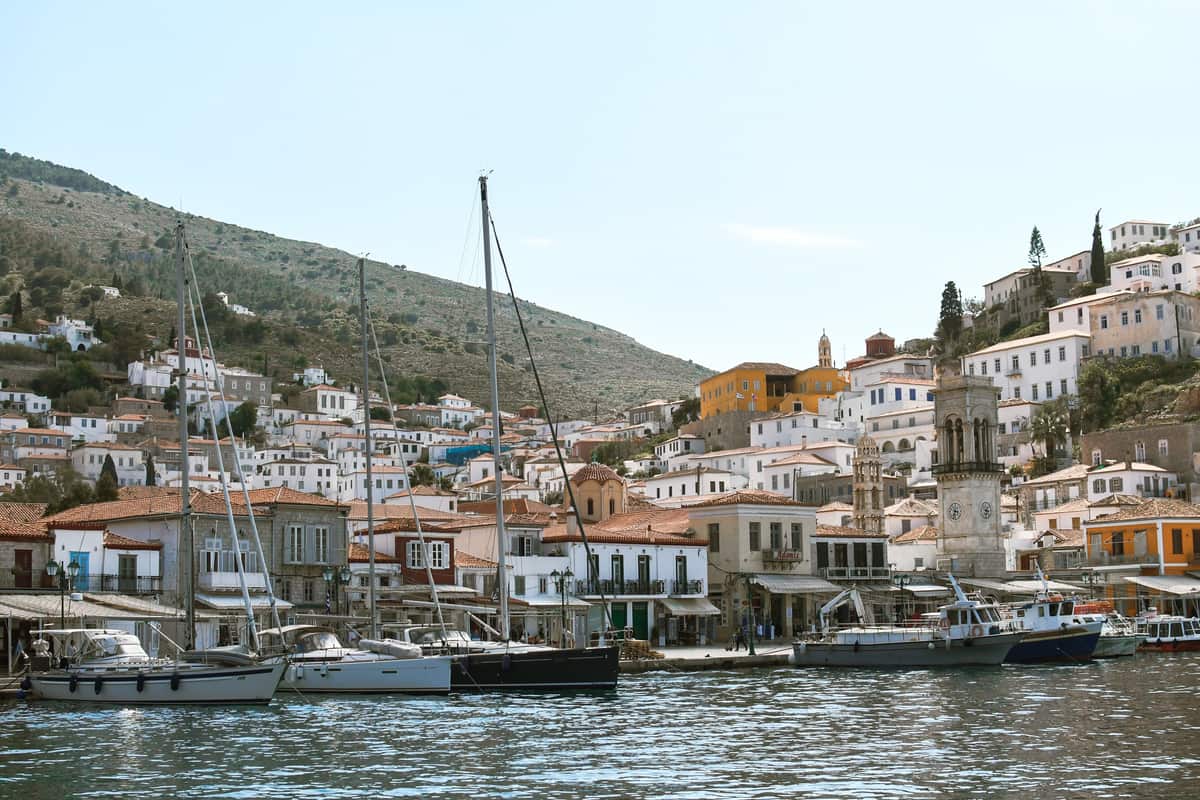
Wikivoyage says every hydrofoil and catamaran ties up at the port, mid-way along the island’s north side. Hydra travel tips from that article describe a deep harbour with whitewashed houses on the hills at both sides. Wikipedia adds that steep streets of stone climb up and away from the harbour area.
Wikivoyage puts nearly everything a visitor wants to see in three places. Those three are the waterfront, the streets just behind the harbour and the coast road. A traveller whose room lies up the hill asks the lodging a plain question. Which stairs lead from the quay to the door, and how steep are they?
Past a little headland, a walk of about a kilometre westward reaches Kamini. Wikivoyage calls it a neighbouring village that is far less touristy than the port. Wikipedia lists it among the small villages of the island. A visitor who plans the walk checks the current boat times first. The walk back needs time as well.
What do these Hydra travel tips say about leaving a car on the mainland?
Hydra travel tips on cars start with one rule. One older travel page says the Saronic ferries carry cars to Aegina, Poros and Spetses. On Hydra, it adds, cars cannot come ashore. Wikipedia gives the same rule from the island side and names cars and motorcycles as banned by law. So the car stays on the mainland.
On the Peloponnese coast lies Metochi, where a number of Athenians end their drive, Wikipedia says. They park in a secure car park and then board the passenger ferry across. The official tourism page names the same route. It runs by car from Athens to Metochi, then by ferry, water taxi or boat.
The crossing time differs by source. Wikipedia gives the passenger ferry from Metochi twenty minutes, while one travel page gives about twelve minutes. Because the two differ, a traveller checks the current time with the operator. The same page adds that a return through Metochi needs a taxi arranged on the other side.