
Leto Hotel Hydra is a hotel of Hydra Town, set on an alley by the port of the island. For tours and day trips from Athens, see our tours in Greece page.
Read on for what the old entry of this site says, what the hotel’s own pages state, the harbour front, the facilities, the rooms and short answers to common questions.
Is the Leto Hotel Hydra open today, and what class does it hold?
The Leto Hotel Hydra is operating, as the pages read for this entry show. The hotel’s own home page speaks of it in the present tense. That page, an archived copy of September twenty twenty-five, calls it a 5 star hotel. The class it holds today needs a check.
Unofficial listings of twenty twenty-five and twenty twenty-six also carry the Leto Hotel Hydra as an operating hotel. The sources behind this entry hold no word of a shutdown, a new owner or a sale. Nothing found points the other way. The record is short: a present-tense home page, matching listings and no report of a change.
The old entry for this hotel, an earlier text of this site, lists it as CLASS B. The hotel’s own home page, in the archived copy dated above, calls it a 5 star hotel. The two labels come from different years and from different texts. This page sets the two labels side by side and picks no winner.
The unofficial listings disagree with each other too. One of them gives the Leto Hotel Hydra four stars, while other listings give it five stars. A listing’s star count is its own claim and no proof of an official class. Readers who want the island first can open Hydra island tours, a separate page of this site.
The hotel’s own website, as its search summary words it, describes the place as a hotel with rooms and suites. These words are the hotel’s own account of itself, written in the present tense. It fits the status found in the home page and the listings. It names two kinds of accommodation and gives no total or detail.
Which class does the Leto Hotel Hydra hold on its current category certificate? Does that class match the 5 star label of the archived home page? The hotel can answer both questions, and its answer replaces the labels quoted above. Until then, each label is a claim of its own source and not a rating by this page.
What kind of building is the Leto Hotel Hydra?
The Leto Hotel Hydra is presented as a traditional Hydriot building. Its old entry here puts it down as a traditional Hydriot style building. One unofficial listing of the hotel says it is furnished as a traditional Hydriot mansion. Neither text names a designer, a builder or a year.
The old entry’s general text describes the Leto Hotel Hydra as “a traditional Hydriot style building”. The same sentence moves on to what the building holds. That entry says nothing about the construction, the floors or the age of the walls. Those details are left for the hotel to supply, and this page does not guess at them.
One unofficial listing says that the hotel is “furnished as a traditional Hydriot mansion”. That line speaks of the interior and the furnishings, not of the shell. It names no designer, no builder and no century for the building. This site gathers the island’s other lodgings on the Hydra hotel index, each with an entry of its own.
That same archived home page speaks of “high class accommodation” given to guests over the past fifty years. It gives no exact year of opening. The span says how long the Leto Hotel Hydra has hosted guests. It does not say when the walls first went up, and this page does not turn it into a date.
Wikipedia defines a mansion simply as a large dwelling house. The English word comes by way of Old French from the Latin word mansio, which means a dwelling. The listing quoted above is the source of that word for this hotel. This page borrows the word from that listing and does not apply it on its own account.
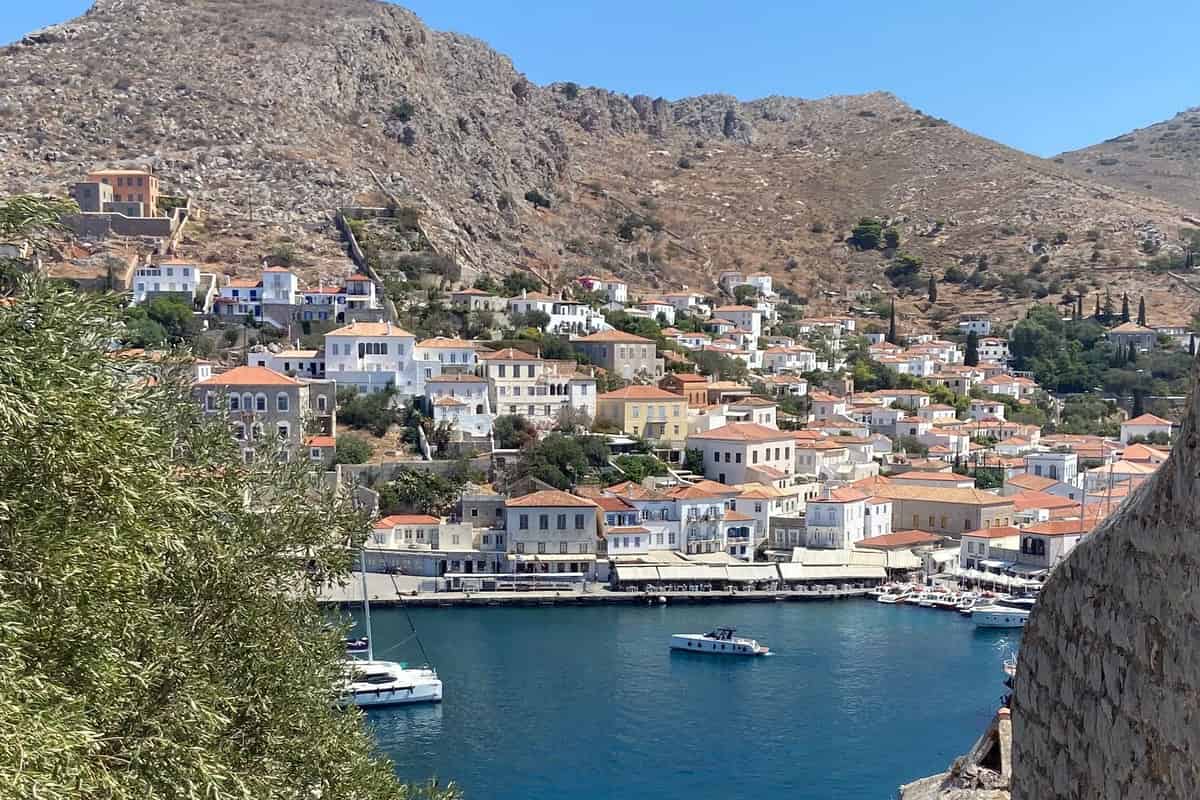
Another lodging on the island publishes a port tour on its website. It describes the houses of the harbour standing in tiers beneath bare cliffs. The Leto Hotel Hydra belongs to that port, so the cliffs and the rising rows of houses form its backdrop. The next part of this page places the hotel on the harbour itself.
Where on the harbour of Hydra Town does the Leto Hotel Hydra stand?
The Leto Hotel Hydra stands on an alley at the centre of the port of Hydra Town. That is the position given by the text of the hotel’s home page, kept in an archive. The summary of the same website adds the street: Rafalia Street, in the port area.
That archived page ends with an address line in the French style: Rue Rafalias Hydra. It gives no street number, so the line cannot point to a door. Anyone who wants the exact entrance needs the street number, which the Leto Hotel Hydra can confirm. Then comes the matter of which turn ends the final walk.
Wikipedia explains how this harbour town gained its standing. Its island article says that Hydra gained importance from the seventeenth century on, thanks to its trading strength. The hotel’s alley lies at the centre of the port of a town with that trading past. The story belongs to the place itself, not only to a history book.
One history page of the island adds the next chapter. It says Hydra used the English-French war to make large profits. The reason given is the island’s control of the sea trade. The Leto Hotel Hydra lies in the port of Hydra Town. A guest meets this sea-trading past in the very place where the hotel stands today.
Wikipedia describes a harbour as a protected stretch of water in which ships, boats and barges can lie at moorings. This page uses the word in that plain sense for the sheltered water of the whole port. For the island as a whole, the Hydra island information page holds the facts that this part leaves out.
Three details of the position stay open, so they are questions for the hotel. Which side of the port does the alley lie on, as a visitor faces the water? Does the entrance of the Leto Hotel Hydra face the alley or a side lane? Does the archived address line match the sign at the door today?
What does the sea in front of the Leto Hotel Hydra look like, and which wind blows there?
The sea at the port where the Leto Hotel Hydra stands is deep, clear and blue. It lies inside a cove that is ringed by huge rocks. The wind that crosses it is the etesian, a north wind of the Aegean, both strong and dry.
One port-tour page puts the town of Hydra halfway along the island’s northern shore. The Leto Hotel Hydra stands in the port of that same town. The coast in question is therefore its coast too. Whether a window looks onto the water, and onto which part of the port, is a question for the hotel.
The same page adds that the town lies inside a close cove, surrounded by huge rocks. In one line, it gives the frame of the harbour scene. The frame is a cove with rock all around and the sea inside it. Which of those rocks a guest sees from the hotel’s door is a question for the staff.
A Wikivoyage article on the island says the port of Hydra lies in a deep harbour. Houses climb the hills along either side, above a sea of azure blue. The Leto Hotel Hydra stands at the centre of the port. From there, the slopes rise on the left and on the right of a viewer facing the water.
The same Wikivoyage article calls the island’s water clear, in one short clause. It gives that one word and no more. Colour near the quay, calm in the basin and depth at the edge are not described. A guest who cares about any of the three can put the question to the hotel before the journey starts.
Wikipedia calls this wind the etesian and gives its Greek plural form as meltemia. Late spring starts its months, and mid-September ends them. By afternoon the wind is at full strength, and it frequently settles down at night. How does the wind feel on the harbour in the afternoon? That question goes to the Leto Hotel Hydra.
Compare the Angelica Hotel Hydra page with the Greece Destinations page. For a different room, try the Ippokampos Hotel Hydra or the Mistral Hotel Hydra.
What boats and moorings lie close to the Leto Hotel Hydra on the harbour front?
A mooring is any permanent structure that holds a vessel in place, says Wikipedia. The Leto Hotel Hydra stands in a port town with a long record of ships, sailors and sea trade. The first truly Hydriot vessel, a maritime college and a treaty of seventeen seventy-four mark that record.
The first truly Hydriot vessel, Wikipedia says, was launched in sixteen fifty-seven, apparently. That launch starts a ship record of more than three centuries for the island. Near the Leto Hotel Hydra, two questions stay open for the hotel. Which part of the quay lies closest to the hotel? Which berths are in sight from the street?
One island history page says a maritime college brought in Italian and Portuguese teachers for the systematic teaching of seamanship. The page presents the college as proof of the high level that shipping and trade had reached. Ask the hotel whether it keeps a printed history of the harbour for guests who want to read more.
The same island history page names the Russo-Turkish treaty of seventeen seventy-four. It says the treaty gave Greek merchant shipping new possibilities. The page counts that treaty among the causes of the island’s highest strength at sea. Together with sixteen fifty-seven, it gives guests of the Leto Hotel Hydra two fixed dates for the island’s sea history.
One unofficial listing puts the hotel a minute’s walk from the harbour’s eateries. That is a short stroll, so the harbour front lies within easy reach of the hotel. The listing measures the walk to the eateries, not to a berth. Ask the hotel where that minute starts and which way the walk to the water runs.
Wikipedia names quays, wharfs, jetties, piers and mooring buoys as examples of moorings. A mooring holds a vessel in place, so it does not drift. Which kind lies nearest to the Leto Hotel Hydra is a question for the hotel. Boat days have their own page here: Hydra, Poros and Aegina day cruise, which starts in Athens.
Which paths and promenades run past the Leto Hotel Hydra on foot?
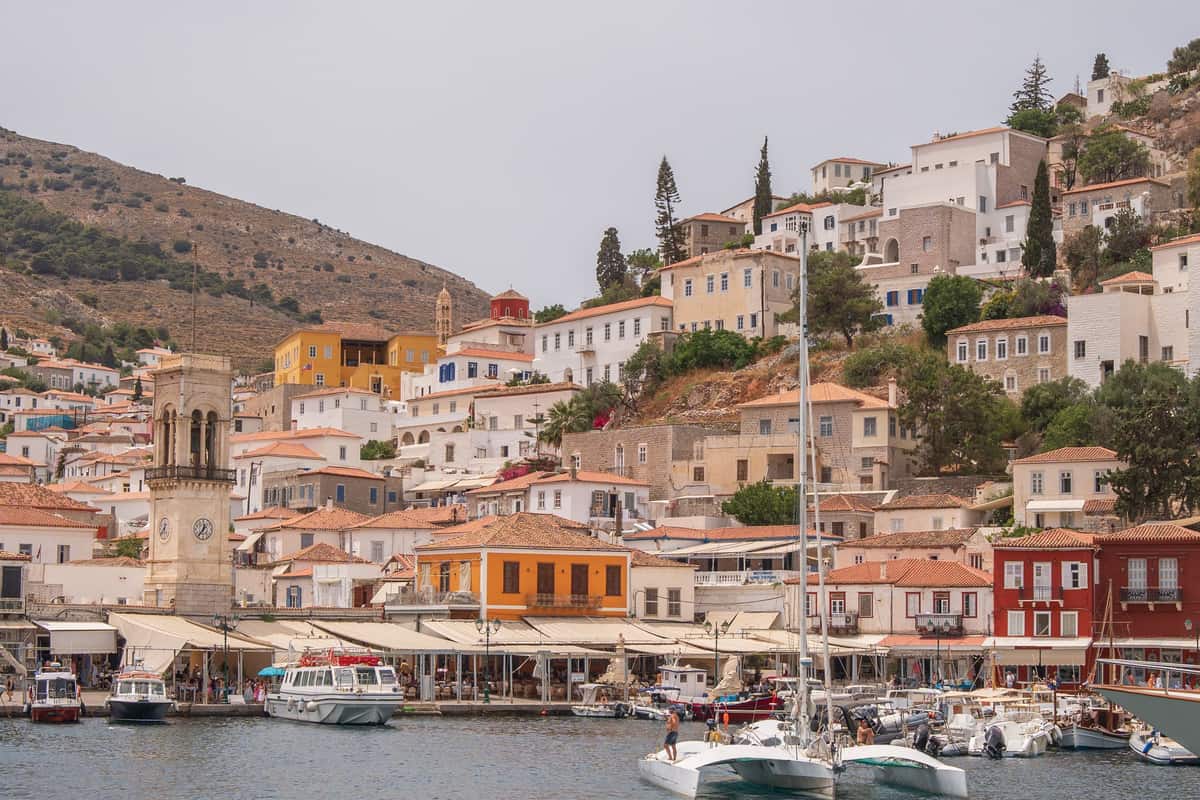
Two walks lead from the harbour road, a short way from the Leto Hotel Hydra. One goes to the Periptero, a bastion on the harbour’s west side. The other goes to Mandraki, a former port with a military past. Both walks run beside the water, so the sea stays near.
The old entry of this site dates from an earlier season. It gives the hotel’s position as the village centre of Hydra. So these walks begin in the middle of the town, not at its edge. One question for the Leto Hotel Hydra is which lane leads to the harbour road, and which way to turn.
Further along the harbour road, one port-tour page of the island reaches the Periptero. It lists the Periptero as one stop of its tour and calls it the western bastion of the harbour. It also ranks the place among the island’s finest spots. Ask the hotel whether the way there is level, or whether it climbs.
The road that starts near the statue of Miaoulis leads to Mandraki. The same port-tour page says Mandraki was the military port during the Revolution. Anyone who walks that road from the harbour near the Leto Hotel Hydra reaches the old military port. Ask the hotel which way leads to the statue and where that road starts.
A page on the beaches of the island calls Mandraki the old port. It says the beach there is the only one on Hydra without pebbles. Ask the hotel how the road to Mandraki runs from its door, and where the walk to the beach begins. Ask also whether the beach has shade and a place to sit.
Wikipedia defines an esplanade or promenade as a long, open, level area beside a large body of water, for walking. Ask the Leto Hotel Hydra which stretch of the harbour road is level and which stretch climbs steeply. A page of this site also treats Athens airport transfers for guests who land in Athens first.
What facilities and rooms does the Leto Hotel Hydra list?
The old entry for the Leto Hotel Hydra names a lobby, a sitting room and a seminar room. The entry also gives each room a private bathroom. The hotel’s own search summary adds a bar. Both lists are old or short, so each item needs a check with the hotel.
The old entry for the Leto Hotel Hydra has a facilities line for the shared spaces. Among them it names a lobby, a sitting room and a seminar room. The entry is years old, so plain questions for the hotel make sense. Which of these spaces do guests use today, and at what hours is each one open?
The old entry also lists the fittings of the rooms. It says the rooms are equipped with a direct-call telephone, air-conditioning, a TV, a safe and a mini-bar. That list belongs to an entry that is years old. Does every room still carry all five of these fittings today, or has the hotel changed the set since then?
One more line of the old entry covers the bathrooms: all rooms have private bathrooms. A line like that says very little about how a room looks. A reader who wants pictures of the whole hotel can open the Leto Hotel photo gallery. Which rooms of the Leto Hotel Hydra have a bath, and which have a shower?
Wikipedia’s article on hotels says room facilities run from a plain bed to large suites with en-suite bathrooms. It adds that rooms carry numbers so guests can find their own room. A smaller hotel or B&B sometimes names its rooms instead. Where the Leto Hotel Hydra sits between those two ends is a question for the hotel.
The hotel’s site, as one search result sums it up, lists a bar for the Leto Hotel Hydra. The hotel’s home page text saved in September twenty twenty-five carries a menu of pages. Those pages are titled “Activities”, “Spa & Wellness” and “Weddings”. What each page covers today, and when the bar opens, are questions for the hotel.
What else do travellers ask about the Leto Hotel Hydra?
What is the number of rooms in the Leto Hotel Hydra?
Two figures appear inside the old entry itself. Its header line says 31 rooms. A line of general text, lower down, speaks of a building with 30 rooms. Nothing in the entry accounts for the one-room gap between its two lines. It also leaves out a count for each room kind.
Two unofficial listings give smaller totals. One unofficial listing states 21 rooms. Another unofficial listing states 22 rooms. In its archived form, the hotel’s own front page names six room kinds in a list but prints no total. So the own site gives no figure that settles the question of the room total.
Four figures now stand side by side: 31, 30, 21 and 22. This page picks none of them, because the sources do not agree. Ask the Leto Hotel Hydra for its current room total and for the split between its room kinds. Ask also whether every room is in use today.
Which room kinds does the Leto Hotel Hydra list?
The same archived page names six room kinds, one after another, in its list. They are, in that order, Superior Room, Superior Balcony, Interconnected Room, Executive Room, Junior Suite and Leto Hydra Suite. Each name stands alone in the page text, with no size, no bed layout, no count and no description.
That old entry names five kinds of its own: Single, Double Standard, Double Superior, Double Deluxe and Triple. It gives no room sizes. The two lists do not match name for name. Only the word Superior appears on both. The kinds around it differ, so this page does not blend the two lists into one.
A summary shown in search results for the hotel’s own site names Superior, Executive, Junior Suite and Leto Hydra Suite. It calls the Leto Hydra Suite suited to couples. Ask the Leto Hotel Hydra which of the six kinds exist today. Ask also what sets the Superior Room apart from the Superior Balcony in practice.
How far is the Leto Hotel Hydra from the port?
The old entry states the distance twice, once in its header line and once in its general text. Both lines say 200 metres from the port. Both use metres, not minutes. Neither line says which quay or which point of the harbour counts as the port. The figure is a plain number.
One unofficial listing says 656 feet from the Hydra port. Converted, 200 metres comes to about 656 feet, so the two figures match once the units are the same. Neither source says how the distance was measured. The figure can be a straight line or a walk along the lanes of the town.
A straight-line figure and a walking figure can differ on a harbour with lanes and quays. Ask the Leto Hotel Hydra how it measures the distance, from which door and to which point of the port. Ask also how long the walk takes at an ordinary pace, and whether the lanes are level.
In which year did the building of the Leto Hotel Hydra open, and when was it renovated?
One unofficial travel-company page says the hotel opened in nineteen sixty-five in a restored mansion. That is the only opening year that any source gives. The old entry carries no date. The home page text names no year either. Nothing on this page confirms or corrects that statement, so it stays an attributed claim.
That page counts years instead of naming one. It says the hotel has been receiving guests for the past fifty years. That is a different claim from the one on the travel-company page, and this page rules for neither. Ask the Leto Hotel Hydra in which year it first opened as a hotel.
Renovation dates differ as well. One unofficial listing gives the year two thousand and five. Another unofficial listing gives twenty twenty-one. The old entry has no renovation date anywhere in its text. Ask the hotel which work took place in which year, and which rooms or floors each round of work covered.
Is the Leto Hotel Hydra the same hotel as the old Leto Hotel entry?
In its headings, the old entry names the property “Leto Hotel”. It places the hotel in Hydra Town, close to the port, and gives the distance in metres. It names no street and no later name. So the entry alone cannot show whether today’s hotel is the same property as the one it describes.
The hotel’s own pages carry the title “Hotel Leto Hydra”, as their search summaries word it. The archived front page uses the same name at the end of its opening paragraph. One unofficial listing adds that the hotel was formerly known by the old entry’s name. That listing is the only source that states the link.
Everything else that joins the two texts is a shared name and a shared place: Hydra Town, near the port. Ask the hotel when its name changed. Ask also whether the hotel of today stands in the building that the old entry describes. Ask whether the room list of that entry still holds.