
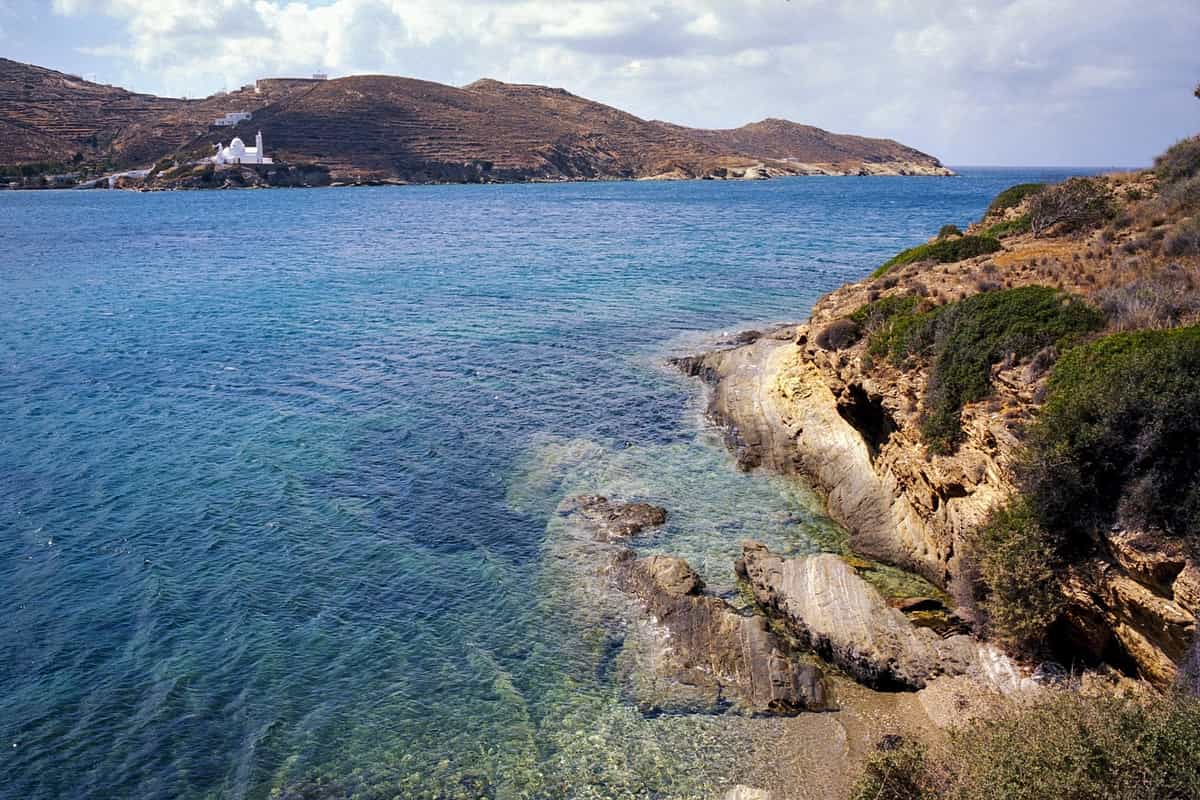
These Ios travel tips cover the practical side of a stay on the island of Ios in the Cyclades. For other trips, see our tours in Greece page.
Below you find the sea crossing from Athens, the port of Ormos, the buses and the roads, scooters and quad bikes, the heat and the sea, walking, money and phones, the neighbouring islands, and short answers to the questions visitors ask.
What are the first Ios travel tips for the sea crossing from Athens?
The first of these Ios travel tips is about the place where the sea crossing begins. Wikivoyage names Piraeus, the port of Athens, as a direct departure point for the crossing to Ios. It adds that ferry boats and high-speed catamarans sail from there every day.
Piraeus is the principal sea harbour of Athens. Wikipedia locates it in the Saronic Gulf, along the Aegean’s western edge. The article ranks it above every other port in Greece and counts it among the large ports of Europe. These Ios travel tips begin in a large harbour, so ask the operator where your boat leaves.
Wikivoyage gives four starting points for a trip to Ios. They are Santorini, Naxos, Heraklion on the island of Crete, and Piraeus itself. The rest of this section follows the Piraeus route, the one that starts in Athens. Readers who are still at the airport can turn to Athens airport transfers before the crossing itself.
The sources differ, so these Ios travel tips quote both. The old page says one hundred and eleven nautical miles, seven to eight hours by ordinary ferry. One timetable page gives roughly one hundred and eight nautical miles. It lists four hours fifteen minutes for the fastest boat and almost ten for the slowest. Check the current times.
Sea travel is one cause of motion sickness, a clash of actual and expected motion. Wikipedia lists nausea, cold sweat, headache and dizziness as symptoms. It names a still head and eyes kept on the horizon as behavioural measures. The Ios photo gallery shows the island itself, for anyone who wants a look before the boat leaves.
One timetable page says strong winds can affect the crossing. Its main example is the meltemi, a north wind of July and August. Rough seas hit high-speed catamarans first, with delays and cancellations. The large conventional ships tend to keep going. These Ios travel tips also point to island cruises from Athens, another way to sail.
Which Ios travel tips cover arriving at the port of Ormos?
These Ios travel tips for arrival begin with one distance. One timetable page says Chora lies above the harbour at Ormos. The trip up takes under five minutes by car or roughly twenty minutes on foot. The page calls the uphill walk with a suitcase sweaty work in August.
Wikipedia has the Port of Ios on the northern edge of the Ormos harbour area. Wikivoyage calls the village by the ferry port Ormos or Yialos. It counts the village as one of three major ones, beside Chora and Milopotas. The harbour village therefore has two names, and these Ios travel tips use the name Ormos.
Wikivoyage describes a long stair as the straight route between the port and Chora. A traveller with luggage meets this stair on the first day, so the stair is worth knowing about before landing. Ask the place you stay what its guests do with their bags. Then plan the climb as a walk of its own.
Wikipedia adds that a footpath climbs the hillside from the port to Chora, the principal village. The article says the word chora comes from the Greek term for a main settlement. It describes narrow alleys and steep stairways that keep the village largely closed to cars. These Ios travel tips use the name Chora in that sense.
Wikivoyage says bus and car traffic take a much longer, winding road uphill instead of the direct stair. That road is the alternative to the stair, and the buses of the island come up in a later section. Visitors who want to plan their days after landing can look at Ios tours elsewhere on this site.
Wikivoyage lists two taxi stations on the island. The first stands in Chora, at the central bus station. The second stands in the port, which Wikivoyage also calls Yialos, right in front of the ferry pier. These Ios travel tips name no taxi company, so ask the place you stay about a ride from the pier.
Which Ios travel tips cover the buses, the boats and the hills of the island?
The summer buses come first among these Ios travel tips. Wikivoyage says they connect the island’s three villages. Ormos is where the ferry docks, Chora is the main village, and Milopotas lies close to Chora. A visitor checks the current timetable on the island before the trip.
Boats are the second way around the island. Wikivoyage states that boats link the main towns on the coast. A trip along the shore then does not need the road. These Ios travel tips suggest asking at the port which boats sail on the day of the trip. Ask for the hour too, before any plan is made.
Wikivoyage also says that regular buses or boats serve the other beaches of the island. It adds that these beaches also hold quieter areas where a visitor can avoid the crowds. The practical questions go to the bus driver or the boat crew. Where is the stop, and when does the last run leave for the day?
On nearly every side, steep cliffs drop into the sea, and Wikipedia calls the island largely hilly. The shape of the land explains why a bus or a boat helps a visitor. A road has to climb and bend, and a walker meets steep slopes too. These Ios travel tips therefore plan for hills on every trip.
The same Wikipedia article measures the coastline of the island at eighty-six kilometres in all. Around thirty-two kilometres of it consist of sandy beaches. The rest of the shore is not sand, so a visitor who wants a sandy beach picks the beach first. Then the current bus and boat times show how to reach it.
The old page of this site lists a bus to Agia Theodoti and rented caiques from Ormos to Manganari. No page fetched for these Ios travel tips lists either one. The old page is an old text, so a visitor treats both as unconfirmed. The current bus times and the boat runs are asked for on the island.
Which Ios travel tips cover scooters, quad bikes and their licences?
These Ios travel tips turn to the scooter and the ATV next. Wikivoyage puts the moped and the ATV, the quad bike, first among the ways to get around the island. A rider needs the right licence, a helmet and suitable insurance, and the next paragraphs take them in turn.
Wikivoyage adds a rule about age. A number of the rental places ask the renter to be twenty-five or older. The renter must also show valid identification. The article is a travel page, so a visitor asks the rental place for its own limits. The licence rules themselves come from a government travel advice page.
The government travel advice page covers the licences of riders. A rider with only a provisional licence cannot hire or drive any vehicle in Greece. The page names category A1, the light motorcycle class, as the minimum for a hired moped. These Ios travel tips pass the rule on as stated, so a rider checks the licence first.
The same page speaks about helmets. Drivers and passengers must wear helmets before they operate a quad bike or a moped. Without a helmet, the insurance cover can become invalid. A rider stopped by the police without one is fined and has the licence taken away. The rule covers the passenger too, so two riders need two helmets.
The government page defines a quad bike ride as an extreme sport. A number of travel insurance policies leave it out, so specific cover is needed. The page adds that the cover of a hire company is normally third-party only. These Ios travel tips repeat the page’s plain step: read the details of the cover before the trip.
The government page also speaks plainly about quad bikes. People suffer serious injury every year in accidents with them, so a rider gets full instructions and training first. A novice rider meets vehicles that are bigger and quicker than the quad. These Ios travel tips add the page’s last check: the vehicle must be in good condition.
Which Ios travel tips cover the heat, the sun and the mosquitoes?
These Ios travel tips start with the climate. Wikipedia classes the climate of Ios as hot and semi-arid, so the sun and the heat shape every day outdoors. Plan the walks, the beach hours and the evenings around that heat, and keep the wind and insects in mind.
Wikipedia files the Ios climate under the classification code BSh, a hot semi-arid type. The same article carries a climate table for a weather station on the island. It lists mean daily highs, mean daily lows and average rainfall. A table shows averages only, so look at a current forecast before you plan each outing or beach day.
Ios travel tips about the sun also cover the summer wind. In summer an almost constant breeze blows from the north, known as the meltemi. Wikipedia says the other Cyclades islands share it, and that it moderates temperatures. A cooling breeze can hide how strong the sun is, so check your neck and shoulders through the day.
Wikipedia defines sunburn as a radiation burn caused by too much ultraviolet radiation, mainly from the sun. Sunscreen and protective clothing are widely accepted ways to prevent it. In general, the article gives about ten in the morning until four in the afternoon as the strongest hours. Water, sand and even concrete also reflect the sun’s rays.
The government travel advice page for Greece has a short list of steps for walkers. It tells readers to check the weather forecasts and to avoid hiking in the peak hours of the sun. It also asks walkers to carry plenty of water, plus a hat and sunscreen. These Ios travel tips pass that list on.
Wikipedia says mosquito saliva reaches the skin during a bite and can cause an itchy rash. Blood-feeding species can also pass germs on to other hosts. The article adds that the greater part of species feed at dawn or dusk. The Ios travel tips on mosquitoes come down to one question: do the windows have screens?
Which Ios travel tips cover clothes, shoes and the weather by season?
Wikivoyage lists a hat, sun protection and good boots for walking on Ios. In the meltemi season, from the end of July and in August, it adds wind protection. These Ios travel tips build the packing list from that advice and from the seasons of the year.
Wikipedia describes the Mediterranean climate as temperate, with summers that are dry and winters that are wet. Summer conditions are hot, and winter conditions are mild. The name points to the lands along the shores of the Mediterranean Sea. For clothes, that points to light layers in summer and one warm layer in the wet months.
Ios travel tips for clothes also need to look at the night hours. The same article says a number of such climates have a large daily range in summer. The sun heats the land strongly by day, and the air cools fast at night. A light layer for the evening takes little room in a small bag.
One timetable page says Ios shows two sides across the year. In July and August, Chora fills with bars and the long beach draws young visitors. In June or September the island turns quieter, with rugged hills and bays reached only by boat or dirt road. Pack for the days you plan, and check the forecast first.
From April to October, the summer season, the government travel advice page for Greece warns of a high wildfire risk. It tells walkers not to light fires, because that is dangerous and illegal. It adds that causing a wildfire is a crime, even by accident. Ios travel tips for summer start with one rule: no open flames outdoors.
Wikivoyage describes Chora as a village of small alleys and white-washed houses. Wikipedia says the alleys are narrow and the stairways steep, so cars largely stay out of it. Steep stairways call for soles that grip well, never smooth ones, by night and by day. That is the plain rule behind these Ios travel tips on shoes.
Which Ios travel tips cover swimming and sea safety?
Flags come first in these Ios travel tips for the sea. The government travel advice page says a number of organised beaches in Greece use flags to signal conditions. Where a red flag flies, entering the water is not allowed. Learn what each flag means and follow every warning.
The same page names two dangers on the seabed: rocks under the surface and shallow depths. Either can end in serious injury or death. The page says never to dive into unknown water. These Ios travel tips turn that into a plain habit. Walk in, look at the bottom first, and dive only where the water is clear.
Wikipedia says large and colourful jellyfish are common in coastal waters around the world. Their tentacles carry stinging cells that can injure swimmers. Where jellyfish are present, the government page tells swimmers to heed local advice. Ask a local person, or the place you stay, about the sea that day. Then decide whether to swim or to wait.
Wikipedia counts about nine hundred and fifty species of sea urchin, living on the seabed in every ocean. The body is a globe covered with spiny shells. The article gives a size of three to ten centimetres across. These Ios travel tips count the urchin as one more reason to look at the sea floor before you step.
Wikipedia describes a lifeguard as a rescuer who supervises the safety of swimmers. Lifeguards are trained in swimming and first aid. In certain areas lifeguards are part of the emergency services. The government page adds that a beach with no lifeguards, flags or signs calls for extra care and local knowledge. Ask someone local before you swim there.
The government page also covers water sports. It asks visitors to join only a licensed water sports centre. Before the activity starts, make sure the paperwork is complete and ask for a safety demonstration. Also learn how to call for help. These Ios travel tips pass the three steps on as a short checklist for the day.
What are the Ios travel tips for walking and hiking in the heat?
These Ios travel tips for walkers begin with maps. The Wikivoyage article points hikers to the OpenStreetMap hiking routes and to a second terrain map of Ios. Look over the trail on a map ahead of the walk, then plan each stage with the heat in mind.
The Wikivoyage article describes a four-day circuit around one mountain of the island. The route passes beaches and ruins on its long way around the mountain. The same Wikivoyage article says there are no shops along the way. These Ios travel tips read that line as a reminder to carry what you need for each long stretch.
Open the Greece Destinations page and the Greece Tours and Cruises page to plan further.
Wikivoyage adds that restaurants and rooms are listed in three villages along the circuit. It asks hikers to check in advance whether they are available. For a walker, that means a day plan with one fixed place to stop, confirmed before the walk starts. Ask the place you stay what is open on the day of the walk.
Always take plenty of water, says the Wikivoyage article, and the line carries the greatest weight on a long day. These Ios travel tips add the government page’s point that trails can lack shade. The quality of the route markings can also vary. A trail in strong sun calls for a steady pace and short rests.
Wikivoyage also notes that a large area of the island is protected as a nature reserve. Take that as a reason to keep to a marked trail where possible. Read any sign on the way, and check the route on a current map before leaving. If the plan is still unclear, ask a local person before you go.
The government travel advice page says a walk in heat that is new to you needs extra care. It asks walkers to plan the route beforehand. These Ios travel tips end with its last points. Weigh your limits, walk with a companion where possible, and leave word of your route with someone. Call 112 if you are lost.
Which Ios travel tips cover cash machines, phones and emergency alerts?
A cash machine, known as an ATM, lets bank customers take out cash at any time without help from staff. These Ios travel tips start with that machine and its general facts. They then turn to the phone setting that lets emergency alerts from the Greek government reach you.
The Ios travel tips on money use Wikipedia facts about the machine. A customer inserts a card and types a personal identification number. When the cash is in a different currency from the account, the bank converts it. British English also says cashpoint or hole in the wall. Ask the place you stay where the nearest one stands.
The government travel advice page for Greece asks visitors to set the mobile phone so that it accepts emergency alerts. The setting lets warnings about events near your location reach the phone. The Emergency Communication Service of the Greek government sends these alerts. Always keep the phone with you, because the alerts follow the phone’s location.
The advice page lists a path for each type of phone, and these Ios travel tips give one. On a Samsung phone, open Settings, Apps, Messages, Notifications, then Emergency Notifications, and switch on the Emergency Alerts option. Other phones have their own paths, so look up the path for yours on the advice page before you travel.
The same page lists flash floods, earthquakes, wildfires and extreme heat as events Greece can see. It also suggests a grab bag packed with phones and device chargers, insurance and other important documents. It adds essential medicine and the prescription details. The page offers this list as a way to prepare for such events before they happen.
One more rule belongs in these Ios travel tips. The advice page says a knife with a blade of ten centimetres or more counts as a weapon in Greece. A special licence is needed for any knife not made for domestic, professional, artistic or hunting use. Pepper spray and knuckledusters are listed as weapons as well.
What are the Ios travel tips for children and visitors with limited mobility?
Small children stay within arm’s reach in the sea, and adults supervise every child, says the government travel advice page. These Ios travel tips also cover the sun and the long stair from the port. They end with four questions to ask before the trip.
The page notes that drowning happens every year in Greece, in the sea as well as in pools. Around pools, it asks adults to supervise children and keep small children close. That holds even when the child can swim or a lifeguard is present. The Ios travel tips for families begin with a watchful adult.
Wikipedia says children are especially susceptible to sunburn, so protective measures are needed to prevent damage. Its article adds that sunburn can set in within fifteen minutes of sun exposure. Hours can pass before the skin shows the first sign of the damage. A child can look fine at the beach and feel the burn in the evening.
Wikivoyage says the direct route between the port and Chora is a long stair. The bus and car traffic take a much longer, winding road uphill. For a traveller with limited mobility, these Ios travel tips offer a choice: the road or the stair. Check the current bus times on the island before you plan the day.
Wikipedia describes Ios as largely hilly. Steep cliffs plunge into the sea on a large share of the coastline. That makes slopes a normal part of a walk on Ios, even a short one. A visitor with limited mobility can plan shorter distances, slower days and rests between climbs. A pushchair meets the same slopes.
Before you travel, ask the place you stay and check the current access. These Ios travel tips suggest four questions. Is there a lift? Is the room on the ground floor? What is the number of steps to the entrance? Is there a route without steps from the street? The answers show a walker what to expect.
Which Ios travel tips cover the neighbouring islands as a day add-on?
Wikipedia sets Ios on the map at about the midpoint between Naxos and Santorini. These Ios travel tips start with those two neighbours. Each island named below gets one plain fact. A day add-on depends on the sailing of the day. Choose the return only after reading the current timetable.
Wikivoyage describes Ios as a short ferry ride away from Santorini. The article adds that this puts a day trip within reach, as well as a long stay. The Ios travel tips treat that as a planning question. How long is the sailing, and when does the last boat leave? The current timetable answers both.
Paros is a Cyclades island in the middle part of the Aegean. Wikipedia places it eight kilometres to the west of Naxos, with a narrow channel between the two islands. The islands are close, so a visitor who plans one hop can look at both. Each leg of such a hop needs its own check of the sailings.
Wikipedia puts Paros about one hundred and fifty kilometres south-east of Piraeus. That figure measures distance, not sailing time, because boats differ in speed and in route. So the Ios travel tips leave the hours to the ferry operators. Their current timetables list the boats of each day and the days on which each boat sails.
Wikipedia contrasts Sikinos with Ios, calling Sikinos quiet and relatively less developed. It places the island in the middle of the gap between Ios and Folegandros. The port, Allopronia, lies on the south side, and the island’s chora stands higher up in the hills. Which days does a boat link Ios and Sikinos? Only a timetable can say.
Folegandros is a small island of the Aegean Sea. Wikipedia groups it with Sikinos, Ios, Anafi and Santorini as the southern part of the Cyclades. That makes five islands in that group. These Ios travel tips close the list here. A reader who chooses a day add-on checks the sailings to that island first, and the sailings back.
What do these Ios travel tips say about the nights and the quiet hours of Chora?
These Ios travel tips begin with one plain fact from Wikivoyage. The nightlife on Ios gathers in a single village, Chora. The article sets this against package resorts. A reader who wants quiet hours can ask how close the place to stay lies to Chora.
By day, Wikivoyage describes Chora as a traditional village, with locals chatting over backgammon in the cafes. The island belongs to the Cyclades islands. Wikipedia describes them as the tops of a mountainous terrain that lies under the sea. The Ios travel tips read Chora as one village with two moods, one by day and one by night.
Wikivoyage also calls Chora calm in the early evening, before the night begins. For a traveller who skips the bars, that is the time for a quiet walk through the lanes. When do the bars open, and when does the music end? Those are questions for the place to stay, ideally asked before the first night.
Wikivoyage also warns about the roads at night. It advises the bus after dark or, for a driver, defensive driving. It also says never to let an intoxicated person drive. The article calls the laws on the island lenient. The Ios travel tips pass the advice on and add one question: when does the last bus run?
Wikipedia says Ios attracts a large number of young tourists. A visitor of any age can still plan around that crowd. Which lane does the room face, and how far does it stand from the bars? Does the lane stay busy late? Only the place to stay can answer, so the questions go to it before arrival.
Wikivoyage names the main square as the main meeting point of the nightlife. The Ios travel tips therefore use the square as a measuring point. Ask the place to stay for the walking time from the main square. Is that walk up a stair or along a flat lane? A quiet night begins with those two answers.

What are the Ios travel tips for food and shopping in Chora?
These Ios travel tips begin with what the main village sells and serves. The Wikivoyage article describes Chora as full of shops for clothes and jewellery and of shops that sell souvlaki. A visitor can therefore shop, and then eat a quick meal, in the same village of the island.
Greek food rests on three old staples, and these Ios travel tips name them first. Wheat, olive oil and wine, Wikipedia says, are the three foods that form the base of Greek cooking. Other cuisines around the Mediterranean Sea share that base. A menu in Chora is easier for a first-time visitor to read with that base in mind.
Wikipedia lists the raw material of Greek cooking as fish, meat, grains, vegetables and olive oil. Its list of meats runs from pork, poultry, veal and beef to lamb, rabbit and goat. Goat sits on that list as well. A visitor who wants to know the meat in a dish can simply ask the waiter at the table.
Two more facts from Wikipedia shape the island table in these Ios travel tips. Fish dishes are common in the coastal regions and on the islands. Because the climate and terrain suit goats and sheep better than cattle, beef dishes are rare. That points a curious visitor toward fish, goat and lamb on a menu in Chora.
Wikipedia lists the common street foods of Greece as souvlaki, gyros, pitas and roasted corn. Those foods match the souvlaki shops that Wikivoyage places in Chora, beside the stores for clothes and jewellery. A visitor who wants a quick meal between stores can look for them. The person at the counter can say what each item holds.
Wikipedia notes that eating out is common across Greece. Locals and visitors get home-style cooking from the taverna and the estiatorio, which are widespread. No timetable for the stores or the kitchens appears in these Ios travel tips. Check the current opening times on the spot. The place of stay can say which doors are open.
Which Ios travel tips cover the winter visit and the year-round boats?
These Ios travel tips treat winter as a time of year with its own weather. The government travel advice page says Greece can see severe weather over the winter period. That includes storms that can lead to flash flooding. A winter visit calls for a flexible plan and spare time.
One timetable page says boats leave Piraeus for Ios on six or seven days of every week throughout the year. Its full-year summary shows that one conventional operator sails about five days a week in every month. These Ios travel tips advise a check of the days on the current timetable before a winter plan is fixed.
The same page adds two details that matter to a visitor in the cold months of the year. On the greater part of winter dates there is no high-speed service, so the large conventional ships carry the traffic. On certain winter days only one ship sails, and a cancelled sailing can lose a traveller a whole day.
Wikipedia defines a ferry as a vessel that carries passengers, and sometimes vehicles, over water. Ferries also work as public transport in cities and on islands beside the water. They give direct transit between two points without a bridge or a tunnel. These Ios travel tips read the winter boat as plain public transport for the island.
The government page also tells travellers to research a destination and to get appropriate travel insurance for the trip. It says the insurance needs to cover the itinerary, the planned activities and the expenses in an emergency. The winter weather notice on the same page sends readers on to a warnings and insurance page before they travel.
Winter opening times for the sights, the restaurants and the summer buses are not listed in these Ios travel tips. Check the current times before you travel. The place of stay can say which sights and buses are working in the winter months. The timetable page also advises leaving a spare day before an international flight home.
What else do visitors ask about Ios travel tips?
What do these Ios travel tips say about camping and parking on the beaches?
A traveller with a tent or a camper van asks about the beaches first. The government travel advice page says Greece has introduced regulations that prohibit camping in tents. The same regulations ban the parking of trailers, semi-trailers, camper vans and motorhomes. These Ios travel tips repeat the rule as the page words it.
The ban applies at archaeological sites, seashores and beaches. It also covers the edges of public forests and general public areas. The page gives no list of permitted places. A visitor asks the municipality, or the hosts of the stay, about local practice. The question comes before the tent or the camper van is packed.
The advice page also tells travellers to use licensed campsites, so that fines are avoided. It calls the lighting of fires both dangerous and illegal, because the risk of wildfires is high. A night outdoors on Ios therefore means a licensed site and no open fire. The local rule is checked on the spot.
What is the number of residents of Ios in these Ios travel tips?
The number of residents that these Ios travel tips can quote comes from Wikipedia. The Greek census of two thousand and eleven counted 2,084 people on Ios, and 1,754 of them lived in Chora. That leaves 330 residents outside Chora. The opening lines of the same article give a higher figure, 2,299, from a later census.
The Wikipedia box lists Chora as the administrative seat for the municipality that covers Ios. It places the municipality in the South Aegean region and gives eighteen thirty-five as the year of its establishment. The opening lines put Ios inside the regional unit of Thira. So the main village is the administrative centre of the island.
Wikipedia reports a steady decline in residents from the nineteen forties until the early seventies. Its causes are people leaving the island and the disease conditions of the period. It adds, to a lesser extent, the loss of men in the war years. These Ios travel tips read them as residents, so summer visitors are not counted.
What do these Ios travel tips say about the Cyclades group?
For these Ios travel tips the Cyclades are the frame of the island. The group is an archipelago in the Aegean Sea according to Wikipedia, and it sits southeast of the Greek mainland. The article calls the group a former administrative prefecture of Greece. The article’s list of the main islands in the group includes Ios.
Wikipedia gives Naxos as the biggest island in the group, while Syros has the greatest number of residents. Ermoupoli on Syros is named as the chief town and administrative centre of the former prefecture. According to the same article, the islands are the tops of drowned mountains. The two exceptions, Milos and Santorini, are volcanic.
Wikivoyage says the archipelago holds about 2,200 islands, islets and rocks, and only thirty-three of them are inhabited. Wikipedia counts about two hundred and twenty islands. The Wikivoyage line names the wider Aegean Sea too, so the two counts can describe different areas. Both texts point the same way: the small islands are largely empty of residents.
What is the size and the shape of Ios in these Ios travel tips?
In these Ios travel tips the size of the island comes from Wikipedia. Its geography section says Ios has a roughly rectangular shape, about fifteen kilometres in length and seven kilometres in width. The same section adds that the island consists almost entirely of metamorphic rocks, with only limited quaternary deposits.
The section gives the longest axis of the island, which runs towards the north-west, as seventeen and a half kilometres. The first line of the article sets Ios among the Cyclades, in the Aegean Sea, as a Greek island. Wikivoyage describes it in similar terms, as a small island of the same group.
The opening lines of the Wikipedia article use larger figures: about eighteen kilometres in length and ten in width. They also give the area as roughly 109 square kilometres. The two sets of figures differ. A map is the safer check before a walk, a bus ride or a day on a scooter.
What do these Ios travel tips say about driving with a UK licence?
Anyone who drives on Ios needs a licence that Greece accepts. These Ios travel tips take the rule from the government advice page. A UK photocard driving licence is accepted for driving in Greece, the page says. A paper licence can need an update to a photocard, or the nineteen sixty-eight international driving permit as well.
Wikipedia describes a moped as a small motorcycle with less stringent licensing than a full motorcycle. Its engine is below one hundred and twenty cubic centimetres, and fifty or lower is common. The government page adds a warning. Category P, the UK class for mopeds of fifty cubic centimetres or smaller, does not count in Greece.
The page states that a provisional licence cannot be used to drive or rent any vehicle in Greece. Car hire companies can add stricter rules of their own. A raised minimum age, an international driving permit and one year behind the wheel are examples. A traveller asks the hire place for its conditions first.