Athens travel tips help a first-time visitor plan the arrival, the moves between the sights and the days around the Acropolis. For tours and day trips from the city, see our tours in Greece page.
Below you find the airport and the metro, the Acropolis and the districts, the weather and the clothes, food and coffee habits, the day trips, and short answers to common questions.
What are the first Athens travel tips for arriving in the city?
These Athens travel tips for arriving name three ways into the city: train, 24-hour express bus and licensed taxi. Each way starts at the airport, which sits well east of the centre, so choose one before leaving the terminal.
Athens International Airport takes its name from Eleftherios Venizelos, and Wikipedia calls it the biggest of the Greek international airports. Its official opening came in two thousand and one, at the end of March, and brought two long parallel runways. Reaching the centre means 30 km of road around hills, although the two lie 20 km apart.
These Athens travel tips for trains begin at the airport platform, which metro and suburban trains share, says Wikivoyage. The airport trains run every thirty-six minutes, yet the metro does not send every train that far. Trains in between turn back at Doukissis Plakentias, so look for the airplane logo on the front of the train.
The express buses connect Piraeus port, the intercity bus terminal and Syntagma Square with the airport. The official page says they run around the clock. Depending on traffic, Wikivoyage says the journey takes between 45 and 90 minutes. Another page here covers Athens airport transfers, for travellers who prefer a driver waiting at the terminal.
The official city tourism page adds one taxi rule to these Athens travel tips: use a licensed taxi only. Check that the meter is running the second you sit down. Certain routes, among them the airport to the city centre, carry a flat fare. A passenger can simply round up the fare as a tip at the end.
These Athens travel tips replace the census figure of the old entry, now out of date. That entry counted 3,192,606 residents at the first census of the century. Wikipedia reports newer figures: 643,452 residents in the municipality, 3,059,764 across the urban area and 3,638,281 across the metropolitan area.
Which Athens travel tips cover getting around by metro, tram and bus?
These Athens travel tips begin with the metro, which the official city tourism page calls the fastest way around. The three lines also connect with trams, buses and the suburban railway throughout the city and its suburbs.
Line 1 is an overground train, known as ISAP, between Kifissia in the northern suburbs and the port of Piraeus. Attiki, Omonia and Monastiraki are the three stations where it joins lines 2 and 3, says the official page. Wikivoyage lists Line 2 as Anthoupoli to Elliniko and Line 3 as Dimotiko Theatro to the international airport.
Among these Athens travel tips is Wikivoyage’s largely pedestrian archaeological walk from Vasilisis Amalias Street. It runs past the Acropolis Museum and the Acropolis to Thiseio, Ermou Street and Kerameikos. Driving is notoriously difficult, says Wikivoyage: streets are narrow, corners blind and motorcyclists split lanes. A separate page lists car hire for readers who still want a car.
The metro hours in these Athens travel tips come from the official page: five in the morning to midnight, daily. On Fridays, lines 2 and 3 run until two in the morning; on Saturdays they run all night. At peak hours, trains arrive every five to six minutes. Check the current timetable before any late weekend trip.
According to the official city tourism page, tram T6 connects Syntagma with Faliro, ending at Pikrodafni station. Tram T7 connects Voula with Piraeus port. The official page puts the ride from Syntagma Square to the seaside stops at about one hour. Four stops link the tram to the metro and the train, among them Syntagma and Neos Kosmos.
The official page says the greater part of bus and trolleybus routes run from five in the morning to midnight. A handful of routes run all night on Saturdays. In these Athens travel tips, one ticket, paid separately, covers every mode for ninety minutes, except airport services. A contactless bank card works at metro gates, buses and trams.
Which Athens travel tips cover the Acropolis and the districts?
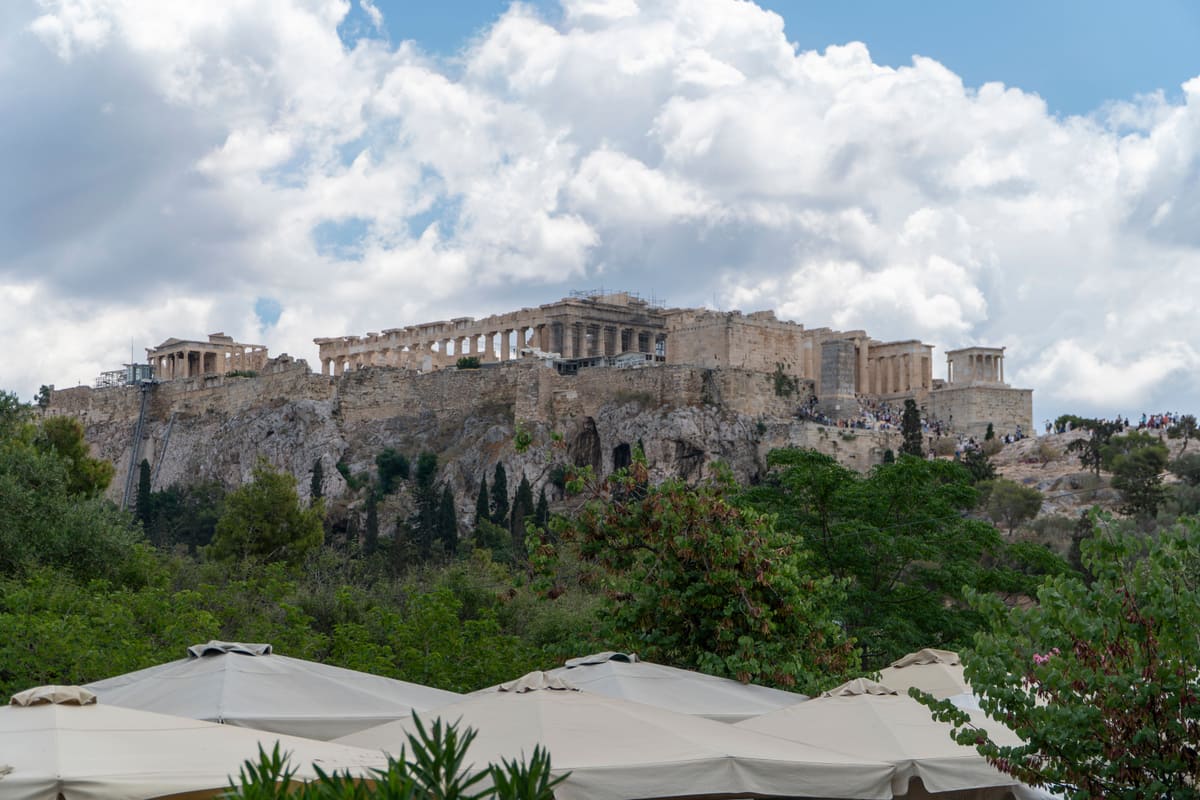
One heritage page says the Acropolis stands on a rocky hill 156 metres above sea level. People have lived on it since the third millennium BC. These Athens travel tips start there, because every district is placed by its position around the rock.
Under Pericles, a building programme began in the mid fifth century BC and then filled the century’s second half. The same page lists four results: the Propylaea, the Erechtheion, the Parthenon and a temple for Athena Nike. Iktinos with Callicrates designed the Parthenon, it says, and Phidias, a close friend of Pericles, handled the sculpture.
Wikipedia places the Acropolis Museum beside the south-eastern side of the hill, only 280 metres from the Parthenon. Dionysiou Areopagitou Street holds the museum’s entrance, beside the Akropoli stop on the red metro line. These Athens travel tips leave entry details to the page on Acropolis Museum tickets; check current hours on that page.
These Athens travel tips use Wikivoyage’s remark that the borders of Plaka are not precisely defined. Monastiraki square and the Ancient Agora mark its western limit. Its southern limit is the Acropolis, along Dionysiou Areopagitou Street. Wikipedia adds that Adrianou Street runs north and south. It separates Ano Plaka, under the Acropolis, from Kato Plaka.
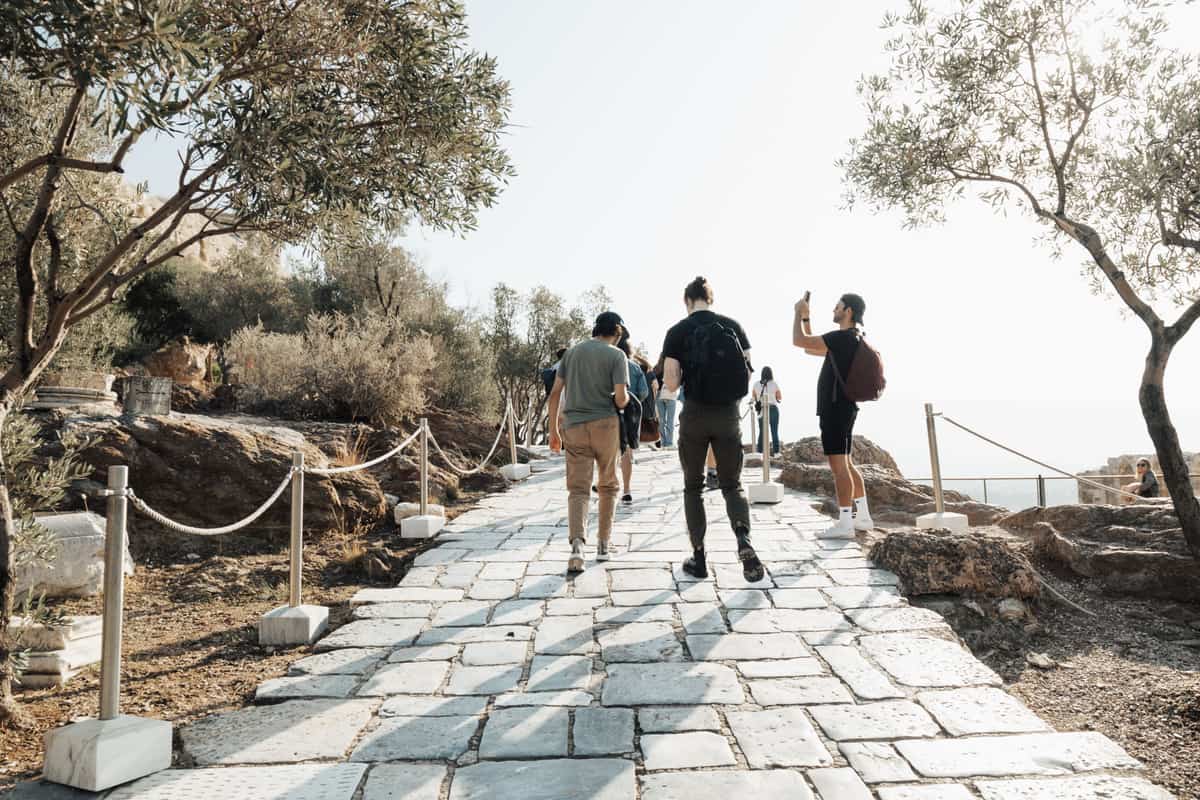
Wikivoyage describes a walk to the main entrance from the Thissio metro stop. Go west to Apostolou Pavlou Street, turn left, walk south, then turn left again on Theorias. The main entrance sits at the west end, the one side that the heritage page does not call steep. The other gate is on the south side.
For walkers, these Athens travel tips note that Wikipedia calls Apostolou Pavlou a pedestrianised street. It joins Dionysiou Areopagitou Street. Joined, the two make the principal pedestrian zone by the Agora site, from Thiseio up to the Acropolis. Wikivoyage adds that Thissio, lying west of the Acropolis, now has a number of restaurants and cafes.
Which Athens travel tips cover the weather and the clothes?
For Wikivoyage, spring and late autumn are the preferred seasons for a visit to Athens. Summer can bring heatwaves, and winter is the low season. These Athens travel tips add the sun, the smog and the clothing rules.
These Athens travel tips follow Wikivoyage on winter: the off-peak months, with a rainy or snowy day now and then. A winter visitor enjoys the city without countless other tourists. Summer can turn extremely hot and dry during a heatwave, although the page says this rarely happens. Wikipedia adds that the Athens climate is classed as hot-summer Mediterranean.
Wikipedia’s climate article for Greece classes the port of Piraeus, plus much of the coastal Athens Riviera, as hot semi-arid. Mount Parnitha in Attica, a higher area than the lowlands, gets a Mediterranean climate with milder summers. In one heatwave, the same article adds, night temperatures in metropolitan Athens stayed above thirty degrees Celsius for twelve days.
The official city tourism page says visitors need sunscreen from April to late October. Pale skin can turn pink even on a sunny winter day. It advises against climbing the Acropolis at midday in summer, since no sunscreen prevents heatstroke. These Athens travel tips pass on its timing: early morning or right before sunset.
Wikivoyage says peak traffic hour can be smoggy on the main roads. It blames mountains that enclose the city in a basin and trap the smog. A diesel ban and emission steps from the early nineteen nineties improved the air. The sky is azure on the greater part of sunny days, as the Athens photo gallery shows.
These Athens travel tips on clothing start with the official page. Hot pants and crop tops are wrong for churches and monasteries. It also warns against high heels on slippery, sensitive marble ruins. Wikivoyage adds that pointed heels damage soft marble and that a number of sensitive sites have banned them. It advises comfortable shoes with good traction.
Which Athens travel tips cover food, coffee and table manners?
These Athens travel tips on food come from the official city tourism page. Choose a restaurant with care, expect late dinners and leave the bargaining aside. A gratuity of ten to fifteen percent is fine in cafes and restaurants.
Athens travel tips on restaurants begin with a warning from the official city tourism page. In touristy areas, waiters stand outside and try to talk passers-by into a table. The page tells visitors to resist that pull and research where to eat. It adds that Athenians eat late and that restaurant kitchens stay open into the night.
The official page also covers bargaining. It says haggling used to be acceptable but is much less so today. A shopper is not expected to trade numbers back and forth, except when clearing a shop. The page does not assume that every vendor wants to overcharge. The page says to speak up if a demand sounds absurd.
Athens travel tips on gratuities name waiters, taxi drivers, bellboys and hairdressers as people to reward. In cafes and restaurants, the official city tourism page calls a gratuity of ten to fifteen percent fine. The same page describes frappe as strong, instant coffee. It also warns against assuming that Athenians drink only frappe or eat only souvlaki.
The same page calls souvlaki an occasional treat, not a staple food. Wikipedia defines it as meat cut small and grilled on a skewer, at times with vegetables. A portion can be eaten hot from the skewer or served in a rolled pita. In and around Athens, Wikipedia adds, the common name is kalamaki, which means small reed.
Athens travel tips on dishes end with meze. Wikipedia describes it as little plates that serve as appetizers in Eastern Mediterranean cooking. Meze sometimes starts a multi-course dinner, and sometimes it makes up the whole dinner. Wikipedia lists cheese, olives and grilled meats among the common features. Turkish passed the word on after borrowing it from Persian.
Which Athens travel tips cover the day trips from the city?
Among these Athens travel tips for day trips, Cape Sounion comes first. From Athens the headland lies 69.5 kilometres to the south-east, says Wikipedia, and a Temple of Poseidon stands on it. That temple is a major monument from the Golden Age of Athens.
Athens travel tips for the sea start with the Saronic Gulf. Two peninsulas, Attica and Argolis, frame this gulf of the Aegean Sea. Along its north coast lies the urban area of Athens. Hydra, one of the Saronic Islands, does not allow wheeled vehicles. Wikipedia adds that a visitor moves about on Hydra by water taxi or on a donkey, a mule or a horse.
Delphi was a sacred precinct on Mount Parnassus, on the mountain’s south-western side. Wikipedia calls it the seat of the Pythia, a major oracle of antiquity. At Delphi, the Omphalos stone marked the spot that ancient Greeks took as the centre of the world. A separate page of this site, Delphi tours, keeps the detail of that day.
Athens travel tips for the Peloponnese can start on the rails. The official transport page says the suburban railway reaches Kiato and Corinth. At Corinth, Wikipedia gives the canal a length of 6.4 kilometres and a completion date of eighteen ninety-three. It adds that the ancient city-state held 90,000 people around four hundred BC.
Wikipedia dates the Epidaurus theatre to the fourth century BC and names Polykleitos the Younger as designer. Up to 14,000 spectators can sit in the auditorium, and plays are staged there today. Nafplio is a Peloponnese port on the Argolic Gulf. Wikipedia adds that Nafplio was the young Greek state’s first official capital from eighteen twenty-seven until eighteen thirty-four.
Athens travel tips on Meteora point to a rock formation in Thessaly, north-western Greece. Wikipedia says its pillars carry a leading Eastern Orthodox monastic complex. Twenty-four monasteries were founded there, chiefly after the middle of the fourteenth century. Six still stand today, and four of those work as monasteries. The other two are no longer in use.
What else do visitors ask about Athens travel tips?
What are the Athens travel tips on safety and pickpockets?
The official city tourism page calls Athens a very safe city in general, with busy streets around the clock. These Athens travel tips still start with care, because a big city draws pickpockets and petty criminals. The page asks for extra watchfulness with belongings on public transport.
The same page lists three plain precautions. Use only a licensed taxi. Choose an ATM that is well lit and well populated. Keep the phone off the table of a cafe, because it can be snatched by a passer-by.
A visitor can also see open drug use in a number of places. The page names squares, parks and districts of the centre, among them Omonia Square. Its advice is short: pay no attention, and the people will generally pay none to a visitor.
What are the Athens travel tips for emergency help?
The official city page sets the emergency services in one short block, and the digits stay on that page. The first entry is the tourist police, who answer in English, French and German. A visitor therefore knows beforehand that English is covered.
For any urgent case the page gives the European emergency number. It adds a separate entry for the hospitals and pharmacies service. Visitors who follow these Athens travel tips can copy the entries from the page before the trip.
The block closes with two more services. One is a police line for the airport. The other is roadside assistance for drivers, which matters to a visitor who plans a drive in a rented car.
What are the Athens travel tips for holidays and strike days?
Athens travel tips from the official city page warn against arriving around the fifteenth of August. The page names that day the biggest national holiday of Greece. The locals leave for the Greek islands, and a large share of the bars and restaurants shut.
The same page gives a second warning about strike and demonstration days. When one is planned, it says to avoid Exarchia Square and Syntagma Square. Wikivoyage calls strikes among cabbies and transit staff common, so a visitor can watch the local news.
The safety page gives the reason for that advice. Police occasionally use tear gas to disperse protesters. Wikivoyage calls Syntagma Square a rallying place for demonstrations and public celebrations. It notes that the square contains a major metro stop.
What are the Athens travel tips for the language and the currency?
Athens travel tips on language begin with good news. The official city page says a visitor needs no Greek before arrival, because residents speak English widely. It still welcomes a hello, yia sas, and a thank you, efharisto.
Wikipedia gives Greek the longest recorded history among the Indo-European languages, at least 3,400 years of writing. The alphabet that writes it today is about 2,800 years old. Earlier, Greek was set down in Linear B, a Bronze Age syllabic script with examples from the fifteenth century BC.
The currency is the euro, and Wikipedia lists Greece among the euro area members. It says the name was adopted in Madrid in nineteen ninety-five. Euro notes and coins went into circulation on the first day of the year two thousand and two. Each euro is divided into cents.
What is the number of hills inside Athens that a visitor can see?
Athens travel tips from Wikivoyage count twelve hills inside the city. It names seven as the historical hills. They are the Acropolis, the Areopagus, the Hill of Philopappus, Observatory Hill, the Pnyx, Lycabettus and Tourkovounia. The Acropolis and Lykavittos stand out above the other ten.
Three mountains bound the city on three sides, Wikivoyage says: Ymettos, Parnitha and Pendeli. Inside the city, the hills offer a break from the din of the busy streets. From them a visitor looks down to the Saronic Gulf on the southern side.
Wikipedia describes the Philopappos Monument as a Roman tomb built in memory of Philopappos, a prince from Commagene. The tomb sits on Mouseion Hill, to the south-west of the Acropolis. The Pnyx lies within one kilometre of the Acropolis, to the west. Athenians gathered there for popular assemblies as early as 507 BC.