
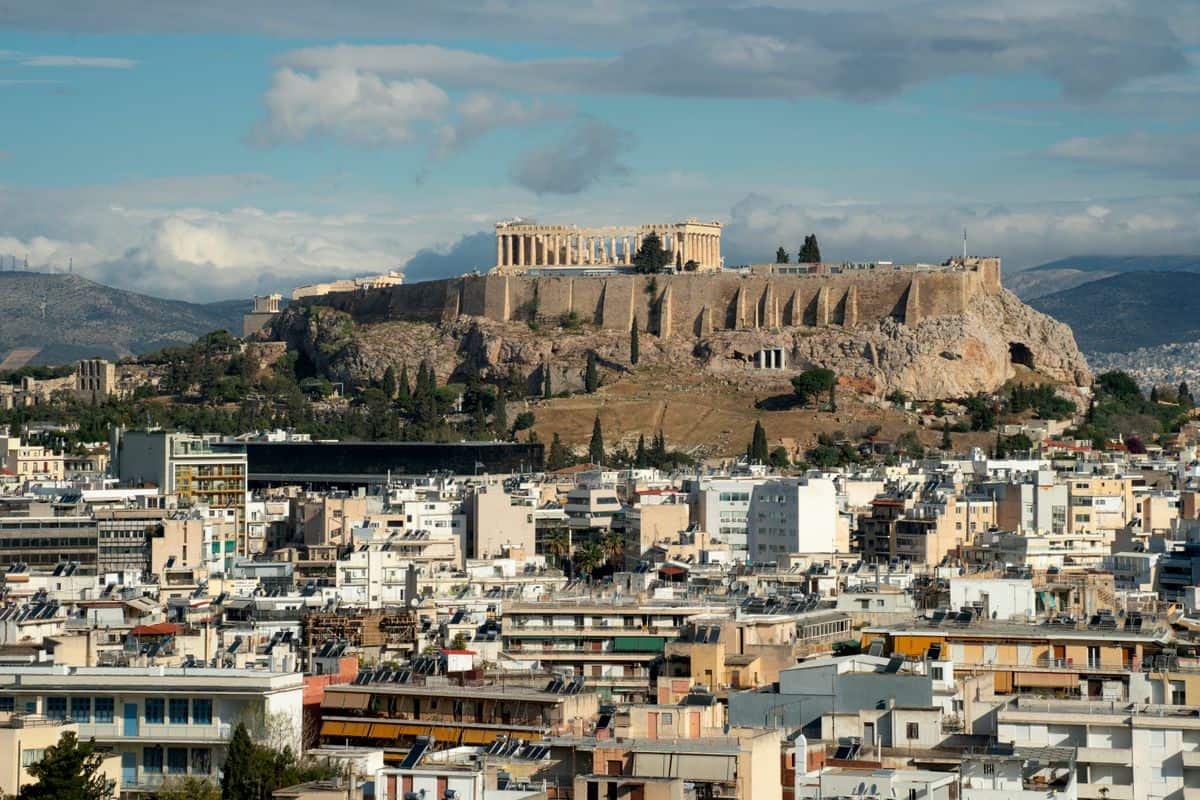
Athens central hotels are the hotels of the old centre of Athens, within walking distance of Syntagma Square, Plaka, the Acropolis, Thissio, Monastiraki and Omonia Square. For other trips, see our tours in Greece page.
Below you find what central means, the areas, the hotel pages of each star class, and short answers to the questions travellers ask.
What are Athens central hotels?
Athens central hotels are the hotels the old hub page of this site groups for the middle of the city. The page places them within walking distance of Plaka, the Acropolis, Thissio, Monastiraki, Omonia and Syntagma Square. It sorts them by class, then by name.
The old page splits Athens central hotels into four classes. Deluxe stands for five stars, A class for four, B class for three and C class for two. More hotel pages of this site start from Athens hotels, while the sections below take each class in turn. Entries run in alphabetical order inside each class.
The old page speaks of classes, but rating sources for Greece today speak of stars. In two thousand thirteen Greece entered the European Hotelstars system, as Wikipedia’s article on hotel rating lists. The Hotelstars page for Greece shows five star levels. Anyone comparing Athens central hotels by class can ask each hotel which stars it holds now.
Wikivoyage calls central Athens the active heart of the city, with the greater part of its ancient sites and museums. Athens central hotels stand in that heart. The old page left villas, apartments and studios to other pages, such as Athens accommodation. Wikipedia defines an apartment hotel as a complex of serviced flats let through hotel-type bookings.
Official borders give a second meaning of central. Wikipedia puts the Municipality of Athens at 38.96 square kilometres, split into seven municipal districts that serve administration. The old hub page does not use those districts. It groups Athens central hotels by the city areas that the next section names.
Which areas do Athens central hotels cover?
The old hub page ties its hotels to areas of the middle of the city. Athens central hotels fall under Syntagma, Plaka, the Acropolis, Thissio, Monastiraki with Psyrri, or Omonia. One entry reads Syntagma and Omonia, for a hotel between the two squares.
Wikivoyage places Omonia north of Syntagma Square, Monastiraki to its west and Plaka to its south. That gives a first map for Athens central hotels: Syntagma in the middle, three areas around it. It adds that the boundaries of Plaka are not precisely defined, so an area label is a rough pointer.
Syntagma is the central square of Athens, with marble steps on its higher eastern side. Plaka is the old quarter of winding lanes and neoclassical buildings. Remains of an ancient citadel crown the Acropolis rock. Thiseio lies northwest of that rock. Monastiraki is a flea-market quarter. Omonia Square is a traffic hub where six main streets meet.
Plaka has an upper level right under the Acropolis and a lower level between Syntagma and Monastiraki. So a page for Athens central hotels that says walking distance leaves questions. Which street does the walk follow? Is the slope steep, and are there stairs? Pictures of the city are collected in the Athens photo gallery.
The walking targets on the old page repeat. Entries tied to Omonia name Monastiraki, Plaka and Syntagma Square as walks. Entries on the Acropolis side name the lanes of Plaka. One entry at Syntagma adds the Acropolis, the museums and the Parliament. Athens central hotels in all four classes name Plaka as a walk.
Where do Athens central hotels stand near Syntagma Square and Plaka?
Athens central hotels near Syntagma Square stand by the Old Royal Palace, where soldiers demanded a constitution in eighteen forty-three. Plaka, the old quarter on the Acropolis slope, borders the square on the south, as Wikivoyage lists the districts.
Today the Old Royal Palace houses the Greek Parliament, as it has since nineteen thirty-four. Below the square lies Syntagma metro station, which opened in the year two thousand. Wikipedia calls it the busiest station of the Athens transport system. Guests of Athens central hotels around the square find that station right under the square.
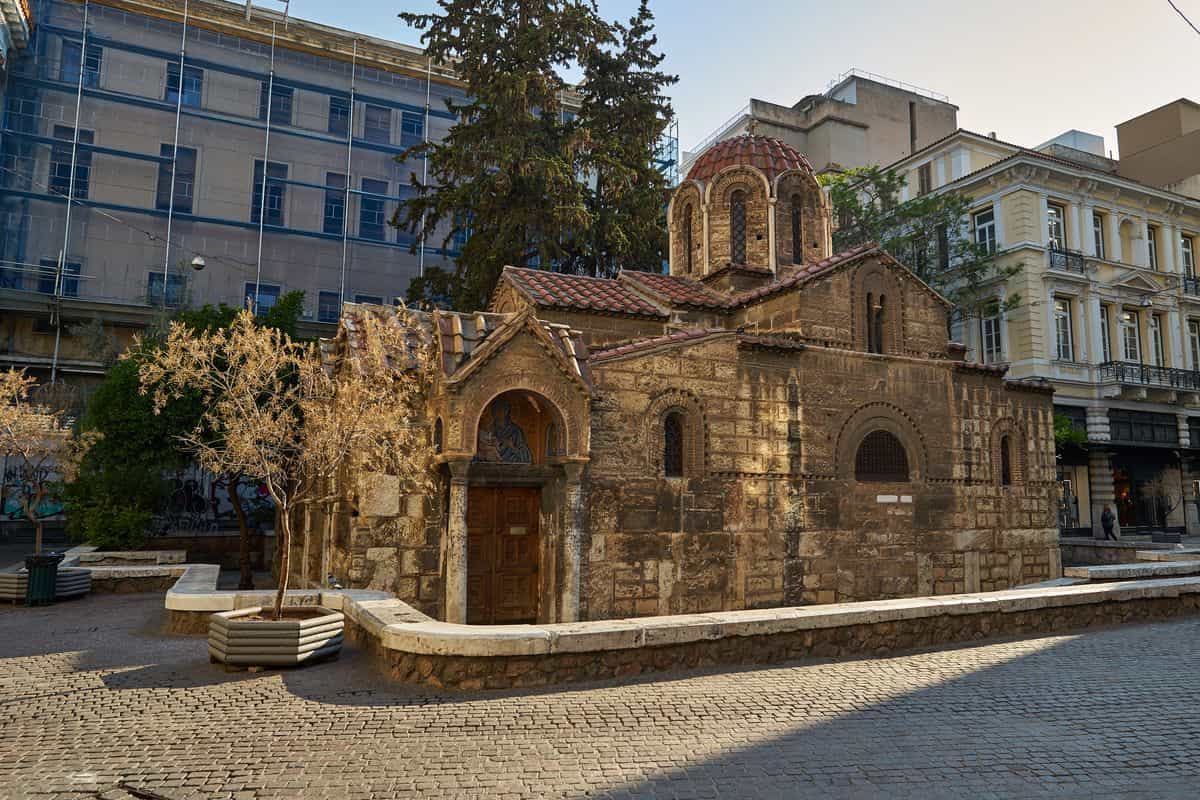
Wikivoyage says Plaka has no exact borders, but the Ancient Agora and Monastiraki Square close it on the west. The old hub page labels the 5 star class of Athens central hotels deluxe. Its short texts for these entries name the Acropolis area, Plaka and Syntagma Square. Below, a list gives the pages of those 5 star hotels.
- Baby Grand Hotel Athens and its Baby Grand Hotel Athens photo gallery
- Divani Palace Acropolis Hotel and its Divani Palace Acropolis Hotel photo gallery
- Electra Palace Hotel Athens and its Electra Palace Hotel Athens photo gallery
- Grand Bretagne Hotel Athens and its Grand Bretagne Hotel Athens photo gallery
- Royal Olympic Hotel Athens and its Royal Olympic Hotel Athens photo gallery
Wikivoyage lists restored nineteenth-century homes, pedestrian streets and Roman ruins in Plaka. It treats Amalias Avenue on the south-east as a border, not as part of Plaka. Its rule of thumb: streets west of Nikis Street and south of Apollonos Street still feel like Plaka. This site also keeps a separate page on luxury hotels in Athens.
The uprising was bloodless, and a constitution followed in March of eighteen forty-four. Wikivoyage adds that the square now and then serves as a gathering place for public celebrations and demonstrations. Athens central hotels around the square have the tram stop to the south, beside Vasilissis Amalias Avenue. That stop opened in July of two thousand four.
Where do Athens central hotels stand near the Acropolis and Thissio?
Athens central hotels near the Acropolis lie south of the rock, in Makrygianni, or northwest of it, in Thiseio. Wikipedia describes a pedestrian zone that runs from Thiseio to the Acropolis and joins the two areas.
Wikipedia says two avenues, Dionysiou Areopagitou and Syngrou, bound Makrygianni, which lies south of the Acropolis. Athens central hotels in this district share it with the new Acropolis Museum, inaugurated in two thousand nine. More on the museum visit sits on this site’s page about Acropolis Museum tickets.
The old hub page labels its 4 star class A class. Its short texts for these Athens central hotels name the Acropolis area and Makrigianni Street, among other places. The old page spells it Makrigianni; Wikipedia spells the district Makrygianni. Further down, a list gives the pages of those 4 star hotels.
- Acropol Athens Hotel and its Acropol Athens Hotel photo gallery
- Amalia Athens Hotel and its Amalia Athens Hotel photo gallery
- Astor Hotel Athens and its Astor Hotel Athens photo gallery
- Electra Hotel Athens and its Electra Hotel Athens photo gallery
- Esperia Palace Hotel Athens and its Esperia Palace Hotel Athens photo gallery
- Herodion Hotel Athens and its Herodion Hotel Athens photo gallery
- Jason Prime Hotel Athens and its Jason Prime Hotel Athens photo gallery
- Kaningos 21 Hotel Athens and its Kaningos 21 Hotel Athens photo gallery
- Olympic Palace Hotel Athens and its Olympic Palace Hotel Athens photo gallery
- Omonia Grand Hotel Athens and its Omonia Grand Hotel Athens photo gallery
- Parthenon Hotel Athens and its Parthenon Hotel Athens photo gallery
- Polis Grand Hotel Athens and its Polis Grand Hotel Athens photo gallery
- Titania Hotel Athens and its Titania Hotel Athens photo gallery
Thiseio lies northwest of the Acropolis, among the sites of the Agora, Keramikos and the Pnyx. Athens central hotels there stand in an area served by the nearby Thiseio metro station. The Philopappos Monument, a Roman tomb, stands on Mouseion Hill southwest of the rock. A separate page on this site covers 4 star hotels in Athens.
The district of Thiseio is named for the Thiseion, a mistaken old nickname of the Temple of Hephaestus. The Philopappos Monument is built of white Pentelic marble, and two thirds of its facade remains. Athens central hotels in Thiseio lie in a district that also holds two synagogues and open-air cinemas, Wikipedia says.
Where do Athens central hotels stand near Monastiraki and Psyrri?
Athens central hotels near Monastiraki and Psyrri stand in the old town, west of Syntagma Square. Wikipedia describes Monastiraki as a shopping area where clothes, souvenirs and specialty goods are sold. Wikivoyage puts Psyrri immediately north of Ermou Street.
Athens central hotels here sit around Monastiraki Square, whose name comes from the Pantanassa church within it. Two streets, Pandrossou and Adrianou, are the main routes of the area, says Wikipedia. The square holds Monastiraki station, where Metro Line 1 meets Line 3. How far does the hotel’s door lie from that station?
Wikivoyage calls Monastiraki a bohemian district between Plaka and Thissio. The old hub page gives the 3 star class the letter B; see 3 star hotels in Athens. Under this paragraph, a list links the hotel pages of that class. Athens central hotels of that class also stand in Psyrri and in Assomaton Street, says that page.
- Achilleas Hotel Athens and its Achilleas Hotel Athens photo gallery
- Acropolis Select Hotel Athens and its Acropolis Select Hotel Athens photo gallery
- Adrian Hotel Athens and its Adrian Hotel Athens photo gallery
- Alassia Hotel Athens and its Alassia Hotel Athens photo gallery
- Amazon Hotel Athens and its Amazon Hotel Athens photo gallery
- Arion Hotel Athens and its Arion Hotel Athens photo gallery
- Athens Cypria Hotel and its Athens Cypria Hotel photo gallery
- Dorian Inn Hotel Athens and its Dorian Inn Hotel Athens photo gallery
- Athens Center Hotel and its Athens Center Hotel photo gallery
- Hermes Hotel Athens and its Hermes Hotel Athens photo gallery
- Jason Inn Hotel Athens and its Jason Inn Hotel Athens photo gallery
- Ionis Hotel Athens and its Ionis Hotel Athens photo gallery
- Pan Hotel Athens and its Pan Hotel Athens photo gallery
- Philippos Hotel Athens and its Philippos Hotel Athens photo gallery
- Plaka Hotel Athens and its Plaka Hotel Athens photo gallery
- Pythagorion Hotel Athens and its Pythagorion Hotel Athens photo gallery
- Zinon Hotel Athens and its Zinon Hotel Athens photo gallery
Athens central hotels near Psyrri stand in a quarter that ranks among the oldest of the city, says Wikipedia. Until the early nineteen nineties it had a poor reputation. Wikipedia now lists restaurants, bars, tavernas with live music and a small number of hotels there. Athinas Street runs through it from Ermou Street to Omonia Square.
Heroes Square lies at the middle of Psyrri, says Wikipedia. Streets that lead to it are named for veterans of the Greek independence war, Karaiskakis among them. The writer Alexandros Papadiamantis spent over twenty years living in the quarter. How far does each of the Athens central hotels there lie from that square?
Where do Athens central hotels stand near Omonia Square?
Athens central hotels near Omonia Square stand at the northern corner of the downtown plan of the nineteenth century. Six main streets meet there, says Wikipedia, and the square ranks among the main traffic hubs of Athens.
Athens central hotels around the square stand on ground that the underground railway reshaped into a circle. Wikipedia dates the building of the Piraeus line from the middle of the nineteen twenties into nineteen thirty. A post office, banks and shops filled the space below the square in nineteen fifty-four.
The old hub page marks the 2 star class C; see 2 star hotels in Athens. Below this paragraph, links lead to the hotel pages of that class. Athens central hotels of that class stand in Pireos and Athinas Streets, says that page. Wikipedia counts Pireos Street, spelled Peiraios there, among the six streets of the square.
- Amaryllis Inn Hotel Athens and its Amaryllis Inn Hotel Athens photo gallery
- Attalos Hotel Athens and its Attalos Hotel Athens photo gallery
Patission Street joins the Patisia area to Omonia Square, says Wikipedia. The National Archaeological Museum has its entrance on that street. Guests of Athens central hotels here reach Omonia metro station below the square. Its passenger traffic equals that of Syntagma station. For the road from the airport, see Athens airport transfers.
Athens central hotels here stand beside a square that was rebuilt once more in two thousand twenty, says Wikipedia. The works restored the round fountain of nineteen fifty-eight. New paving, chosen to reduce the square’s thermal footprint, replaced the old surface. The Five-ring sculpture, placed there in two thousand one, moves with water again after that work.
What else do travellers ask about Athens central hotels?
This part answers five questions about Athens central hotels. Where a detail depends on one hotel, the answer says what to ask.
Are Athens central hotels the same as one hotel called Central?
No. This page is a hub for the whole centre of Athens. It rebuilds an earlier hub page from this site, which listed hotels by class and gave each one’s area.
One hotel in Plaka carries the word Central in its own name. That single hotel is a different subject. A hub lists classes and areas, while a hotel page lists rooms and a street address.
What do travellers ask about noise and sleep in Athens central hotels?
Wikipedia calls Psyrri a gentrified quarter, where live music is played in bars and tavernas. Wikivoyage calls Monastiraki a bohemian district and notes noise pollution on very urban streets.
Useful questions for any hotel: Which floor is the room on? Does it face the street? Do the windows keep sound out? Wikipedia says air conditioning removes heat from an enclosed space.
How do guests move around from Athens central hotels?
Wikipedia says the Athens Metro changes between lines at five stations. Syntagma, Monastiraki and Omonia are three of them. Wikivoyage gives the first train at half past 5 and the last at half past midnight on ordinary days.
On Friday and Saturday nights, Wikivoyage says, trains run until about 2 in the morning, so check the current timetable. Wikipedia says a rider can hail a taxi in the street or use a taxi stand.
How do the summer heat and the Acropolis walk affect a stay?
Summer heat matters to guests of Athens central hotels. Wikipedia’s Climate of Greece entry records a July heatwave in metropolitan Athens. Minimum temperatures there stayed above 30 degrees Celsius for twelve days running.
Wikipedia describes the Acropolis as a flattish-topped rock. It reaches 150 metres over sea level. Wikivoyage calls Mnisikleous Street, the walk up from Plaka, steep.
What do travellers ask about check-in and luggage at Athens central hotels?
Wikipedia notes that check-in is also called registering or signing in. Times vary, from around midday up to mid-afternoon. Ask each hotel for its own times.
Wikipedia gives left luggage as temporary bag storage, held at a staffed counter or in lockers. It says newer services keep bags at local businesses, hotels among them. Ask whether the front desk takes a bag before the room is ready, and again on the day of departure.