2 star hotels in Athens form the C class group of this listing, with one list of the pages of such hotels. For other trips, see our tours in Greece page.
This page covers what the level means, where the hotels stand near Omonia and Monastiraki, the food, the trolleybus, the trains, the museum, the walking day and the day trips.
What are 2 star hotels in Athens?
2 star hotels in Athens sit on the second step of the five-star ladder, which the Hotelstars Union calls Standard. A guest gets a private room with its own bathroom, a front desk, a colour television, and a breakfast buffet.
Older listings on this site named the level of 2 star hotels in Athens C class. Listing pages today use the star label for the same step. Wikipedia says grading, rating, and classification name one idea: a label that tells travellers what to expect. The Athens hotels page sets the classes of the whole city side by side.
The single star sets the base of the Hotelstars Union, and the two-star list reads as an addition to it. Wikipedia lists reception service, daily room cleaning, and a shower or bath with a toilet in every room. The base also holds a colour television and wireless internet. 2 star hotels in Athens build on this base.
The second star adds items to that base, and the first two concern staff and breakfast. Wikipedia names bilingual staff, for example German and English, and a breakfast buffet. The single star asks only for an extended breakfast. A guest of 2 star hotels in Athens can ask which languages the front desk speaks.
The rest of the Standard list covers the room. Wikipedia names a reading light next to the bed, bath essence or shower gel, and bath and hand towels. It adds shelves for linen, a sewing kit, and shoe polish utensils. A guest who reads a listing for 2 star hotels in Athens can check each item.
Wikipedia says traditional rating systems weigh the facilities on offer, such as food, views, spas, and fitness centres. It says hotels of small to medium size provide only a modest range of extras. A number of observers find that rule hard on small hotels. A missing lift or spa can hold a good room in a lower class.
Athens is the Greek capital and the biggest city in the country. It lies on the Mediterranean coast. Wikipedia ranks the urban area eighth in the European Union by population, with more than 3.6 million residents. Written records of the city reach back over 3,400 years. Trips that start in the city are listed on the Athens tours page.
How do 2 star hotels in Athens differ from hostels and guesthouses?
2 star hotels in Athens differ from hostels and guesthouses in what the guest rents. A hotel rents a private room under a star label. A hostel rents a bed in a shared or private room. A pension adds meals to the stay.
Wikipedia describes a hostel as shared, sociable lodging where a guest rents a bed. Its main form is a bunk bed in a shared room for four to twenty guests, plus a lounge. Nearly all hostels have a shared kitchen. Rooms can be private, and bathrooms can be private or shared. So hostel is not one room type.
Wikipedia lists the trade-offs of a hostel. There is less privacy than in a hotel, and noise can disturb sleep. Earplugs and eye masks help. A number of hostels set a curfew. A guest who needs privacy can weigh 2 star hotels in Athens against a dormitory. The 3 star hotels in Athens page covers the next class.
Wikipedia calls a pension a type of guesthouse or boarding house. The word is used in continental Europe and parts of North Africa. It sets the pension against the bed and breakfast, since a pension offers lunch and dinner as well as breakfast. A guest picks one plan, full board with every meal or half board without lunch.
Wikipedia defines a bed and breakfast as a small lodging with an overnight stay and breakfast. The hosts live in the same house. The words also name a hotel meal plan, as against room-only, half board, or full board. A listing for 2 star hotels in Athens can say bed and breakfast and still mean a hotel room.
Wikipedia calls an apartment hotel a serviced apartment complex with no fixed contract. Its apartments hold a kitchen with a sink, a refrigerator, and a stovetop. Wikipedia says tourists take a vacation rental, a furnished home, for a temporary stay instead of a hotel. One listing page mixes hostels and apartments into its two-star list for Athens.
When a listing says rooms, ask if the bed sits in a dormitory and if the bathroom is inside. When a listing says inn, ask what the stay holds. The inn of medieval Europe gave travellers food, lodging, and stabling. The same questions work for 2 star hotels in Athens and for hotels across Greece.
Where are 2 star hotels in Athens near Omonia Square?
The 2 star hotels in Athens near Omonia Square stand in the streets around it. One listing page files a number of them under the district name Omonia. Wikivoyage describes the Omonia area as the square together with its streets and large buildings.
Around the square, the 2 star hotels in Athens stand in a district of shops and offices. Wikipedia calls Omonia Square an important shopping centre and a transport hub that thousands of people use all day. Wikivoyage says the area holds banks and offices in large buildings. Both pages describe a working part of the city centre.
Pireos Street meets the square and marks the western end of Ermou Street, which leads on to Kerameikos. Wikipedia calls Pireos Street an arterial road. It says the street carried industry and wholesale trade in the nineteenth and twentieth centuries. A list follows with the pages of the 2 star hotels in Athens that this site lists.
- Amaryllis Hotel Athens and its Amaryllis Hotel Athens photo gallery
- Amaryllis Inn Hotel Athens and its Amaryllis Inn Hotel Athens photo gallery
- Attalos Hotel Athens and its Attalos Hotel Athens photo gallery
Patission Street, one of the major streets of central Athens, joins Omonia Square to the Patisia area. Between Panepistimiou Street and Amerikis Square it is called 28 October Street. The name marks the day in nineteen forty when Greece refused an Italian ultimatum. Wikipedia says work on the road began in eighteen forty-one, on older country roads.
On the map, Metaxourgeio is the district above Kerameikos, north of the historical centre. Wikipedia calls it a transition neighbourhood with art galleries, museums and cafes. A listing of 2 star hotels in Athens at the northern edge of the old centre meets this district. Metro Line 2 has served the district since the year two thousand.
Kerameikos was the quarter of the ancient potters, north-west of the Acropolis, within and outside the ancient city walls. Wikipedia places the entrance of the site at the western end of Ermou Street, close to Pireos Street. The first modern plan of Athens drew a triangle between the Acropolis, the Kerameikos cemetery and the royal palace.
Wikivoyage lists the areas around Omonia Square among the rough areas. Athenians hold a negative view of them, it says, and locals advise visitors to avoid them late at night. It also calls the area notorious for pickpockets. A guest who compares 2 star hotels in Athens here can ask each hotel about its street at night.
Where are 2 star hotels in Athens near Monastiraki and Athinas Street?
The 2 star hotels in Athens near Monastiraki and Athinas Street stand in the old centre of the city. Athinas Street begins at Ermou Street and leads north to Omonia Square. Metro lines 1 and 3 both stop at the station on Monastiraki Square.
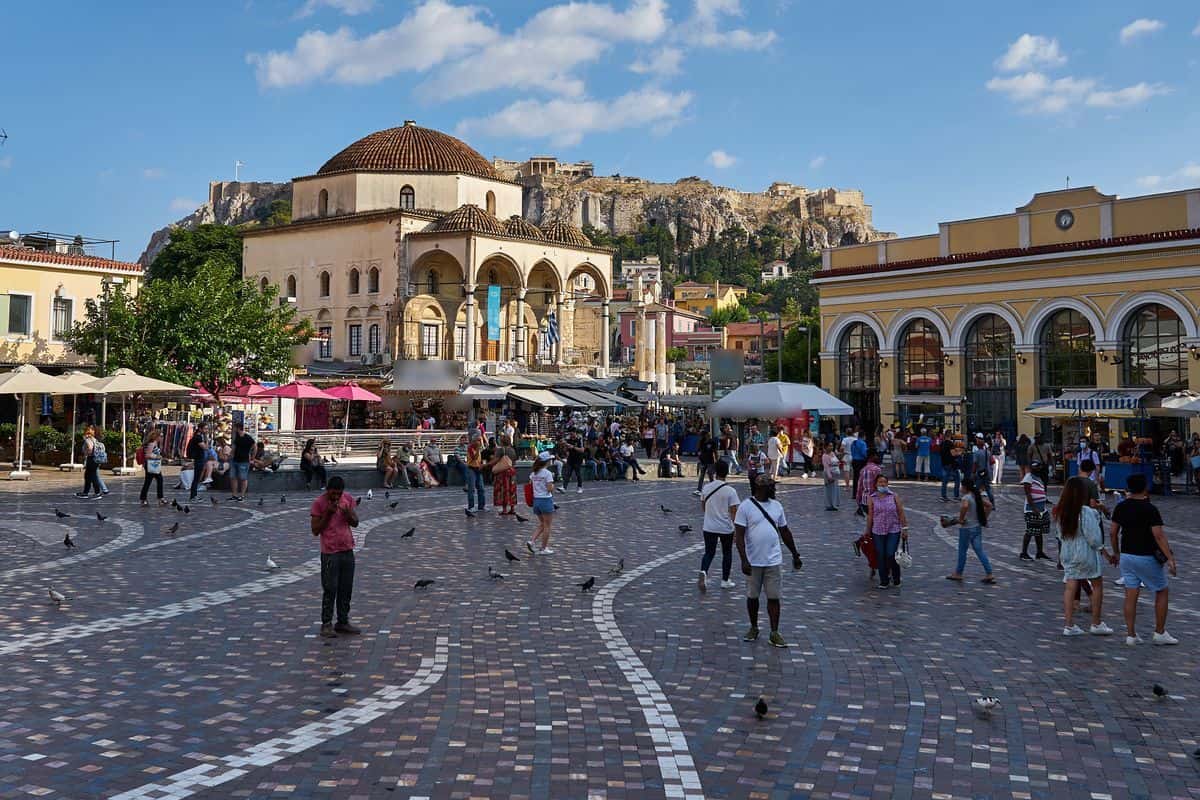
The name Monastiraki means little monastery, and the old-town district is known for its flea market. Wikipedia also counts it among the main shopping areas. The district takes its name from its square, and the square from the Pantanassa church that stands on it. The 2 star hotels in Athens near the square share this district with the market.
The main streets of Monastiraki, Wikipedia says, are Pandrossou Street and Adrianou Street. Wikivoyage says a sign by Monastiraki station claims the area as the Flea Market of Athens. The street is lined with second-hand and surplus shops. Wikivoyage adds that the real flea market is held on Sunday mornings in Avissinia Square, so check the current times.
Athinas Street passes through Psyrri on its way north. Wikipedia calls Psyrri a gentrified district, full of restaurants, bars and tavernas that host live music. One listing page labels a number of 2 star hotels in Athens as near Psyrri and Monastiraki. Metro Line 1 runs under the whole length of the street. Other hotel pages are in the Athens hotels index.
Wikipedia says the street was first paved in the late nineteenth century. Its cross streets, from south to north, include Ermou, Evripidou, Sofokleous and Lykourgos. Athens City Hall is on the west side of the street, and Kotzia Square on the east. Of its length of nearly one kilometre, 80 metres have been a walkway since nineteen ninety-nine.
Ermou Street runs for one and a half kilometres from Kerameikos to Syntagma Square, through Monastiraki, Psyrri and Thiseio. Wikipedia says its western section ends the Grand Promenade, a pedestrian walkway around the Acropolis. A walk south along Athinas Street, from the 2 star hotels in Athens near Omonia Square, ends at Ermou Street.
Wikivoyage places Monastiraki between Plaka and Thiseio and calls it a bohemian district, popular with visitors. Its shops sell items such as antiques, cookware, souvenirs, and arts and crafts. It names Monastiraki Square as a clear border of Plaka on the west. That puts the 2 star hotels in Athens near Monastiraki Square at the edge of Plaka.
What do guests of 2 star hotels in Athens eat near the Central Market?
Guests of 2 star hotels in Athens eat bread, olives, cheese, pies and grilled food. Wikipedia names these foods for Greek cuisine. On Athinas Street stands the Central Market, a building where traders of meat, poultry, seafood and produce share a roof.
Greek Wikipedia places the Central Market at number 42 on Athinas Street, under a glass and metal roof. English Wikipedia says the market sits at the centre of the street and is the oldest market in Athens. One listing page of 2 star hotels in Athens gives 0.16 and 0.23 km from two hotels to the market.
Greek Wikipedia names Ioannis Koumelis as the architect and the national benefactor Ioannis Varvakis as the donor behind the building. The decision to build the market came in eighteen seventy-six, and the work began in eighteen seventy-eight. A fire on 8 and 9 August in eighteen eighty-four came between, and the work ended late, in eighteen eighty-six.
The Greek article adds a fish section with about 100 fish traders under the same roof. It says the market is open every day except Sunday, from morning until late afternoon. It also counts the market as a point of tourist interest. Before the walk, guests of 2 star hotels in Athens look up the current hours.
Greek cuisine rests on three bases, wine, olive oil and wheat, in Wikipedia’s account. It says wheat bread is found everywhere and olives are widely eaten. It names a great variety of cheeses, among them feta, kasseri and graviera. A menu board invites two questions. Which bread comes with the dish, and which cheese is on the plate?
Wikipedia lists filo pies, among them spanakopita, a spinach and cheese pie. It names souvlaki and gyros as street foods, and lists grilled octopus and roasted sardines among the appetizers. Guests of 2 star hotels in Athens can ask which filling a pie holds. They can also ask whether a grilled dish comes with bread and a salad.
Wikipedia describes ouzo as a dry aperitif flavoured with anise. Water turns it milky white, and a plate of mezes beside it can hold small fish, fries, olives and feta. The Turkish coffee article lists Greek coffee among the local names of the drink. It adds that the sugar level is named at the order.
How do guests of 2 star hotels in Athens use the trolleybus and the bus?
Guests of 2 star hotels in Athens ride city buses and electric trolleybuses, and change to the metro at Omonia. Wikipedia counts about 322 bus lines on this network, and the lines span the whole Athens Metropolitan Area.
According to Wikivoyage, the city’s network mixes diesel buses, buses on natural gas and electric trolleybuses. Wikivoyage reports that smart screens stand at the larger share of the central stops. They show when the next bus arrives and carry announcements. Guests of 2 star hotels in Athens can glance at such a screen before they decide to wait.
Wikipedia counts the trolleybuses as the electric-powered part of the fleet, next to buses on compressed natural gas. It says every one of the trolleybuses is equipped to run on diesel in case of a power failure. A subsidiary of the city’s transport organisation is the main operator of the buses and the trolleybuses in Athens.
The Wikipedia page on the trolleybus company, founded on 14 December in nineteen seventy, lists 20 active routes. The numbers run from 1 to 6, 10 to 12 and 14 to 21, plus 19B, 24 and 25. Guests of 2 star hotels in Athens can ask the front desk which of these numbers stops nearest.
The same page shows line 5 running from Lambrini by Syntagma Square to Tzitzifies. Line 21 is a circular route through Nikaia, Petrou Ralli and Omonoia. Line 14 follows Alexandras Avenue. Lines 18, 19 and 19B run between Mouseio and Chalandri. A reader who wants a different way to cross town can read about Athens transfers.
Wikipedia says the daytime bus network runs generally from 5 in the morning to midnight. The greater part of the routes depart every 30 to 60 minutes, says the same article. Two routes, the 11 and the 040, run on a 24-hour basis. Check the current times before a late ride back to 2 star hotels in Athens.
Wikipedia names Omonia among five metro interchanges, where Lines 1 and 2 meet. Wikivoyage’s page on Piraeus says bus and trolleybus tickets are bought in advance, generally at kiosks or inside metro stations. Wikivoyage warns that public transport strikes are common. When a strike hits, guests of 2 star hotels in Athens weigh the walk against the wait.
What does the National Archaeological Museum hold, close to 2 star hotels in Athens?
Objects from prehistory to late antiquity, found at sites across Greece, fill the National Archaeological Museum. Wikipedia calls its Greek antiquities the richest collection in the world. Travellers in 2 star hotels in Athens near Omonia Square find it in the next district, Exarcheia.
The museum stands in Exarcheia, between Epirus Street, Bouboulinas Street and Tositsas Street. Its entrance opens on Patission Street, next to the old building of the technical university. Victoria metro station on Line 1 lies five minutes away on foot. One listing page places one of the 2 star hotels in Athens not far from the museum.
Greece opened its first national archaeological museum on Aegina in eighteen twenty-nine, under the governor Ioannis Kapodistrias. The present building was begun in eighteen sixty-six and finished in eighteen eighty-nine. The land came as a gift from Eleni Tositsa. The neo-classical design matches the classical objects inside, and a large garden with sculptures stands at the front.
The prehistoric collection starts with the Neolithic era and runs through the Bronze Age, with Cycladic and Mycenaean art. Its marble figurines from the islands Delos and Keros date to the third millennium BC. Wikipedia says they resemble modern art. Guests of 2 star hotels in Athens who plan an island trip can meet Cycladic art here first.
The Mycenaean collection shows stone, bronze and ceramic pots, figurines, ivory and glass. The objects come from tombs at Mycenae, Tiryns, Pylos and Vaphio. Heinrich Schliemann’s finds from the grave circles at Mycenae include golden funerary masks. The masks covered the faces of dead nobles. Two golden cups from Vaphio, in Laconia, show the capture of a bull.
Sculpture and vessels form further collections of the museum. Wikipedia lists amphorae, kraters, hydriai and lekythoi, plus stelae, frescoes, jewellery, weapons, tools, coins and toys. The finds come from Santorini, Delos, Sparta, Thebes, Dodona, Rhamnous, the Antikythera wreck and other sites. A visit from 2 star hotels in Athens near Omonia Square therefore covers finds from across Greece.
The Egyptian collection dates to the last twenty years of the nineteenth century. In eighteen ninety-three the Egyptian government gave the museum nine mummies of the Pharaoh era. Wikipedia counts more than 6,000 objects, of which 1,100 are on view. The centrepiece is a bronze statue of the priestess Takushit, 70 centimetres high, dated to about 670 BC.
Where do students and walkers gather near 2 star hotels in Athens?
Students and walkers gather in Exarcheia, the district beside the Polytechnic, the capital’s technical university. Wikivoyage calls it a bohemian district, and its bars and clubs draw students. Travellers in 2 star hotels in Athens near Omonia Square have it as their northern neighbour.
Exarcheia is a neighbourhood of central Athens. It is named after Exarchos, a businessman of the eighteen hundreds who started a large general store in the area. Wikipedia says it was created between eighteen seventy and eighteen eighty, at the city’s edge. Kolonaki borders it on the east. Alexandras Avenue, Panepistimiou Street and Patission Street frame it.
Wikivoyage lists Exarcheia as the area north of Omonia Square and says the Athens Polytechnic dominates the area. Guests of 2 star hotels in Athens around that square therefore find a district of student life right next door. The same text adds that intellectuals and people drawn to alternative culture visit its bars and clubs as well.
Guests of 2 star hotels in Athens find cafes and bars at the central square of Exarcheia. Wikipedia lists a number of bookshops in the district, and comic book shops. Computer shops stand mainly on Stournari Street, which it calls the Greek Silicon Valley. A summer cinema on the square counts among the oldest in the city.
Walkers who pass the old campus of the technical university on Patission Street see neoclassical buildings by Lysandros Kaftantzoglou. Founded in eighteen thirty-seven, the university is the oldest technical one in Greece. It moved there in eighteen seventy-three. The School of Architecture still teaches there, north of 2 star hotels in Athens around Omonia Square.
The student uprising at the Polytechnic opened on 14 November nineteen seventy-three with a strike against the military junta. The students occupied the Polytechnic and ran a pirate radio station from it. Early on 17 November, an army tank crashed through the gates. Wikipedia says at least 24 people died, and the junta fell the following summer.
Athens marks the uprising every year on 17 November, with a march that starts near the grounds of the Polytechnic. A monument by Memos Makris on the campus honours the victims. Wikipedia adds that protests have started in Exarcheia more than once. A guest of 2 star hotels in Athens can check the news before an evening walk.
How do guests arrive at 2 star hotels in Athens by train?
Guests who come to 2 star hotels in Athens by train step off at Larissa Station, the main railway station. Wikipedia calls it the second-largest station in Greece. It stands in the central quarter of Kolonos, beside a metro station of the same name.
Wikipedia gives the full name as the Athens railway station and adds that onboard announcements call it Athens Central. The station is still known colloquially as Larissa Station, and the adjacent metro station carries the same name. Which of these three names does the hotel use when it explains the way from the platform to the door?
The station that guests of 2 star hotels in Athens see today grew from two terminals. Larissa Station opened in nineteen hundred and four and took the name of the city of Larissa. The Peloponnese Station beside it opened on 30 June in eighteen eighty-four. Wikipedia says the two terminals joined in two thousand and five.
Guests of 2 star hotels in Athens can change here from the railway to the metro. Wikipedia says the underground metro station opened on 28 January in two thousand. Line 2 serves it, running between Anthoupoli and Elliniko. The article also lists bus routes on Theodore Diligiannis Street to the east and Konstantinoupoleos Avenue to the west.
Wikipedia says Hellenic Train manages the greater part of the rail services in Greece. The article lists three kinds of regional passenger train: regular, express and InterCity. Wikivoyage says the network has two lines, one south to the Peloponnese and one north to Thessaloniki and Larissa. Timetables change, so check the current times before the trip.
Guests of 2 star hotels in Athens can also take the suburban railway, called Proastiakos, from this station. Wikipedia says Hellenic Train runs it. Three lines call here: A1 between Piraeus and the airport, A3 towards Chalcis, and A4 between Piraeus and Kiato. The article gives up to one train per hour on A1 and A4.
Wikipedia says the suburban railway runs daily from half past four in the morning until midnight. A guest of 2 star hotels in Athens who expects a late train needs plain answers. Is the front desk staffed when the train arrives? Is there a night bell? Which exit of the station is closest to the hotel?
What lies close to 2 star hotels in Athens at Kerameikos and Gazi?
Near 2 star hotels in Athens, Kerameikos holds an ancient cemetery and Gazi holds an old gasworks turned cultural centre. Wikipedia calls Gazi a neighbour of Kerameikos, near the Acropolis. A metro stop named Kerameikos, on Line 3, lies next to the old gasworks.
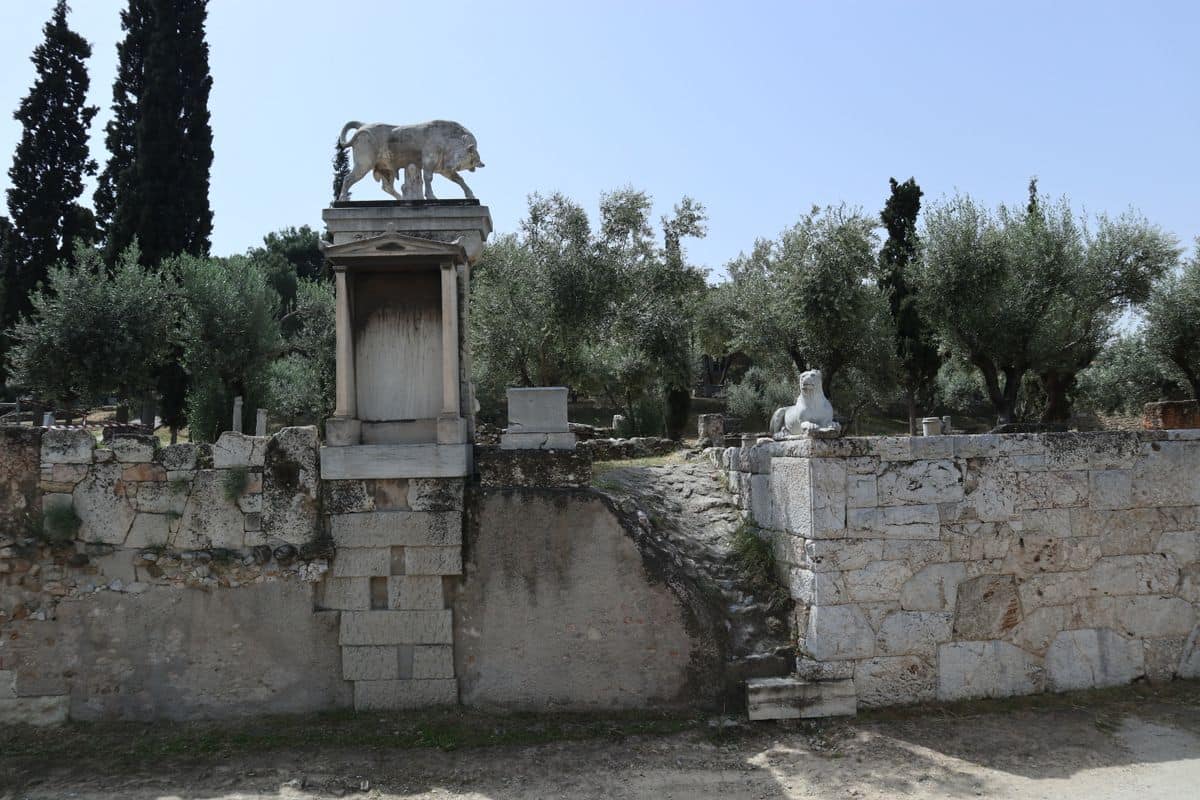
Guests of 2 star hotels in Athens who walk to Kerameikos reach an area north-west of the Acropolis. Wikipedia says the area straddles the line of the ancient city walls and reaches the banks of the Eridanos River. Wikipedia calls it the potters’ quarter and links it to the English word ceramic. The area served as a major burial ground too.
The Sacred Way, the road to Eleusis, began at the cemetery, and the procession of the Eleusinian Mysteries followed it. A new city wall rose in 478 BC, after the Persian sack of Athens. Wikipedia says the grave sculptures were built into the wall. The Sacred Gate stood on the south side, the Dipylon Gate on the north.
The site is enclosed, and Wikipedia puts its entrance at the end of Ermou Street, near Peiraios Street. A small neoclassical building there houses the museum. The article says its collection of burial-related finds is more extensive than any other in Greece. Anyone staying in 2 star hotels in Athens can check the current visiting times first.
The old Athens gasworks, founded in eighteen fifty-seven, sits inside the neighbourhood of Gazi. The site is now Technopolis, an industrial museum and cultural centre on about 30,000 square metres. In July nineteen eighty-six the ministry of culture listed the factory building. A year later it became a focal point of the cultural identity of Athens, Wikipedia says.
Wikipedia says that in recent decades Gazi turned into an entertainment district, with nightlife, cafes and restaurants. Wikivoyage ends a largely car-free archaeological walk at Kerameikos, which it calls Gkazi, where it names bars and clubs. For guests of 2 star hotels in Athens, one question matters: how loud is the street after dark?
Thiseio, says Wikipedia, is a neighbourhood of the old city, north-west of the Acropolis. Ancient sites surround it, among them the Agora, Kerameikos and the Pnyx. Footpaths along Ermou Street link it to Gazi. Guests of 2 star hotels in Athens who prefer to drive between the quarters can read about car hire first.
Who stays in 2 star hotels in Athens?
Wikipedia names backpackers, young travellers, families and business guests as the users of hostels and hotels. Those are the groups to picture when reading about 2 star hotels in Athens. Wikivoyage lists lodging in the city from camping and hostels up to 5 star hotels.
Wikipedia calls hostels a popular lodging for backpackers and for youth travel. The article says the majority of hostels set no age limit for guests. The typical guest is between 16 and 34 years old, though that figure varies from country to country. Wikivoyage uses the same word, backpackers, in its entries for hostels in Athens.
Families appear in two articles. The Hostelling International network caters more to school-aged children, sometimes on school trips, and families with school-aged children. The apartment hotel article says they began as lodging for families who wanted to live in an apartment. A family can ask each of the 2 star hotels in Athens whether it has a kitchen.
Wikipedia sorts hotel guests by the purpose of the trip: business, conference and leisure travel are the common reasons. A hotel can host business travellers during the working week and leisure travellers at the weekend. It defines a hotel as lodging on a short-term basis and names the microstay, a booking of under 24 hours.
Wikipedia gives the visitor figures for Greece as a whole. The Bank of Greece reports 40.7 million travellers entering the country during two thousand and twenty-four. Germany supplied the largest group in two thousand and twenty-three, at about 4.7 million people. The United Kingdom ranked second with roughly 4.5 million, and France third with roughly 4.2 million.
Wikipedia says the stretch from late spring to September brings about 75 percent of the visits to Greece. Attica, the region of Athens, drew 2.6 million tourists in two thousand and nine. Wikivoyage calls winter the low season in Athens, with fewer tourists. A winter stay in 2 star hotels in Athens falls in those quiet months.
Athens is also a gateway to the islands. Wikivoyage lists Lavrio, 60 km south of the centre, and Rafina, 25 km to the east, as alternative ports. Wikipedia puts Syros two and a half hours from Piraeus by ferry. A guest who sleeps in 2 star hotels in Athens before a ferry can ask which port the boat uses.
How do guests plan a walking day from 2 star hotels in Athens?
Wikivoyage puts Plaka below the Acropolis and Thiseio on its west side, with Monastiraki between the two. One walking day on foot can link all three. Guests of 2 star hotels in Athens can plan that day around the pedestrian streets.
Start at Monastiraki Square, the point between Plaka and Thiseio. Wikivoyage lists the square and the Ancient Agora as the western border of Plaka. Wikipedia adds that Line 1 and Line 3 both stop at the metro station on the square. Guests of 2 star hotels in Athens can reach the square on foot or by metro.
Wikipedia says Plaka has two areas, divided by Adrianou Street. That street, the largest in the district, runs north to south. The upper area, Ano Plaka, sits directly beneath the Acropolis. The lower area, Kato Plaka, stretches from Syntagma toward Monastiraki. Wikivoyage notes restored nineteenth-century neoclassical homes, pedestrianised streets and pleasant walking in the upper reaches.
Wikivoyage describes the way in turns. Coming from Plaka, Wikivoyage sends walkers south up the steep Mnisikleous Street to its end, then right on Theorias. That road leads to the main entrance at the west end. The south entrance is close to the Theatre of Dionysus. Walkers from 2 star hotels in Athens can use either.
Wikivoyage lists summer opening as 8 in the morning and closing as 8 in the evening, April to August. In winter the site closes at sunset, which means 5 in the evening by December. Entry stops 30 minutes before that time, and timed-entry tickets are mandatory. Check the current times before leaving 2 star hotels in Athens.
Next, the walk can turn west to Thiseio. Wikipedia says the pedestrianised Apostolou Pavlou Street joins Dionysiou Areopagitou Street. The pair make up the main walking zone that links Thiseio with the Acropolis. Wikivoyage adds that Thiseio holds restaurants and cafes. That makes it a place to sit down for guests of 2 star hotels in Athens.
Wikivoyage asks walkers for comfortable shoes that grip well and no high heels. Pointed heels damage the soft marble, so a number of sites ban them. Wikivoyage says small Orthodox churches call for dress with no short sleeves and no bare legs. Readers who want pictures of Athens before the walk can open the Athens photo gallery.
Which churches and squares lie close to 2 star hotels in Athens?
Three sites stand out near 2 star hotels in Athens. They are the Metropolitan Cathedral on Mitropoleos Street, and the Pantanassa church and the old mosque on Monastiraki Square. Wikipedia sets out a plain history for each one of these sites.
The Metropolitan Cathedral of the Annunciation is the main church of the Athens archbishop, popularly called the Metropolis. Wikipedia says King Otto and Queen Amalia laid its cornerstone on Christmas Day, eighteen forty-two. Wikivoyage marks it as the northern limit of Plaka, the old quarter under the Acropolis. Plaka borders Monastiraki, where 2 star hotels in Athens stand.
Its basilica plan has three aisles and a dome. Wikipedia gives its size as about 40 metres in length, 20 in width and 24 in height. Three architects and twenty years went into the work. The walls use marble taken from seventy-two churches that were pulled down. The king and queen dedicated it in eighteen sixty-two.
Visitors from 2 star hotels in Athens find the graves of two saints inside, Saint Philothei and Patriarch Gregory V. Wikipedia says the Ottomans killed both of them. Saint Philothei’s bones lie in a silver reliquary. The sultan ordered Gregory V hanged in eighteen twenty-one. Greek sailors rescued his body, and it was later placed in Athens.
Just south of the cathedral stands the small Church of St. Eleftherios, which Wikipedia also names the Little Mitropoli. The square in front holds two statues, of Constantine XI, the final Eastern Roman emperor, and of Archbishop Damaskinos. Wikivoyage gives one rule for entering any Athens church: cover the arms and legs as a mark of respect.
Guests of 2 star hotels in Athens at Monastiraki find a church called the Pantanassa on the square. Wikipedia says the church gave the square its name, which means little monastery. Monastiraki station, on the square, is a stop on metro Lines 1 and 3. Two streets, Adrianou and Pandrossou, form the core of this flea market district.
For guests of 2 star hotels in Athens, the square also holds the Tzistarakis Mosque. Wikipedia says the Ottoman governor of Athens built it in seventeen fifty-nine. Between nineteen eighteen and nineteen seventy-three, the Museum of Greek Handwork occupied the building. Today it is a traditional art museum, run as an annex of the Greek Folk Art museum.
Which day trips leave from 2 star hotels in Athens?
Day trips from 2 star hotels in Athens reach Cape Sounion, Delphi, Meteora and the Saronic Gulf islands. Wikipedia describes each of these places in its own article, from the temple and the oracle to the monasteries.
Cape Sounion marks where the Attica peninsula reaches its southernmost point. The ruins of Poseidon’s temple crown a headland that the Aegean Sea surrounds on three sides. Wikipedia dates the work to the years 444 to 440 BC. Day trips from 2 star hotels in Athens reach this Doric temple, set nearly 60 metres over the water.
Wikipedia says the temple once had 34 columns, cut from local white marble. Of these 34 columns, 15 still stand today. It adds that sunsets over the Aegean, watched from the ruins, have attracted travellers since the early nineteenth century. Readers who want to see that view can open the Cape Sounion sunset tour page.
The next of the day trips from 2 star hotels in Athens goes to Delphi. Ancient Delphi lay on the southwestern flank of Mount Parnassus. Wikipedia says the Pythia, the priestess of Apollo, was consulted on important decisions throughout the ancient world. In Greek belief Delphi sat at the centre of the world, and the Omphalos stone stood as its mark.
Along the Sacred Way at Delphi, Wikipedia says the restored Athenian Treasury marks the victory at Marathon. The Delphi Archaeological Museum keeps the Charioteer statue, along with the Sphinx of Naxos. UNESCO lists the whole precinct as a World Heritage Site. For the myths of the place, readers can also look at the Athens and Delphi mythology tour.
The Meteora rock pillars rise near the town of Kalabaka, in Thessaly. Wikipedia counts twenty-four monasteries built on their tops, with building starting in the fourteenth century. Six of them remain, and four are still in use. For day trips from 2 star hotels in Athens to Meteora, readers can see the Meteora day trip.
Two peninsulas, Attica and Argolis, frame the Saronic Gulf. Aegina, Salamis and Poros are among the islands in the gulf. On Aegina, Wikipedia singles out the Temple of Aphaia as one of two archaeological sites in the gulf. A sea option among day trips from 2 star hotels in Athens is this Hydra, Poros and Aegina day cruise.
What else do travellers ask about 2 star hotels in Athens?
What does a guest of 2 star hotels in Athens learn about the Kapnikarea church?
Wikipedia calls the Church of Panagia Kapnikarea a Greek Orthodox church, one of the oldest in Athens in continuous use. The article dates the building to the eleventh century. Anyone who compares 2 star hotels in Athens finds it on Ermou Street, at the edge of the Plaka.
The article says the church was built over a temple of an ancient goddess, named as Athena or Demeter. It also tells of a close call. When Leo von Klenze drew the new city plan for King Otto, demolition of the church came up. The King of Bavaria, Ludwig the First, spoke against it and saved the church.
Three units form the building. The largest, on the south side, is a domed cross-in-square church of the Presentation of Mary to the Temple. A chapel of Saint Barbara stands on the north side, and an exonarthex with a propylon lies to the west.
What does the Stoa of Attalos hold for a traveller in 2 star hotels in Athens?
Wikipedia calls the Stoa of Attalos a covered walkway in the Agora of Athens. King Attalos the Second of Pergamon built it in the second century BC. It was a gift to Athens for the education he had received there under the philosopher Carneades. The building measures 115 by 20 metres.
The building had two storeys. At the rear of the ground floor, 42 closed rooms served as shops. The wide colonnades formed a covered promenade. The Heruli burned its woodwork in the third century AD. Between nineteen fifty-two and nineteen fifty-six, the American School of Classical Studies rebuilt the stoa.
Inside the rebuilt stoa sits the Museum of the Ancient Agora. Its displays connect mainly with the democracy of Athens. Wikipedia lists clay, bronze and glass objects, sculptures, coins and inscriptions. A guest of 2 star hotels in Athens can check the current opening times of the museum before a visit.
What was the Ancient Agora that guests of 2 star hotels in Athens read about?
Wikipedia places the Ancient Agora of Athens to the northwest of the Acropolis. On its south side rises the Areopagus hill. The article says the agora first served for trade, for assembly and for living.
The Monument of the Eponymous Heroes stood on the west side. It honoured the ten heroes of the tribes of Athens. Wikipedia adds that it also worked as a notice board. New laws, public events and military conscription were posted on it.
A guest of 2 star hotels in Athens can put two questions to the desk. Which street leads from the hotel to the site? How long does that walk take at an easy pace? Wikipedia points to the Greek Ministry of Culture for the opening hours. Check the current times on that site.
Which questions on arrival, check-in and bags help with 2 star hotels in Athens?
Wikipedia says hotels ask guests to check in, which it also calls registering or signing in. The guest gives or confirms personal details, such as contact information, and signs. A guest of 2 star hotels in Athens can ask which papers the desk wants. The article names a passport, a national identity card and a driving licence.
The article calls the register a hotel register or a guestbook, and says a registration card can serve as one. In a number of countries the law requires guests to sign it. As a rule, one guest per room has to register. At the end, the reception staff hand over a room key.
Late arrival raises its own questions. Wikipedia says a number of hotels set a deadline for checking in, because the reception desk closes for the night. It adds that a late check-in can be arranged through the hotel, if the guest tells it in advance. Ask also whether the desk keeps bags before the room is ready.
Is Greek lettering on street signs a hurdle for guests of 2 star hotels in Athens?
Wikivoyage says every sign on Athens transit also spells its words in Roman letters. Airport trains carry an airplane logo on the front, and signs on the metro platform announce them. These signs help a guest of 2 star hotels in Athens who does not read the Greek letters.
Street names are a different case. Wikivoyage says they sit on signs fixed to building walls, not on corner posts. This is the case in much of Europe. The same section calls road signs small and hard to read. When an address is in a side street, look up at the walls.
The source adds a warning about spelling. It gives the district Helliniko as an example and notes that Roman-letter spellings of one Greek name can differ. Wikivoyage also says English information is abundant, and the greater part of the staff speak English. A number of Athenians speak it as well.