
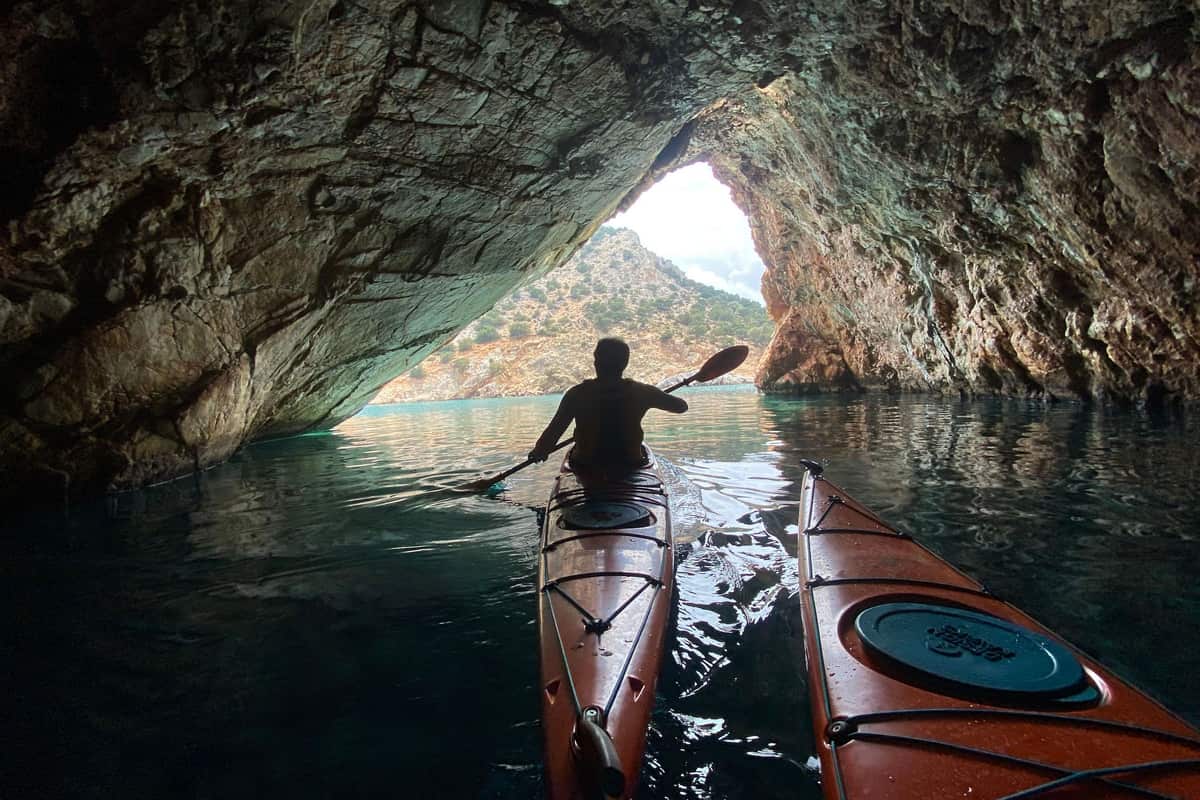
Operators run boat trips from Naxos to a sea cave on the south-east coast, and other operators add the Koufonisia islands of the Small Cyclades. The Naxos Rina Cave and Koufonisia cruise is the name of that day on the water, and the tours in Greece hub lists other island routes to compare.
This page explains what the trip is, what it includes, where the boats go, when to join, how the day works, what visitors see, who it suits, how to stay safe and what visitors ask.
What is the Naxos Rina Cave and Koufonisia cruise?
The Naxos Rina Cave and Koufonisia cruise is a boat trip from Naxos. It sails to Rina Cave, a sea cave along the south-east shore of Naxos, and to the Koufonisia islands. One operator lists both stops on a private half-day trip.
Operators describe the Naxos Rina Cave and Koufonisia cruise in different ways. One lists a private half-day trip in a powered speedboat for up to nine guests. It sails from Agia Anna and starts at Rina Bay in the south of Naxos. The page says the stop on Koufonisia offers a chance to have lunch at a local tavern.
Another operator sails a traditional wooden boat on a two-hour trip to Rina Cave and south coast beaches. It says plainly that it does not run trips to Koufonisia. For a full day to the Small Cyclades, it names a ferry or a different operator. A full-day listing names Kato Koufonisi, Ano Koufonisi and Rina Cave.
A travel blog says the full-day excursions it found ran on larger catamarans from the main port of Naxos town. So the Naxos Rina Cave and Koufonisia cruise is a family of trips, not one fixed outing. Each page names its own boat, harbour, length and stops, and no single trip stands for all of them.
Naxos belongs to the Cyclades. Wikipedia names it the largest island of the group. Chora, the island capital, is also known as Naxos City and sits on the western shore. One operator describes the wild, roadless south-east shore where Rina Cave lies. It says no road or walking path leads to the cave and that boats alone reach it.
Koufonisia is a small island complex of the Cyclades. Wikipedia places the islands to the south-south-east of Naxos. Ano Koufonisi, the upper island, has a village. Kato Koufonisi, the lower island, is almost uninhabited. The cave and the islands lie by the sea. Visitors therefore choose a boat for the Naxos Rina Cave and Koufonisia cruise.
What does the Naxos Rina Cave and Koufonisia cruise include?
Operators differ on what the Naxos Rina Cave and Koufonisia cruise includes. One lists snacks and soft drinks on the boat. Another lists snorkelling and safety gear. A full-day listing names a barbecue lunch on board.
One operator says the private speedboat trip of the Naxos Rina Cave and Koufonisia cruise serves snacks and soft drinks. The same page names snorkelling gear, towels and a skipper. The page states that the meal at the tavern on Ano Koufonisi is paid separately. The trip does not include a transfer.
Another operator lists what its two-hour wooden boat trip includes. The list names a local captain, a local host, and snorkelling masks and snorkels. It adds swimming and flotation aids as safety gear, trip photos and videos, and all local taxes and port fees. That operator does not list any stop on Koufonisia.
One full-day listing for the Naxos Rina Cave and Koufonisia cruise says the lunch is a barbecue on board. The menu names tzatziki, fresh bread, fruit, pork or chicken skewers and a vegetable salad. Water, soft drinks and wine come with it. The listing adds snorkelling gear and a live tour leader. The leader speaks Greek and English.
Group sizes differ as well. The private speedboat takes up to nine guests, says the operator that runs it. The wooden boats of the two-hour operator hold ten and twenty guests, according to its page. Its private trip is for a group of up to ten. Its page lists shared trips and private trips as two different kinds of departure.
So the answer depends on the boat. A private speedboat half day, a two-hour wooden boat trip and a full-day barbecue cruise each list their own items. Only the speedboat page and the full-day listing name Koufonisia. Anyone who reads about the Naxos Rina Cave and Koufonisia cruise has to check the list of the trip itself.
Where does the Naxos Rina Cave and Koufonisia cruise go?
One operator lists a half-day Naxos Rina Cave and Koufonisia cruise leaving the pier at Agia Anna in west Naxos. Its route names Rina Bay, then Kato Koufonisi, the islet of Glaronissi and Ano Koufonisi.
Pages on the Naxos Rina Cave and Koufonisia cruise and on Rina Cave trips name three starting points. Agia Anna is one. Panermos, a bay on the south coast, is another; its operator calls it quiet and wind-protected. The blog adds that the catamaran day trips it found started at the main port of Naxos town.
Rina Cave lies on the roadless south-eastern coast of Naxos. The same page adds that the coast has neither road nor footpath to the cave, so only boats reach it. A travel blog says the crew told guests of seven lagoons on this shoreline, all reached only by boat. The Panermos operator states that Koufonisia is not on its list of trips.
To reach Panermos, the travel blog’s writer drove through Apiranthos and met the coast at Moutsouna. The post describes hairpin turns and advises adding at least a quarter to the drive time that a map shows. Wikivoyage says an asphalted road runs between Moutsouna and Panermos, and the last petrol station before them stands near Filoti.
On the Koufonisia leg of the Naxos Rina Cave and Koufonisia cruise, the stops are Kato and Ano Koufonisi. Wikipedia says Kato Koufonisi has a small church on a jetty. Its small port serves fishing boats and tourist boats alone. On Ano Koufonisi, Chora sits on the south-western shore, and a white windmill stands east of the port.
Near the stops of the Naxos Rina Cave and Koufonisia cruise lie other islands of the Small Cyclades. Wikipedia lists Keros, Schoinoussa, Irakleia and Donousa as main islands. Keros lies about 10 kilometres south-east of Naxos and is uninhabited. Wikipedia says landing there is forbidden. A travel blog says the crew pointed out other small islands nearby.
When can visitors join the Naxos Rina Cave and Koufonisia cruise?
One operator lists daily departures on a cave trip of two hours, with a timetable of shared and private departures. A second operator lists a half-day Naxos Rina Cave and Koufonisia cruise of four and a half hours.
A travel blog says an e-mail the day before confirmed a trip at one in the afternoon. The blog advises writing to the operator first, because the bay is remote. The Panermos operator says its two-hour trip does not fill the whole day. It adds that guests combine the trip with a visit to Filoti, Apiranthos or Moni.
A travel blog ties season and sea to trips like the Naxos Rina Cave and Koufonisia cruise. Just outside the peak season, it says, catamaran trips were not really going to Koufonisia, Paros or the smaller islands. It blames wind and rougher seas. Wikipedia calls Naxos a windy island, good for windsurfing and kitesurfing.
Wikipedia says the Meltemi is a dry, strong north wind across the Aegean. The season starts around late spring and ends in mid-September. Wikipedia says it can blow at force seven or eight, measured on the Beaufort scale. The Panermos operator says the south coast is better protected against it, though the sea depends on the day.
The weather on a Naxos Rina Cave and Koufonisia cruise follows the climate of the Small Cyclades. Wikivoyage describes that climate as mild Mediterranean, with summer north winds that ease the heat. Wikipedia says Naxos is both Mediterranean and hot semi-arid in climate, depending on location. In summer, Wikipedia gives the Aegean’s surface water 19 to 24 degrees Celsius.
One operator of the Naxos Rina Cave and Koufonisia cruise states a notice period. A guest who cancels up to seventy-two hours before the start gets a full refund. The same page says a trip cannot be secured on arrival, so a reservation comes first. Its four and a half hours include ample time on Ano Koufonisi.
How does the Naxos Rina Cave and Koufonisia cruise work?
The Naxos Rina Cave and Koufonisia cruise is a boat day built from swim stops. One operator lists a half-day run from Agia Anna. The boat visits Rina Bay, then a snorkel stop near Kato Koufonisi, then Ano Koufonisi.
The operator behind that half-day Naxos Rina Cave and Koufonisia cruise caps its fast boat at nine guests. It says the day ends at Agia Anna pier after four and a half hours. At Rina Bay, guests swim and look at the sea cave up close. Next the boat sails on to Kato Koufonisi, in the Small Cyclades.
The trip is not the same on every page. Another operator runs only a short cave trip of two hours from the bay of Panermos. It says guests swim into the cave with the crew, then get extra time to relax and snorkel. Trips to Koufonisia are outside its programme, and its timetable lists shared and private departures.
The boats of the Naxos Rina Cave and Koufonisia cruise differ as much as the routes. Wikipedia says boats vary in build with purpose, materials and local tradition. The blog calls its wooden boat a trehantiria, a small double-ended Greek craft once used chiefly for fishing. It has open seating and a covered area for shade.
On the blog’s trip, the boat anchored at Rina Cave for the longest stop. The guests swam to the cave mouth and stood in safe places the captain chose. Anyone who wanted to jump climbed the side of the cave. He gave the height as five to six metres. One more operator lists natural ledges outside the cave for jumping.
On the speedboat, the Naxos Rina Cave and Koufonisia cruise moves to a snorkel stop near Kato Koufonisi. At Ano Koufonisi, the operator lists time on the island and a lunch paid separately. The blog’s boat anchored in one more bay for a short swim. It served tomatoes, olives, dried bread and local wine.
What do visitors see on the Naxos Rina Cave and Koufonisia cruise?
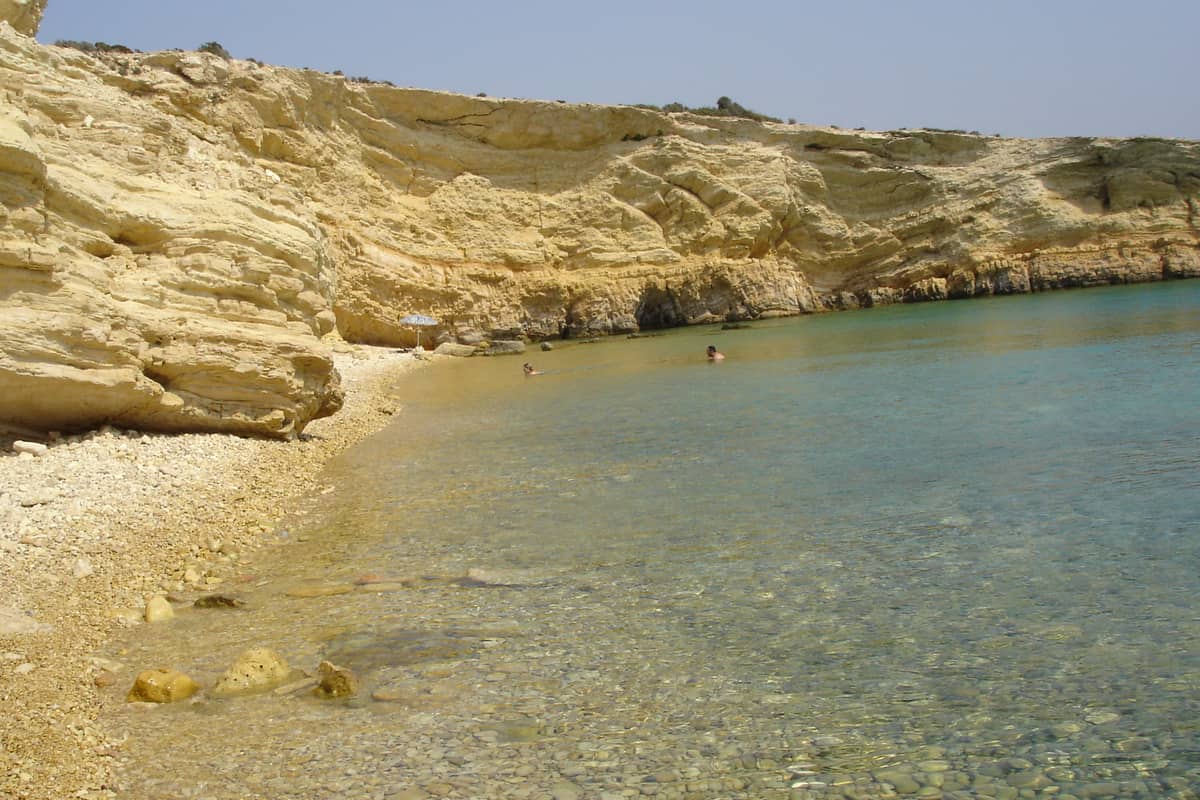
On the Naxos Rina Cave and Koufonisia cruise, visitors see a domed sea cave and water in blue and green. Marble lines the coast, and the islands add white sand and a small church built on a jetty.
The cave is the main sight of the Naxos Rina Cave and Koufonisia cruise. One operator describes a wide domed ceiling where wild birds nest. It says the water is deep emerald-blue and clear enough inside to spot small fish. Wikipedia says wave action widens and deepens cracks in the rock until a sea cave forms.
Next to the cave, one operator lists a small unorganised beach in the natural shade of the cliffs. The blog tells of small bays with no road, where the water shifted colour against the shoreline. It also names Naxian marble lining the coast, highly prized in ancient Greek times and still quarried.
From the water, the Naxos Rina Cave and Koufonisia cruise shows nearby islands. In one bay, the blog says, the captain pointed them out. A number of them are uninhabited or hold no more than about eighteen people, with no electricity. On the Naxos shore he showed a similar house where one family had lived for generations.
The island stops have sights of their own. One operator names Ano Koufonisi for its natural pool of turquoise water. The Greek tourism website describes beaches with fine white sand and emerald water. Wikipedia adds a white windmill by the port of Ano Koufonisi and houses painted white and blue across Koufonisia. The islands sit south-east of Naxos, says Wikipedia.
On Kato Koufonisi, Wikipedia names the small church of Panagia, built on a jetty over ancient ruins. Its small port sees only fishing boats and tourist boats at anchor. It also says pirates once sheltered between Pano and Kato Koufonisi. For snorkellers, the Naxos Rina Cave and Koufonisia cruise lists marine life, though the blog found only small fish.
Who is the Naxos Rina Cave and Koufonisia cruise for?
The Naxos Rina Cave and Koufonisia cruise suits swimmers and snorkellers, as operators describe it. One listing also names a family or friends on a private charter. Age rules vary by operator, and one listing says swimming skills are not required.
Trip length decides who the Naxos Rina Cave and Koufonisia cruise suits. One operator says its two-hour trip leaves time for the rest of the day. It names Filoti, Apiranthos and Moni as villages to pair with it. For a full day on Koufonisia and the Small Cyclades, that operator names a ferry or another boat operator.
Operators set age rules in different ways. A full-day cruise from Agia Anna is listed for ages one to one hundred. The same page adds that infant seats are available. A nine-hour listing states no age restrictions. A private speedboat listing names two years as the minimum age. One operator keeps a child category for ages up to twelve.
Visitors who want a boat to themselves have a choice on the Naxos Rina Cave and Koufonisia cruise. One listing describes a private charter for a family or friends, with a maximum of eight guests. A full-day listing adds that guests need to feel comfortable in the water to enjoy the trip fully.
One operator says the rock formations outside Rina Cave offer natural ledges for jumping into deep water. It names thrill-seekers as the visitors for that jump. Another listing says guests can jump from the boat or go down a ladder for a swim inside the cave. The Agia Anna page says the trip is not wheelchair accessible.
One private speedboat page asks guests to bring water, beachwear, sunscreen and comfortable shoes. A second private listing names swimwear, a towel, sunscreen and sunglasses. A full-day listing names a sun hat, swimwear and sunscreen. A listing for a catamaran day trip says towels are not included. No two lists for the Naxos Rina Cave and Koufonisia cruise match.
How do visitors stay safe on the Naxos Rina Cave and Koufonisia cruise?
On the Naxos Rina Cave and Koufonisia cruise, sources name certified boats, life jackets and flotation aids. They also name a crew briefing, safe places to stand in the water and care when jumping from the ledges.
Certified boats and flotation gear are the first safety points on the Naxos Rina Cave and Koufonisia cruise. One operator describes its traditional wooden boats as fully certified and compliant with all official safety regulations. Its trip includes swimming and flotation aid equipment, labelled safety gear. Another operator lists life jackets and lifebuoys for all guests on the boat.
The sources give the crew a clear role. One listing for a nine-hour cruise says guests receive a quick briefing about onboard safety from the crew. A travel blog says the captain had every guest stand in safe places in the water at Rina Cave. One operator lists the swim into Rina Cave with its experienced crew.
Jumping is the part of the Naxos Rina Cave and Koufonisia cruise where a source gives a height. A travel blog reports that the captain put the ledge at about five to six metres. The blog’s writer notes taking care to jump far enough out to miss the rocks. One operator calls the natural ledges outside the cave safe.
Wikipedia says summer in the Mediterranean brings clear skies and high temperatures. Wikivoyage puts summer heat on the west side of Naxos at up to 30 degrees Celsius. A travel blog describes a traditional boat with covered areas to keep out of the sun. Wikipedia adds that a rash vest protects a snorkeller from sunburn.
Wind and weather can change a trip on the Naxos Rina Cave and Koufonisia cruise. Wikipedia calls the Etesian winds, or Meltemi, dangerous for sailors. It says the winds arrive in clear weather with no warning. Listings say the itinerary can change with the weather. They offer another date or a refund when poor weather cancels a trip.
What else do visitors ask about the Naxos Rina Cave and Koufonisia cruise?
What does the name Koufonisia mean in the Naxos Rina Cave and Koufonisia cruise?
Wikipedia gives two explanations for the name Koufonisia. The first says Koufonisia once named the gulf that lies between Koufonisia and Glaronisi. Its full name was “Koufos Limin”, meaning a lee port, a place where ships drop anchor.
The second explanation links the name with the island’s caves and sediments. A third view, from a writer in nineteen twenty, calls Pano Koufonisi Fakousa and Kato Koufonisi Pino. Wikipedia treats Koufonisia as a small island complex. So the Naxos Rina Cave and Koufonisia cruise names a group, not one island.
How does a sea cave like Rina Cave form?
Wikipedia defines a sea cave as a cave carved chiefly by waves. The main process is erosion. The rock must first hold a weak zone, such as a fault or a split between rock layers. Wikipedia also notes how varied the sea caves of the Greek islands are.
Waves reach into the weak zone and widen it. The surf and the rock pieces it carries add force, and so does air squeezed inside the crack. Sea urchins drill into the rock too and remove it over generations. The Naxos Rina Cave and Koufonisia cruise reaches a sea cave, and this is the general process Wikipedia describes.
What is Keros, and why do archaeologists study it?
Wikipedia calls Keros an uninhabited island of the Cyclades that belongs to the community of Koufonisia. It was an important site of the Cycladic civilization, which flourished around twenty-five hundred BC. It is now forbidden to land on Keros.
The Keros Hoard is a very large find of Cycladic figurines that came from the island. Figurines and vessels from a Cambridge dig on the west coast were all broken before they were left there. Wikipedia counts Keros among the three main islands of Koufonisia. That is the island group in the Naxos Rina Cave and Koufonisia cruise.
What is the Portara in Naxos town?
The Portara is a large marble door frame, the main surviving part of an ancient temple of Apollo. Wikipedia dates the start of the building to around five hundred and thirty BC, under the tyrant Lygdamis. The work stopped, so the temple was never finished. The name Portara means “large door” in Greek.
The frame stands on Palatia, a small islet on the north side of the Naxos harbour. A causeway built in nineteen nineteen links the islet to the town. Its five marble pieces weigh up to 20 tons each. The Naxos Rina Cave and Koufonisia cruise covers sea sights, while the Portara is an ancient sight on land.
How do visitors reach Naxos before the Naxos Rina Cave and Koufonisia cruise?
Wikivoyage calls Naxos a central hub of the sea transport system. It says regular ferries from Piraeus take about five and a half hours. Fast ferries on that route take three hours and twenty-five minutes or three hours and fifty-five minutes. From Santorini, a regular ferry takes about two hours.
Wikivoyage also lists Naxos airport, which lies 3 km from Chora. It calls the airport small and basic. Propeller planes fly from there to Athens, and Wikivoyage gives the flight as about 30 minutes. A bus to town runs every half hour. Visitors who land or dock in Naxos can then plan the Naxos Rina Cave and Koufonisia cruise.