The Knossos and Heraklion tour joins the Minoan palace site south of the city with a day in Heraklion, and operators add the Archaeological Museum to the plan. Readers who want more routes across Crete or the islands can start from the tours in Greece hub.
Below, the page sets out the tour, what it covers, the route, the timing, the order of the day, the visitors it suits and the questions that come up.
What is the Knossos and Heraklion tour?
The Knossos and Heraklion tour pairs a Minoan palace site with a city on Crete. It is a day trip: the palace site of Knossos first, then Heraklion. Operators differ on the start town, the stops and the museum, so each page tells its own version.
One operator runs the Knossos and Heraklion tour as a coach day trip that returns to Chania. The museum is an option in Heraklion, and the way back includes a stop in Rethymno. Another operator lists a daily group tour with a breakfast stop, Knossos, and city time for the museum or lunch.
The Knossos and Heraklion tour also comes in formats led by an archaeologist. One site, run by licensed archaeologists, lists a family tour, a kids tour and a shore-excursion tour. The shore-excursion tour starts at the port of Heraklion. Another operator also names an archaeologist as the tour leader.
Wikipedia gives Heraklion two ranks: it is the island’s largest city and fourth in Greece. It is also the administrative capital of Crete. Heracleium, an ancient port, was the harbour for Knossos, and the modern name comes from it. Wikivoyage describes the modern city as having a pedestrian centre and a coastal promenade.
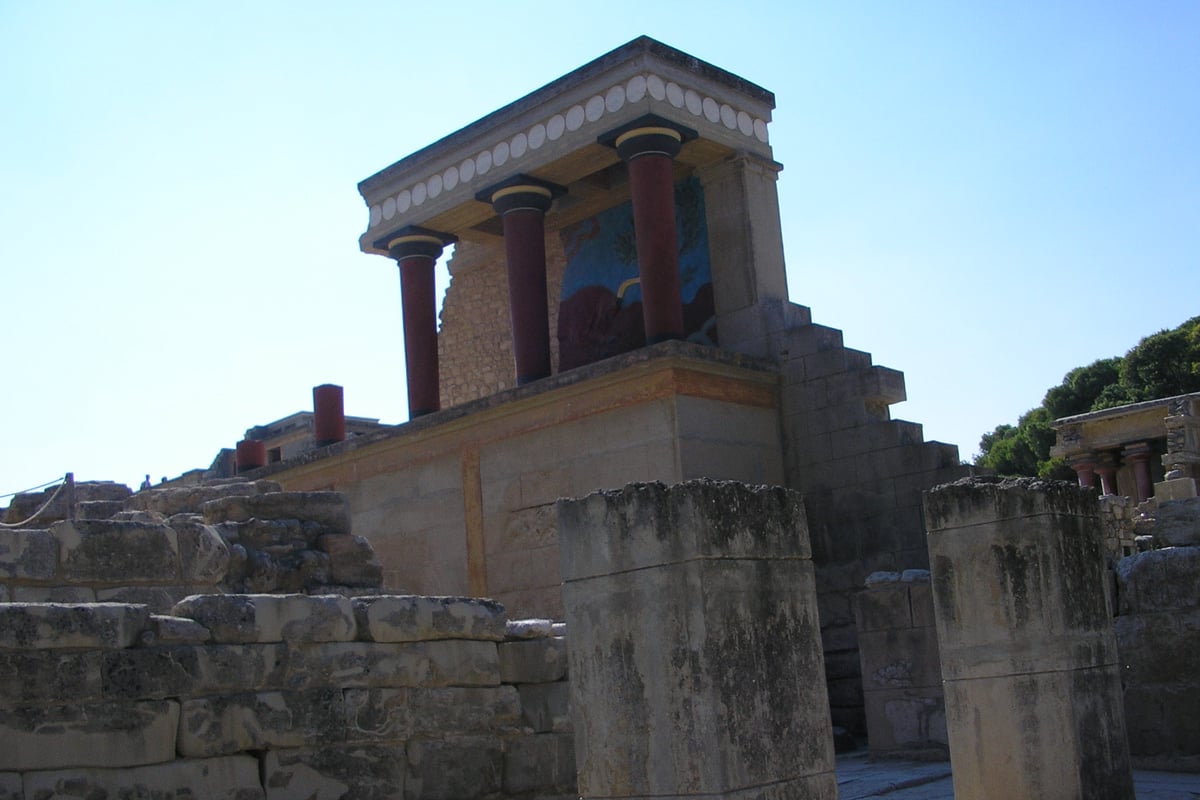
Knossos is an ancient urban centre and an archaeological site, Wikipedia says, on the southern edge of Heraklion. The site sits in the Kairatos river valley, on a hill called Kephala. Wikivoyage says the site lies just south of the city. Wikipedia adds that Knossos became a leading centre of the Minoan civilisation.
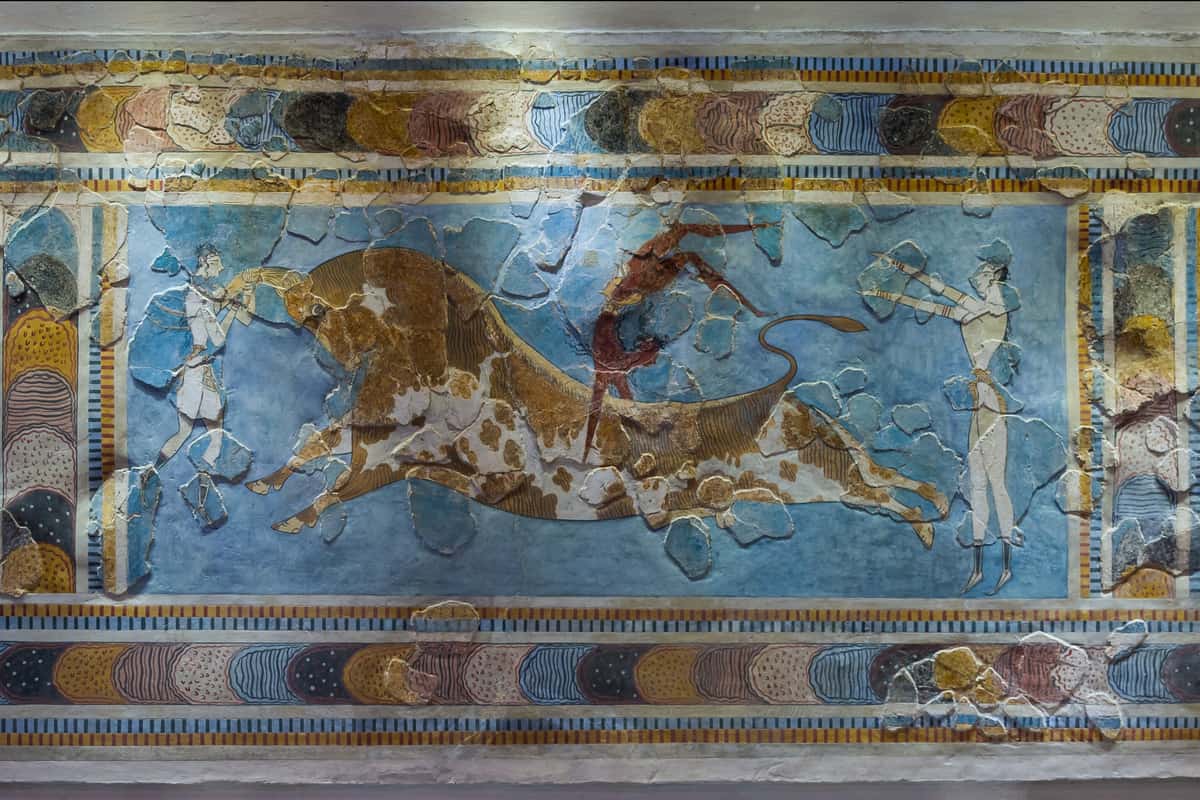
On the Knossos and Heraklion tour, the museum links the site and the city. One operator says the museum holds artifacts from Knossos and the surrounding area. Wikipedia says the museum keeps the bulk of the objects found at the Minoan palace of Knossos. Wikivoyage names the museum downtown and the palace of Knossos as the two main sights.
What does the Knossos and Heraklion tour include?
One operator’s Knossos and Heraklion tour includes transfers on air-conditioned buses, a tour leader and a headset system. Entrance tickets sit apart on that list: they are excluded items, paid on the day. Other operators list a different mix.
Transport comes first. One operator lists a pick-up from the point nearest the guest’s accommodation. Another operator collects guests from its pick-up points, and an escort tells them about the trip before the drive. A site run by licensed archaeologists names a pick-up at the port of Heraklion for its shore-excursion tour.
On a Knossos and Heraklion tour, each operator names a tour leader. One operator lists a leader who speaks Greek, English and German. It adds a whisper headset system, with earphones, that makes the explanations easy to hear. Another operator names an archaeologist as tour leader and gives the language as English.
Tickets work differently. The first operator buys all tickets ahead of the day. It must know at the time of the reservation whether a guest wants the museum. It lists the entrance tickets for Knossos and for the museum as excluded and payable on the day.
The museum visit is an option. The same operator lists the museum entry as without a tour leader. It also gives short information on arrival in Heraklion, to help guests get around on their own. Another operator offers the choice of the museum or lunch in the city centre. Both operators place that city time after the visit to Knossos.
The lists vary beyond that. One operator mentions a coffee stop, another a breakfast stop, and a third starts at the port of Heraklion. Each listing for the Knossos and Heraklion tour sets its own items. One listing is titled a tour of Knossos Palace and Heraklion led by a tour leader.
Where does the Knossos and Heraklion tour go?
Two operator pages describe a Knossos and Heraklion tour that runs east from Chania. The coach stops on the way and visits Knossos. It then spends time in the city centre, where a visit to the museum is optional.
One operator lists an early pick-up at the point nearest to the guest’s accommodation. It brings the coach back to Chania at the end of the day. Another operator also runs its Knossos and Heraklion tour from Chania. On the way east, that operator stops for 30 minutes for breakfast on the national road outside Rethymno.
Knossos lies on the southern side of Heraklion, about five kilometres from the historic centre, Wikipedia says. Heraklion takes its name from Heracleium, an ancient port that was the harbour of Knossos. Both coach operators visit Knossos first and drive on to the city centre afterwards.
Wikivoyage describes Heraklion as the capital of Crete and its major city. It says the main central sights can be seen on foot. The Koules, a Venetian fortress, stands over the inner harbour, and the mole beside it runs for almost two kilometres. The Knossos and Heraklion tour reaches this centre after Knossos, and both operators leave time there.
Wikipedia says the Venetian wall has seven bastions and reaches a thickness of 40 metres in places. Nikos Kazantzakis, a writer from Heraklion, rests on the Martinengo Bastion, at the top of the walls. Morosini Fountain stands in Venizelou Square, which dates from the Venetian era. Wikipedia names two cathedrals from the nineteenth century, Saint Titus and Saint Minas.
The town centre holds the Heraklion Archaeological Museum, Wikipedia says. Its finds cover a span of 5,500 years and more, from the Neolithic period up to Roman times. One operator makes the museum an optional stop on its Knossos and Heraklion tour. The same operator ends with an hour in Rethymno, an old town Venice built almost entirely.
When can visitors join the Knossos and Heraklion tour?
Operators differ. One runs its Knossos and Heraklion tour on Sundays only, and another lists a daily tour. Both start with an early pick-up and bring the coach back to Chania in the evening.
The first operator calls its trip a long day, with a pick-up window between 6 and 8 in the morning. A note on that page says the trip closes for the season and resumes in late spring. The second operator lists a Knossos and Heraklion tour of about nine hours.
On the first operator’s trip, the coach stops for coffee at 9 in the morning. The page lists an approximate arrival at Knossos between 10 and half past 10. The walk at the site lasts ninety minutes with a tour leader. Wikipedia describes Heraklion summers as warm to hot, dry and clear.
On the second operator’s Knossos and Heraklion tour, an archaeologist leads two hours at the site, in English. At noon, the first operator’s coach leaves for the optional museum. With the museum, that operator lists ninety minutes in the city. Without it, the city time is three and a half hours.
The first operator’s coach leaves Heraklion at about 3 in the afternoon. It reaches Rethymno between 4 and half past 4. It returns to the pick-up points in the evening, between 6 and 7. The second operator allows about two hours in the city, and its coach reaches Chania at about half past 6.
The first operator asks for a reservation at least one day before its Knossos and Heraklion tour. The second operator’s page offers a full refund if the guest cancels a day or more ahead. The museum’s page lists 8 in the morning until 8 in the evening on six days a week. Entry stops 20 minutes before closing.
How does the Knossos and Heraklion tour work?
The Knossos and Heraklion tour follows one set order. It starts with a pick-up and a drive, then a walk through the palace site with a tour leader. Heraklion follows, with the museum or lunch, and then the return. Operators differ on the details.
One operator runs the Knossos and Heraklion tour on a coach that leaves from Chania. The coach picks travellers up close to their stay. It drives east, with a coffee stop at nine in the morning. At noon it heads for the Archaeological Museum in Heraklion, which the page marks as optional.
A second operator plans the Knossos and Heraklion tour with its own stops. After the hotel pick-up, its escort briefs the group on the coach. A breakfast stop on the road comes before the site. In Heraklion the group chooses between the museum and a lunch. A refreshment stop of twenty minutes comes on the way back.
At the site, the tour leader explains the palace as the group walks. The first operator adds a whisper system with earphones. On arrival in Heraklion, the same operator gives short information to help travellers find their way around on their own.
The first operator says the company buys all tickets before the day of the trip. Travellers must say when they reserve whether they want the museum. The archaeologist-led booking site describes a private Knossos and Heraklion tour. It arranges a driver, or a tour leader who also drives, to pick up travellers where they ask.
At the museum, the visitor page says backpacks and packages go to the cloakroom on the ground floor. Amateur photography is allowed in the exhibition areas, but flash and professional equipment are not. Phones are not allowed there. Wikipedia’s room list runs by period, from Neolithic finds in Room I to Dorian finds in Room XI.
Who is the Knossos and Heraklion tour for?
The Knossos and Heraklion tour suits visitors who want the story of Knossos from a tour leader. The day also shows them Heraklion. Pages describe it for families, friends, cruise passengers and travellers without a car.
The archaeologist-led booking site also describes a family tour and a tour for children. One coach operator sets a children’s category for ages four to twelve on its Knossos and Heraklion tour. That operator adds that children under four travel on an adult’s lap, as the page words it.
The same operator sets ticket categories by age and citizenship. Adults are aged twenty-six to sixty-four, and separate categories cover younger visitors and people aged sixty-five or more. Travellers carry a passport to prove age and origin. The page also lists comfortable walking shoes and a hat and sun lotion, which it stresses for Knossos.
Mobility matters on a Knossos and Heraklion tour. Wikivoyage calls the site fairly compact and says much of it is accessible with restricted mobility. The museum’s visitor page says wheelchairs can use the public areas. A ramp at the main entrance serves wheelchairs and strollers. Inside are an elevator and toilets for people with disabilities.
Wikivoyage calls the traffic in Heraklion bad and the parking worse. It adds that visitors hardly need a car. It adds that a bus runs to Knossos. On a coach tour, the operator does the driving. The company behind the tour site says it has run shore excursions for cruise ships.
One operator invites visitors to learn the history and the myths around the palace from its archaeologist. Its Knossos and Heraklion tour lasts about nine hours. The same coach operator lists coastline views and stops on the way as part of the day. The private tours on the tour site include half-day programs, a shorter format.
What else do visitors ask about the Knossos and Heraklion tour?
What is the Phaistos Disc, and where does it fit in the Knossos and Heraklion tour?
The Phaistos Disc is a disc of fired clay from Crete that bears a text in an unknown script. Wikipedia says the disc now sits in the archaeological museum of Heraklion, in Room III. Two operators list that museum as an optional stop for visitors on the Knossos and Heraklion tour.
An Italian archaeologist, Luigi Pernier, found the disc at the Minoan palace of Phaistos, which lies on Crete’s south coast. It is about 16 centimetres across and bears 242 signs of 45 kinds, each pressed in with a stamp.
Why was Heraklion once called Candia, and who gave the city that name?
Wikipedia traces the name Candia to Arab exiles from al-Andalus, who conquered Crete in the ninth century. They moved the capital of Crete to a new castle and called it the Castle of the Moat in Arabic. Greek speakers turned the Arabic name into Chandax, which became Candia in Latin and in Italian.
Venice purchased the city during the thirteenth century and made Candia the seat of its duke. Visitors on the Knossos and Heraklion tour therefore walk through a city that kept the name Candia for centuries.
Who was Nikos Kazantzakis, and how does he link to the Knossos and Heraklion tour?
Wikipedia says Nikos Kazantzakis, a Greek writer, poet and philosopher, was born in Kandiye, now Heraklion, under Ottoman rule. Among his novels are Captain Michalis and Christ Recrucified, and he also wrote plays, memoirs and essays. Wikipedia counts nine different years in which he was a Nobel nominee for literature.
In one of those years the prize went to Albert Camus, who won by a single vote over him. His grave lies on the Martinengo Bastion of the Venetian walls, in the city that the tour reaches after Knossos.
What is Cretan food like at lunch on the Knossos and Heraklion tour?
One operator says time in the city on the Knossos and Heraklion tour goes to the museum or to lunch. Wikipedia says Cretan cuisine rests on food from plants, such as fruit, pulses, wild herbs and cereals. People ate seasonal food from nearby, and olive oil, used in salads and in cooking, supplied their main fat.
Among its dishes, the same article names dakos, a salad, graviera cheese, sofegada, a vegetable stew, and snails with tomato. It also names desserts such as xerotigana and portokalopita, and the drinks tsikoudia, rakomelo and Cretan wine.
What is Mount Juktas, the mountain that rises south of the city of Heraklion?
Wikipedia places Mount Juktas south of Heraklion, close to the Minoan palace that the Knossos and Heraklion tour visits. The summit stands 811 metres high, over the town of Archanes. Wikipedia says it held an important Minoan peak sanctuary, and probably the first such sanctuary.
Finds there include clay figurines of people and animals, stone altars, stone horns and bronze double axes. A Greek Orthodox chapel stands along the ridge, and every year people from the plains bring flowers there in procession.