
The Naxos bus tour is a day around the island by coach, with stops in mountain villages, at ancient sites and on the coast. Guests who compare other trips can start from the tours in Greece hub.
Below are the stops, the season and the times, the order of the day, the guests it suits and the questions that come up.
What is the Naxos bus tour?
The Naxos bus tour, as operators list it, is a coach or minibus trip around the island. It stops at villages and monuments. Routes, length and group type vary between operators.
One operator says the bus tour has been popular since the nineteen eighties. It describes a comfortable bus with air conditioning. A tour leader explains local history, traditions, architecture and modern life along the way.
The same operator lists excursions of a full day and of half a day, each with its own itinerary. One title in that list reads as a highlights bus tour with time for lunch and a swim. Another operator shows a Naxos bus tour for villages, one for beaches and one for sightseeing.
Wikipedia ranks Naxos first by size among the Cyclades. It counts 20,578 inhabitants. Filoti, Apiranthos and Koronos are among the main villages it names. The island is known for emery, an abrasive rock.
The capital is also named Chora, and it counts 8,897 inhabitants, according to Wikipedia. It sits on the island’s west coast. One operator’s tour starts at its port.
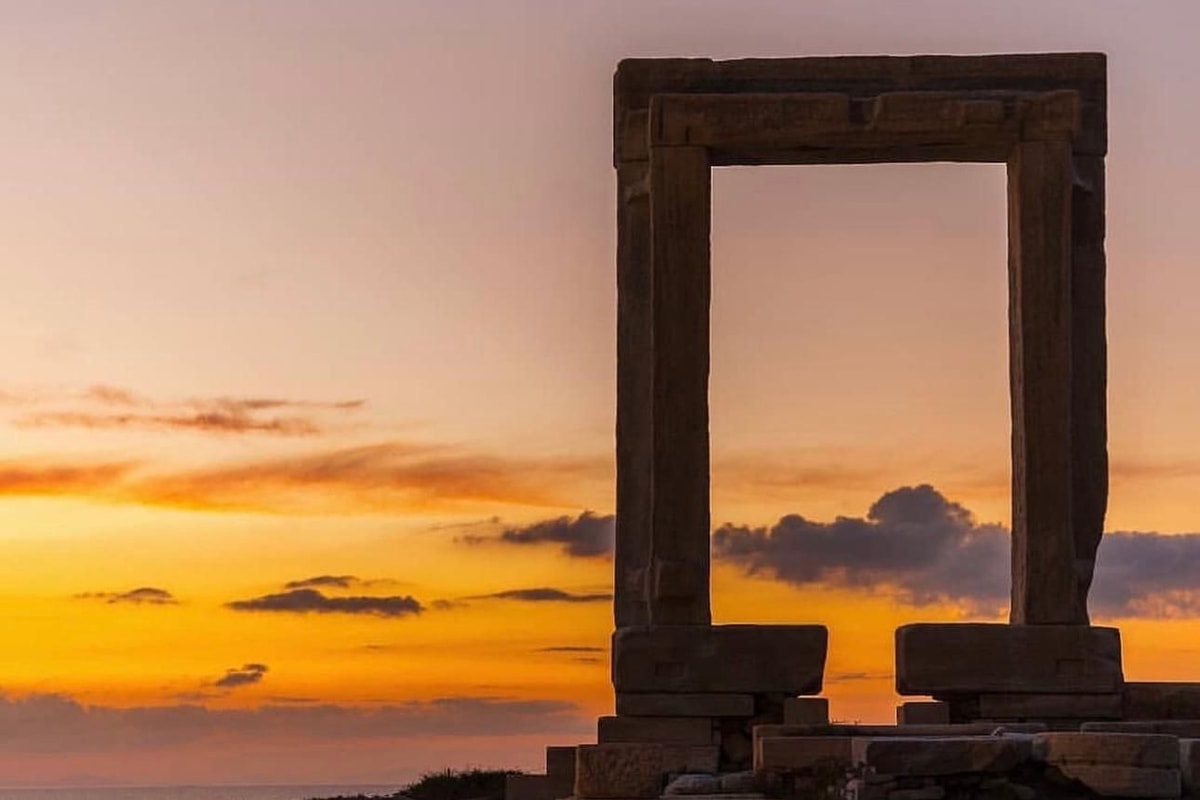
On the small islet of Palatia beside the harbour stands the Portara, a large doorway made of marble. It belongs to a temple of Apollo that the tyrant Lygdamis began about 530 BC. The temple was left unfinished. Visitors walk to the islet along a causeway from town.
One operator begins and ends its tour right outside Naxos port. A Naxos bus tour of that kind sets off in the harbour town. After that, the coach drives inland to the villages.
What does the Naxos bus tour include?
What a Naxos bus tour includes depends on the operator. One operator’s half-day tour lists an air-conditioned vehicle, an escort speaking English and Greek, and luggage storage. The Temple of Demeter ticket is paid separately.
Another operator names the highlights of its day tours. These are the huge Kouros statue and a citron liqueur distillery. They also include the marble village of Apiranthos. Visitors see a pottery workshop and an olive press in Damalas. A Naxos bus tour on that page also lists time to swim or have lunch.
The half-day operator sees the meal differently. It says its tour has no scheduled lunch break and no time for a full meal. It recommends a hearty breakfast and snacks if needed. The tour does list about forty-five minutes at leisure in Chalki to wander, shop or sit in a cafe.
That operator says only the early departure comes with pick-up. The ride back to a hotel is not part of it. Gratuities for the tour leader and the driver are not included either. A Naxos bus tour of this kind keeps luggage in storage while the group travels.
Entry to the Temple of Demeter is settled at the gate in cash. The same operator adds that its leader holds no licence to speak inside the temple. The same applies to the church of Panagia Drosiani. The leader gives the information before the group goes in. It is also customary to donate a small amount when visiting a church.
Operators differ on the group too. One operator lists scheduled tours, private tours and a private minibus with a driver for four hours or eight hours. It says its trips are private or shared.
Another site lists small group trips in a minivan, private full-day tours and half-day tours. So the Naxos bus tour a visitor picks sets the group, the vehicle, the stops and the meal arrangements. Reading each tour title closely shows which of these a tour offers.
Where does the Naxos bus tour go?
The Naxos bus tour leaves Naxos town and heads inland. One operator lists a half-day route with six stops. They are the Temple of Demeter, Damalas, Chalki, Panagia Drosiani, Kinidaros and the kouros at Melanes. Then the coach returns to town.
Operators do not agree on one route. Another operator adds Apiranthos and Apollonas, after the temple and the two villages of Damalas and Chalki. A third route names Apeiranthos and Filoti. A small-group route names Kaloxylos. Each Naxos bus tour has its own list of stops.
The Temple of Demeter stands near the village of Sangri. One operator says it is built of Naxos marble and places it in the sixth century BC. Wikipedia counts it among the building projects of the tyrant Lygdamis. The same operator says visitors climb steps and walk uphill.
Chalki lies in an olive grove. One operator calls it the island’s former capital and mentions Byzantine and Venetian towers around it. The page lists about forty-five minutes of time at leisure there. Damalas sits in Tragea valley and has a pottery tradition, says the same page.
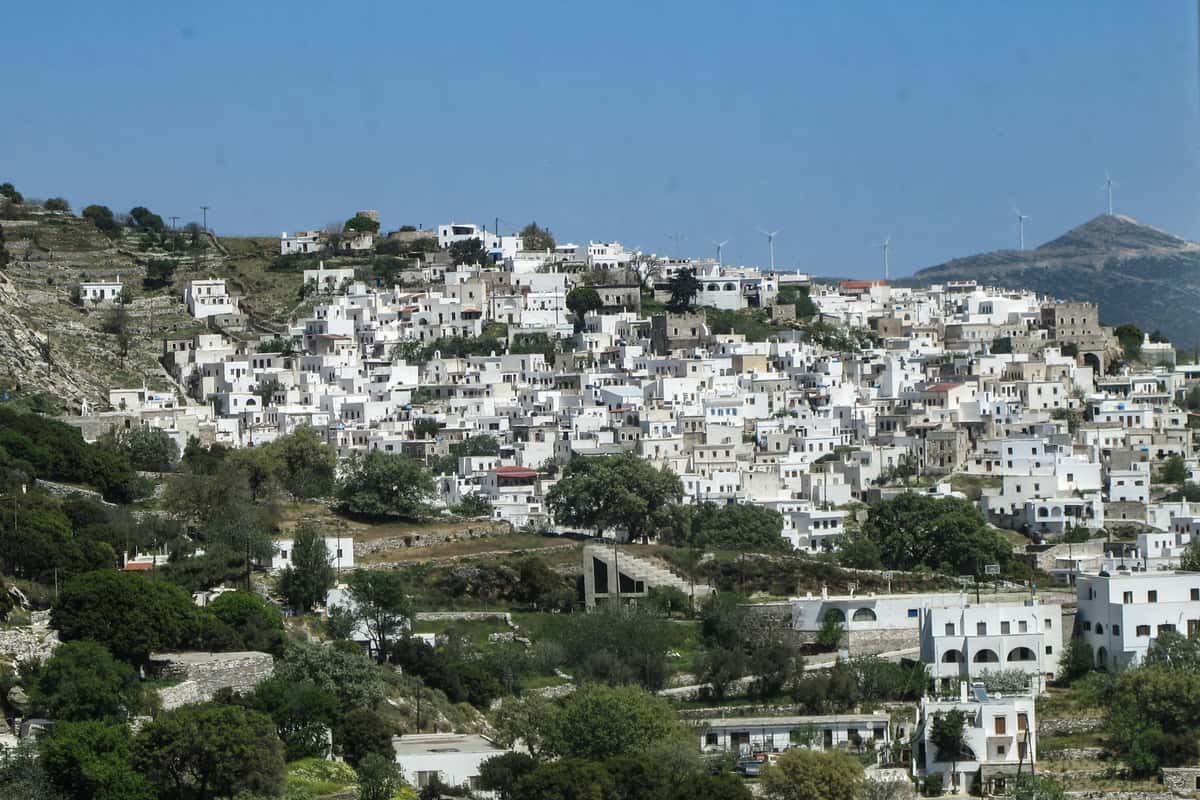
Apeiranthos rises on the foothill of Mount Fanari. Wikipedia gives its altitude as 650 to 700 metres and puts it 28 kilometres from the capital. It adds that the village has four museums. A Naxos bus tour with this stop climbs well above the coast.
Wikipedia places Filoti beneath Mount Zas, which it gives as 1,001 metres. Koronos sits on the slopes of Koronion Oros, says Wikipedia, which calls that peak the second tallest mountain there. It gives the village an altitude of 630 metres.
Marble and emery shaped the island. Wikipedia says emery was mined on the east side of Naxos for over two thousand years. Moutsouna, on the east coast, loaded emery onto boats until the early nineteen eighties. Wikipedia says an aerial cableway and a ruined transfer station survive there.
On the half-day route, the operator lists a short roadside stop outside Kinidaros to see the marble quarries. Next comes the kouros at Flerio, a statue of Naxian marble, 4.7 metres long, left unfinished. Apollonas, the northern village, has a fishing boat port on a sheltered bay, says one village page.
Wikipedia says Naxos is the one Cyclades island with fertile soil. That suits a Naxos bus tour through olive groves and valleys. Naxos town has its own Kastro, built by Marco Sanudo on the old acropolis. It held a palace, walls, a keep and a Catholic cathedral.
When does the Naxos bus tour run?
Operators give different start times. One lists two half-day departures, at half past eight and at a quarter past one. It gives the length as approximately four hours.
Another operator lists three day tours. Each leaves at nine thirty in the morning and returns at five thirty in the evening. So the length of a Naxos bus tour changes with the route. The exact times are on each operator’s own page.
The first operator says its tour starts and ends right outside Naxos port. Pick-up from places to stay applies only to the early start. Drop-off at the end is not part of it. That page lists a set of pick-up stops, each with its own time before departure.
Closing days and heat can change the route. The operator says the Temple of Demeter is closed on Tuesdays, and a stop at Filoti replaces it. The temple also closes at noon when a heat wave is forecast. The afternoon departure then visits Filoti.
One more operator lists trips of a day or half a day on different itineraries. Its search page suggests trying dates closer to the summer. So the warm months suit a Naxos bus tour, as that page puts it.
Summer on Naxos is hot and dry. Wikipedia describes a Mediterranean climate as one with dry summers and wet winters, hot in summer and mild in winter. It says the island group has a dry, mild climate. On a Naxos bus tour in the heat of the day, expect sun at each stop.
How does the Naxos bus tour work?
One operator describes the Naxos bus tour as a half-day drive of about four hours. It starts at an office outside Naxos port, calls at the Temple of Demeter and villages, and ends there again.
Here the day follows the operator’s plan. This operator starts at its office by the port and drives straight to the first stop, the Temple of Demeter. A different operator lists a full day instead, and that one names a stretch for a swim or a meal.
On the half-day route, the Naxos bus tour goes first to the temple. Next comes Damalas, where a local potter shows his workshop, as this operator lists it. Chalki follows, with about forty-five minutes at leisure.
After Chalki come a brief photo stop at the Panagia Drosiani church and a roadside stop at marble quarries. The last stop is the kouros at Flerio.
Time at each stop is short. This operator calls the trip a fast-paced sightseeing tour. It lists no scheduled lunch break and says there is not enough time for a full meal. It suggests a hearty breakfast beforehand and snacks for the road.
The same operator adds two notes. On Tuesdays the Temple of Demeter is closed, and a stop at Filoti village replaces it. The operator also says the trip runs in rain or in sun.
The vehicle on a Naxos bus tour is a coach or a minibus. Wikipedia describes a coach as a type of bus built for longer journeys. It has forward-facing seats and a luggage hold under the passenger floor. Wikipedia gives a minibus between 12 and 30 seats.
One operator lists a modern air-conditioned vehicle, and another lists a mini bus for a small group. The half-day operator names an English and Greek speaking escort. The escort holds no licence to lead people inside the temple or the church. So the information comes before the visitors walk in.
The operator also stores luggage during the tour. It calls a small donation in a church customary. During a Naxos bus tour, the driver takes care of the road, while visitors step out only at each stop.
Who is the Naxos bus tour for?
Operators present the Naxos bus tour for visitors who want villages and sights without driving. One operator calls its village day a great tour for new visitors. Another page says bus tours have been popular since the nineteen eighties.
Operators list shared and private formats, in full days and half days. A pair of friends, a family or one traveller alone can join a shared tour. Each of them can also ask an operator about a private one. One operator adds a village tour for a small group in a mini bus.
Age limits come from the operator. For the half-day Naxos bus tour, one operator says children up to four years old can join. It sets separate terms for children from five up to twelve. Other operators set their own limits, so the age rule belongs to each tour.
Walking matters on this route. The same operator states that visitors have to climb steps and walk uphill to reach the Temple of Demeter. Guests with limited mobility can note this before they choose a stop.
Wikipedia adds that Filoti sits on two hills with paved, winding streets. It places Apeiranthos on a mountain foothill, at 650 to 700 metres, and lists four museums in that village.
The half-day route starts and finishes right outside the port, and this operator stores luggage during the tour. That suits a guest on a short stay or one passing through the island.
A Naxos bus tour is one choice among others. One operator page names boat tours, snorkelling and hiking as other activities. Another operator page names marked trails in the Tragea upland for walkers.
What else do visitors ask about the Naxos bus tour?
What is the myth of Mount Zas on a Naxos bus tour?
Myth places the childhood of Zeus on Mt Zas. Wikipedia explains that the name Zas stands for Zeus. The peak is 1,001 metres high and looms over Filoti, a village at its foot.
One operator lists Filoti among the villages of its Naxos bus tour routes. Wikipedia says a cave near Filoti shows people living there from the newer Neolithic period. It also tells another island story. Theseus left Ariadne on Naxos, and Dionysus, the god of wine-making, fell in love with her.
What is the Portara, and who built it?
Portara means “large door” in Greek. Wikipedia says the tyrant Lygdamis started a temple to Apollo around 530 BC. He lost power around 524 BC, and builders left the job undone. The door frame is what stands today. It faces towards the sacred island of Delos.
The frame is made of five blocks of marble. Wikipedia says each block weighs as much as 20 tons. The blocks came from a quarry at Flerio, ten kilometres from the temple site. The temple sits on the islet of Palatia, beside Naxos harbour.
What is the kouros that a Naxos bus tour lists?
Sculptors of Ancient Greece carved the kouros, a nude young man standing upright. The Greek word kouros means a youth or boy. Wikipedia places the earliest ones in the Archaic period. Marble is the usual material, though sculptors also used limestone, wood and bronze. Early giant examples stand up to 3 metres tall.
Scholars Hurwit and Campbell suggest Naxos was apparently the birthplace of the type. Their reason is that the early statues are mainly in Naxian marble. One operator’s page for a Naxos bus tour says the kouros at Melanes is 4.7 metres long. It adds that the figure is unfinished and lies in a village garden.
What is Kitron, and does a Naxos bus tour mention it?
Kitron is a liqueur from the citron tree. Producers on Naxos make it from the leaves and the fruit. Wikipedia says the citron looks like a lemon tree but is stronger. The green kind is sweeter, at 30 percent alcohol. The colourless kind has 33 percent, and the yellow kind is strongest at 36.
Wikipedia says the traditional way to drink Kitron is as a digestif, once the meal is over. The first distillery was set up in Halki in eighteen ninety-six. A shortage of citron trees makes the drink rare abroad. One operator lists tasting the local liqueur on its Naxos bus tour, at the oldest distillery for citron.
What is Apeiranthos like?
Apeiranthos climbs the lower slopes of Mount Fanari, and the village sits 650 to 700 metres above the sea. Wikipedia gives its distance from Naxos town as 28 km, towards the north-east. Four museums stand in the village. Its notable people include a politician and writer, a Prime Minister of Greece and an army officer.
The local dialect and customs resemble those of Cretan mountain villages. Wikipedia says this has led historians to suggest that Cretans built it in the tenth century. The first written record dates from fourteen twenty. One operator lists a walk through the marble village of Apiranthos on its Naxos bus tour.
That is the question visitors raise first, as the sources describe it.