
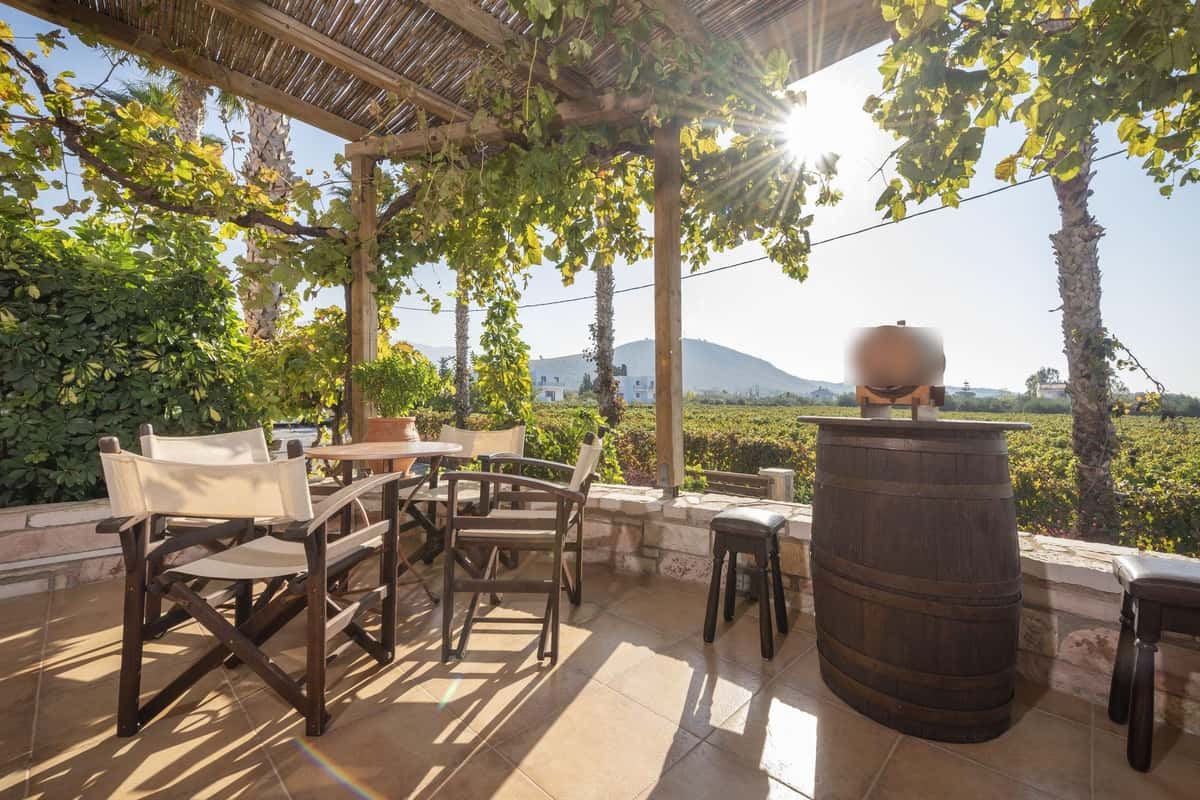
The Kos wine tasting tour is a trip with transport that visits vineyards and wineries on the island and pours local wines beside small bites of local food. Guests who plan a longer stay in the Dodecanese can open the tours in Greece page for further routes.
Below are the stops and the vineyards, the grapes and wines, the food that comes with the glasses, the order of the day, the guests the tour suits and the questions that come up.
What is the Kos wine tasting tour?
The Kos wine tasting tour is a trip to wineries and vineyards on the Greek island of Kos. Local wines are poured where they are made. Operators differ on the number of wineries, the transport, the food and the group.
Kos is one of the Dodecanese islands, which lie in the southeastern Aegean Sea. Only Rhodes and Karpathos are bigger, says Wikipedia, so Kos ranks third in the group. Its measurements are 42.1 and 11.5 kilometres, according to Wikipedia. It files the climate under hot-summer Mediterranean. The port and main town on the island carries the same name, Kos.
Wine is an old craft here. The official Kos tourism page says that winemaking on the island dates back to antiquity. Wikipedia describes the island in the ancient world as rich in wines. Its list of main farm crops on the island starts with grapes. Its article on Greek wine puts Greece among the oldest wine regions of the world.
The tourism page describes an old method. According to the page, wine on Kos was once only sweet and sold in flasks. It was made with psima: part of the juice is boiled down and added back to the must. The must then ferments in concrete tanks. The page says certain wineries still use methods from the nineteen twenties.
A Kos wine tasting tour turns that tradition into a trip. Listings describe a ride to one or two wineries and a look at the vineyards or the cellars. They add a tasting of local wines with small bites. A title such as Kos: Wineries Tour with Wine Tastings and Transportation names the wineries, the tastings and the ride.
The ride sets the Kos wine tasting tour apart from a walk-in visit. One winery says it hosts individual visitors, groups and organised tours. One listing has a driver meet guests at their hotel; another returns them to the original pick-up points. The tourism page says tasting menus and places differ and suit novices and experts.
What does the Kos wine tasting tour include?
A Kos wine tasting tour is listed with a ride and tastings at one or two wineries. Small local snacks come with the tastings. Whether it also includes a tour leader, a lunch or a dinner depends on the operator.
Operators describe the ride of a Kos wine tasting tour in different ways. One operator lists an air-conditioned coach that collects and returns guests at their hotels. Another lists a bus or coach. In the private listing, the vehicle has air conditioning and the driver is a professional. One listing names hotels in Kos, Tigaki, Marmari and Agios Fokas.
The number of wineries on a Kos wine tasting tour depends on the operator. The group listings name two wineries. One operator lists a vineyard visit at the first stop, with three wine samples in the cellars. At the second stop it lists a cellar visit and three or four wines paired with local products.
Food on a Kos wine tasting tour is stated in plain lines. Snacks are included and meals are not, says one small-group listing. Another operator lists a light lunch with wine pairings, and a half-day listing names one winery and adds a dinner. Listings name gratuities as excluded. One winery says its wines can be bought in an on-site shop.
Who explains the wine on a Kos wine tasting tour differs by operator. One small-group listing names an English-speaking host and a sommelier who explains each wine. Another operator says the leader of the vineyard visit belongs to the winemaking family. A private listing includes a tour leader for the party alone.
Group size is not the same in every listing. One half-day listing gives a group of four to ten guests. A second operator offers a small-group tour with no minimum number of guests. It says guests can ask about adding a winery. A private listing serves a single party.
Where does the Kos wine tasting tour go?
The Kos wine tasting tour goes to family wineries on Kos, an island of the Dodecanese. Winery pages place them around Asfendiou on the north-eastern slopes and at the foot of Mount Dikaios. One village tour page puts a tasting in Kefalos. Operators differ on which stops a day includes.
Wikipedia sets the length of the island at 42.1 kilometres and its width at 11.5 kilometres. Any Kos wine tasting tour works inside that space. On the farms of Kos, says Wikipedia, grapes grow beside olives, tomatoes, figs, almonds and watermelons. It puts the coastline at 112 kilometres.
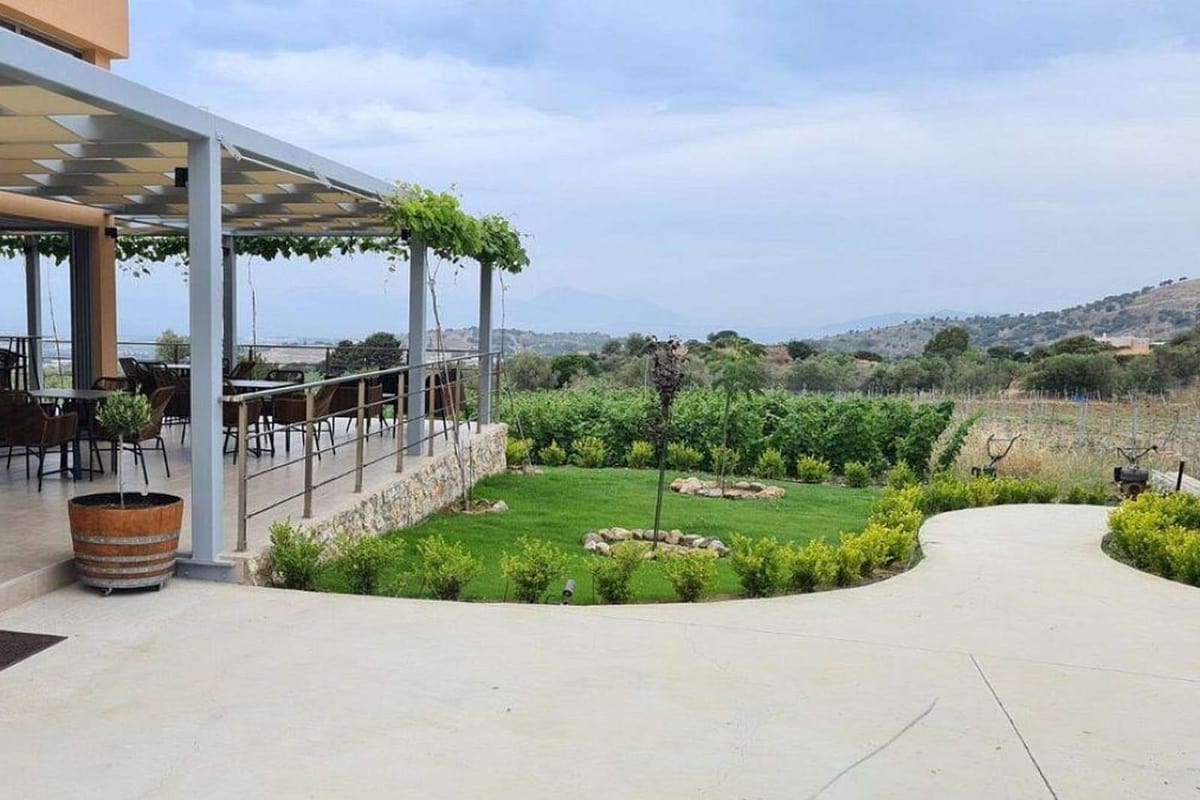
One winery site places its vineyards in two areas of Asfendiou, on the north-eastern slopes of Kos. The site credits Mount Dikaios with shelter and the Aegean breezes with cooling. It gives their altitude as 105 metres, near the shore. The winery sits at their entrance, on the main road to Kefalos.
A visitor page calls Mount Dikaios the highest peak on Kos, at 846 metres. Two winery sites put their estates at its foot. A Kos wine tasting tour with such a stop sits below that peak. One estate adds a view of Kalymnos and Pserimos. One wine blog places vineyards on the slopes, around 300 metres up.
Zia sits on the slopes of Mount Dikaios at about 350 metres, says a visitor page. It lists views of the Aegean Sea, Kalymnos, Pserimos and the Turkish coast. Pyli is a village in the south-west, 15 kilometres out of Kos Town. It stands on a plain of olive groves. One wine page lists a family winery there.
Wikipedia puts Kefalos, the westernmost town on Kos, 43 kilometres from Kos Town. Wikivoyage gives the drive as about 40 minutes by car. Another page places Antimachia on a plateau, 4 kilometres south of Mastichari and 23 kilometres from Kos Town. Operators set their own routes, so the stops of a Kos wine tasting tour change with the operator.
What wines does the Kos wine tasting tour pour?
The Kos wine tasting tour pours white, red, rosé and sweet wines of the island, says a Kos wine page. Pages name Assyrtiko, Malagouzia, Syrah and Merlot among the grapes. Operators differ on the number of wines in the glass and the size of each pour.
The official Kos tourism page lists Malagouzia, Assyrtiko, Kydonitsa, Cabernet Sauvignon, Grenache Rouge, Syrah and Merlot. Visitors sip them while they walk the vineyards. Its wine page calls Malagouzia a source of savoury white wines. It says Syrah, Merlot and Cabernet Sauvignon give rich, well balanced reds. It names Mavrothiliko as an indigenous grape that was nearly extinct.
Wikipedia names Santorini as the home of Assyrtiko, a white grape also planted on Paros and other Aegean islands. The article adds that the grape holds its acidity in ripe years. Athiri, also white, is noted for a lemon character. One Kos winery page lists a dry white made with Athiri and Assyrtiko. Wikipedia says Malagousia gives perfumed aromas.
Wikipedia describes Mandilaria as a red variety grown across the Greek isles, with deeply coloured wines of light body. A Kos wine shop page lists it among the reds. Wikipedia says sweeter wines are denser and leave thick streaks, called legs, on the glass. Which wines a Kos wine tasting tour pours depends on the operator.
The official tourism page presents a Kos wine tasting tour as a way to learn old winemaking methods. One is psima. Part of the grape juice is boiled down, then added back before fermentation in concrete tanks. The page says the wine of the nineteen twenties was sweet only and sold in flasks.
The official tourism page lists olive oil, tomatoes, breadsticks and wine cheese called krasotyri beside the glasses. One village tour page lists cheese, olives, bread and olive oil with six wines. One winery page lists a 150 millilitre pour, or four pours of 50 millilitres with local delicacies. Pour sizes and food differ on each Kos wine tasting tour.
How does the Kos wine tasting tour work?
The Kos wine tasting tour works as a half-day trip with a driver. Operators list hotel pick-up and a drive to one or two wineries. Guests walk the vineyard, taste with small local bites, and ride back to the hotel.
On one operator’s Kos wine tasting tour, a driver collects guests at hotels in Kos, Tigaki, Marmari or Agios Fokas. The first winery comes next. The group walks the vineyards, learns how the local grapes grow, and tastes with light snacks. A second winery shows its production area and oak barrels, and a sommelier explains the wines.
Another operator lists three and a half hours in total. That Kos wine tasting tour begins at one winery with a vineyard walk and three wine samples in the cellars. A second winery follows, and its wines come beside local products. The operator sends the exact pick-up place and time a day ahead.
Lengths differ. A private tour with village stops runs four and a half hours. One winery page gives ninety minutes to two hours for its own tasting. Between late spring and October, one winery opens Monday to Saturday, nine in the morning to six in the evening. The first operator runs its tour every day.
In Wikipedia’s account, a taster checks the colour, swirls the wine, smells it, sips it and savours the finish. One winery site serves each wine in the proper glass, with printed notes. On the Kos wine tasting tour, one operator has a sommelier explain the wines. Wikipedia says spitting at a winery causes no offence.
One operator asks for comfortable shoes, water and sun protection. Another asks for walking shoes and a camera, plus protection against the sun. Wikipedia calls sunscreen a product that helps protect the skin against sunburn. It adds that the island’s summers are hot. One operator notes that weather can alter the route, and its tasting rooms sit under cover.
Operators differ on cancellation. One refunds in full for a cancellation made a day before the start. A tasting page gives a full refund at seven days or more and a partial one after that. It gives none inside the last day. One private tour says all sales are final.
Who is the Kos wine tasting tour for?
The Kos wine tasting tour suits adults who want a relaxed half day with a driver at the wheel. Operators name couples and small groups. Listings give 18 as the minimum drinking age, and children can come along without a glass.
The official Kos tourism page says the wine tastings suit guests at every level, novice to expert. One tasting page speaks to couples, small groups and travellers who are simply curious. Operators run the Kos wine tasting tour as a small group experience or as a private trip. One winery listing caps a visit at six people.
Guests without a car have the easiest day. Operators collect guests at the hotel and bring them back at the end. Transport differs: one lists a coach, another a private vehicle, and a third a minivan, each with air conditioning. A winery visit listed without transport leaves the way there to the guest.
Tastings are for adults. One operator says children can come along but do not drink. Other listings let children up to seventeen join the visit. A winery site asks every visitor to confirm age 18 or over before its pages open. One private tour lists infant seats and says prams can ride along.
A Kos wine tasting tour is built around wine. One winery page states that every one of its tasting choices contains alcohol. One tasting lists water as included. Guests with food allergies are asked to tell the host. Listings give English as the tour language, and one adds French.
One operator lists wheelchair accessible wineries on its Kos wine tasting tour, and a winery tasting listing says the same. A private tour is listed for guests of any fitness level. Guests whose main wish is the sea can pick a boat trip or a beach day instead. Wikipedia names the island’s beaches as the main draw for visitors.
What else do visitors ask about the Kos wine tasting tour?
Where do Hippocrates and the Asklepieion fit into the story of the island behind the Kos wine tasting tour?
Hippocrates, a Greek physician and a native of Kos, lived during the fifth century before Christ. He carries the title Father of Medicine on Wikipedia, which also links the Hippocratic Oath to his name. The same article says he was probably trained at the asklepieion of Kos.
Wikivoyage describes the Asklepieion as a place of ancient healing and one of the first ancient hospitals. Wikipedia adds that settlers from Epidaurus brought an Asclepius cult that made Kos known for its healing centres. A Kos wine tasting tour is about wineries, so this healing story is island background.
How big is the Dodecanese group that holds Kos, and what does its name mean?
Fifteen large islands and 150 small ones make up the Dodecanese chain, which lies next to the Anatolian coast. Wikipedia adds that 26 are inhabited, while Rhodes has been the leading island since ancient times. After Rhodes, it names Kos and Patmos as the islands of greatest historical weight.
The name means twelve islands; Byzantine sources first gave it to twelve Cyclades islands near Delos, not to this chain. A Kos wine tasting tour runs on Kos, one of the 15 larger islands.
Which sights does Kos Town offer apart from a Kos wine tasting tour?
Kos Town is the chief port of Kos, and the municipality has its seat there. Wikivoyage describes a castle of the Knights Hospitaller at the port, dated to the fourteenth to sixteenth centuries.
After a quake in nineteen thirty-three, Rodolfo Petracco drew up a plan. It turned the old quarters into an open archaeological park. By legend, Hippocrates taught his pupils under the plane tree in the centre. Wikivoyage puts the age of today’s tree near 500 years and calls it a possible descendant of the original.
Where does the island name Kos come from, and what else carries it?
A Kos wine tasting tour runs on an island whose name first appears in the Iliad, says Wikipedia. Other ancient names include Meropis, Cea and Nymphaea, while the Knights Hospitaller called the island Lango. Stanchio in older Romance speech and İstanköy in Turkish both trace back to the Greek words for “to Kos”.
A person from the island is called a Koan in English, and the word also works as an adjective. Wikipedia says Cos lettuce, or romaine, is named after the island, but Wikivoyage calls the name unrelated.
How does olive oil connect to wine in Greek cooking and in a Kos wine tasting tour?
Olive oil is a vegetable oil made by pressing whole olives, the fruit of a traditional Mediterranean tree crop. Wikipedia says it is used for frying, as a condiment and as a salad dressing. Olive cultivation around the Mediterranean dates back to the eighth millennium before Christ, according to the same article.
Wine joins wheat and olive oil as a Greek staple, so a Kos wine tasting tour fits local food culture. The Greek cuisine article calls olive oil ancient and characteristic, found in a majority of dishes.