Greece travel information covers the practical facts a visitor needs before and during a trip to the country, from entry paperwork and money to ferries and public holidays. The tours in Greece listed on this site fit alongside this reference when you plan your days on the ground.
The sections below explain where Greece lies, the entry rules, the euro, the language and time zone, plugs, emergency numbers, climate and the meltemi wind, Athens airport and metro, Piraeus and the ferries, domestic flights, trains and buses, driving, places to stay, public holidays, Orthodox Easter, food and drink, World Heritage sites, museums in Athens, the island groups, Crete, Rhodes and Corfu, Thessaloniki, Delphi, Olympia, history and customs.
What is Greece travel information and who needs it?
Greece travel information is the set of plain facts a visitor needs before and during a trip to Greece. It covers entry, money, language, health, weather, transport, food and sights, and it helps first-time and returning visitors alike.
This page works as a long reference. A short bold answer starts every section, and short paragraphs of facts follow it. Read it from top to bottom before you book, or jump to the one topic you need. It gives no costs and no timetables, because the official sites and the operators set those and change them.
The topics below come in this order:
- entry rules, the euro, the Greek language, time and phone calls
- plugs, emergency numbers, health, the climate and the meltemi wind
- airports, the Athens metro, ports, ferries, flights, trains, buses and driving
- places to stay, public holidays, Orthodox Easter, food and drinks
- World Heritage sites, museums, island groups, major places, history and customs
First-time visitors need the basics: where the country lies, which language people speak and how to get around. Returning visitors use Greece travel information to check a rule or plan a trip to a new region.
Greece has been a major tourist destination in Europe since the nineteen-seventies. It attracted 40.7 million inbound travellers in two thousand and twenty-four, according to the Bank of Greece. It also ranked ninth among all countries by number of visits that year.
Greece travel information starts with the country itself. Greece, officially the Hellenic Republic, lies largely on the Balkan peninsula in southeastern Europe. It sits at the crossroads of Europe, Asia and Africa. The capital, Athens, is also the largest Greek city. Thessaloniki and Patras follow it in size. Greek is the official language, and almost the entire population speaks it.
Which Greece travel information explains where Greece lies?
Greece travel information places the country on the Balkan Peninsula in southeastern Europe. Albania, North Macedonia and Bulgaria border it to the north, and Turkey borders it to the east. Thousands of islands stretch out across the seas around the mainland.
Water surrounds the country on three sides. The Aegean Sea fills the eastern side, and the Cretan and Libyan seas fill the southern side. The Ionian Sea in the west runs between Greece and Italy. Land borders total about 1,110 kilometres: 212 with Albania, 234 with North Macedonia, 472 with Bulgaria and 192 with Turkey.
Greece travel information splits the country into a mainland and its islands. Two smaller peninsulas, Chalkidiki and the Peloponnese, project from the mainland. Crete is the largest island, and Euboea is the second largest. The Greece destinations pages on this site take the places one by one.
Greece covers 131,957 square kilometres. The mainland takes 83.33 percent of that area, and the islands take the other 16.67 percent. About 80 percent of the country is mountainous, and the Pindus range runs across the centre from northwest to southeast. Among Mediterranean countries, Greece has the longest coastline.
The north point is Ormenio village, and the south point is Gavdos island. The east point is Strongyli island, and the west point is Othonoi island. Greece travel information covers the sea too, because the islands lie across open water. The tours and cruises pages on this site list ways to explore the shoreline by boat.
What Greece travel information covers entry rules?
Greece travel information on entry starts with the Schengen Area. The UK government advice says Greece follows Schengen rules. UK passport holders need no visa for a stay of up to 90 days, counted over a 180-day period. That covers visits to family or friends.
The Schengen Area is a system of open borders between European countries. Greece is a member. Its member countries abolished border checks along the borders they share. The area is named after the Schengen Agreement of nineteen eighty-five, signed in Schengen, Luxembourg. Wikipedia says the area itself was created on the twenty-sixth of March in nineteen ninety-five.
Greece travel information from the UK page covers passports too. The date of issue must be less than ten years before the day of arrival. The expiry date must fall at least three months after the day the traveller plans to leave the Schengen area. A lost or stolen passport, or no valid travel document, means denied entry.
The UK page also names a return or onward ticket and proof of enough money for the stay. Time spent in other Schengen countries in the previous 180 days counts toward the 90 days. The page says an overstay can bring a ban of up to three years. A longer stay needs a national visa from the Greek authorities.
The official Greek tourism site adds a rule for visitors from Schengen countries. A national ID card is enough to enter for three months, and no passport is needed for entry. Travellers from outside the Schengen Agreement are told to ask the Greek embassy or consulate first. Rules change, so for Greece travel information on entry, the official pages decide.
What Greece travel information covers the euro and payments?
Greece travel information on money is short. Greece uses the euro, and the eurozone admitted Greece on the first of January in two thousand and one. Each euro is divided into one hundred cents, called lepta in Greek.
Wikipedia lists euro coins in eight values: one, two, five, ten, twenty and fifty cents, plus one and two euros. The newer Europa series of notes has six values and no longer includes the five hundred. Both series stay legal tender. Each note has its own colour, with windows and gateways on the front and bridges on the back.
Greece travel information from the official Greek tourism site covers cash and cards. Exchange offices stand at the airport, at certain main ports and in the larger cities. A passport is needed to exchange currencies. Banks open on weekdays and close on public holidays. Credit card holders can take out money at the cash machines of partner banks.
Wikipedia’s article on the euro says card payments and cash machine withdrawals inside the eurozone count as domestic transactions. The UK page adds a customs rule. Declare cash or travellers cheques at the point of entry when carrying ten thousand euros or more. The page says to keep a certified copy, or the money can be seized on departure.
Greece travel information on the euro also has three Greek links. The euro symbol is modelled on the Greek letter epsilon, with two parallel lines for stability. Greece issued a commemorative two-euro coin for the Summer Olympics of two thousand and four. The conversion from Greece’s old currency, the drachma, was fixed months before the changeover.
What Greece travel information covers the Greek language?
Greece travel information begins with the language. Greece uses Modern Greek as its official language, and nearly every resident speaks it. At least 13 million people speak Greek today. The European Union also lists Greek among its 24 official languages.
Among the Indo-European languages, Greek has the longest documented history. Written records for it cover at least 3,400 years. The earliest written evidence is a Linear B clay tablet found in Messenia. In nineteen seventy-six, Dimotiki, the vernacular form, was declared the official language of Greece. Standard Modern Greek is used today for all official purposes and in education.
Greece travel information on the alphabet is short. The Greek alphabet has 24 letters, each with an uppercase and a lowercase form. Greek has been written in it since approximately the ninth century B.C. The Phoenician alphabet was modified to make it, with letters added for the vowels. Lowercase letters came much later, from medieval scribes.
The writing reform of nineteen eighty-two simplified the accents. Since then, Greek has been written mainly in the monotonic system, which employs only the acute accent and the diaeresis. In Greek writing, the question mark looks like the English semicolon. Online, Greek typed in Latin letters is called Greeklish. The older polytonic system is still used for Ancient Greek.
Every reader of Greece travel information already uses Greek words, because English borrows them. Examples are mathematics, physics, astronomy, democracy, philosophy, athletics and theatre. Greek roots also coin new words such as photography and telephony. Greek and Latin form the base of international scientific vocabulary. Greek is also the language in which the New Testament was first written.
What Greece travel information covers time and phone calls?
Greece travel information on time is simple. The standard time is Eastern European Time, UTC+02:00. Daylight saving time moves the clocks ahead by one hour, to UTC+03:00. Summer time starts on the last Sunday in March and ends on the last Sunday in October.
Greece travel information on clocks goes back to nineteen sixteen, when Greece adopted Eastern European Time. Before that, Athens mean time was observed, one hour, thirty-four minutes and fifty-two seconds ahead of GMT. In the IANA time zone database, Greece has the zone Europe/Athens. People speak the time in the 12-hour notation, while writing uses both forms.
Greece has a national telephone numbering plan with ten-digit numbers. The first digit shows the type of service. Short codes begin with 1, geographical numbers with 2, mobile numbers with 6 and toll-free numbers with 800. All dialable numbers are ten digits, except for short codes of three to five digits.
Greece travel information for phone calls starts with the country code, which is 30. The international access prefix is 00. Greece moved to the closed ten-digit scheme in two stages, in two thousand and one and two thousand and two. In the second stage, the leading zero became a 2 for geographical numbers and a 6 for mobile numbers.
The only two-digit area code is 21, for the Athens Metropolitan area. In a number that begins 210, the area code is 21 and the zero starts the subscriber number. Three-digit codes are used for Thessaloniki, Patras, Larissa, Heraklion, Kavala and Tripoli. Two-digit codes are used with eight-digit subscriber numbers, so the full number is always ten digits.
What Greece travel information covers electricity and plugs?
Greece travel information on electricity is short. The official tourism site of Greece gives 230 volts and 50 hertz, with type F plugs. Wikipedia’s table lists types C and F for Greece, also at 230 volts and 50 hertz.
Voltage is the strength of the supply, and frequency is how fast the current alternates. Wikipedia names North America as the biggest exception to a supply of 220 to 240 volts at 50 hertz. There, the usual supply is split-phase, with a choice of 120 or 240 volts at 60 hertz.
A visitor from North America therefore meets a different supply in Greece. Greece travel information about plugs begins with letters, because Wikipedia sorts plugs and sockets into types A to O. The Greek row of its table shows two letters, C and F.
Wikipedia says type F, the Schuko socket, is used in large parts of continental Europe. It carries a rating of 16 amps at 230 volts. The tourism site tells visitors to pack the transformers or adaptors their devices need. Or they can check that the socket supplies one.
The same Wikipedia article adds a warning for any traveller. A plug that fits a socket does not prove that the voltage, the frequency or the earth connection match. Greece travel information therefore ends with a simple check: read the label on each charger and each device.
What Greece travel information covers emergency numbers and health?
Greece travel information on emergencies starts with one number, 112. Wikipedia lists 112 beside the police, ambulance and fire entries for Greece. The UK government health page tells travellers to call 112 or 166 and request an ambulance.
Wikipedia’s list gives Greece 100 for police, 166 for ambulance, 199 for fire and 108 for the coast guard. For a consumer complaint, the official Greek tourism site gives the Tourist Police line, one-five-seven-one, open round the clock.
Wikipedia says the European Union adopted 112 as a standard on the twenty-ninth of July, nineteen ninety-one. It is a valid emergency number throughout the EU, and Greece is an EU member state. In this part of greece travel information, 112 is the number to learn first.
Phones help too. Wikipedia says a GSM phone and its SIM card hold a preprogrammed list of emergency numbers. A traveller does not have to know the local ones. Dialling a known number such as 112 forces the phone to try the call on any available network.
For Greece travel information on health, the UK government page says to check the destination offers the care you need. It asks for travel insurance that covers local treatment and unexpected medical evacuation. It also says a GHIC or EHIC card is needed for medically necessary state healthcare. The card does not replace travel insurance.
The same page also covers care on the ground. Treatment and facilities are generally good on the mainland but can be limited on the islands. The page calls the public ambulance service basic and reports serious shortages of ambulances on certain islands.
It adds that pharmacies across Greece stock a good supply of medicines. Strict rules apply to dispensing certain medicines, including antibiotics. Travellers bring prescription medicines in the original container, with a letter from their doctor stating the quantity needed. The name on the prescription must match the name on the passport.
What Greece travel information covers the climate?
Greece travel information on the climate starts with one fact: the climate is predominantly Mediterranean. Wikipedia adds that complex geography gives the country a wide range of local variations. The weather differs between the mainland, the islands and the mountains.
The Mediterranean climate covers low-lying parts of the mainland and islands, the article says. Examples are Attica, the Peloponnese, Crete and the Ionian Islands. Summers are frequently dry and sunny, with rain only as showers or thunderstorms. Coastal heat stays milder, tempered by the sea breeze and a cooler sea. Winters are wet, and snow does not last long.
The mountains are a different story, and this Greece travel information has to say so. The article describes an alpine Mediterranean climate on high ground, such as the Pindus mountains. The winter there is harsh with abundant snowfalls, and the summers are cool. The official Greek tourism site agrees: mountains are cooler in summer, and the plains have mild winters.
East and west differ too. Wetter weather falls west of the Pindus range, with maritime features, while the east is drier and windier in summer. The north has a transitional climate between continental, Mediterranean and humid subtropical. The official Greek tourism site urges travellers to check the weather of their destination in the days before the trip.
The figures behind this Greece travel information show the spread. Kaimaktsalan averages about 4 degrees Celsius a year, and Lindos about 22. Average yearly rainfall is lowest at Xerokampos in Crete, at 219 millimetres, and highest at Theodoriana in Epirus, at 2,529. The UK government advice warns of a high wildfire risk in the summer season, April to October.
What Greece travel information covers the meltemi wind?
Greece travel information on the meltemi starts with one fact: a strong, dry northern wind crosses the Aegean Sea. Wikipedia says it blows in cycles between about late spring and mid-September. A single spell can go on for days with no pause.
Etesian, the older name, derives from the Greek word étos, meaning year, because the wind returns every year. Writers described it in ancient times. The modern Greek name is probably a loan from Italian, where the words mean bad weather. It is called a monsoon wind at times, yet it stays dry and has no winter counterpart.
Timing matters in Greece travel information about the wind. The climate article stretches the season into October and records its peak in July and August. Each day the wind reaches full strength in the afternoon. The same article says the winds keep Aegean temperatures below the levels in the Ionian Sea and on the mainland.
The direction changes with the sea. Over the northern Aegean the wind runs from the north-east to the north. Over the central Aegean it is a north wind. In the southern Aegean, the Cretan Sea and the Carpathian Sea it turns north-west. The climate article singles out the Cyclades and the waters around them for very windy days.
For Greece travel information on sea crossings, the wind decides what happens. The article warns sailors that it appears without warning under a clear sky. It can blow at Beaufort force 7 to 8. At that force the greater part of inter-island ferries cannot put to sea. Leisure sailors favour the steady sailing wind, which also tempers the summer heat.
What Greece travel information covers Athens airport?
Greece travel information about Athens airport begins with its full name: Athens International Airport Eleftherios Venizelos. Airlines call it ATH. No other international airport in Greece is bigger, and it serves Athens and the Attica region that surrounds the capital.
Passenger service began on the twenty-eighth day of March, two thousand and one. That was just ahead of the Athens Olympics of two thousand and four. This airport took the place of the old Ellinikon International Airport. Its name honours Eleftherios Venizelos. The two parallel runways measure 4 km and 3.8 km, and both take the A380 jet.
Greece travel information on location helps you plan the first hour. The site sits close to four towns: Spata, Koropi, Markopoulo and Loutsa. Central Athens lies about 20 km (12 miles) west of the airport. The road distance is 30 km (19 miles), since hills sit in between.
Two terminals share the site. Check-in happens in the main terminal, which has 153 desks. Its three floors hold arrivals, departures and a food court that overlooks the eastern runway. Moving walkways run through an underground link to the satellite terminal. Hall A takes flights from outside the Schengen Area. Hall B takes flights inside it, and domestic flights.
Greece travel information on the road into the city starts at the railway station by the terminal. An elevated walkway leads to it. Trains of the Proastiakos suburban railway and of Metro Line 3 stop there. The taxi rank is at exit 3. City buses link the airport with greater Athens. Fares and timetables are on the operators’ pages.
What Greece travel information covers the Athens metro?
Greece travel information on the Athens metro starts with three lines. They are Green Line 1, Red Line 2 and Blue Line 3. Together they run for 91.7 km and serve 66 stations across the Athens urban area. Trains reach Piraeus, Kifissia and the airport.
Line 1 is the oldest. It began in the eighteen-sixties as a single-track steam railway between Piraeus and Thiseio. Lines 2 and 3 were built in the nineteen-nineties and inaugurated in January two thousand. Line 3 reached the airport in the summer of two thousand and four. Line 2 grew to Anthoupoli and Elliniko in two thousand and thirteen.
Line 1 is 25.7 km long with 24 stations. Line 2 is 18.7 km long with 20 stations. Line 3 is the longest, at 47.3 km and 24 stations. Greece travel information on changing trains is short. Five stations let you swap lines: Syntagma, Monastiraki, Omonia, Attiki and Piraeus. Every line meets each other line at least once.
Line 2 runs entirely underground. Line 1 runs mostly above ground, with a tunnel between Monastiraki and Attiki stations. Line 3 is mostly underground, and only trains bound for the airport use its overground section. Stations show art and finds from the digs made while the tunnels were built. Photography and video are allowed.
Greece travel information about the wider network adds two links. Each metro line has at least one connection with the Athens Suburban Railway and the Athens Tram. The tram opened in two thousand and four and has two routes, Lines 6 and 7. Monastiraki, Akropoli and Syntagma hold exhibitions of ancient objects or replicas.
What Greece travel information covers Piraeus and the other ports?
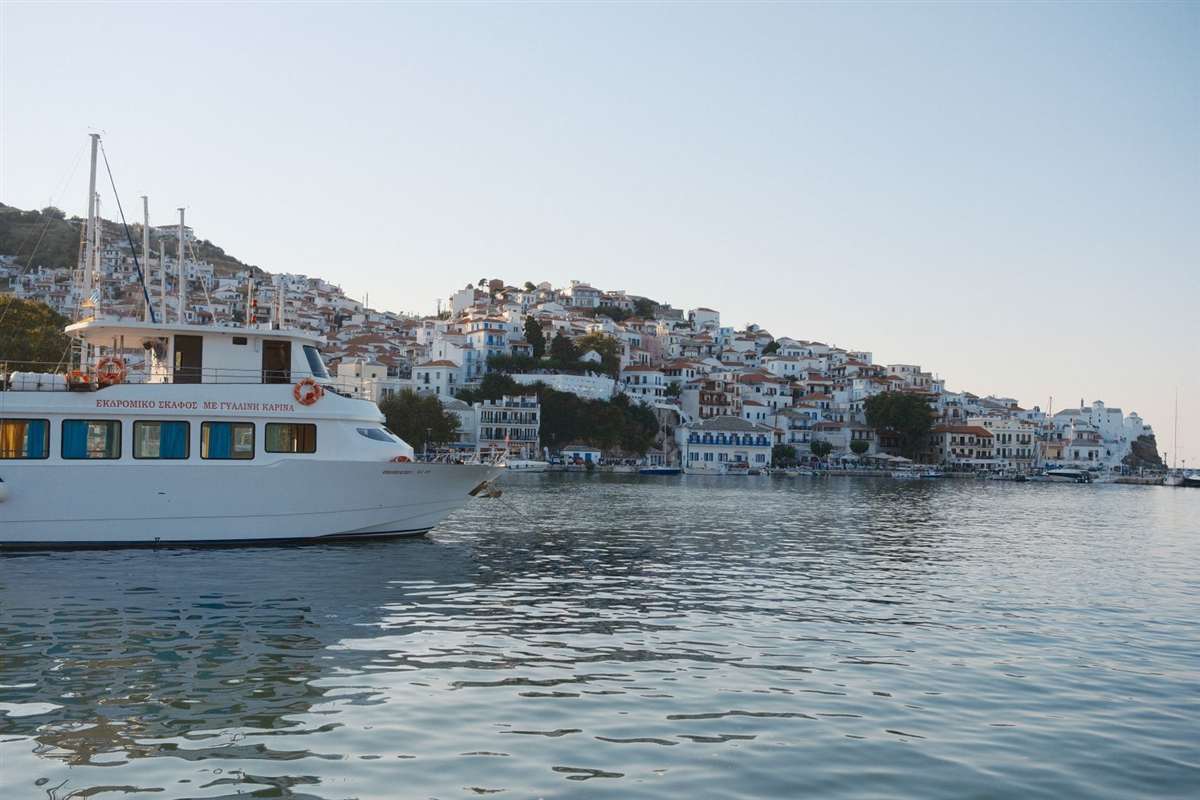
Greece travel information about ports starts with Piraeus, the largest harbour in the country. It sits on the Saronic Gulf, eight kilometres from central Athens. Rafina, on the Aegean side of Attica, serves Athens as its second port.
Piraeus is a city of its own inside the Athens urban area. Its municipality holds 168,151 people, and the wider Piraeus area holds 448,051. Wikipedia ranks it fifth in Europe for passenger traffic. Greece travel information for island trips begins at this port for that reason.
Piraeus has three natural harbours, set on a rocky peninsula that was once an island. Kantharos is the central harbour, a hub for passenger shipping and for commercial shipping. Zea and Munichia, to the east, serve pleasure boats and fishing boats. Zea is also called Pasalimani, and Munichia is also called Mikrolimano.
The port is old. Athens made it the city’s harbour in the fifth century B.C. The railway between Athens and Piraeus was completed in eighteen sixty-nine. Wikipedia counts that line among the events that made the port more important than ever. Greece travel information on Piraeus therefore rests on a long record of sea trade.
The city also holds museums and tavernas. The Hellenic Maritime Museum shows exhibits on the nautical tradition of Greece. The Archaeological Museum of Piraeus displays objects from classical antiquity found in the Piraeus area and along the nearby coast. The article places seafood tavernas by the shores of Mikrolimano and Piraiki.
Rafina lies on the Aegean coast of Attica, 25 km from central Athens. Wikipedia says its port acts as a second port for Athens, behind Piraeus. Its ferries reach southern Euboea. They also reach the greater part of the Cyclades. Check which port your ferry uses, because Piraeus faces the Saronic Gulf and Rafina faces the Aegean Sea.
What Greece travel information covers ferries between the islands?
Greece travel information on ferries starts with a plain fact. Wikipedia says ferries remain the main way to cross between the islands. One Greek ferry company links the mainland with the Aegean islands.
The article calls Greece a maritime nation by tradition. It names two more Greek ferry companies. One runs mainly from Piraeus to Crete and across the Adriatic Sea. The other connects Greek ports with Italy. Igoumenitsa and Patras join Ancona and Bari, and Bari joins Corfu.
The Saronic Islands lie close to the mainland. Wikipedia says boats leave for them on a regular basis, both from Piraeus and from the Peloponnese. Greece travel information about the island groups therefore starts at the ports covered above. One lies on each coast of the Attica peninsula.
Weather decides whether a ferry sails. In summer the Aegean gets the meltemi, a dry north wind. Wikipedia says it blows in periods, starting in late spring and ending around the middle of September. It can blow as hard as force seven to eight. Then, the article says, inter-island ferries are among the ships that cannot go to sea.
This page lists no timetable. For the route you want, open the page of the ferry company itself. Read it again close to your sailing day, since wind can change a plan. Greece travel information from this site shows how the ports and ferries fit together. The company’s page covers sailing times and booking.
What Greece travel information covers domestic flights?
Greece travel information on domestic flights starts with two airlines. Aegean Airlines is the flag carrier and the largest Greek airline. Olympic Air is its regional subsidiary and keeps the domestic routes. Check each airline’s own page for routes and times.
Aegean carries more passengers, serves more destinations and runs a bigger fleet than any other Greek airline, says Wikipedia. It flies scheduled services from Athens and Thessaloniki. Its first commercial flights, in late spring of nineteen ninety-nine, ran from Athens to Heraklion on Crete and to Thessaloniki. In summer it also flies charters with tour operators.
Olympic Air is a regional airline. It began limited operations in two thousand and nine, after the former national carrier Olympic Airlines ceased all operations. Its main hubs are Thessaloniki and Athens, with Rhodes as a small secondary hub. Greece travel information on domestic routes names both brands, because Olympic Air keeps those routes, partly in co-operation with Aegean.
The European Commission blocked a merger of the two airlines in two thousand and eleven. It cited a combined share above ninety per cent of the Greek domestic air transport market. In two thousand and thirteen it approved Aegean’s purchase of Olympic Air, and both brands stayed. Transport in Greece also names SKY Express as a Greek airline.
The same article counts 16 international airports, 11 military airports and 26 airports of mixed use. Athens and Thessaloniki are the two biggest by passengers. Heraklion on Crete, Rhodes and Corfu come next, which the article calls key tourist hubs in the busy summer season. Greece travel information like this never fixes a timetable or a fare.
What Greece travel information covers trains and buses?
Greece travel information on trains starts with one operator. Hellenic Train runs all passenger services on the network, and the main line joins Athens and Thessaloniki. Buses are run by KTEL companies, the common name for intercity and regional bus operators in Greece.
Rail transport in Greece began in eighteen sixty-nine, with the Athens to Piraeus railway. Trains first ran the full 506 kilometres from Athens to Thessaloniki when that standard-gauge line was completed in nineteen eighteen. The Piraeus to Platy line, with its branches to Thessaloniki, is electrified and double-tracked. The article calls it the country’s busiest passenger and freight line.
Hellenic Train, called TrainOSE until two thousand and twenty-two, runs three kinds of train. Regular trains make frequent stops and are the slowest, Express trains make fewer stops, and Intercity trains are the fastest. Express and Intercity trains have seat reservation, a bar and a restaurant. Timetables change, so Greece travel information here names the train types only.
Suburban trains, called Proastiakos, serve Athens, Thessaloniki and Patras. The Peloponnese is different: the article says its metre-gauge network has been largely unused since two thousand and eleven. It lists the lines to Volos and to Kalambaka as suspended in two thousand and twenty-three, with buses instead. For rail, Greece travel information gives one rule: check each route first.
Regional KTEL networks carry the region’s name on their vehicles, such as KTEL Argolidas. The article names four major bus terminals. Thessaloniki has the biggest, which serves all of Greece. Athens has two, Kifissos and Liossion, with a new one at Elaionas planned. Greece travel information cannot fix a departure point, so confirm it with the bus company.
What Greece travel information covers driving in Greece?
Greece travel information on driving starts with three facts. Traffic keeps to the right, and motorways carry the letter A before a number. The UK government advice says a UK photocard licence is valid for driving in Greece. Motorways and national roads form the main road network.
The same UK advice rules out provisional licences for driving or hiring any vehicle in Greece. It adds that hire companies have stricter requirements of their own. Read the terms of your car hire company before you arrive. Greece made right-hand traffic official in nineteen twenty-six, Wikipedia says. The advice also calls drink-driving a serious offence.
Motorways use the letter A and green signs only, while national roads use the letters EO. Wikipedia says motorways are the only toll roads, apart from one undersea tunnel. The highest speed limit is 130 kilometres per hour on motorways, 110 on expressways and 90 on national roads. Together the six big motorways pass through about 150 tunnels.
Greece travel information for long trips names three motorways. The A1 is the oldest and links Athens and Thessaloniki over about 550 kilometres. The A2, or Egnatia Odos, is the longest at about 670 kilometres. Its western end is Igoumenitsa, and its eastern end is the Kipoi border crossing. The A6 is the Athens ring road, 65 kilometres long.
More days out wait on the Acropolis Ticket with Audio Guide page and the Meteora Day Trip from Athens page. A separate page deals with the Symi Day Trip from Rhodes.
Greece travel information on the Corinth Canal belongs here, because roads cross it. The Saronic Gulf lies at one end and the Gulf of Corinth at the other. It cuts the Peloponnese off from the mainland. It is 6.4 kilometres long. A railway line and a road span the canal, and a motorway does too, about 45 metres overhead.
What Greece travel information covers places to stay?
Greece travel information on places to stay starts with hotels. The Hellenic Chamber of Hotels counted 9,730 hotels in Greece in twenty-sixteen, sorted from one star to five stars. Aparthotels, boutique hotels and resort hotels are other kinds of stay.
Two-star hotels are the largest group in that count, with 3,990 hotels. Three-star hotels follow with 2,472, and five-star hotels number 444. Four-star hotels and one-star hotels each number 1,412. Five-star hotels hold 137,210 beds. Together the star classes hold 788,553 beds. These figures describe one year only, and Wikipedia prints them in a table.
Greece travel information also names the hotel types that the Hotel article describes. A hotel provides paid lodging on a short-term basis. A boutique hotel is smaller and independent, without a brand. A resort hotel exists to serve another attraction. An apartment hotel is a serviced apartment complex with a hotel-style booking system.
Tourism in Greece began to flourish in the nineteen-sixties and nineteen-seventies, in what became known as mass tourism. Visitor numbers rose over the years. Large construction projects for hotels followed. Greece has 752 thermal springs. The article adds that, from the late eighteen-hundreds, hotels and restaurants surrounded these hot springs. The article names Loutraki, near Corinth, as one spa town.
Beach resorts named in the article include Skiathos, Zakynthos, Kefalonia, Corfu, Kos, Rhodes and Crete. This Greece travel information stops at the kinds of stay. Our Greece hotels page lists stays by region instead, from Athens and the Saronic islands to Rhodes, Samos and Zakynthos. That page groups its lists by place.
What Greece travel information covers public holidays?
Greece travel information on public holidays starts with one rule: by Greek law every Sunday is a public holiday. Twelve national holidays come on top. Eight sit on fixed dates, and four move from year to year.
The fixed dates start with New Year’s Day on the first of January and Theophany on the sixth. Independence Day and the Annunciation share the twenty-fifth of March. Dormition falls on the fifteenth of August. Nativity is on the twenty-fifth of December, and the Synaxis of the Theotokos follows a day later.
Greece travel information on Ochi Day adds the story behind the date. On the twenty-eighth of October, Greece remembers its refusal of an Italian ultimatum in nineteen-forty, one Greek travel site says. In Athens a student parade passes Parliament. Thessaloniki’s celebrations last three days and end with the main military parade along the waterfront.
Independence Day recalls the eighteen twenty-one uprising against Ottoman rule. Ochi Day looks back at a refusal, not at the end of a war. The four moving holidays are Clean Monday, Orthodox Good Friday, Orthodox Easter Monday and Orthodox Pentecost Monday.
A holiday that lands on a Sunday does not move to another day. The fifth month’s opening day is the one exception. Wikipedia adds that locals regard it more as a general strike than a public holiday.
Greece travel information on closures comes from two pages. The official Greek tourism site says Greek banks are closed on public holidays. A Greek travel site tells readers to check holiday opening hours and official transport announcements. Towns also keep local days, such as a patron saint’s day, when schools customarily take a day off.
What Greece travel information covers Greek Orthodox Easter?
Greece travel information on Greek Orthodox Easter starts with the date. Orthodox Christians base it on the Julian calendar, so Easter can differ from Western Easter. It varies between the fourth of April and the eighth day of the fifth month.
Great Lent leads into Easter and starts on Clean Monday. Clean Monday is itself a public holiday that moves each year. Holy Week then gives every day a name that starts with the word Holy, or Holy and Great.
Greece travel information on the faith behind Easter is short. The Church of Greece is an Eastern Orthodox church that works within the modern borders of Greece. A U.S. government estimate says 81 to 90 percent of the people in Greece identify as Greek Orthodox.
Orthodox Good Friday is a public holiday, and the Divine Liturgy is never celebrated on it. The epitaphios represents the body of Jesus in a burial shroud. In Greek communities its procession is a funeral for Christ, and a decorated kouvouklion is carried around the local city. Local girls lay flowers on it, and the priest sprinkles it with rose-water.
Greece travel information on the Easter night service follows the Paschal Vigil. Before midnight the church lights go out, and everyone waits in darkness and silence. At midnight the priest lights a candle for the resurrection. The greeting Christ is risen waits until after midnight, and the mood turns from sorrow to joy.
Orthodox Easter Monday is a public holiday, and Orthodox Pentecost Monday is a moving holiday too. Wikipedia’s article on Easter adds that Good Friday, Saturday, Easter Sunday and Monday are traditionally observed public holidays in Greece. Greece travel information for an Easter trip starts with the exact date for that year.
What Greece travel information covers Greek food?
Greece travel information about food starts with three old staples: wheat, olive oil and wine. Greek cuisine builds on them with vegetables, fish, meat, cheese, herbs, lemon juice and yogurt. Dishes run from street souvlaki and gyros to moussaka and spanakopita, a spinach and cheese pie.
Olive oil is an ancient part of Greek food and gives it a distinctive taste. People also eat the olives themselves. Wheat is the basic grain, though barley is grown too. Wheat bread is found everywhere, and barley goes into paximathia, a hard bread. Honey, nuts, fruits, sesame and filo pastry make up the common dessert ingredients.
Greece travel information on meat starts with goats and sheep. Beef dishes are uncommon, since the terrain and climate favour breeding goats and sheep. Fish dishes turn up widely in seaside regions and on the islands. The cuisine also uses pork, poultry, lamb and rabbit. Pastitsio, pasta baked with ground meat and béchamel sauce, was borrowed from Italian cuisine.
Greek cooking uses a great variety of cheese, including feta, kasseri, kefalotyri, graviera and manouri. Horiatiki, the village salad, has feta and olives beside pieces of tomato, cucumber and onion. Tzatziki is a dip of strained yogurt, cucumber, garlic and salt. Lathera is a home-cooked dish of seasonal vegetables simmered in tomato sauce with olive oil and herbs.
Eating out is the easy part of Greece travel information. Dining out is common in Greece, and the taverna and estiatorio are found across the country. Both offer home-style cooking to locals and visitors. Street food includes souvlaki, gyros and roasted corn. Moussaka is made with sliced eggplant, ground lamb and a thick béchamel topping.
What Greece travel information covers drinks?
Greece travel information on drinks covers three classics: Greek wine, ouzo and Greek coffee. Greek wine has evidence dating back 6,500 years. Ouzo is an anise-flavoured aperitif, and Greek coffee is brewed in a pot called a briki.
Winemaking in Greece is among the earliest in Europe, and the country has approximately 200 vine varieties. Greece travel information on wine also covers retsina, which is flavoured with pine resin. Retsina became linked with Greece worldwide as tourism grew. Savatiano, the leading white grape of Attica, makes retsina or rustic unresinated wines when fermented without cooling.
Assyrtiko is native to Santorini, and its old vines have resisted phylloxera. Xinomavro, meaning sour black, is the predominant grape of Macedonia, with Naousa as its centre. Agiorgitiko, the Saint George’s grape, is native to Nemea in the Peloponnese. A system of appellations, with labels such as PDO and PGI, shows buyers where a wine comes from.
Greece travel information on ouzo is short: it is a dry spirit, widely consumed in Greece and Cyprus. When water or ice is added, the clear liquid turns milky white. Ouzeries are café-like places that serve ouzo with mezedes, small plates for sharing. The name is protected too: European makers other than Greece and Cyprus cannot use it.
Greek coffee is made by heating very finely ground coffee and water in a briki until the mix just boils. The grounds stay in the cup when it is served. Greeks once called the drink simply Turkish, and political tensions in the nineteen-fifties led to the name Greek coffee. A Greek breakfast list also names frappé coffee and mountain tea.
What Greece travel information covers World Heritage sites?
Greece travel information on World Heritage sites begins with one number. UNESCO has put 21 sites in Greece on its World Heritage List. They range from ancient temples and sanctuaries to a Byzantine city and monasteries built on rock pillars.
Of the 21 sites, 18 are cultural. Three are mixed, listed for natural and cultural value: Meteora, Mount Athos and Mount Olympus. Greece also keeps a tentative list of 11 candidate sites. It ratified the World Heritage Convention in nineteen eighty-one, which made its sites eligible for the list.
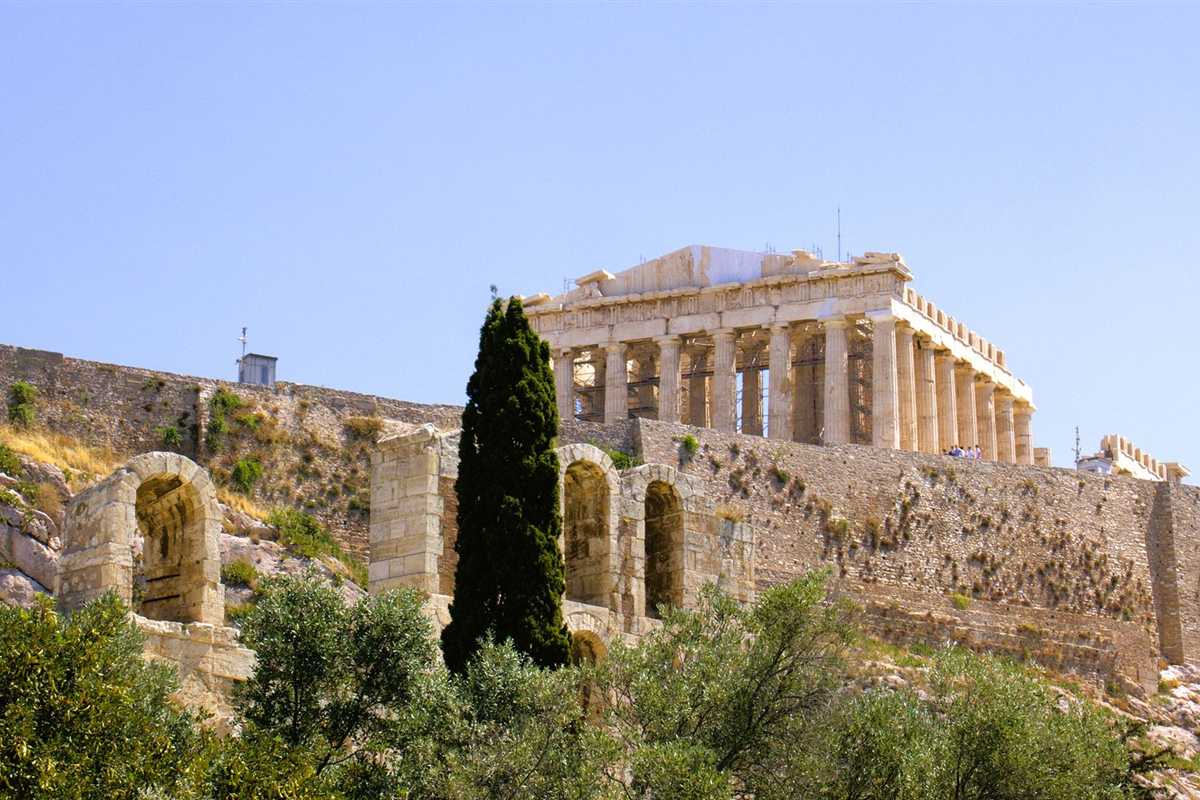
Bassae holds the Temple of Apollo Epicurius, the first Greek entry on the list. Delphi and the Acropolis of Athens followed in the next year. Greece travel information about Athens starts with the Acropolis. Its rock reaches 150 metres above the sea. Pericles coordinated the main buildings in the fifth century B.C., including the Parthenon and the Erechtheion.
Delphi stands on Mount Parnassus, on its southwestern side, and forms part of Parnassos National Park. UNESCO lists it because it shaped the ancient world, as the monuments of the important city-states there show. Meteora is in Thessaly, between Kalabaka and Kastraki. Six of its monasteries remain, and UNESCO listed the group for architecture plus religious and cultural significance.
Mystras, above Sparta in the Taygetus range, is listed as a well-preserved Byzantine city. During the fourteenth and fifteenth centuries, the Byzantine Despotate of the Morea ruled from Mystras. Its churches were covered in frescoes, and the Hagia Sophia church at the site still shows part of that decoration. Greece travel information for the Peloponnese includes Mystras.
What Greece travel information covers museums in Athens?
Greece travel information on museums in Athens names two. The Acropolis Museum displays objects excavated on the Acropolis hill and around it. The National Archaeological Museum, in Wikipedia’s words, houses the richest holding of Greek antiquities anywhere in the world.
The Acropolis Museum opened to the public on the twentieth of June, two thousand and nine. It sits beside the Acropolis hill, on its southeastern side, 280 metres from the Parthenon. The entrance faces Dionysiou Areopagitou Street, and the Akropoli metro station is right beside it. Greece travel information on the route is short for that reason.
The first museum stood on the Acropolis itself and was completed in eighteen seventy-four. The move of the finds to the new building began in October two thousand and seven. The job took four months. Three tower cranes lifted the sculptures across the 280 metres between the rock and the museum.
The exhibits number more than 4,250. Three levels cover 14,000 square metres of exhibition area. The oldest objects date from the Bronze Age, and the youngest come from Roman and Byzantine times. The top level holds the Parthenon marbles. Its 48 columns mark the outline of the ancient temple. Glass floors show the excavated ruins below.
Ioannis Kapodistrias founded the first national archaeological museum of Greece on Aegina in eighteen twenty-nine. The current building stands in central Athens, in Exarcheia, and was finished in eighteen eighty-nine. The name dates from eighteen eighty-one. The entrance is on Patission Street. The nearest metro stop is Victoria, on Line 1, within a five-minute walk.
The artifacts span prehistory and late antiquity. The Cycladic collection has marble figurines. The Mycenaean collection has golden funeral masks found by Heinrich Schliemann. The Egyptian section includes over 6,000 artefacts. A cafe sits in the sculpture garden. Greece travel information on opening times and tickets belongs on each museum’s own website. Check it before a visit.
What Greece travel information covers the island groups?
Greece travel information sorts the Greek islands into six traditional groups: Saronic, Cyclades, Sporades, Dodecanese, Ionian and North Aegean. Crete and Euboea, the two largest islands, stand outside these six groups.
Near the mainland, the Saronic Gulf holds the Saronic Islands. Hydra is sometimes added to the inhabited core: Salamis, Aegina, Agistri and Poros. Salamis, the biggest of the four, saw the Greek navy beat the Persians in 480 B.C. The Sporades lie northeast of Euboea. Of their 24 islands, only Alonnisos, Skiathos, Skopelos and Skyros have permanent residents.
Greece travel information puts the Cyclades at roughly 220 islands. Their name points to a ring of islands around Delos, which ancient Greek religion held sacred. Naxos is the biggest of the Cyclades by size, while Syros holds the biggest population. Only Milos and Santorini are volcanic. Mykonos, Paros, Ios, Sifnos and Tinos also rank among the major islands.
Greece travel information finds the Dodecanese in the far southeast of the Aegean, near the Anatolian coast. Despite a name meaning twelve islands, the chain counts 15 bigger islands and 150 smaller ones. Rhodes has dominated it since ancient times, with Kos and Patmos next. The North Aegean region has nine islands, including Lesbos, Chios, Lemnos, Ikaria and Samos.
The Ionian Islands sit west of mainland Greece, in the Ionian Sea. Tradition calls them the Heptanese, meaning Seven Islands. Corfu and Paxos sit in the north. Lefkada, Ithaca and Kefalonia follow, then Zante, while Kythira lies apart, off the Peloponnese. Venetian rule kept them out of Ottoman hands. To link two groups on one trip, compare Greek islands cruises.
What Greece travel information covers Crete, Rhodes and Corfu?
Greece travel information ranks Crete as the largest Greek island by both area and population. Rhodes leads the Dodecanese by size and holds the group’s historical capital. Corfu sits in Greece’s far northwest, in the Ionian group, and its capital shares the island’s name.
Measured end to end, Crete runs about 260 km and shrinks to a waist of 12 km near Ierapetra. Water meets it on two sides: the Sea of Crete in the north and the Libyan Sea in the south. Heraklion, on the northern coast, is both the capital and the biggest city. Knossos, the Minoan palace, is in Heraklion too.
Greece travel information for flyers names two Cretan airports with international routes: Nikos Kazantzakis at Heraklion and Daskalogiannis at Chania. Mountains dominate the island. The White Mountains alone have 30 summits taller than 2,000 metres. Four regional units divide Crete: Chania, Rethymno, Heraklion and Lasithi. Crete has no railway today.
Greece travel information on Rhodes starts with its shape, a spearhead about 79.7 km long. It covers about 1,400 square kilometres, more than the rest of the Dodecanese together. Its highest point is Mount Attavyros, which reaches 1,216 metres. Knights of Saint John governed Rhodes until the early sixteenth century. The Grand Master’s palace there dates from their time.
Corfu is about 64 km long. Mountains fill the north, rolling land the centre, and low ground the south. Mount Pantokrator, at 906 metres, is the highest point. Two castles ring the capital, also named Corfu. No other Greek city is enclosed like this, and Greece officially calls it a kastropolis, a castle city. Beaches include Sidari and Kassiopi.
What Greece travel information covers Thessaloniki and Delphi?
Greece travel information on the north starts with Thessaloniki, the biggest city in Northern Greece and capital of Central Macedonia. Delphi, in central Greece, was home to the Pythia, the major oracle. People across the ancient classical world consulted her on important decisions.
Greece travel information about Thessaloniki starts with its age. Cassander, king of Macedon, founded the city around 315 B.C. Its name honours his wife Thessalonike, who was Alexander the Great’s half-sister. The city faces the Thermaic Gulf, at the northwestern corner of the Aegean. It passed to the Kingdom of Greece on the eighth of November, nineteen twelve.
Along the waterfront boulevard, Nikis Street, rises the White Tower. It is the city’s emblem. The round main tower is 34 metres high. Inside, a museum tells the story of Thessaloniki. The tower dates from Ottoman rule, after Sultan Murad II captured the city in fourteen thirty. A convict whitewashed it in eighteen ninety in exchange for his freedom.
The ancient Greeks held the centre of the world to be at Delphi. A monument, the Omphalos stone, marked that centre; the word means navel in Greek. Greece travel information on Delphi also names the modern town next door, a small town of the same name. In legend the site was first called Pytho.
The Athenian Treasury marks the win at the Battle of Marathon in 490 B.C. The Tholos of Athena Pronaea has three restored columns and is the top photo spot. The Sphinx of Naxos and the Charioteer of Delphi are among the museum’s finds. Meteora, in Thessaly, is another stop, with monasteries on rock pillars. Its name means lofty.
What Greece travel information covers Olympia and the mountains?
Greece travel information on Olympia centres on a sanctuary of Zeus that hosted the Olympic Games every four years. For the mountains it names Mount Olympus, the highest peak in Greece. It also names two gorges: Samaria on Crete and Vikos in the Pindus range.
Greece travel information about Olympia begins in Elis, a region in the west of the Peloponnese. Its sanctuary, the Altis, was mainly for Zeus. The Games began in the eighth century B.C. and ended in the fourth century A.D. Tradition gives 776 B.C. for the first Games. They were revived worldwide in eighteen ninety-four.
The site held over 760 significant buildings. The stadium was a plain field with marked start and finish lines. Its length became the stadion, an old Greek measure of distance. Antipater of Sidon ranked Pheidias’s statue of Zeus among the Seven Wonders. The whole site is a long walk, and it has three museums.
Mount Olympus stands in northern Greece, far from the town of Olympia, though the names match. Ancient Greek religion placed its twelve main gods, the Olympians, on this mountain. Greece travel information on the mountain names its top peak, Mytikas, nearly 2,918 metres high. Hikers start at the town of Litochoro, about 100 kilometres from Thessaloniki.
Greece travel information on hiking names two gorges. Samaria Gorge lies in southwest Crete and is 16 kilometres long. Its narrowest stretch, the Gates, closes to only four metres wide. Walkers need five to seven hours for it. Vikos Gorge is 32 kilometres long and up to 1,350 metres deep. Guinness lists Vikos as deepest relative to its width.
What Greece travel information covers Greek history in brief?
Greece travel information on history moves in plain steps. Ancient Greece was a loose collection of city-states, then came Roman and Byzantine rule, then Ottoman rule. The modern state follows the war of independence, which began in eighteen twenty-one. The talks of eighteen thirty-two made Prince Otto of Bavaria the first king of Greece.
The city-states shared a culture and a language. Athens built its democracy in the Archaic period, which began around the eighth century B.C. In 490 B.C. the Athenians won the Battle of Marathon. The Peloponnesian War began in 431 B.C. The Classical period ran from 480 B.C. until Alexander the Great died in 323 B.C.
Greece travel information labels the next two periods Roman Greece and Byzantine Greece. Rome took the peninsula after the Battle of Corinth in 146 B.C. Augustus made it the province of Achaea in 27 B.C. Byzantine Greece began in A.D. 324, when Constantinople became the Byzantine capital. It ended when Constantinople fell in fourteen fifty-three.
Ottoman rule over Greece began halfway through the fifteenth century. The Ottomans captured Athens in fourteen fifty-eight and the Peloponnese in fourteen sixty. Greeks call it Turkocracy. The Orthodox Church helped preserve Greek heritage. Greeks left the plains and resettled in the mountains. There the rugged land made it hard for the Ottomans to station troops or officials.
Greece travel information on the modern state starts on the twenty-fifth of March, Independence Day. The slogan of the revolution was Freedom or death. British, French and Russian ships destroyed the Ottoman-Egyptian fleet at Navarino in eighteen twenty-seven. The London Protocol of eighteen thirty recognized Greece as independent. Athens took over from Nafplio as the national capital in eighteen thirty-four.
What Greece travel information covers customs and name days?
Greece travel information on customs starts with name days. A Greek celebrates on the feast day of the saint whose name he or she carries. The party is similar to a birthday party, except there is no birthday cake. Newborns are traditionally named after a grandparent, so names run through families.
An American government estimate puts Greek Orthodox believers at 81 to 90 percent of Greeks. The Church dedicates every day of the year to at least one saint or martyr. A number of Greek names come from pagan antiquity, so a matching saint does not always exist. Those people can choose All Saints’ Day.
Greece travel information on name days also covers the party itself. The traditional format is an open house, and all well-wishers are welcome. It can take place at home, at a restaurant, at a bar or at a club. Gifts are expected from the guests. A name day can be celebrated up to forty days after its date.
The vast majority of name days fall on the same date every year. The exceptions are names tied to Easter, so their dates float. People named Chrestos or Christine celebrate on Christmas, and people named after St. Basil celebrate on New Year’s Day. Anastasios and Anastasia celebrate on Easter Sunday. All Greek-language calendars carry detailed name-day lists.
Greece travel information on customs also touches Greek mythology, the body of myths told by the ancient Greeks. The stories cover the world’s origin, the gods and the heroes. Homer’s Iliad and Odyssey are among the earliest sources. The Olympian gods lived on Mount Olympus under the eye of Zeus. Athena was the goddess of wisdom and courage.
What else do travellers ask about Greece travel information?
Can every visitor enter Mount Athos?
Greece travel information on Mount Athos, a monastic peninsula in northeastern Greece, starts with a limit. Entry is restricted and needs a special permit called a diamonitirion. Wikipedia says entry is limited to male visitors, and Greek law bars women from the monastic area.
Visitors arrive by boat from Ouranoupoli, which the article names as the main gateway. The monastic authorities and the Greek state regulate entry, so check their rules first. If a point on this page is unclear, contact us and we will point you to the right official page.
What does a Blue Flag mean on a Greek beach?
Greece travel information on beaches includes the Blue Flag, run by FEE, the Foundation for Environmental Education. Beaches that meet its standards earn the award. Greece is one of the countries that take part. A beach has to satisfy at least thirty criteria grouped in four categories to get it.
The standards cover safety and quality, services, general environmental management, and environmental education and information. The foundation issues awards every year and announces them for Europe on the fifth of June. Couples planning weddings in Greece by the sea can use the label to compare beaches.
What is the number of Greek islands?
Greece travel information gives a range, not one number. Wikipedia gives estimates from roughly 1,200 up to 6,000. The total depends on the minimum size set for an island. It cites between 166 and 227 inhabited islands.
Lesbos is third by area and Rhodes is fourth. Every other island measures two-thirds of the area of Rhodes, or less.
Is the Peloponnese a peninsula or an island?
Greece travel information treats the Peloponnese as a peninsula in southern Greece and the southernmost part of the mainland. On land, it meets central Greece at the Isthmus of Corinth. Since the Corinth Canal was built, it has technically been an island, though it is rarely called one.
The peninsula covers 21,549.6 square kilometres. Greece travel information lists seven regions there, in use since antiquity: Achaea, Arcadia, Argolis, Corinthia, Elis, Laconia and Messenia. Wikipedia names Patras as the largest city, with 170,000 people. The Rio-Antirrio bridge near the northern tip was completed in two thousand and four.
What is the Mani peninsula?
Greece travel information on the Mani starts with the map. It is a region of the southern Peloponnese, about 45 kilometres long. Cape Matapan at its tip lies further south than any other point on continental Greece.
East Mani lies in Laconia, and West Mani lies in Messenia. Areopoli, Gytheio and Pyrgos Dirou are towns of the Mani. An ancient temple to Poseidon lies in ruins at the cape, and the Apidima Cave holds Neanderthal fossils. In two thousand and three, the entire peninsula received the designation “cultural complex of international importance”.