CRETAquarium tickets open the doors of the aquarium at Gournes, east of Heraklion on the island of Crete. For other days out in Greece, see our tours in Greece page.
This page covers what the tickets cover, the ticket categories the aquarium lists, opening times, audio and guided tours, where the aquarium and Gournes lie, the sea life inside and who runs the site.
What do CRETAquarium tickets cover?
Entry to the aquarium route is what CRETAquarium tickets give. Interactive touch screens and displays there explain the marine species. The aquarium’s tour page also counts sixty two tanks that contain more than 1,500 marine organisms.
A public aquarium is the aquatic equivalent of a zoo, says Wikipedia. It houses living aquatic animals and plants for public viewing. Modern aquarium tanks can hold large species, thanks to thick, clear acrylic glass windows. The aquarium’s own website names its subject as the beauty and biodiversity of the Mediterranean underwater environment.
On the route, CRETAquarium tickets lead past tanks and past information. The website’s tour page says interactive touch screens and displays are placed throughout the route. They give visitors rich information about the marine species. So the route holds living animals in tanks, and screens that tell visitors what they see.
The home page of the website groups the visit under three headings. Explore speaks of the marine world and tours of different marine ecosystems. Magic of the sea invites visitors to learn about the organisms the aquarium hosts. Research asks visitors to observe the life cycle and behaviour of the animals.
CRETAquarium tickets are the base, and the extras sit on top of them. The tour page says a guided tour comes in addition to the entrance ticket. The entrance page keeps a separate list headed additional services.
That list names audio guide devices, tours for groups and a special tour for children. A virtual reality experience has a line of its own. Each of these is an extra, so the entrance ticket and the extras are read as two different things.
Which kinds of CRETAquarium tickets exist?
The entrance page of the aquarium’s website sorts CRETAquarium tickets by who is visiting, with a general category first. It names children, seniors, groups, students, security forces, youth card holders, people with a disability and members.
The page opens with a general category and then lists the groups. CRETAquarium tickets for children come in two categories: ages 0 to 4 and ages 5 to 17. A child of 3 and a child of 10 fall into different categories. Seniors have their own category, for adults over 65 years old.
Groups have a category of their own. The website describes organised visits for groups of over 20 individuals. So this category turns on the number of people who arrive together, not on their ages.
Three more categories depend on who the visitor is. Students have a category, and so do members of the Hellenic Security Forces. The website also lists individuals with a disability. For CRETAquarium tickets in these categories, the label on the page is what counts.
European Youth Card holders form a category too, split by age. One band covers ages 13 to 17 and the other covers ages 18 to 30. A visitor of 15 and a visitor of 25 with the card fall into different bands. The category is for holders of the card, so the card matters as much as the age.
Aquarium members are the last category on the page. The additional services list a member’s card. It has one line for the first family member and one for each additional member. This site sells nothing and arranges no visits. The entrance page of the website is the place to read the current categories of CRETAquarium tickets.
When is CRETAquarium open?
The aquarium’s own website says CRETAquarium opens every day of the week, on all 365 days of the year. In summer the hours are 9:30 in the morning to 7 in the evening. Winter hours end at 4 in the afternoon, so any visit with CRETAquarium tickets falls inside those times.
The opening-hours page also lists the categories of CRETAquarium tickets. It adds that festive periods and holidays do not close the doors. No day of the week and no holiday is named as a closing day. A holiday date is therefore an opening day too.
The summer season lasts from 1 April until 31 October, according to the website. Across those seven months the aquarium is open from 9:30 in the morning until 7 in the evening. That is a window of nine and a half hours, the longer of the two seasonal days.
The winter season begins on 1 November and ends on 31 March, the website says. A winter visit with CRETAquarium tickets begins at the same half past nine in the morning as in summer. The doors close at 4 in the afternoon. The winter day lasts six and a half hours, three hours shorter than a summer day.
The home page of the website gives both sets of times. The opening-hours page lists the same two seasons with the same dates. The date of a visit decides which closing time applies. A reader choosing a day for CRETAquarium tickets can check the season first.
How do the audio and guided tours at CRETAquarium work?
The aquarium’s website lists audio guide devices and guided tours as additional services beside CRETAquarium tickets. The audio tour comes in nine languages. The guided tour lasts about one hour and runs in Greek and English.
The audio tour uses small, user-friendly devices with headphones. They hold recorded explanations, comments and in-depth information. A visitor learns at their own pace and by preference, the website says. The home page calls it a private tour with a personal audio guide device. The nine languages are Czech, Dutch, English, French, German, Greek, Italian, Polish and Russian.
A guided tour adds a personal approach to CRETAquarium tickets, in the website’s words. Trained staff lead it and help visitors delve deeper into the secrets of the sea. The tour is added on top of the entrance ticket.
The website describes two forms of the guided tour. Scheduled tours follow set times listed in the aquarium’s program, with a minimum group of 10 people. A custom tour lets a group pick the day and time, with a minimum of 20 people. Both come on top of CRETAquarium tickets, and the website asks groups to book by phone.
The Little Explorers tour takes about one hour. It is a playful tour for a group of small children. They learn about the marine environment and its animals. The e-tour is a live webcam visit. It suits schools, retirement homes and similar groups in remote parts of Greece or in other countries. The website says it runs only on request.
The behind-the-scenes tour is an extra on top of CRETAquarium tickets. The website marks it as not available at the moment. Its description lists feeding preparation, tank safety checks and quarantines. Quarantines are the places where new animals adapt before entering a tank. Trained staff answer questions. The opening-hours page limits it to 20 people.
Where is CRETAquarium, and how far is it from Heraklion?
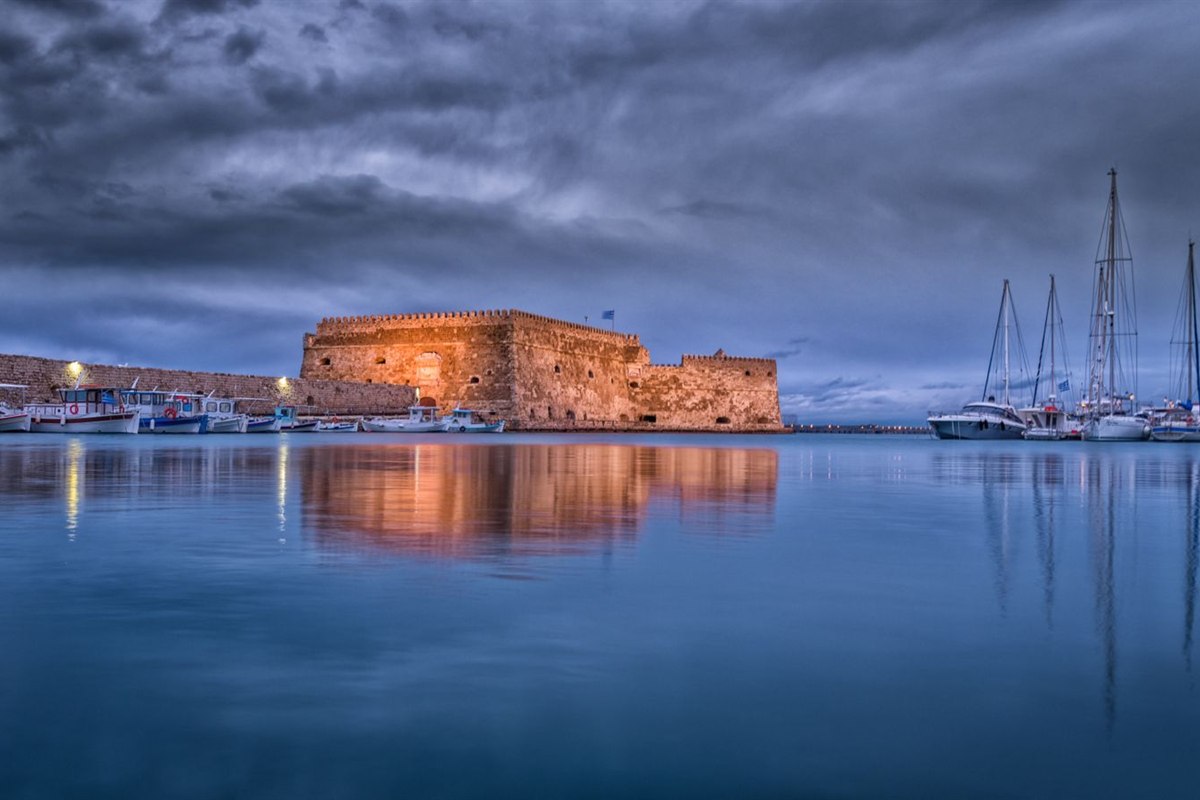
Wikipedia puts CRETAquarium near the town of Gournes on Crete, 15 km to the east of Heraklion. Anyone who plans around CRETAquarium tickets is planning a trip out of the city, not a stop in the centre.
Heraklion is the starting point for the distance. Wikipedia calls it the capital of Crete and ranks it as the fourth city of Greece by size. The article on Crete adds that the capital stands on the island’s north shore. CRETAquarium tickets are for a place east of that city.
The figure of 15 km is not the only one in print. Another Wikipedia article, on the former air station where the aquarium opened, gives 16 km east of the city. The two figures differ by one kilometre. Neither sentence says whether the figure follows the road or a straight line, and neither gives a drive time.
Hersonissos is the other name on the map. Wikipedia says the resort town is about 25 km away, to the east of Heraklion. The same article names the village of Gournes as the administrative centre of that local unit. It places Hersonissos in the Heraklion regional unit. So CRETAquarium tickets are for a visit inside the regional unit of the city.
The aquarium’s own website describes the setting. It says CRETAquarium has spaces overlooking the Cretan Sea, where visitors can browse, explore and relax. On its northern side, Crete borders the Sea of Crete, Wikipedia says. Its article on that sea gives Cretan Sea as another name. That gives CRETAquarium tickets a sea-facing setting.
What is Gournes, the former air base beside the aquarium?
Gournes is a village in the Hersonissos area of Crete, the seat of its local government unit, Wikipedia says. CRETAquarium tickets are for a visit to the site of a former United States Air Force station.
Wikipedia has no page of its own for the village, and the name leads to the article on Hersonissos. That article names the Dinosauria Park as a tourist site in Gournes. Its list of beaches for the Hersonissos area includes Gournes too.
The Iraklion Air Station has an article of its own. It describes a United States Air Force facility near Gournes, in the north central section of Crete. The article calls it a non-flying facility. It began operations to support an air transport wing and other liaison work in Crete. A visitor with CRETAquarium tickets walks onto that former base.
The article says operations began on 5 October nineteen fifty-four. Its information box lists the years of use as nineteen fifty-four to nineteen ninety-three. Its text gives the closure as nineteen ninety-four. The two end years differ by one, so this page gives both.
The same article says the site today holds a dinosaur park, an animal shelter and an aquarium. Of those three, CRETAquarium tickets concern the aquarium, the only one this page covers.
Both sources agree on the link. Wikipedia says the aquarium first opened on the site of the former air station in December two thousand five. The website places the aquarium in the north-western section of the old American base at Gournes. So CRETAquarium tickets are for one corner of that old base.
What sea life do you see at CRETAquarium?
CRETAquarium tickets open the door to five sections of sea life. Wikipedia says the aquarium holds more than 2,500 animals of approximately 250 species. The majority are native to the Mediterranean.
Wikipedia counts 61 tanks, and the water in them adds up to 1,800,000 litres. CRETAquarium tickets admit visitors to an exhibit that Wikipedia splits into five sections. The first, Playing with the light, shows sea life found in caves or at great depths. Wikipedia lists three species for it: dusky grouper, common stingray and red scorpionfish.
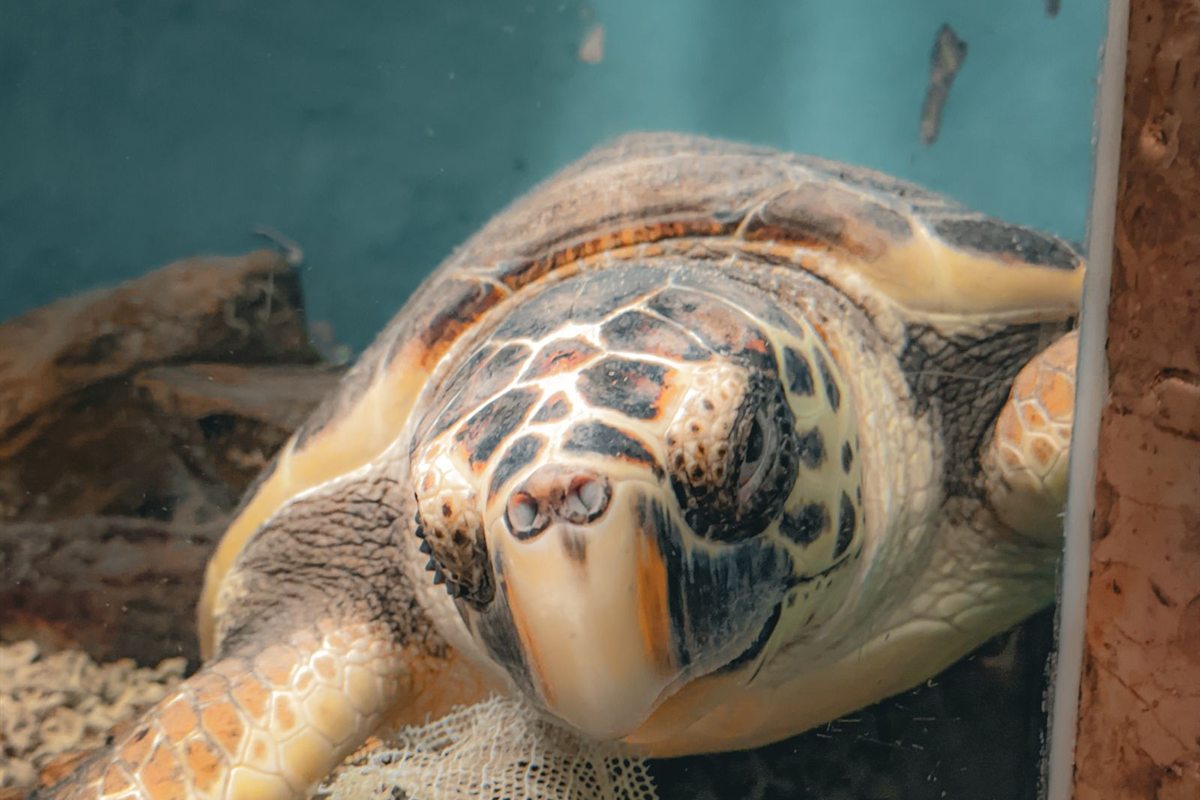
The second section, Open Sea, shows animals of the Mediterranean’s open water, the pelagic zone. Wikipedia places loggerhead sea turtles there, beside sand tiger sharks, and smaller tanks add Mediterranean slipper lobsters and common octopuses. The aquarium’s own tour page asks how fish and sharks are fed and how sea turtles are cared for.
Wikipedia’s species articles give plain figures for two of these animals. A sand tiger shark can reach 3.2 metres in length. An adult loggerhead sea turtle measures around 90 centimetres in carapace length. For a visitor with CRETAquarium tickets, those figures set the scale.
The third section, Coastal areas, shows the coastal zone, with the European spiny lobster and the snakelocks anemone. In the fourth section, shallow open tanks let visitors look at animals from nearby. Wikipedia titles it The Aquarium beyond the glass and names the Mediterranean rainbow wrasse and the moon jellyfish. Moon jellies lack long, potent stinging tentacles, Wikipedia says.
The last section that CRETAquarium tickets open is Travelling to the Tropics. Wikipedia dedicates it to tropical fish and to Lessepsian migrants, naming clownfish and spinefoots among its animals. Wikipedia defines a Lessepsian migration as species moving along the Suez Canal, mainly from the Red Sea to the Mediterranean. These lists promise no sighting on any one day.
Who runs CRETAquarium, and what does Thalassokosmos do?
Wikipedia says the Hellenic Centre for Marine Research currently runs the aquarium that CRETAquarium tickets open. The centre, known as HCMR, is a public research institution and a Greek governmental organisation that works in marine science.
HCMR runs facilities across Greece, Wikipedia says, including scientific laboratories, public aquaria and experimental tanks. It owns three research vessels and remotely operated vehicles. CRETAquarium tickets admit visitors to one of those public aquaria.
According to its own website, the aquarium was founded within HCMR and works as part of it today. Wikipedia traces the idea to staff of an older marine biology institute on Crete. The aim was Greece’s first large aquarium, set within a marine park that joins research with education, culture and recreation.
The website places the site that CRETAquarium tickets open in the north-western section of a former American base at Gournes. It says the aquarium and the research premises of HCMR together form Thalassokosmos. It calls Thalassokosmos the largest centre for marine science and promotion of the Mediterranean sea world in Greece.
Wikipedia lists Thalassocosmos, Greek for sea world, as another name for the aquarium. It adds that one of three HCMR institutes, which covers marine biology, biotechnology and aquaculture, sits on the premises. Sick or wounded animals receive care there, and the aquarium returns them to the wild with local agencies.
A visit with CRETAquarium tickets happens beside working research. Wikipedia says cameras observe a share of the animals to study their life cycle and behaviour. The research gives particular emphasis to Lessepsian migrants, to learn how these introduced fish affect the marine ecosystem of Greece.
What else do travellers ask about CRETAquarium tickets?
Who can use the virtual reality room at the aquarium?
The aquarium’s website says its virtual reality experience is available for visitors over 12 years old. The home page describes a new, specially designed room. A second line there calls it a newly equipped area.
That age line matters for families who plan a visit with CRETAquarium tickets and bring younger children. The entrance page lists the experience on its own line beside the ticket categories. The rule comes from the aquarium itself.
Can a day with CRETAquarium tickets include Knossos?
Wikipedia calls Knossos an archaeological site and ancient urban centre in Crete. Its hill is called Kephala, and the valley belongs to the Kairatos river. The old centre of Heraklion is 5 km to the north. Settlers first farmed the hill in the Neolithic period, and the place stayed inhabited until early Byzantine times.
By size, Wikipedia ranks Knossos first among Minoan centres. It names the Palace of Minos as the main monument of the site. The myths of Minos and the Minotaur belong to this place. Later Greeks linked the Labyrinth to the complex plan of the palace. Travellers who pair CRETAquarium tickets with ancient history find Knossos in the Heraklion area.
Which airport serves the Heraklion area?
Wikipedia names Heraklion International Airport “Nikos Kazantzakis” as the primary airport on Crete. In Greece only the Athens airport is busier. The airport stands near Nea Alikarnassos, east of the city, 5 km from the main centre. Its runway measures 2,680 metres after an extension.
Its name honours the writer and philosopher Nikos Kazantzakis, a native of Heraklion. Wikipedia says the airport serves Heraklion, Malia, Hersonissos, Elounda and other resorts. For a stay with CRETAquarium tickets in this part of Crete, it is the main airport the source names.
Which sea does the aquarium overlook?
The aquarium’s home page invites visitors to relax in spaces overlooking the Cretan Sea. Wikipedia explains that the Sea of Crete, or Cretan Sea, is part of the Aegean Sea, in its southern part. It lies north of Crete and south of the Cyclades.
Its surface measures 45,000 square kilometres, Wikipedia says. It notes a maximum depth near 3,293 metres off the north-east coast, while other maps show 2,591 metres. Visitors who arrive with CRETAquarium tickets reach an aquarium whose spaces overlook this sea, as the home page puts it.
What does the Heraklion Archaeological Museum hold?
Wikipedia puts the Heraklion Archaeological Museum among the biggest museums in Greece. Objects dug up at the Minoan palace of Knossos form the core of the collection. Other Minoan sites on Crete add more.
The objects cover more than 5,500 years of Cretan past, beginning in the Neolithic age and ending in Roman times. Items named by Wikipedia include the Harvester Vase, the Phaistos Disc and small snake goddess figures. A day around CRETAquarium tickets can add this museum, which stands in the town centre of Heraklion.