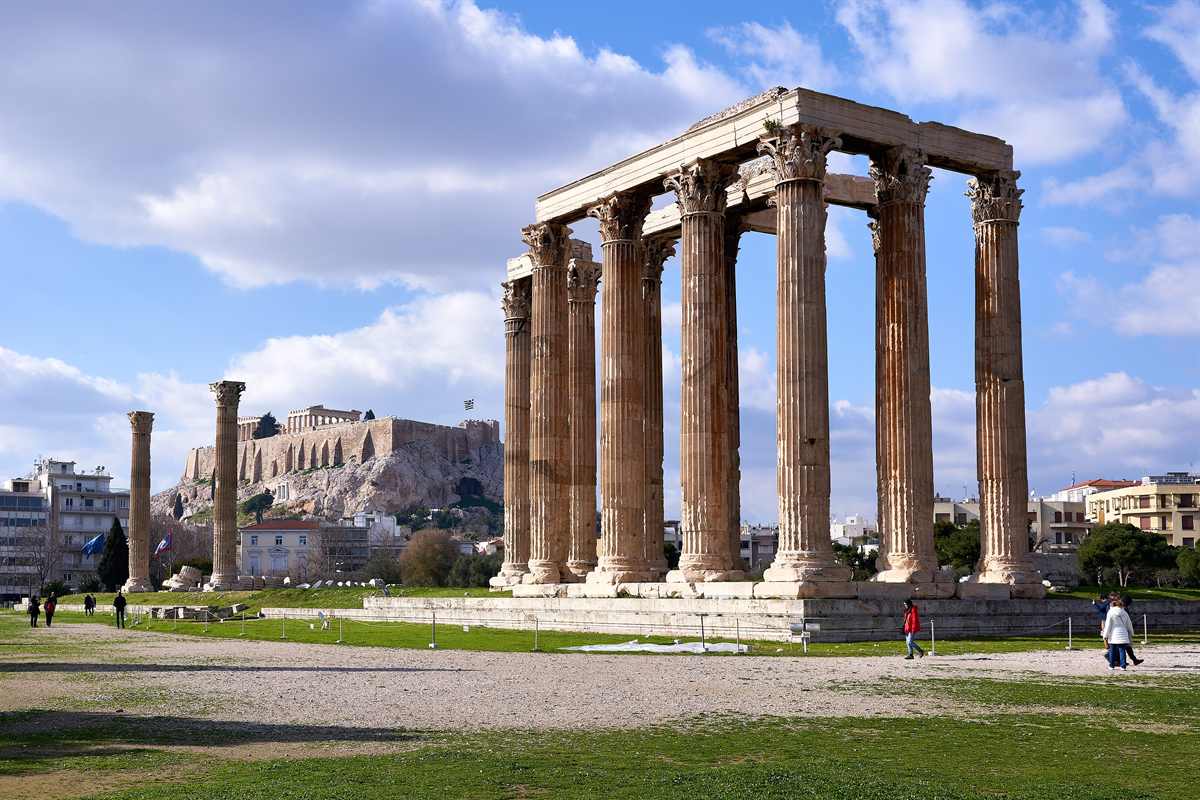
An Athens hop on hop off bus tour carries you between the main sights of the capital, and you step off at any stop that catches your eye. Heading beyond the capital as well? See our tours in Greece.
Read on for the inclusions, the lengths of the 24, 48 and 72 hour tickets, the three routes, the timetable, the stops of the Athens line, Syntagma Square, the Temple of Olympian Zeus and Hadrian’s Arch, the Panathenaic Stadium, Piraeus, the Beach-Riviera route, the audio commentary, Plaka and Monastiraki, and the questions travellers ask.
What does an Athens hop on hop off bus tour include?
Your Athens hop on hop off bus tour comes with unlimited rides until the ticket ends, on red open-top buses. You board at any stop, and audio commentary and free Wi-Fi are on the bus.
The listing of one tour operator names five inclusions in its Athens tickets.
- A hop-on hop-off ticket for 24, 48 or 72 hours
- Access to the Athens line, or to all three routes
- Flexible boarding and unlimited rides
- Free Wi-Fi onboard
- Multilingual audio commentary
The operator says its stops sit near all major sights. Its Athens line page promises views from the top of a red double-decker open-top bus. Your Athens hop on hop off bus tour sets no limit on hops.
The ticket leaves out the entrance fees to attractions. The listing names the Temple of Olympian Zeus, the Parthenon and the Acropolis Museum as places to hop off. For those sites, you pay the entrance fees apart.
Sellers set their own extras. One other operator’s 2 day ticket lists free headsets for its audio guide and a free city route map. Compare the inclusions before you pick your Athens hop on hop off bus tour.
How do the 24, 48 and 72 hour tickets work on an Athens hop on hop off bus tour?
Each Athens hop on hop off bus tour ticket is a timed pass of 24, 48 or 72 hours. You hop on and off with no limit on trips until the time ends.
Passes for your Athens hop on hop off bus tour sit on two pages of the operator’s own site. Its Athens line page lists a 24 or 48 hour ticket. Its page for all three lines lists a 48 or 72 hour ticket.
A 72 hour pass spans three days, a 48 hour pass two days and a 24 hour pass one. A ticket seller lists the same operator with 24, 48 or 72 hours. Its tickets cover the Athens line or all three routes.
That seller adds that 72 hour tickets are available during summer months only. So a three day Athens hop on hop off bus tour means a summer visit.
The operator’s Greek site also lists a 24 hour ticket for cruise ship passengers on all lines. It includes a transfer from and to the cruise ship terminal.
Another operator sells 48 and 72 hour passes. Its 72 hour pass adds a 1 hour night tour past lit landmarks like the Acropolis. The operator with the 2 day ticket also lists a 3 day ticket.
A voucher can sit on your phone, or you can print it. An agent on the bus or at a stop must redeem it before you board. Redemption swaps the voucher for a printed paper ticket.
Carry the printed ticket for the whole journey, because electronic vouchers cannot be used after redemption. Your Athens hop on hop off bus tour then runs on the paper ticket. The voucher stays valid for 12 months, counted from the day you choose at booking.
What are the three routes of the Athens hop on hop off bus tour?
Three routes make up one Athens hop on hop off bus tour. They are the red Athens line, the green Piraeus line and the purple Beach-Riviera line. Together they link the city centre, the port of Piraeus and the Athenian coast.
The red Athens line is the city route of your Athens hop on hop off bus tour. It covers the historic heart of the city. One operator describes it as a route past landmarks of ancient Greece and through the busy modern centre. Passengers ride a red double-decker bus with an open top.
The green Piraeus line serves the port. It meets the Athens line at the interchange stop The Acropolis and Parthenon, listed as A4. The purple Beach-Riviera line leaves the city crowds behind and follows the Athenian coast. It meets the Athens line at the Acropolis and Plaka stop, listed as A2.
Riders on a single Athens hop on hop off bus tour change lines at these two interchange stops. For the Piraeus line, the operator tells passengers to show the ticket and join the bus on the Athens line. One listing gives unlimited access to the Athens line. Another listing gives full access to all three lines.
Another operator sells a different Athens hop on hop off bus tour, in other colours. Its Athens line is orange, its Piraeus line is blue, and its coast lines are green and yellow. These coast lines run to Glyfada and Vouliagmeni. Do not mix the colours of the two companies on a route map.
How frequently do the buses run, and when does the first bus leave?
The first Athens-line bus leaves at 8:30 in the morning on your Athens hop on hop off bus tour. That line sends out a bus every 30 minutes. The Piraeus and Beach-Riviera lines send one every hour.
One operator lists a summer timetable for April through October. The Athens line starts each day at 8:30 in the morning. It ends at 8 in the evening, and its last departure is at 6:30 in the evening. For one Athens hop on hop off bus tour, service runs all year round, says the operator.
The other two lines start later in the day, as one Athens hop on hop off bus tour timetable shows. The Beach-Riviera line runs between 9 in the morning and 5 in the afternoon. The Piraeus line runs between 11 in the morning and 5 in the afternoon. Both are listed with a bus every 60 minutes.
A ticket reseller of the same operator lists the loop time of each line. The Athens line takes 1 hour 30 minutes. The Piraeus line takes 1 hour 20 minutes. The Beach-Riviera line takes 1 hour 50 minutes. The Beach-Riviera loop is the longest of the three.
Timings on one Athens hop on hop off bus tour can change, says the reseller. It also notes that Athens is a functioning city, and weather, traffic and events cause disruption at times. Another operator lists its own buses at gaps of 20 to 180 minutes across its lines.
Where does the Athens line start, and which stops does it have?
The Athens line of your Athens hop on hop off bus tour leaves from Syntagma Square. One operator codes this terminal as stop A1. The line also serves the Acropolis and Parthenon, the Parliament and National Gardens, and the National Archaeological Museum.
One operator’s timetable calls Syntagma Square the terminal of its Athens line. The same operator’s route list on a ticket seller’s page gives three more stops. Riders can board at any stop, so each Athens hop on hop off bus tour can begin along the route.
Along the line, each Athens hop on hop off bus tour has an Acropolis and Parthenon stop. It is also an interchange with the Piraeus route. The stop takes its name from the Acropolis, a citadel of ancient Athens built on a high rock. The summit is 150 metres above sea level. Its remains include the Parthenon.
The Parliament and National Gardens stop on your Athens hop on hop off bus tour has one rule to know. The gardens around the Parliament are open to the public, but the Parliament building is not.
The National Archaeological Museum stop on your Athens hop on hop off bus tour names a neo-classical building. The museum stands in Exarcheia, with its entrance on Patission Street. Builders finished it in the eighteen eighties. It holds artifacts from prehistory to late antiquity, among them the gold funeral mask known as the Mask of Agamemnon.


What is Syntagma Square, the main stop of the Athens line?
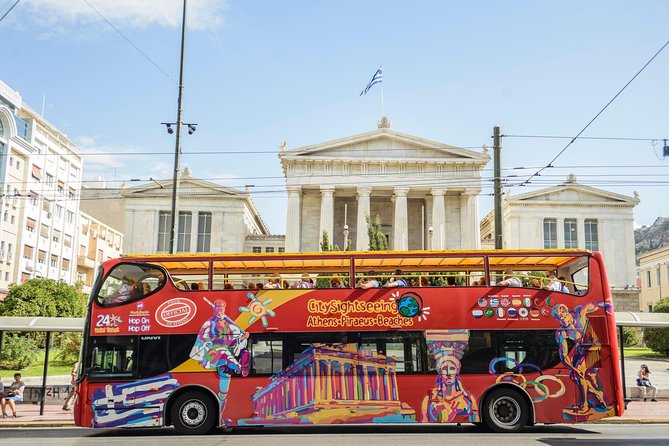
Syntagma Square is the main square of central Athens. The Greek Parliament works in the old royal palace that faces it. The Athens line has its terminal here, where your Athens hop on hop off bus tour can start.
The square dates from the early nineteenth century. Otto, the first King of Greece, shifted his capital to Athens from Nafplio, and the square followed soon after. Its first name was Palace Square.
An uprising in the eighteen forties forced Otto to grant the first Constitution of Greece. The palace square took a new name in memory of that event. Syntagma means Constitution in Greek. The palace has housed the Parliament since the nineteen thirties. Today the square sits at the heart of commercial activity and Greek politics.
Metro lines 2 and 3 meet at a station below the square. The northern end of the tram line is next to the square, and buses also start and end here. That makes it one of the busiest transport hubs in the country. The terminal of your Athens hop on hop off bus tour shares that same square.
Marble steps on the east side lead up to Amalias Avenue, above the metro station. A water fountain from the middle of the nineteenth century stands in the centre. Hop off your Athens hop on hop off bus tour here for the changing of the guard. The Presidential Guard performs it each hour, near the Tomb of the Unknown Soldier.
What do you see near the Temple of Olympian Zeus and Hadrian’s Arch?
Operators list the ruined Temple of Olympian Zeus as a sight for your Athens hop on hop off bus tour. Fifteen of its columns still stand. Beside it, at the north-western corner of the enclosure, sits Hadrian’s Arch, a marble gateway.
The temple lies about 500 m away from the Acropolis, towards the south-east. One operator with red buses says its 17 m columns tower above you. On your Athens hop on hop off bus tour you see sixteen surviving columns. The sixteenth lies on the ground, where it fell during a storm in the eighteen fifties.
The temple’s design included 104 colossal columns. The Athenian tyrants began the work in the sixth century BC, but their rule ended and the work stopped. Hadrian, the Roman emperor, completed the temple. He dedicated it in the second century AD. In the Roman period it was renowned as the largest temple in Greece.
Hadrian’s Arch stands right by the temple. One stop on your Athens hop on hop off bus tour covers both. The arch is made of Pentelic marble and dates to the second century AD. It is 18 m high and 13.5 m wide. It towers over Amalias Avenue, 325 m from the Acropolis.
Step off near the temple on your Athens hop on hop off bus tour to see the arch. It carries two Greek inscriptions, one facing each way. The face towards the Acropolis names the place Athens, the old city of Theseus. The face towards the temple replies that this is Hadrian’s city, not the city of Theseus.
What is the Panathenaic Stadium, the marble stadium on the route?
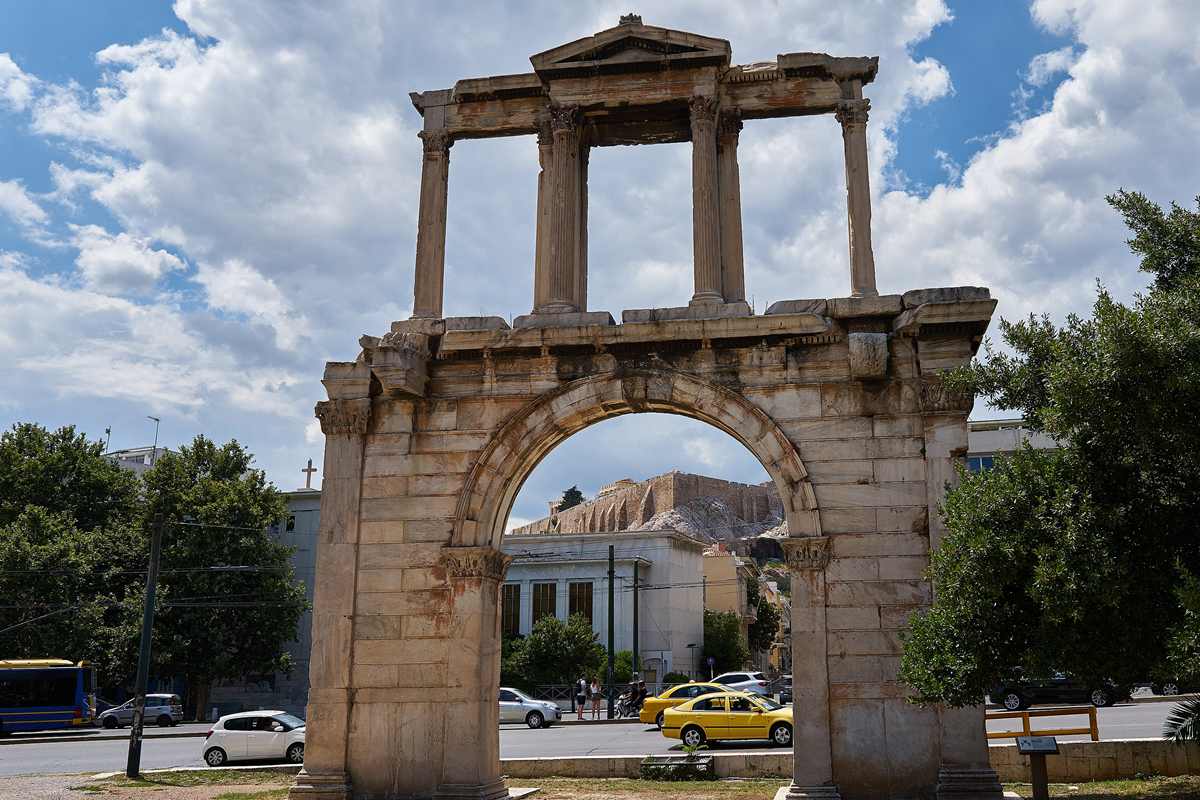
The Panathenaic Stadium stands alone as the one stadium in the world made wholly of marble. It is one of the main historic attractions of Athens. Another operator names it a popular stop to visit on your Athens hop on hop off bus tour.
An operator with red buses sends its red route east. With it, your Athens hop on hop off bus tour reaches what it calls the Ancient Olympic Stadium. The stadium sits in the Pangrati district, east of the National Gardens.
A racecourse stood here from the sixth century BC. It staged the Panathenaic Games, a religious and sports festival for the goddess Athena that took place every four years. In the fourth century BC, the statesman Lykourgos built a stadium of poros stone on the site.
The marble stadium on your Athens hop on hop off bus tour owes its look to Herodes Atticus. He was a Roman senator from Athens, and he rebuilt it in Pentelic marble in the second century AD. It had 50,000 seats, and Hadrian’s Arch is built of the same stone.
Georgios Averoff, a Greek businessman based in Egypt, donated money for the marble rebuild. The first modern Olympics opened and closed here, and the stadium hosted 4 of the 9 sports. Runners in the annual Athens Classic Marathon finish here too. Your Athens hop on hop off bus tour sight doubles as the finish line.
What is the Piraeus route, and what does the port offer?
At one operator, your Athens hop on hop off bus tour offers a green line, the Piraeus route. It leads from the port to the Acropolis stop, where it meets the Athens line.
Greece’s largest harbour is Piraeus. It sits 8 km southwest of central Athens, along the east side of the Saronic Gulf. The city was founded in the early fifth century BC, as the new port of Athens. Its three deep-water harbours were Cantharus, Zea and Munichia.
Cruise passengers can start your Athens hop on hop off bus tour at the terminal, when the ticket includes Piraeus. After customs, the operator says, the buses wait in front of the terminals. From Terminal 1 they are about 80 metres to the left. From Terminals 2 and 3 they are about 50 metres to the left.
Riders on your Athens hop on hop off bus tour join the Piraeus line at the terminal. They reach the Acropolis stop after about 40 minutes. There they show the ticket and change to the Athens line, with hosts on hand to help. The listing also names a Planetarium and Marriott Hotel stop.
The operator’s listing names the Archaeological Museum of Piraeus as a stop. Its collection is mainly sculpture, from the Bronze Age to Roman times, discovered at Piraeus or around the Attic coast. The Piraeus Athena and the Piraeus Apollo are bronzes there. Votsalakia Beach is another stop for a break during your Athens hop on hop off bus tour.
What is the Beach-Riviera route, and where does it go?
At the same operator, your Athens hop on hop off bus tour adds a purple line, the Beach-Riviera route. It runs south along the Athenian coast, with Agios Kosmas, Glyfada and Asteria beaches as popular stops.
South of Athens, a strip of coast called the Athens Riviera runs from Piraeus down to Sounio and Lavrio. It passes through the southern suburbs. Glyfada, Voula, Vouliagmeni and Varkiza count among its main areas. Acropolis and Plaka is the interchange. Your Athens hop on hop off bus tour moves there from the purple line to the Athens line.
Glyfada lies on the Saronic Gulf coast. Its marina covers three kilometres of sea space and shore. The town has nightclubs, restaurants and shops, and its shopping district runs along Metaxa Avenue and Grigoriou Labraki Street. The operator’s listing counts Glyfada Beach among the favoured boarding stops of your Athens hop on hop off bus tour.
Vouliagmeni, a seaside suburb, lies 18 km south of central Athens. Its position is the southwestern foot of Hymettus, a mountain range. Its small lake is brackish and fed by underground currents. As a spa, the lake dates back to the close of the nineteenth century. One operator says the warm waters soothe aching muscles.
Another operator splits the coast into two lines. Its Glyfada line names Kosmas Beach and Glyfada Beach. Its Vouliagmeni line names Astir Beach and Kavouri Beach. The first operator’s listing names an Oceanis Beach and Astir Palace stop. Either way, your Athens hop on hop off bus tour offers the coast lines of its own.
How do the audio commentary and the onboard extras work?
While you ride, an audio commentary shares the history of Athens on your Athens hop on hop off bus tour. According to one operator’s Athens site, the commentary comes in 13 languages, and its listing adds free Wi-Fi on board.
A ticket seller’s listing names 13 languages for that Athens hop on hop off bus tour. In alphabetical order they are Chinese, Dutch, English, French, German, Greek, Hebrew, Italian, Japanese, Portuguese, Russian, Spanish and Turkish. Check that your own language is on the list.
Other companies give different numbers. One company’s listing counts 16 languages and free headsets for its audio guide. Another company’s listing counts 14 languages and free earphones. So the list above belongs to the first operator only.
Free Wi-Fi works on board the buses, says the listing for your Athens hop on hop off bus tour. That connection helps you plan the next stop or share your journey. Two other companies’ listings also mention onboard Wi-Fi.
The operator’s own page adds two rules for that Athens hop on hop off bus tour. Its buses are wheelchair accessible, with space for one wheelchair on the bus. A dog travelling in a carrier is permitted on board. A ticket seller’s page for the same operator also lists wheelchair accessibility as yes.
What are Plaka and Monastiraki, the old districts near the stops?
Plaka and Monastiraki are two old districts of central Athens, and Plaka lies between Syntagma Square and Monastiraki Square. Syntagma Square is the terminal of the Athens line on one Athens hop on hop off bus tour. Plaka is the quarter of old lanes, and Monastiraki is the flea market district.
Plaka is the old historical neighbourhood of Athens. It hugs the Acropolis hill on the north and east sides, a maze of lanes and neoclassical buildings. Its closeness to the Acropolis earned it the nickname “Neighborhood of the Gods”. The operator’s description of that Athens hop on hop off bus tour pictures pavement cafes on cobbled lanes in Plaka.
Plaka’s biggest street, Adrianou Street, runs north to south and splits the district in two. The upper level is Ano Plaka, just below the Acropolis hill. The lower level, Kato Plaka, sits between the squares of Syntagma and Monastiraki. That Athens hop on hop off bus tour lists an interchange stop called Acropolis and Plaka.
People have lived in Plaka without a break since the Neolithic age. Two of its streets, Adrianou and Tripodon, can be traced to the ancient era. Under King Otto, people who came from Anafi, an Aegean island, built Anafiotika in Cycladic style. Today the water, power and phone lines of Plaka all run in tunnels underground.
Monastiraki, meaning “little monastery”, is a flea market district in the old town of Athens. It is a main shopping area, and its shops sell clothes, souvenirs and specialty items. Its square has a metro station for Line 1 and Line 3. That is a second way in, besides your Athens hop on hop off bus tour.
What else do travellers ask about an Athens hop on hop off bus tour?
What is Athens, and how big is the city?
Greece’s capital and largest city is the setting for your Athens hop on hop off bus tour. Among capitals on the European mainland, Athens lies furthest south. The Municipality of Athens, the city proper, counted 643,452 people at the latest census.
Athens is also the capital of the Attica region. The wider urban area holds over 3.6 million people, the eighth-largest in the European Union. The city proper covers 38.96 square kilometres.
What is the weather like for your Athens hop on hop off bus tour?
Summers in Athens are hot, and the climate is called hot-summer Mediterranean. Daily highs in the centre peak in July and August, at 34.3 degrees Celsius on average. In January the daily highs fall to 13.3 degrees. The mean annual temperature in the centre is 19.2 degrees.
August is the driest month, with 5.4 millimetres of rain, and December is the wettest, with 76.3 millimetres. Snowfall is relatively uncommon. Athens can get particularly hot in the summer, partly because of the urban heat island effect.
What kind of bus carries passengers on your Athens hop on hop off bus tour?
Double-decker buses have two storeys, called decks. Open-top versions are commonly used as sightseeing buses for tourists. One operator gives you an open upper deck on its Athens hop on hop off bus tour.
Modern double-deckers have the main door at the front. The open rear platform was dropped for safety, because passengers risked falling when they jumped on. Under European Union rules, buses are limited to 4 metres in height.
What are Kerameikos and the Acropolis Museum?
Kerameikos lies northwest of the Acropolis, which is a main stop on one Athens hop on hop off bus tour. It was the potters’ quarter, from which the English word ceramic is derived, and the site of an important cemetery. Pericles and Cleisthenes were among those given state graves beside the Dipylon Gate.
Workers building the Kerameikos metro station found a plague pit and about 1,000 tombs. The Acropolis Museum is an archaeological museum focused on the finds of the Acropolis site.
How do travellers arrive for their Athens hop on hop off bus tour?
Athens International Airport lies near the town of Spata, about 35 kilometres east of the city centre. It is the largest airport in Greece. Greece’s largest port is Piraeus, which sits eight kilometres southwest of the centre of Athens.
The Athens Suburban Railway connects the airport to the port of Piraeus and to Larissa station, the central rail station.