A Thessaloniki Dion and Mount Olympus day trip drives south from the city to the sacred town of Dion and to the foot of the highest mountain in Greece, all within one day. For longer plans in the north, see the tours in Greece on this site.
The sections below cover what the trip includes, its length and start time, the road from Thessaloniki, the town of Litochoro, the archaeological site of Dion and its history, the park and the museum, Mount Olympus and the twelve gods, the national park and the Enipeas gorge, Mytikas and the questions travellers ask.
What does a Thessaloniki Dion and Mount Olympus day trip include?
Three stops make up a Thessaloniki Dion and Mount Olympus day trip. They are the ancient site of Dion, a walk in the Mount Olympus national park, and the village of Litochoro. The ride from Thessaloniki and back is part of the plan.
One operator lists five highlights: the Dion archaeological site and a trek on the Agia Kori trail. Then come a swim at the Agia Kori waterfall and a visit to the park information center. Litochoro, a village on the mountain’s lower slopes, closes the list. That center has interactive exhibits on the park.
The same operator includes round-trip transportation. A trip attendant who speaks English comes along, and this person is an archaeologist and historian. Basic travel insurance covers the transportation, and you can ask for a baby seat. The entrance fee to the Dion site is left out. So are a tour inside the site and all food and beverages.
A second operator picks you up at a central point in Thessaloniki and brings you back. An official English-speaking tour guide goes along. It also covers the entrance fees to the Dion archaeological site and its museum. So the entrance ticket is inside one Thessaloniki Dion and Mount Olympus day trip, while another sells it extra.
A bus-tour listing swaps the waterfall trail for a walk of 20 minutes through the Enipeas Gorge. It names natural pools, wooden bridges and green riverbanks. Dion and free time in Litochoro come after it. Stops are not the same everywhere, so read the inclusions of your Thessaloniki Dion and Mount Olympus day trip first.
How long is a Thessaloniki Dion and Mount Olympus day trip, and when does it leave?
A Thessaloniki Dion and Mount Olympus day trip takes about 8 to 10 hours, as the operators state it. It leaves at 8 in the morning from the Venizelos statue in central Thessaloniki.
Three listings give the Venizelos statue as the meeting point, with Aristotelous Square and Egnatia Street as the address. One operator wants you there at least 10 minutes before departure. Another wants you there 20 minutes before the scheduled time.
Operators differ on the length of the day. One states that its tour lasts about 10 hours. The bus-tour listing gives about 8 hours for its Olympus and Dion trip. The first operator states no total, but the stops in its itinerary add up to 8 hours:
- The drive to Dion takes 1 hour.
- The Dion archaeological site takes 1.5 hours.
- The Agia Kori trail plus a waterfall swim fills 1.5 hours.
- The stop at the park information center needs 30 minutes.
- Lunch and a break at the Stavros refuge fill 1.5 hours.
- The return to Thessaloniki takes 2 hours.
The calendar differs too. The bus-tour listing runs its Olympus and Dion trip on Monday, Wednesday, Friday and Saturday. Its season goes from June 1st until October 31st. Another operator runs departures by calendar from January to October. Look at the dates first if a certain weekday suits your Thessaloniki Dion and Mount Olympus day trip better.
One operator notes that the schedule can change because of the weather. The bus-tour listing says the same of its timings and stops. Keep the whole day free for the Thessaloniki Dion and Mount Olympus day trip, and the evening too.
How do you get from Thessaloniki to Dion and Mount Olympus?
Olympus lies 90 kilometres from Thessaloniki, so a Thessaloniki Dion and Mount Olympus day trip starts on the road. One travel portal states a drive of 1.5 to 2 hours; traffic and the chosen stop change the time.
Drivers on their own Thessaloniki Dion and Mount Olympus day trip find the route plain, the portal says. Take the A1 motorway towards Katerini and stay on it for about an hour. Leave at the exit for Dion-Museum. Keep coins in the car for the road, because a couple of toll stops lie on the way.
Without a tour, a Thessaloniki Dion and Mount Olympus day trip runs by train too. The portal says to board at the New Railway Station in Thessaloniki. The Litochoro train leaves almost every day, and Wikipedia counts about one every two hours. The station stands 6.5 kilometres east of the village, by the sea.
A Thessaloniki Dion and Mount Olympus day trip made by public bus needs one change. The bus for Litochoro leaves the KTEL station almost every hour and calls at Katerini first. The portal adds that no direct bus reaches the mountain. From Katerini, a local bus or a taxi goes on. Tickets for Litochoro are sold only at that station.
The last stretch of a Thessaloniki Dion and Mount Olympus day trip is short for drivers. After the Dion-Museum exit, the drive to Litochoro takes about ten minutes. There the portal says you can leave the car in the public parking and explore the town. From the airport, line 01X runs to the KTEL bus station.
What is Litochoro, the town at the foot of Mount Olympus?
Litochoro is a town at the base of Mount Olympus, with the Thermaic Gulf to its east. It lies about 90 kilometres south-southwest of Thessaloniki. Operators include it among the stops of a Thessaloniki Dion and Mount Olympus day trip.
Litochoro belongs to the Pieria regional unit, 22 kilometres south of Katerini. Dion, with its large archaeological park and museum, is about 8 kilometres north. With the two places so near, one Thessaloniki Dion and Mount Olympus day trip reaches both of them. Almost all climbing routes up the mountain start southwest of the town.
Two operators describe the village differently. One names narrow alleys, traditional Macedonian architecture and lively squares and cafes. The other names cobbled streets, traditional stone houses and a taverna. Both sell a Thessaloniki Dion and Mount Olympus day trip. Wikipedia adds two main churches, a town hall, a hospital, a sports centre and a concert hall.
Wikipedia lists the Olympus National Park Information Center among the sights. Visitors learn there about plants, animals, geology, mythology, monasteries and archaeological sites. Two operators add this visit to a Thessaloniki Dion and Mount Olympus day trip. Beside the A1 motorway stands the Alexandreion, a monument-building devoted to Alexander the Great.
East of the town, the coastal area of Plaka runs from the foot of the mountain to the sea. It has sandy beaches, hotels, restaurants and beach bars, and the bars open from June to September. Further north, Gritsa is the port of Litochoro, though its capacity is small. The town also has a Nautical Museum on Agios Nikolaou street.
What is the archaeological site of Dion?
Dion is a village and ancient city at the foot of Mount Olympus. It lies in the Pieria regional unit, 17 km from Katerini. A Thessaloniki Dion and Mount Olympus day trip stops here for its great ancient Macedonian sanctuary of Zeus.
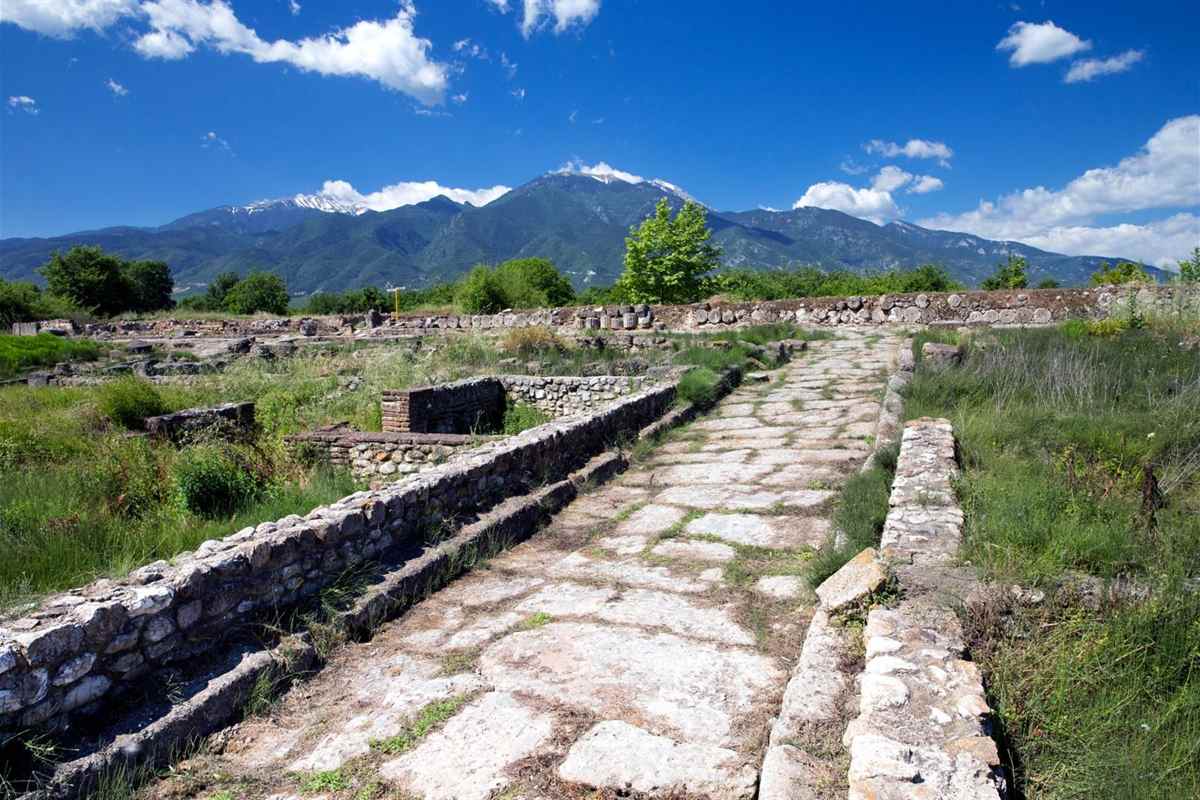
Dion is part of the municipality called Dion-Olympos. Next to the village lie the ruins of the old city. Much of the ancient town is visible today in the Archaeological Park of Dion. One operator lists the site as a highlight of its Thessaloniki Dion and Mount Olympus day trip.
Scholars identified the place in the early nineteenth century. The English traveller William Martin Leake found it among the ruins beside the village, then called Malathria. Another operator describes Dion as a religious centre dedicated to the god Zeus. That purpose shapes every Thessaloniki Dion and Mount Olympus day trip.
Careful digging began in the late nineteen twenties. G. Sotiriadis uncovered a Macedonian tomb from the fourth century BC and an early Christian basilica. Work started again in the early nineteen sixties near the theatre and the wall.
Since the early nineteen seventies, Professor Dimitrios Pandermalis has led the research in the city. He works with the Aristotle University of Thessaloniki. The city he studies is a stop on the Thessaloniki Dion and Mount Olympus day trip.
Until the nineteen sixties the village was called Malathria, and then it was renamed Dion. So each Thessaloniki Dion and Mount Olympus day trip ends in a village that carries the old name again.
How did Dion become a sacred city of the Macedonians?
Dion became holy ground for the ancient Macedonians because an early altar to Zeus and the Muses stood here. The city and the mountain it was tied to meet on the Thessaloniki Dion and Mount Olympus day trip.
Its name comes from Dios, which means “of Zeus”. The setting was green, with tall trees, countless springs and a river open to boats. The kings made rich sacrifices here for the new year of the Macedonian calendar, at the end of September. In spring, the army held purification rites and victory feasts.
Thucydides gives the first written mention of Dion. He tells how the Spartan general Brasidas crossed from Thessaly into Macedon and reached Dion first, in 424 BC. Late in the fifth century BC, King Archelaus I raised its standing with a festival. It ran nine days and held athletic and dramatic contests in honour of the Muses and Zeus.
King Philip II celebrated his victories at Dion, and so did his son Alexander the Great. Alexander gathered his armies here and made grand sacrifices on the eve of the campaign to Asia. That was in 334 BC. The city where he made them is a stop on the Thessaloniki Dion and Mount Olympus day trip.
Cassander built strong walls and public buildings, so Dion was known far and wide for its defences. In 219 BC, Aetolian invaders destroyed the city, but Philip V rebuilt it straight away. The Romans took it in 169 BC. Octavian founded a Roman colony here in 32 and 31 BC.
Dion became the seat of a bishop in the fourth and fifth centuries AD. Earthquakes and floods then forced its people to leave. These layers of history make the Thessaloniki Dion and Mount Olympus day trip a lesson in Macedonian and Roman life.
What can you see in the Dion archaeological park?
A Thessaloniki Dion and Mount Olympus day trip visits the Dion archaeological park. The ruins hold a Hellenistic theatre, sanctuaries, Roman baths, city walls and a house with a large floor mosaic. The Macedonians held this city sacred.
The theatre sits on the southern edge of the settlement. Earthworks shaped it on the slope of a low hill facing northeast. Its orchestra is 26 metres across, with an underground corridor of two chambers inside. A local tourism site calls it the entrance of the actors who played figures of the Underworld.
Wooden stands give the theatre 4,000 seats today, and the Olympus Festival revives ancient tragedy there. One operator’s Thessaloniki Dion and Mount Olympus day trip lists grand temples, theatres and public buildings at Dion.
Demeter’s sanctuary is the earliest at Dion, from the sixth century BC. Digs also opened a large temple of Zeus, temples of Isis and Dionysus, and an Asclepieion. Streets with shops, a cemetery, the city wall and Roman baths came to light too. On a Thessaloniki Dion and Mount Olympus day trip, you walk through a whole ancient town.
One tour operator says an earthquake moved water and mud. The Sanctuary of Isis then lay hidden under about six feet of water for centuries. The temple still sits in water, and a copy of the statue of Aphrodite stands there.
The House of Dionysos gave a mosaic of exceptionally fine quality. A local tourism site puts it at about 100 square metres. Statues found almost whole went to the nearby museum, and copies stand in their place. Another operator’s Thessaloniki Dion and Mount Olympus day trip lists the museum too.


What is in the Archaeological Museum of Dion?
Finds from the ancient city fill the museum: statues, coins, vases, mosaics and a water organ. It is the indoor part of the Dion stop on a Thessaloniki Dion and Mount Olympus day trip.
The museum opened in the nineteen eighties. It displays finds from a fortified city that existed from the sixth century BC until the fifth century AD. Objects also come from Olympus, the ancient site of Leivithra and the wider Pieria regional unit.
The ground floor holds the statue of Dionysos and the daughters of Asklepios, found in the ancient baths. The Sanctuary of Isis gave the statues of Isis and Aphrodite Hypolympidia. Wooden figurines and votive offerings from Macedonian tombs fill other cases.
The coin cases are worth a look on a Thessaloniki Dion and Mount Olympus day trip. Philip II’s gold stater shows Apollo’s head beside a two-horse racing chariot. Alexander the Great appears nearby, on a silver tetradrachm. A small cinema plays a multilingual video about the excavations.
The basement shows daily life in ancient Dion: vases, jugs, keys, locks, hammers and chisels. One model explains how the hypocaust heated the baths of the city.
The hydraulis, a water organ, is displayed in a room of its own upstairs. Its pipes stand in two rows with silver rings. The organ belongs to the second century AD. A Thessaloniki Dion and Mount Olympus day trip includes the oldest such organ found anywhere. Greece has no other.
Look for the Archaiothiki on a Thessaloniki Dion and Mount Olympus day trip. This separate building was built only to show the Dionysus mosaic. A gallery lets you see it from all sides, and a video explains how it was lifted and restored.
What is Mount Olympus?
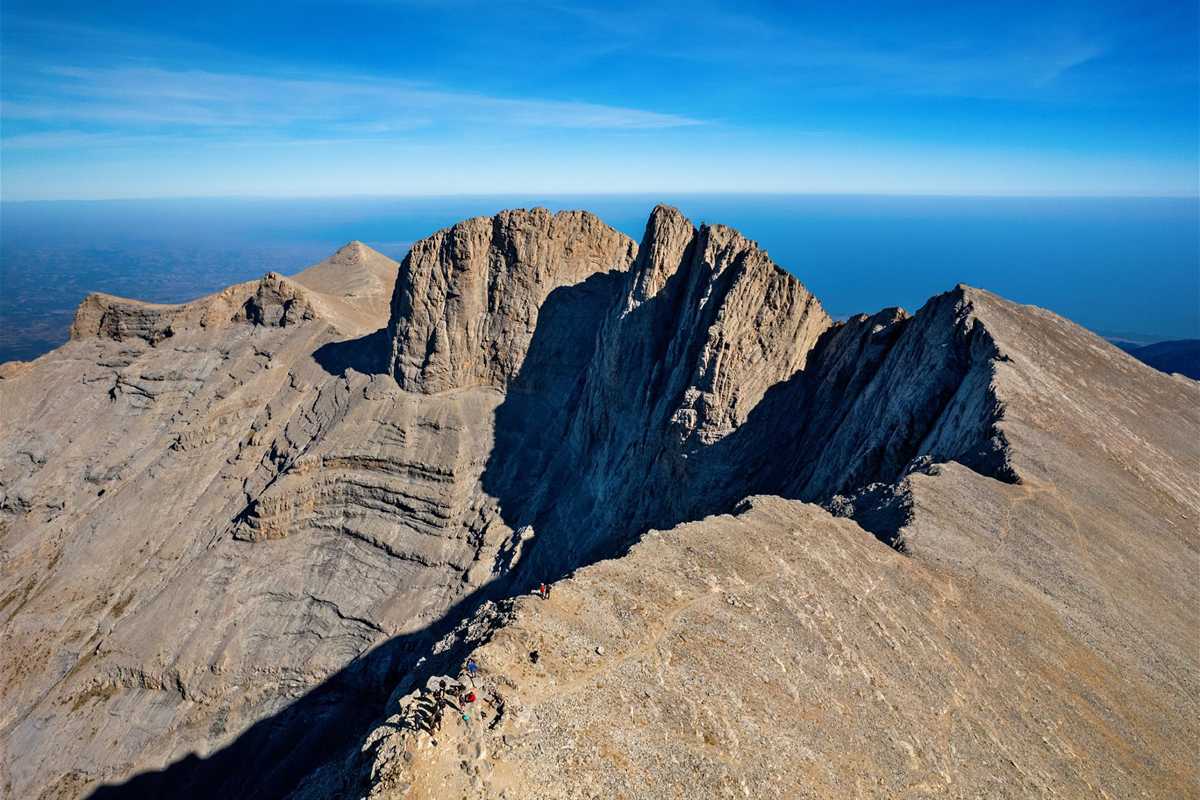
Olympus is a huge mountain block in northern Greece, roughly 80 kilometres southwest of Thessaloniki, where Thessaly meets Macedonia. The mountain anchors every Thessaloniki Dion and Mount Olympus day trip.
Wind and rain cut the massif into a lone tower that climbs almost 3,000 metres from sea level. Fifty-two peaks crown it, and deep gorges split it. Seen from above, it is nearly round: 80 kilometres around and 500 square kilometres in area. The coast lies just 18 kilometres from Litochoro.
Mytikas, which means “nose”, is the top. No other peak in Greece rises higher than its 2,917 metres. Its neighbour Stefani, called the Throne of Zeus, reaches 2,911 metres. The pair makes a V on the skyline above Litochoro. That town is on the route of a Thessaloniki Dion and Mount Olympus day trip.
Litochoro lies on the eastern side. The dry foothills, called the Xirokampi, are covered in low shrubland, and wild boar live there. Streams from Olympus water the plain of Dion further east, which makes its soil fertile. A Thessaloniki Dion and Mount Olympus day trip links two places that the same mountain feeds.
Sedimentary rock laid down by a shallow sea, 200 million years old, forms Olympus. Glaciers covered it around one million years ago and left plateaus and hollows. The zone above 2,000 metres holds snow for about nine months a year. Lower down, near Litochoro, a Thessaloniki Dion and Mount Olympus day trip meets a Mediterranean climate.
Who are the twelve gods of Olympus?
The twelve gods of Olympus are the leading gods of ancient Greece. A Thessaloniki Dion and Mount Olympus day trip takes in the mountain where tradition set their home. They are Zeus and Hera, Poseidon and Demeter, Athena and Apollo, Artemis and Ares. The rest are Aphrodite, Hephaestus, Hermes, and Hestia or Dionysus.
The Greeks named them Olympians after their home, Mount Olympus. No single list is fixed: one version ends with Hestia, another with Dionysus. Hades, a major god too, ruled the underworld, a realm far from Olympus, so the twelve leave him out.
Zeus was the king of the gods and the god of sky and thunder. His parents were Cronus and Rhea. The thunderbolt and the eagle were his symbols. After the war, Zeus, Poseidon and Hades shared out the world by chance: sky, sea and underworld. One operator calls its trip an excursion to the mythical mountain of the twelve gods.
According to the myths, the gods took power after a ten-year war. In that fight Zeus commanded his siblings, and the Titans, offspring of Gaia and Uranus, lost. The Olympians struck from Mount Olympus, while the Titans stood on Mount Othrys. The tale gives a Thessaloniki Dion and Mount Olympus day trip its mythical edge.
Pieria, the region around the northern foot of the mountain, was the home of the nine Muses in tradition. Zeus and the Titaness Mnemosyne were their parents. Dion, the other stop in a Thessaloniki Dion and Mount Olympus day trip, lies in Pieria as well.
Nobody knows where the name Olympus comes from. In the Homeric poems, the word names the gods’ home, with no single peak attached. By the fifth century before Christ, the Greeks saw the Olympus of Thessaly as that home. That old belief gives a Thessaloniki Dion and Mount Olympus day trip its mythical reputation.
What is Mount Olympus National Park, and what is the Enipeas gorge?
Greece named Mount Olympus its first national park in the late nineteen thirties. The Enipeas gorge cuts through it above Litochoro. At the edge of this protected mountain, a Thessaloniki Dion and Mount Olympus day trip takes its walk.
The park protects the eastern side of the mountain. Its core covers about 4,000 hectares, where the law bans every form of exploitation. A wider ring around the core is a buffer zone. Today the whole park covers 24,000 hectares. Its lowest point lies at 600 metres, and its top is Mytikas.
Visitors follow clear rules. People walk only on the marked paths, between sunrise and sunset. Children under 14 cannot enter without an adult. Drivers leave cars in the set car parks only. Picking plants and seeds is banned, and so is hunting. Guests on a Thessaloniki Dion and Mount Olympus day trip follow the same rules as everyone else.
Botanists count about 1,700 kinds of plants here, close to a quarter of Greek flora. Of these, 23 grow nowhere else but Olympus. Researchers have recorded 32 kinds of mammals. The list includes the wildcat and the Balkan chamois. They have also counted 108 kinds of birds, including the golden eagle.
The river Enipeas is small. Its springs lie at Prionia, and it divides the massif at Litochoro before it reaches the Aegean Sea. Its ravine is 14 kilometres long. One operator’s listing describes a 20-minute trek through the gorge, with natural pools and wooden bridges. In it, a Thessaloniki Dion and Mount Olympus day trip keeps the gorge walk short.
Another operator walks the Agia Kori trail and ends at a waterfall. It also stops at the park’s information centre in Litochoro, which explains the geology, plants and animals of the mountain. The ruins of Dion complete that Thessaloniki Dion and Mount Olympus day trip.
How high is Mytikas, and who climbs it?
Mytikas is 2,917.727 metres high. It is the highest peak of Mount Olympus and of all Greece. Climbers go up it, but a Thessaloniki Dion and Mount Olympus day trip stays on trails at the foot.
The name Mytikas means “nose”, and the peak also carries the name Pantheon. In the Balkans only Musala in Bulgaria is higher. Right beside it stands Stefani, at 2,911.11 metres. A Thessaloniki Dion and Mount Olympus day trip stops at Litochoro, where the two peaks form a V.
The eye cannot tell which is taller. The summit climb is harder than a Thessaloniki Dion and Mount Olympus day trip. Only the last stretch, between the Skala summit and Mytikas, is a rock scramble with high exposure. The Kakoskala section has a steep slope and a vertical drop.
Two trails lead to the top: Skala to Kakoskala, and Zonaria to Louki. Both belong to the European path E4. Climbers start from Litochoro, where a road leads to Prionia and the hike begins. Each year more than 10,000 people come to Olympus, yet the majority get only as far as Skala and Skolio.
Two Swiss climbers and a wild goat hunter from Litochoro first stood on Mytikas, in the early twentieth century. A travel blog says the top needs good fitness and fair weather. A travel portal lists a two-day hiking tour to it. One operator calls the marked red trail of its Thessaloniki Dion and Mount Olympus day trip easy.
What else do travellers ask about a Thessaloniki Dion and Mount Olympus day trip?
Which clothes and items go in your bag for a Thessaloniki Dion and Mount Olympus day trip?
The first operator’s list starts with long pants for the trek. Add a water bottle and snacks. It also asks for comfortable shoes made for walking and trekking. For summer, it lists sunglasses, sunscreen and a hat. A second operator gives a single tip: wear comfortable shoes.
How much walking does a Thessaloniki Dion and Mount Olympus day trip hold?
The first operator marks its trekking trail in red and calls it easy and accessible. Its itinerary gives the Agia Kori trail walk and the waterfall swim 1.5 hours in total. The same operator names mobility issues, pregnancy and infants as reasons the trip is not suitable.
A second operator says you can enjoy the gorge walk even if you do not want to climb to the summit. Both operators put a walk into their Thessaloniki Dion and Mount Olympus day trip.
What is the Monastery of Saint Dionysius of Olympus?
Saint Dionysios of Olympus built it in the sixteenth century. The old monastery lies in the Enipeas gorge, and a road from Litochoro reaches it by car. The second operator sends its Thessaloniki Dion and Mount Olympus day trip on a trek through the same gorge.
The Ottomans looted and burned the old monastery. In the Second World War, German troops destroyed it. The New Monastery of Dionysios lies three kilometres outside Litochoro. The partly restored old monastery is now its dependency.
What is Pieria, the region of the Thessaloniki Dion and Mount Olympus day trip?
Pieria is a regional unit in the south of the Region of Central Macedonia. Its capital is the town of Katerini. The name comes from the ancient Pieres tribe.
Dion, Pydna, Leivithra and Platamonas are its archaeological sites. The southern part of Pieria holds Mount Olympus, and the Thermaic Gulf lies along its eastern side. Three municipalities share the unit, and one of them is Dion-Olympos.
Where is Platamon Castle, close to Dion and Mount Olympus?
Platamon Castle stands southeast of Mount Olympus. Crusaders built it in the early thirteenth century.
Its hill commands the point where the Tempe valley opens out. The road linking Macedonia with Thessaly runs through that valley. A Roman historian placed the site between Dion and Tempe. That puts it close to the area of a Thessaloniki Dion and Mount Olympus day trip.
Its walls reach between 7.50 and 9.50 metres in height. The small church of Agia Paraskevi is the only intact building inside. The acropolis also serves as a venue of the Olympus Festival.